Discovering LLM Style Axes Without Training: A Low-Cost Probe via Sampling + PCA
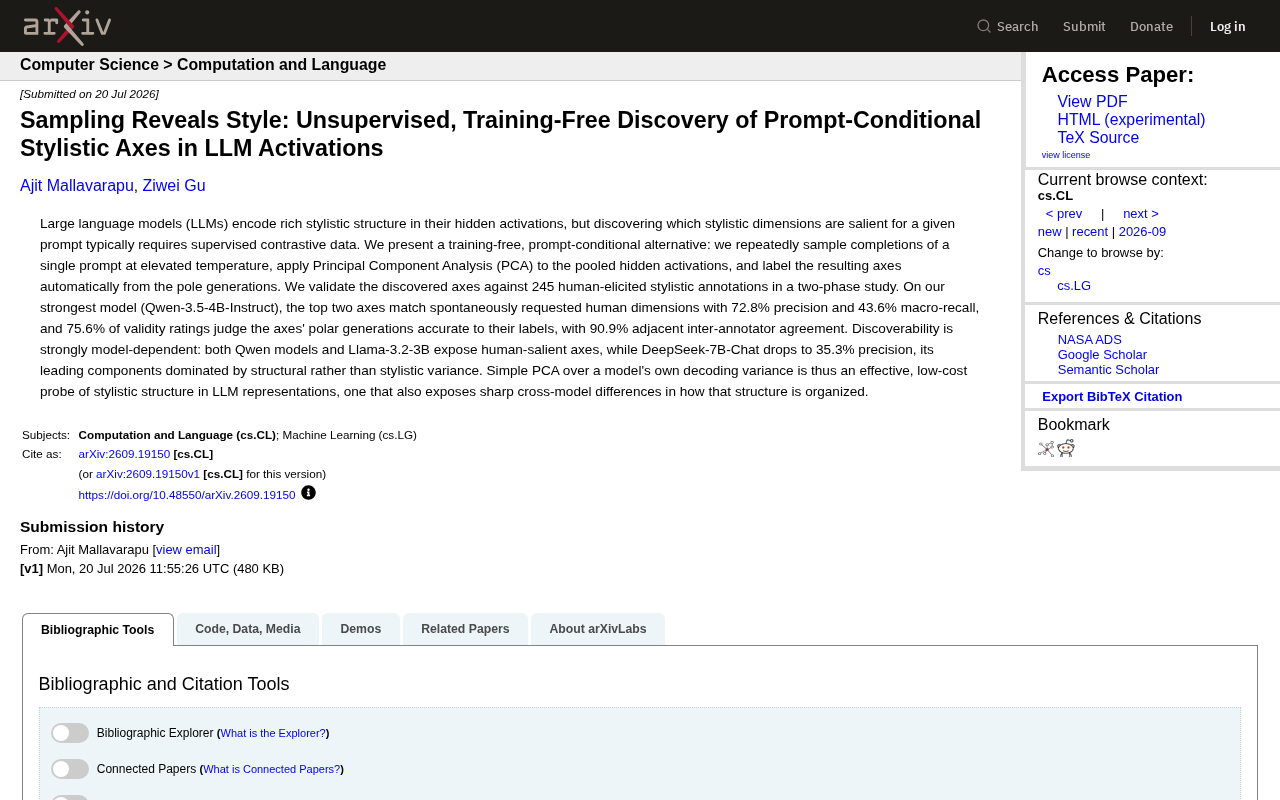
Discover LLM style axes training-free: high-temperature sampling + PCA on hidden activations.
This paper proposes a training-free method for discovering LLM style axes: repeatedly sample a single prompt at high temperature, apply PCA to the hidden activations, and auto-label the poles of each principal axis — no human annotation or fine-tuning required. On Qwen-3.5-4B-Instruct, the top two axes match 245 human-generated style annotations at 72.8% precision, 75.6% validity, and 90.9% adjacent inter-annotator agreement. However, results are highly model-dependent: Qwen and Llama expose human-perceptible style axes, while DeepSeek-7B-Chat's principal components are dominated by structural variance, yielding only 35.3% precision — a finding that itself reveals fundamental differences in how models organize stylistic information internally.
Reading "Style" from Hidden Activations
When large language models (LLMs) generate text, their internal hidden activations encode rich stylistic structure — formal versus casual tone, level of detail, emotional valence, and more. The challenge is figuring out which style dimensions are most salient for any given prompt. Traditional approaches rely on supervised contrastive data, requiring large amounts of manually annotated paired samples — expensive and difficult to scale.
A new paper on arXiv (arXiv:2609.19150v1) proposes a fundamentally different approach: a training-free, prompt-conditional method for discovering style axes. The core idea is disarmingly simple — rather than constructing a contrastive dataset, let the model repeatedly sample from the same prompt and "read out" stylistic structure from its own decoding variance.
Method Breakdown: Sampling, Dimensionality Reduction, Auto-Labeling
The pipeline can be summarized in three steps, with no model parameter updates at any stage:
Step 1: High-Temperature Sampling
For a single prompt, generate multiple completions at a higher sampling temperature. Raising the temperature increases output diversity, causing the model to exhibit different stylistic tendencies across samples from the same prompt — these variations become the raw material for subsequent analysis.
Step 2: PCA Dimensionality Reduction
Aggregate the hidden activations from these completions and apply Principal Component Analysis (PCA). PCA automatically identifies the directions of greatest variance in the activation space — these principal axes correspond to the style dimensions along which the model varies most dramatically for that prompt.
Principal Component Analysis (PCA) is a classic unsupervised linear dimensionality reduction technique. Its core idea is to find a set of orthogonal directions (principal components) along which the data has maximum variance in high-dimensional space. For LLM hidden activations, each layer's activation vector typically has thousands or even tens of thousands of dimensions, making direct analysis intractable. PCA projects these high-dimensional activations onto a small number of maximum-variance axes, each representing the direction of greatest change in activation space. In this method, researchers apply PCA to the matrix of hidden activations from multiple samples of the same prompt. The first principal component captures the direction of greatest difference across all samples; the second captures the next-largest variance direction orthogonal to the first, and so on. Intuitively, if the model most frequently "oscillates between formal and casual" for a given prompt, the first principal component should correspond to that stylistic opposition. Different models may capture entirely different structures in their principal components — which is precisely why DeepSeek-7B-Chat diverges so sharply from the Qwen series.
Step 3: Auto-Labeling the Poles
For each principal axis, take representative generated outputs from its positive and negative poles and automatically assign semantic labels to that axis. The entire process requires no manual pre-specification of style categories — style dimensions emerge from the model's own behavior.
The elegance of this design lies in using "which directions the model naturally drifts toward during sampling" as the probe signal itself, rather than imposing an external taxonomy of style.
Experimental Validation: Benchmarked Against 245 Human Annotations
The paper evaluates the discovered style axes through a two-stage study, benchmarking against 245 style annotations spontaneously provided by human annotators.
Results on the best-performing model, Qwen-3.5-4B-Instruct, are compelling:
- The top two principal axes match the style dimensions from human-generated requests at a precision of 72.8%, with a macro-average recall of 43.6%;
- 75.6% of validity ratings confirm that the pole generations for these axes accurately correspond to their labels;
- Inter-annotator adjacent agreement reached 90.9%, indicating that the judgments themselves are highly robust.
The lower recall (43.6%) suggests that only the top two highest-variance axes cannot cover all the style dimensions humans care about — humans may attend to a dozen or more stylistic properties, while the first two principal components only capture the most prominent ones. But for a zero-training-cost probe method, this level of precision is quite impressive.
Macro-average recall computes the arithmetic mean of per-class recall rates, unaffected by class sample size — in contrast to weighted-average recall, where high-frequency classes dominate the result. The 43.6% macro-average recall in this study means that across all style dimensions spontaneously identified by human annotators (such as "formality," "sentence length," "emotional warmth," etc.), the top two PCA axes cover less than half of them on average. The reasonable interpretation: the top two PCA axes are good at discovering the most salient 1–2 style dimensions, but humans attend to around a dozen stylistic properties spread across many directions in activation space — the first two principal components inevitably miss much of this. Extending to more principal components would theoretically improve recall, but would also introduce more noise axes and likely reduce precision, representing a core trade-off inherent to the method.
Key Finding: Style Discoverability Is Highly Model-Dependent
The most thought-provoking conclusion of this study is the striking variation in how different models organize stylistic structure.
The same sampling-plus-PCA pipeline yields sharply divergent results across models:
- Qwen series models and Llama-3.2-3B both expose style axes that are perceptible to humans;
- DeepSeek-7B-Chat, however, sees precision drop sharply to 35.3% — its principal components are dominated by structural variance rather than stylistic variance.
In other words, DeepSeek-7B-Chat's variation under high-temperature sampling manifests more in text structure (paragraph organization, formatting) than in style. This suggests that models of equivalent scale can organize their internal representations in fundamentally different ways — style is not inherently the dominant direction of variation in every model's hidden space.
This finding has practical implications for interpretability research, revealing a low-cost means to compare how different models "organize stylistic information in their representations."
Structural variance here refers to variation in text at the level of format, paragraph segmentation, use of bullet points, length distribution, and other "skeletal" features — as opposed to "stylistic" variation in word choice, tone, and affect. DeepSeek-7B-Chat's primary variation under high-temperature sampling concentrates in the former: for instance, the same question might be answered with a bullet-point list in one sample and a flowing paragraph in another, so the direction of greatest variance in activation space gets occupied by this format switching rather than subtler stylistic differences. This phenomenon may relate to the model's training data composition, RLHF alignment approach, or instruction fine-tuning strategy: if training involved heavy use of format-diverse instruction data, the model may have internalized "choosing output format" as a more salient degree of decoding freedom than "adjusting tone." This suggests that researchers comparing representations across models need to distinguish between "format diversity" and "style diversity" as fundamentally different sources of variation.
Why This Method Deserves Attention
From both engineering and research perspectives, the value of this approach comes down to three properties: training-free, low-cost, and diagnostic.
It requires no expensive contrastive datasets — model style structure can be probed using only the model's own decoding variance, making it nearly plug-and-play with any open-source LLM. It can also serve as a diagnostic tool to quickly assess whether a model's style dimensions are "discoverable," reflecting the health of its representational organization.
The limitations are also clear: limited recall means it is better suited for discovering the most salient style axes rather than exhaustively enumerating all dimensions; and the method is highly model-dependent, failing on models like DeepSeek. But as a probe, it provides a lightweight yet effective entry point for understanding LLM internal style representations.
For researchers focused on model interpretability, style control, or prompt engineering, this offers a near-zero-barrier experimental starting point: give a prompt, sample multiple times, run PCA, and get a glimpse into the "skeleton of style" inside the model.
Related articles
Three Stages of AI LLM Testing: A Practical Guide from Core Concepts to API Calls
A learning path for testers covering LLM fundamentals, prompt engineering, OpenAI SDK calls, API Key vs Token differences, streaming output, RAG, and Agent systems.
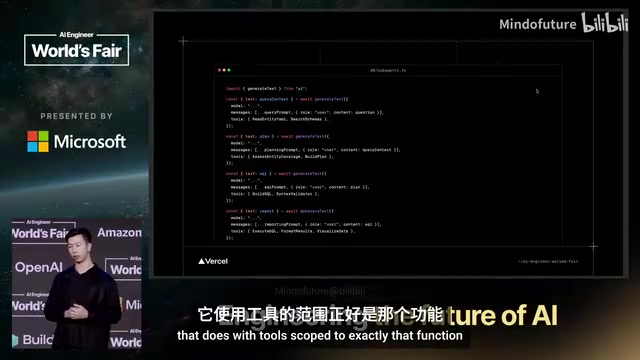
Vercel's Chief of Software Looks Back: The Evolution of Agent Building — From Multi-Agent Chains to File System Agents
Vercel's Chief of Software Andrew recaps the agent-building journey at AI Engineer: from giant prompts to multi-agent chains, monolithic memory, file system agents, and the open-source EVE framework.
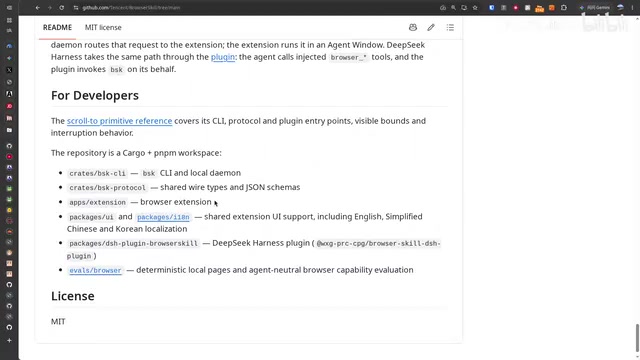
Tencent's Open-Source BSK in Action: Letting AI Take Over Your Already-Logged-In Browser
Tencent's open-source BSK (Browser Skill Kit) lets AI take over your real, logged-in Chrome via WebSocket. We break down the architecture, setup, and three key pitfalls from real-world testing.