Dissecting a Single Convolutional Neuron: A New Approach to Mechanistic Interpretability

New mechanistic interpretability method uses Hadamard product clustering to fully dissect a single convolutional neuron.
An independent researcher applies Hadamard product clustering to analyze a single 1×1 convolutional neuron in InceptionV1, extracting clear monosemantic patterns including cars, cats, and letters. The study also uncovers an unexpected phenomenon: gradient descent appears to deliberately suppress certain concepts into low-activation noise ranges by balancing positive and negative weights across dependent neurons, offering new insights into neural network information encoding.
Introduction: From Distill Circuits to Independent Research
Mechanistic Interpretability has become one of the core research directions in AI safety and model understanding. It attempts to answer a fundamental question: what is actually happening inside a neural network? What concepts are encoded in each neuron and each layer of connections?
The rise of this research direction is closely tied to work from institutions like Anthropic and DeepMind. The Distill Circuits project (2020–2021), led by Chris Olah and others, was a foundational contribution to the field. It systematically analyzed curve detectors, high-low frequency detectors, and other features within InceptionV1, demonstrating that neural networks contain interpretable "circuit" structures — groups of neurons that collaborate to perform specific computational tasks, analogous to functional modules in electronic circuits. This discovery inspired a large body of subsequent research, including explorations into the internal mechanisms of language models like GPT.
Recently, an independent researcher shared their first mechanistic interpretability paper on the Reddit machine learning community. Taking the classic Distill Circuits research trajectory as a starting point, this work focuses on an extremely granular subject of analysis — a single 1×1 convolutional neuron in the InceptionV1 model. The researcher attempts to thoroughly dissect and understand the behavior of this neuron, then extend the methodology to other neurons in the same layer.
While the author humbly notes that "starting with convolutions may have been a mistake," the analytical techniques and unexpected findings in this work reveal several thought-provoking information-encoding mechanisms inside neural networks.
![reddit source: Mechanistic interpretability: a first paper on disentangling a convolutional neuron [R]](/media/screenshots/source/14397_0.png)
Core Methodology: Understanding Neuron Behavior with the Hadamard Product
What Is the Neuron Actually "Looking" At?
The most critical insight in this research is that what a neuron truly "detects" is the Hadamard product of its receptive field and its weights — that is, the element-wise multiplication of the two.
The Hadamard Product (also called the element-wise product) is the operation of multiplying corresponding elements of two matrices or tensors of the same dimensions, distinct from the row-column dot products of standard matrix multiplication. In neuron analysis, the receptive field is a tensor with the same dimensions as the weights. Computing their Hadamard product preserves each spatial position's independent contribution to the neuron's activation, yielding a "contribution heatmap." This provides far richer spatial information than observing a scalar activation value alone — similar to how attention weights in an attention mechanism are visualized — allowing researchers to precisely localize the local sources of a neuron's response.
Traditional analysis often focuses only on a neuron's activation value (a scalar sum), which obscures internal structural information. The Hadamard product preserves point-wise contributions across the spatial dimension, precisely characterizing which regions of the input trigger a neuron's response and with what intensity. This perspective is both elegant and profound.
Clustering Analysis Reveals Monosemantic Patterns
Building on this insight, the researcher applies clustering analysis to the Hadamard products to extract all semantic patterns detected by the neuron. The results are compelling — clustering produces clearly "monosemantic" clusters.
Monosemanticity refers to a neuron cleanly corresponding to a single concept rather than a mixture of multiple concepts. Polysemanticity is one of the core challenges in interpretability research. In their 2022 paper on the "Superposition" hypothesis, Elhage et al. systematically explained this phenomenon: because neural networks need to encode far more features than there are dimensions in the network, individual neurons are often forced to respond simultaneously to multiple unrelated concepts — essentially "stacking" high-dimensional information into a low-dimensional space via sparse coding. Anthropic's 2023 dictionary learning research (Towards Monosemanticity) directly targeted this problem, attempting to "decompose" polysemantic neurons into monosemantic features using sparse autoencoders.
In this case, clustering clearly separates categories such as cars, cats, and dogs, which aligns closely with the neuron's previously known activation behavior. More valuably, clustering also surfaces many previously unnoticed patterns — letters, faces, and a large number of low-activation responses — providing researchers with a novel technical pathway for closely examining neuron behavior.
Unexpected Finding: Gradient Descent "Deliberately" Suppresses Information
Hidden Structure in Low-Value Clusters
During deeper analysis, the researcher uncovers the most intriguing phenomenon, concentrated in the low-activation clusters (with "letters" as the archetypal example).
The observation shows that for low-value concepts like "letters," all dependent neurons of this neuron are also responding to the same concept. This indicates that the network is indeed encoding the semantic concept across multiple layers.
The Careful Balance of Positive and Negative Weights
The more critical finding is that the positive and negative weights of these dependent neurons are evenly distributed, and their net effect is to push the sum downward. In other words, the network appears to be "actively" causing the signals for a given concept to cancel each other out, keeping it in a low-value, noisy range.
The author interprets this as important evidence that gradient descent deliberately places certain patterns and concepts in the noise interval during training. This phenomenon can be theoretically grounded in Information Bottleneck Theory and neural network compression theory — research by Tishby et al. shows that networks actively compress representations of task-irrelevant information in the later stages of training. The uniform distribution of positive and negative weights driving net activation toward zero is a sophisticated "soft suppression" mechanism: it neither completely discards the semantic information (dependent neurons still respond to the concept) nor allows it to explicitly participate in downstream decisions. This functionally resembles the Lateral Inhibition mechanism in neuroscience, where a balance of excitation and inhibition achieves fine-grained signal regulation.
This finding has important implications for understanding how neural networks encode information: even seemingly "unimportant" low-activation responses may carry carefully organized semantic information, rather than being mere training noise.
Significance and Limitations of the Research
Visualization and Reproducibility
The author employs high-quality, Distill-style visualizations. This is particularly crucial for mechanistic interpretability research — many conclusions in this field depend on intuitive displays of internal representations, and clear visualizations effectively help readers assess the credibility of findings. Interested readers can refer to the original article.
The Shift from Visual Convolutions to Language Models
The author candidly acknowledges that choosing convolutional neurons as an entry point may have been a strategic "mistake" — current interpretability research hotspots have clearly shifted toward large language models (LLMs), with relatively limited attention on visual convolutional networks. They indicate a planned pivot to language model research going forward.
From a scientific value standpoint, however, convolutional networks have their own unique advantages: InceptionV1 (GoogLeNet, 2014) is an early deep convolutional network proposed by Google, where the Inception module improves feature extraction efficiency by using convolutional kernels of different sizes in parallel. The model has become a "standard testbed" for interpretability research because its structure is relatively simple, its weights are publicly available, receptive field boundaries are clearly defined, and the Distill Circuits team has accumulated extensive benchmark results for comparison. In particular, the 1×1 convolution (Pointwise Convolution) studied here involves no spatial neighborhood information — it performs only a linear combination in the channel dimension — making the analysis of input-output relationships cleaner and reducing confounding factors introduced by spatial positions. By contrast, the interactions between Transformer feed-forward layers and attention heads are far more complex, with higher debugging costs. The core "Hadamard product clustering" methodology has the full potential to be transferred to the analysis of Transformer attention mechanisms or feed-forward layers.
Conclusion: The Scientific Value of a Microscopic Perspective
Though limited in scale, this independent research embodies the core spirit of mechanistic interpretability — not settling for observing a model's output behavior, but diving inside individual neurons to ask what they encode and how they encode it.
The analytical perspective that "the Hadamard product reveals what a neuron truly sees" is concise and powerful; the finding that "gradient descent deliberately places concepts in the noise interval" offers a new angle for understanding how neural networks organize information, resonating with cutting-edge theoretical frameworks such as Information Bottleneck Theory and the Superposition hypothesis.
For researchers interested in the internal mechanisms of AI, this kind of rigorous microscopic analysis is precisely the foundational work that builds deep understanding of neural networks. We look forward to seeing what further insights the author will bring from their future explorations in the language model domain.
Related articles
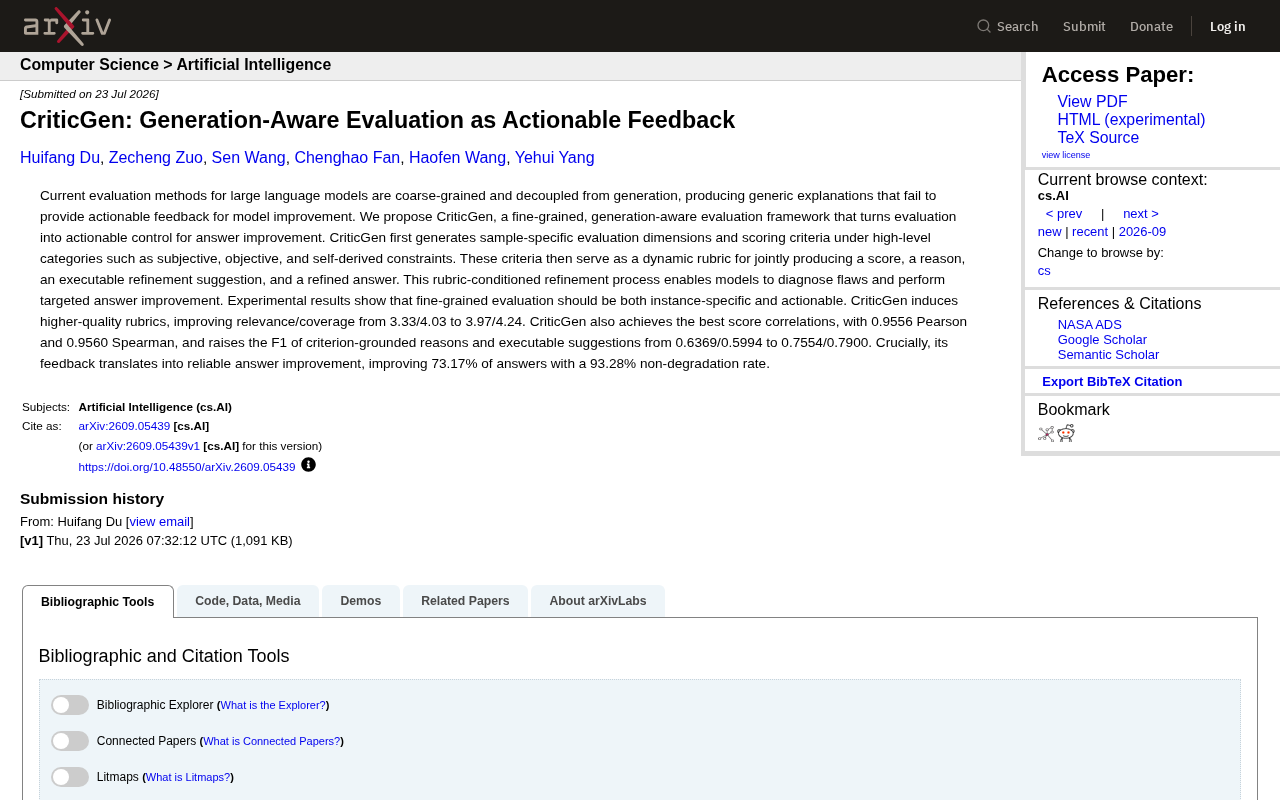
CriticGen: A New Framework That Transforms AI Evaluation into Actionable Improvement Feedback
CriticGen proposes a generation-aware evaluation framework that transforms AI assessment from passive scoring to an active optimization loop, achieving 73.17% answer improvement and 93.28% non-degradation rate.

Vercel AI SDK workflow-harness Update Analysis
Deep analysis of Vercel AI SDK workflow-harness 1.0.107 update: architecture design, engineering practices, and developer value for building reliable AI apps.
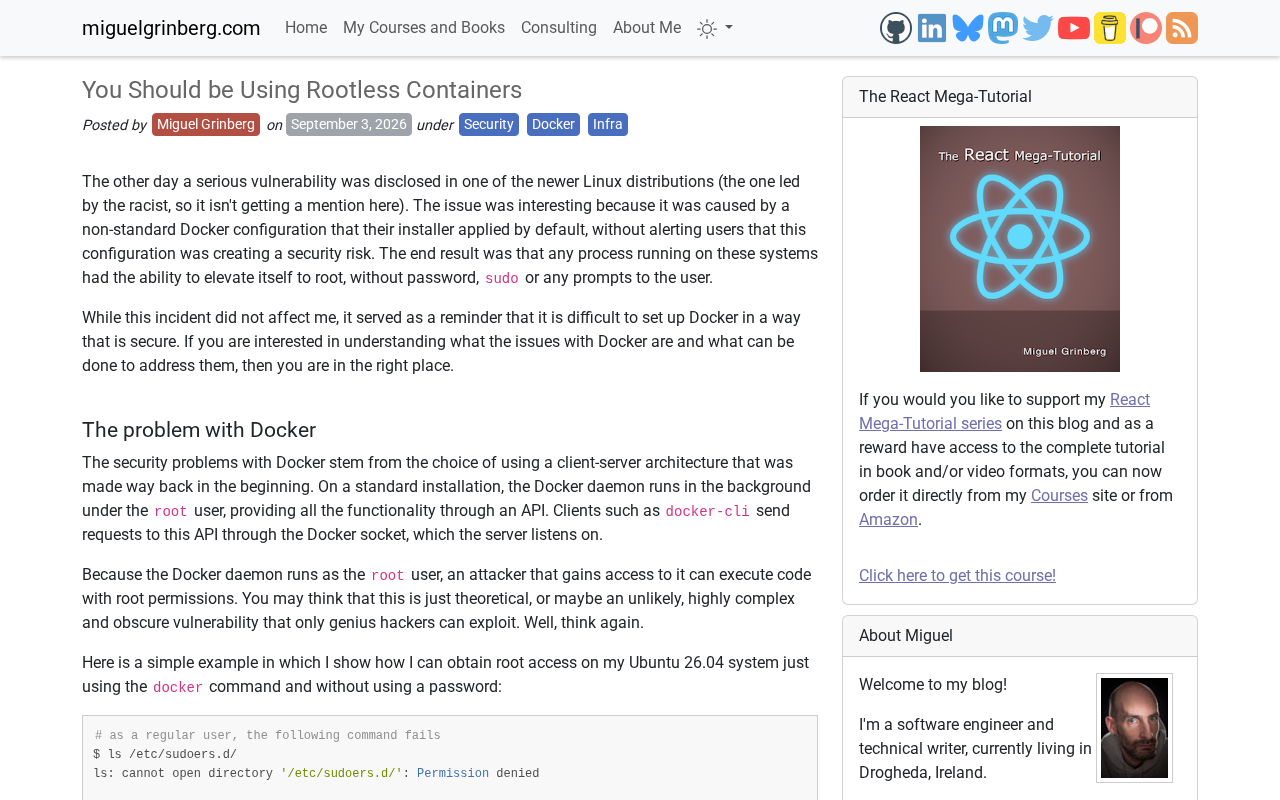
Rootless Containers Explained: Principles, Benefits, and Leading Implementation Approaches
A deep dive into rootless container principles and security benefits, comparing Podman, Docker Rootless mode, and Kubernetes integration with practical migration advice.