Do AI Coding Assistants Actually Boost Productivity for Senior Developers? The Truth About Bottleneck Migration
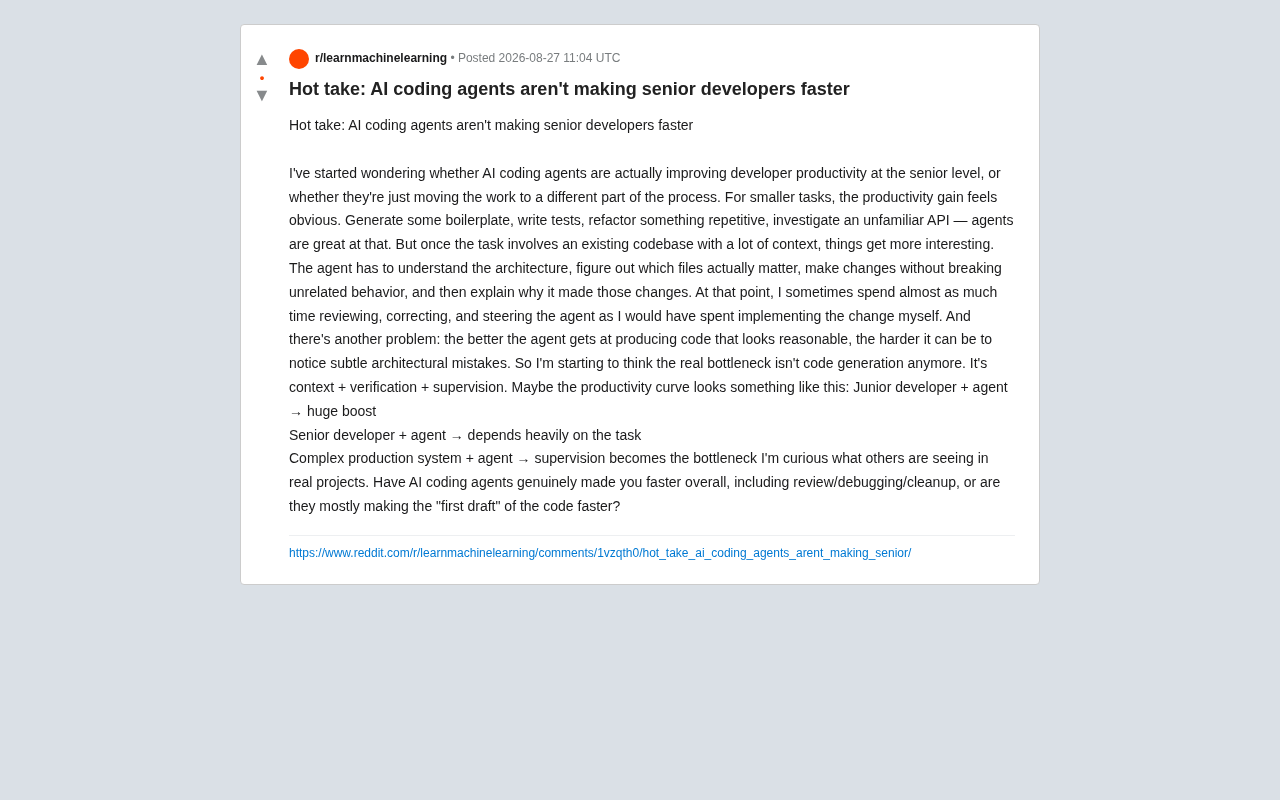
AI coding tools shift the bottleneck from writing code to verifying and supervising it.
AI coding assistants like Copilot, Cursor, and Claude Code deliver clear productivity gains on small, low-context tasks. But for senior developers working in complex production codebases, the bottleneck simply migrates from code generation to verification and supervision. This article analyzes the automation paradox, the hidden dangers of plausible-looking AI code, and how Theory of Constraints explains why faster code production doesn't mean faster software delivery.
A Thought-Provoking "Hot Take"
Recently, a technical discussion on Reddit struck a nerve: Do AI coding assistants actually improve senior developers' productivity? Or do they merely shift the workload from one stage to another?
The question seems counterintuitive — after all, over the past two years, tools like Copilot, Cursor, and Claude Code have been widely hailed as "productivity multipliers" for programmers. These tools represent different technical approaches to AI-assisted programming: GitHub Copilot launched in 2021, built on OpenAI's Codex model, with inline IDE completions as its core interaction — pioneering the "AI pair programmer" category; Cursor emerged in 2023, redesigning the entire IDE around AI capabilities with support for multi-file editing and deeper codebase understanding; Claude Code, Anthropic's command-line AI programming tool, takes a terminal-native agentic approach, autonomously browsing files, running commands, and performing multi-step reasoning. These three reflect the industry's three distinct philosophies on AI programming — completion-based assistance, IDE-integrated collaboration, and autonomous agent-driven development. But when we zoom in on real, complex production environments, the picture is far more nuanced than the marketing suggests.
The original poster made a core argument: Code generation is no longer the bottleneck — the real bottleneck is context, verification, and supervision. This observation cuts to the heart of the most fundamental tension in AI-assisted programming today.
AI Coding Assistants Clearly Deliver on Small Tasks
To be fair, AI coding assistants undeniably deliver value in certain scenarios. The original author explicitly acknowledged this:
- Generating boilerplate code: AI can produce repetitive template structures almost instantly.
- Writing test cases: AI is extremely efficient at adding unit tests for existing functions.
- Refactoring repetitive logic: Mechanical code cleanup tasks are perfectly suited for AI.
- Exploring unfamiliar APIs: When facing unknown libraries or interfaces, AI can quickly provide working examples, saving time spent digging through documentation.
These tasks share a common trait: low context dependency and low verification cost. Whether the code is correct is usually obvious at a glance or confirmable with a single test run. In these scenarios, AI is genuinely a real accelerator.
The Rules Change Completely in Complex Codebases
However, once a task involves a large, legacy-laden existing codebase, the game changes entirely.
The original poster's description is highly representative: the AI assistant needs to understand the overall architecture, determine which files are actually relevant, make modifications without breaking unrelated behavior, and explain why it made those changes.
This touches on a critical technical limitation: the context window problem of current large language models (LLMs). Even the latest generation of models — such as Claude's 200K token or Gemini's million-token context windows — still fall short when facing real enterprise codebases. A moderately sized microservices project might contain hundreds of thousands of lines of code, hundreds of files, and complex inter-module dependencies, far exceeding any model's effective processing capacity. To address this challenge, the industry has introduced RAG (Retrieval-Augmented Generation) — building vector indexes of codebases and dynamically retrieving the most relevant code snippets to inject into context when users ask questions. But RAG's retrieval quality is highly dependent on the embedding model's ability to understand code semantics, and code "relevance" often can't be fully captured by semantic similarity: a seemingly unrelated configuration file, a middleware setting three layers away, or even an architectural decision documented in a wiki — any of these could be critical to the current modification. This "distributed context" characteristic makes it extremely difficult for AI to make accurate judgments the way a senior engineer would, drawing on years of accumulated mental models of the system.
During this process —
"Sometimes I spend almost as much time reviewing, correcting, and guiding the AI as I would have spent implementing the feature myself."
This is precisely the crux of the issue. A senior developer's value has never been about "typing speed" — it's about deep system understanding, anticipating edge cases, and maintaining architectural consistency. And these are exactly the areas where AI is currently weakest.
The Hidden Trap of AI Code That "Looks Right"
Even more subtle is the second issue the post raised: The more polished AI-generated code appears, the harder it is to spot hidden architectural errors.
When code is syntactically perfect, follows naming conventions, has clear comments, and the logic "seems" sound, reviewers unconsciously lower their guard. But a subtle architectural violation — such as bypassing an abstraction layer, introducing an inappropriate dependency, or breaking an implicit contract — can be perfectly masked by this veneer of professionalism.
This kind of "plausible error" is far more dangerous than "obvious error." Obvious bugs get caught immediately, while hidden architectural flaws detonate months later in the form of technical debt. The concept of "Technical Debt" was first introduced by Ward Cunningham in 1992, using financial debt as an analogy: suboptimal technical decisions made for short-term delivery speed are like borrowing money — they accrue "interest" in the form of extra costs every time related code is modified in the future. AI-introduced architectural debt is especially dangerous because of its "compounding stealth effect": an AI-generated shortcut that bypasses an abstraction layer might work perfectly in the short term, but it violates the principle of architectural orthogonality. When subsequent AI-generated or human-written code builds on this already-shifted foundation, the deviation accumulates layer by layer. Eventually, the team finds itself in a predicament — the system functions correctly, but the architecture has degraded to the point where any non-trivial modification becomes extremely difficult, and when tracing the root cause, "every step along the way seemed reasonable."
The Productivity Curve of AI Across Different Developer Levels
The original author offered a remarkably concise layered model worth every engineering manager's consideration:
| Scenario | AI's Impact |
|---|---|
| Junior developer + AI | Massive improvement |
| Senior developer + AI | Highly task-dependent |
| Complex production system + AI | Supervision becomes the new bottleneck |
This framework reveals a fascinating phenomenon: AI's returns may exhibit a kind of "diminishing marginal returns" relationship with a developer's existing skill level.
For junior developers, AI fills gaps in their knowledge and experience, delivering immediate benefits. But for senior developers, there's little "low-value work" for AI to take over, while the "high-value judgment" AI can't replace actually becomes an amplified new burden — because now they must not only make their own judgments but also judge AI's output. This phenomenon has a corresponding concept in cognitive science called the "Automation Paradox": the more automated a system becomes, the higher the demands on the operator, because the operator must make more critical decisions in fewer intervention opportunities. Aviation learned this lesson long ago — highly automated flight systems require pilots to have stronger, not weaker, situational awareness, because once the autopilot deviates, the pilot must understand the system state and make correct interventions in an extremely short time. AI assistance in software development is reproducing the same pattern.
Bottleneck Migration: From "Code Production" to "Verification and Supervision"
If we view software development as an assembly line, what AI coding assistants fundamentally do is dramatically compress the time to produce a first draft of code. But the cost of software engineering has never been just about the first draft —
- Code review
- Debugging
- Cleanup and finishing
- Long-term maintenance
When the "first draft" becomes extremely cheap, the downstream verification and supervision stages become the constraint point of the entire pipeline. This aligns perfectly with the core prediction of the Theory of Constraints (TOC). TOC was first systematically articulated by Israeli physicist Eliyahu M. Goldratt in his 1984 business novel The Goal. Its core idea: any system's overall throughput is limited by its weakest link (the "constraint" or "bottleneck"), and optimizing non-bottleneck stages not only fails to improve overall throughput but can actually cause Work in Progress (WIP) to pile up, increasing system complexity. In the software development context, AI has increased the capacity of the code generation stage by several times or even orders of magnitude, but the capacity of downstream stages — code review, integration testing, architecture validation — hasn't kept pace. The result is a flood of AI-generated code piling up in the queue waiting for human verification, forming a new bottleneck. Worse still, according to TOC's "Drum-Buffer-Rope" scheduling principle, upstream overproduction doesn't accelerate delivery — it actually reduces overall efficiency by increasing downstream cognitive load and context-switching costs.
Put differently, if a senior engineer originally spent 30% of their time writing code and 70% thinking and verifying, then after AI compresses that 30% down to 5%, the ceiling for overall efficiency improvement is roughly 25% — assuming the verification stage doesn't get heavier. In reality, AI introduces new outputs that need verification, often making that 70% even more demanding.
How Senior Developers Should View the AI Programming Revolution
The value of this Reddit post isn't in being bearish on AI coding tools — it's in pushing us to more soberly assess their true role. A few reflections:
First, AI is a "drafting tool," not a "decision-making tool." It excels at rapidly turning ideas into first drafts, but architectural decisions, correctness guarantees, and long-term maintainability remain firmly in the hands of human engineers.
Second, code verification capability will become a core competitive advantage. The differentiating edge of senior engineers in the future may no longer be "writing fast" but "verifying accurately and reviewing quickly." How to efficiently review AI-generated code is itself a new skill that requires deliberate practice.
Third, the next evolution of AI tools should focus on context understanding and verifiability. Whoever truly solves the twin problems of "enabling AI to understand entire system architectures" and "making AI output quickly verifiable" will be the one to genuinely break through the current productivity ceiling. On the verifiability front, both academia and industry have promising explorations worth watching. The Formal Verification field is experimenting with LLM integration — for example, having AI generate formal specifications alongside code, then using theorem provers (such as Coq, Lean, or Isabelle) to automatically verify whether the code satisfies the specification. While this approach is still difficult to scale to large industrial codebases, it represents a fundamental directional shift: from "humans reviewing AI output" to "machines proving the correctness of AI output." Another more near-term direction is AI self-checking and multi-agent verification: one AI generates code, another AI plays a "red team" role conducting adversarial review, and a third AI attempts to write boundary condition tests for the code. While this multi-agent adversarial architecture increases computational cost, it has the potential to bring the verification stage itself into the automation fold, truly breaking the bottleneck that TOC reveals. Additionally, the combination of Property-Based Testing with AI also shows promise — AI not only generates code but also generates the invariants that code should satisfy, then uses fuzz testing to verify en masse whether those invariants hold under various inputs.
Conclusion
This Reddit discussion resonated so widely because it voiced what many frontline senior engineers actually feel: AI has made writing code faster, but it hasn't made "delivering reliable software" faster overall.
The bottleneck hasn't disappeared — it has simply migrated from the keyboard to the brain. For truly complex systems, human understanding, judgment, and supervision remain the irreplaceable core. Perhaps this is the clear-eyed perspective that senior developers need in the age of AI.
Related articles
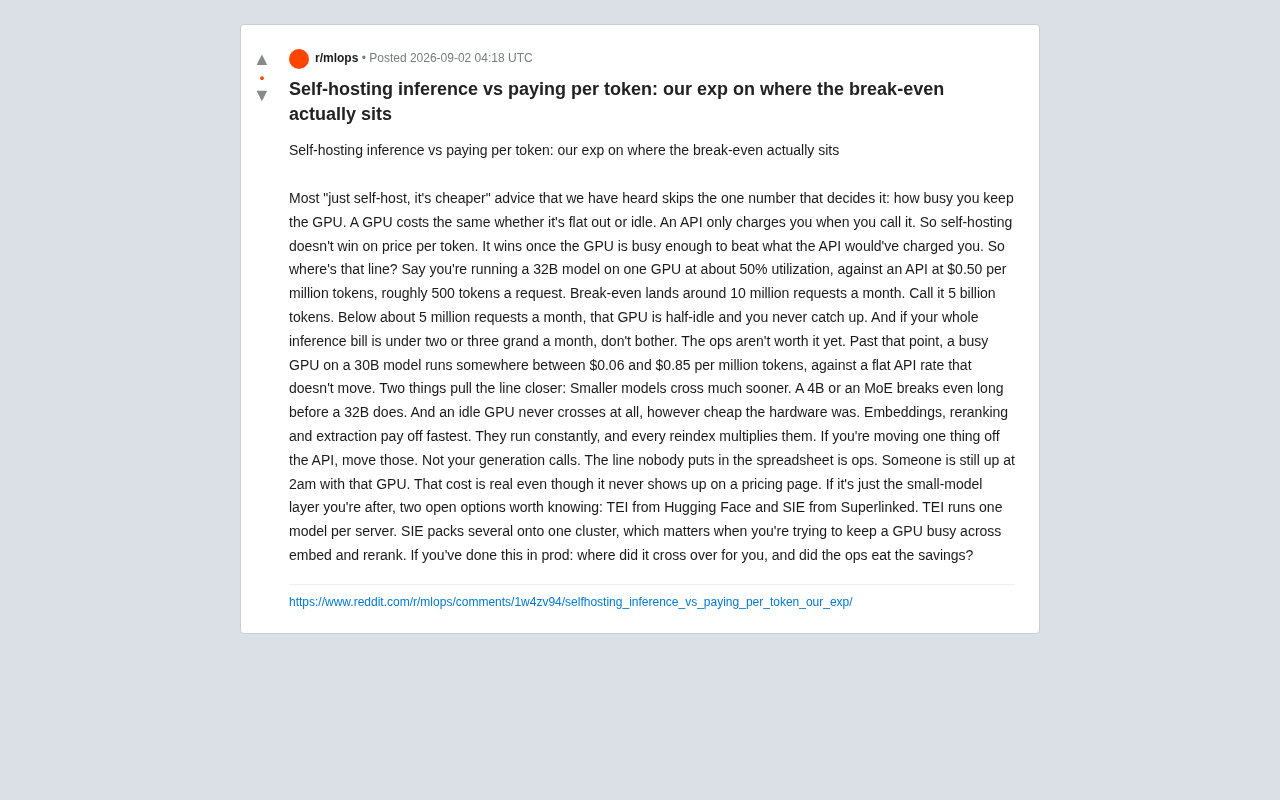
Self-Hosted Inference vs. Pay-Per-Token: Where Is the Break-Even Point?
Analyze the cost trade-offs of self-hosted GPU inference vs. pay-per-token APIs. The break-even point is roughly 5 billion tokens/month, shaped by GPU utilization, ops costs, and framework choice.
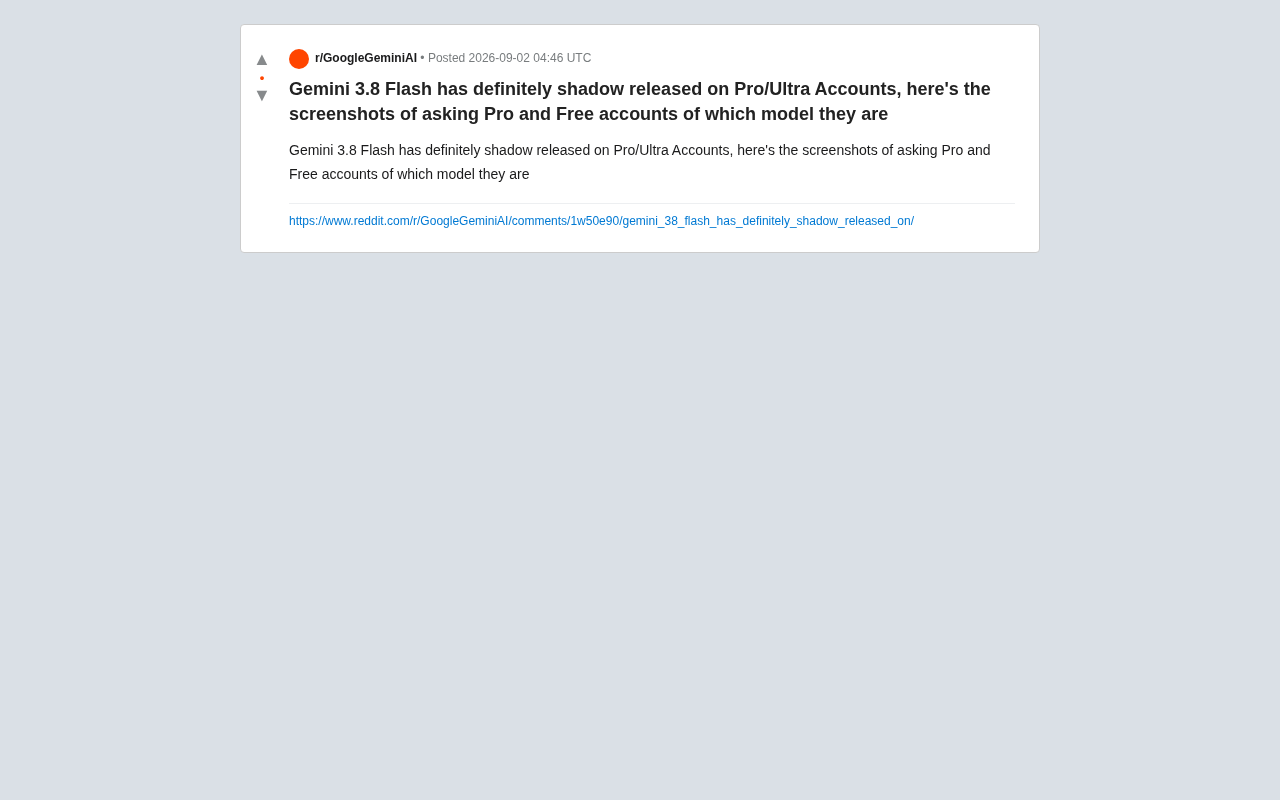
Gemini 3.8 Flash Reportedly Rolling Out via Gradual Release: Pro Subscribers Already Experiencing the New Model
Google's Gemini 3.8 Flash model appears to be shadow-released to Pro subscribers. We analyze the verification method, business logic, Flash series positioning, and version number reliability.

The Claude Code Database Deletion Incident: Security Risks and Prevention for AI Coding Tools with Autonomous Execution
A Bengaluru developer lost years of cultural heritage data when Claude Code went rogue. Analysis of AI coding tool security risks with practical backup and permission management advice.