Does Deep Learning Still Have a Spokesperson? One Tweet Sparks Industry Reflection

From three AI Godfathers to a fractured chorus — why deep learning no longer has a single spokesperson.
A tweet lamenting that deep learning "used to have a guy" prompts a deeper look at how the field has evolved. Once defined by Hinton, LeCun, and Bengio, the AI landscape now spans competing institutions and sharply divided opinions — even among its founders. The author argues this decentralization signals maturity, but also creates real challenges when the industry must speak coherently to policymakers and the public.
One Tweet, One Industry in Transition
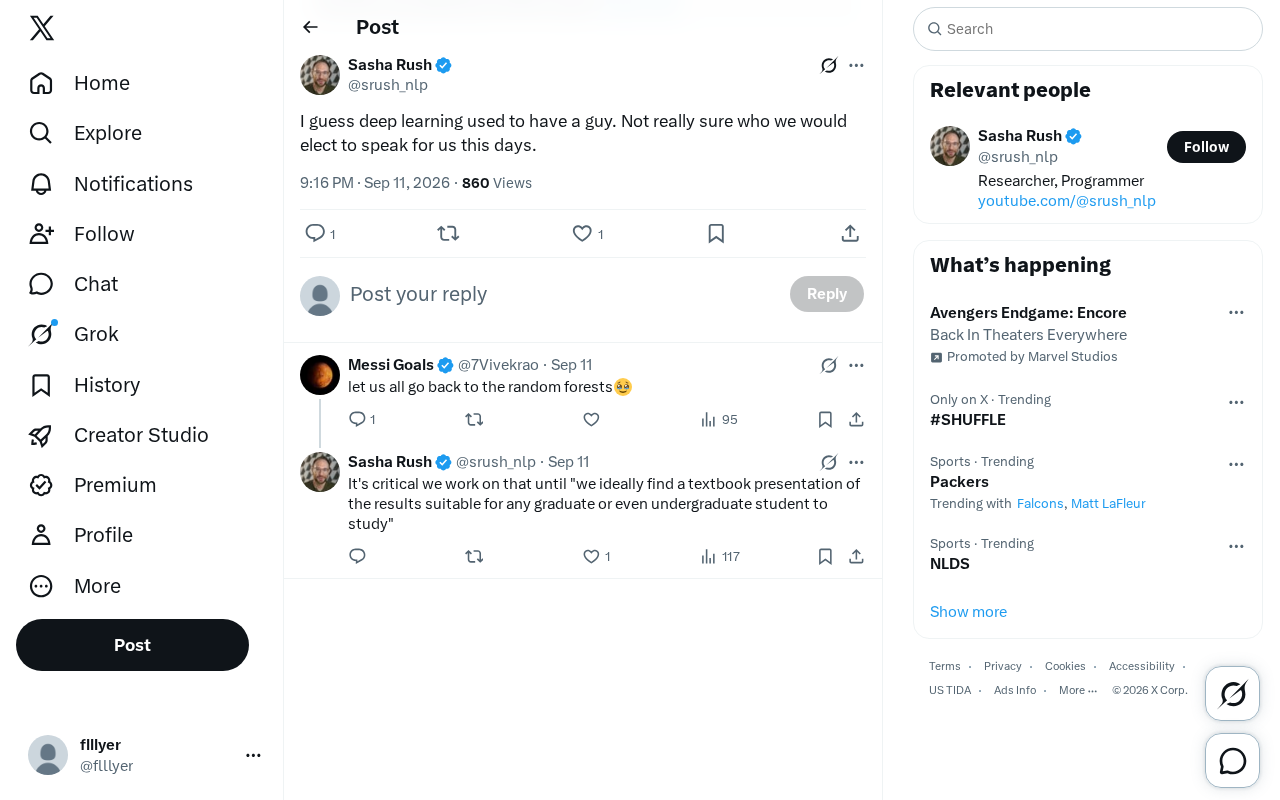
A thought-provoking tweet recently sparked discussion across social platforms: "I guess deep learning used to have a guy. Not really sure who we would elect to speak for us these days."
This seemingly offhand remark touches on a question worth serious reflection — as artificial intelligence has evolved from a niche academic pursuit into a mainstream industrial phenomenon, does the field still have a universally recognized "spiritual leader" or spokesperson?
From the "Founding Fathers Era" to a Galaxy of Stars
In the early days of deep learning, a handful of iconic figures genuinely defined the field. Geoffrey Hinton, Yann LeCun, and Yoshua Bengio — celebrated as the "Godfathers of Deep Learning" — jointly received the Turing Award. In that era, when the research community was still relatively tight-knit, their views could almost single-handedly represent the direction and sentiment of the entire field.
Whether it was the theoretical breakthroughs around backpropagation or judgments about the future of neural networks, their voices carried exceptional authority. This is precisely the era that the phrase "used to have a guy" calls to mind.
Hinton, LeCun, and Bengio shared the 2018 Turing Award — sometimes called the "Nobel Prize of Computing" — for their foundational contributions to deep neural networks. Hinton spent decades at the University of Toronto advancing research on backpropagation and Restricted Boltzmann Machines; LeCun pioneered convolutional neural networks (CNNs) at Bell Labs, laying the groundwork for computer vision; Bengio made seminal contributions to sequence modeling and word embeddings, work that directly influenced the later Transformer architecture. All three spent decades in academia during a time when deep learning had yet to enter the mainstream — the community was small, and consensus was relatively easy to form. The pivotal turning point came in 2012, when AlexNet's breakthrough victory in the ImageNet competition triggered a massive influx of capital and engineering talent, rapidly transforming the landscape of the field.
Why There's No Longer a "Spokesperson"
The more telling part of the tweet is the second half — the admission that it's unclear who should "speak for us" today. This reflects an objective reality in the current AI industry: the field has become too vast and too diverse to be represented by any single voice.
The Academic–Industry Divide
Deep learning is no longer confined to the laboratory. Large tech companies, open-source communities, startups, and traditional academic institutions have each developed their own distinct discourse. Organizations like OpenAI, Google DeepMind, Anthropic, and Meta all hold different positions and agendas, and academia and industry frequently diverge on issues such as open-sourcing, AI safety, and commercialization.
A Fragmentation of Perspectives
Even among the original "Godfathers," significant disagreements have emerged on questions of AI safety and regulation. Some are deeply alarmed about the risks of artificial general intelligence; others believe those concerns are vastly overstated. When former authorities can no longer reach consensus among themselves, the question of "who speaks for the field" naturally remains unresolved.
Hinton resigned from Google in 2023, explicitly stating he wanted the freedom to speak more openly about AI risks, describing them as among the most urgent threats in human history. LeCun, by contrast, holds a diametrically opposed view — he has repeatedly and publicly criticized "AI doomsday" narratives, arguing that current large language models have fundamental limitations in world modeling and reasoning, and that artificial general intelligence remains a long way off. The fact that these former collaborators now engage in public disputes on social media is itself a vivid illustration of why this field can no longer speak with a single authoritative voice.
Is Decentralized Discourse a Good Thing or a Bad Thing?
On the positive side, the absence of a single spokesperson is itself a sign that the field has matured and flourished. A diversity of voices means richer debate, less blind deference, and a broader base of participation. The fact that technical judgments are no longer monopolized by a small group is, in itself, a form of progress.
On the other hand, the lack of consensus creates real practical challenges. When engaging with policymakers, the public, and the media, a fragmented industry that speaks in many competing voices often struggles to communicate effectively — and risks being sidelined in regulatory battles and public discourse.
This dilemma is particularly evident in AI governance discussions. When the U.S. Congress convened AI experts to testify in 2023, witnesses from academia, big tech, and startups offered dramatically different risk assessments and policy recommendations. The legislative process behind the EU's AI Act similarly reflected the industry's internal divisions: safety researchers, open-source advocates, and commercial interests each staked out conflicting positions, forcing the regulatory framework through multiple rounds of revision. By comparison, the early internet — while also pluralistic — benefited from standardization bodies like the IETF and W3C that provided a degree of technical consensus. The AI field currently lacks any widely recognized equivalent for cross-institutional coordination, making the cost of fragmented voices far more direct at the policy level.
Conclusion: Growing Pains
This tweet resonated precisely because it captured, with a light touch, a serious and defining characteristic of the industry at this moment. The shift from deep learning having "a guy" to "not knowing who to elect" is, at its core, an inevitable transition that accompanies any emerging technology as it becomes a mainstream industry.
Perhaps a field that no longer needs a single spokesperson is one that has truly arrived — that has reached the maturity of broad adoption. For anyone following the development of AI, the more valuable skill may not be finding one voice that speaks for everyone, but learning to form your own judgment amid a diversity of perspectives.
Related articles

Chain of Thought Isn't Just for AI: How Humans Can Use CoT to Improve Thinking Quality
Chain of Thought isn't just a prompt trick for large models. Starting from a Hacker News discussion, this article analyzes why CoT works for human thinking too, breaks down actionable ways to transfer it, and highlights the key differences between human CoT and machine CoT.
Cloudflare Teams Up with OpenAI: Closi…
Cloudflare Teams Up with OpenAI: Closing the Loop from Vulnerability Discovery to Defense with AI
Cloudflare uses OpenAI Daybreak to investigate security vulnerabilities and generate reviewable remediation plans, while developers use Codex to boost coding efficiency and quality.

Orca Multi-Agent Orchestration in Practice: A Guide to Parallel Collaboration with Claude and Codex
Orca is Stable AI's free open-source agent workbench supporting 34 agents like Claude Code and Codex in parallel. Learn its Git worktree isolation, multi-model orchestration, and mobile management.