Domestic AI Coding Plans Compared: How to Choose Between Zhipu, Kimi, and MiniMax
Domestic AI coding plans adjusted: Zhipu raised prices, Kimi changed its quota pool, MiniMax swapped models.
Based on a Bilibili creator's review of official pages for Zhipu, Kimi, and MiniMax, this article breaks down the latest adjustments to domestic AI coding plans. Zhipu's revamp raised monthly prices to roughly 2.4–3.6x the original, but its points and token rules are the most transparent; higher tiers yield more points per yuan, with full-price deductions at peak hours and half-price otherwise. Kimi's new plan removes the weekly limit, with coding sharing a monthly quota pool with Agent, PPT, and other features—actual request counts require checking the console. MiniMax renamed its plans to M-Plan, lists quotas only as multipliers, will migrate M2.5/M2.7 models to M3.1 Flash Preview, and calculates quota separately from request rate, so rate limiting is possible. None left everything untouched; selection should weigh usage scenarios and quota transparency together.
Why It's Time to Re-examine Domestic AI Coding Plans
Domestic AI coding plans have recently undergone a wave of dense adjustments. A Bilibili creator went through the official pages of Zhipu, Kimi, and MiniMax in full, and the conclusion was blunt: no one left everything untouched—the only difference is where they made their moves. For developers who are choosing a plan or considering renewal, understanding what each vendor changed, how quotas are deducted, and what happens when you run out is more meaningful than simply comparing prices.
According to the creator's breakdown, you can check for "shrinkage" in three places: the price tag, the quota pool, and changes to models or rules. This article combines the official page information they presented to dissect the current state of all three vendors one by one, and offers selection advice based on usage scenarios.
Zhipu: The Most Obvious Price Adjustment, but the Most Detailed Accounting
Pricing and Tiers
Zhipu's GLM Coding Plan individual plans come in three tiers—Lite, Pro, and Max—with monthly prices increasing in order. The creator noted that before the late-July revamp, the same Lite tier cost far less; after the revamp, new subscribers face noticeably higher monthly prices, with the three tiers at roughly 2.4x, 3.6x, and 2.3x of the original (these are the creator's own calculations). Quarterly billing offers a 20% discount and annual billing a 30% discount, so the effective monthly price on annual payment is considerably lower than monthly.
The Ins and Outs of the Points System
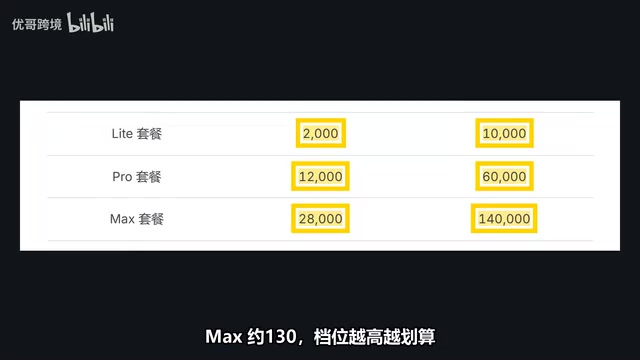
Zhipu changed its quota algorithm from per-request billing to points-based billing. Lite gets 10,000 points per week, with 2,000 points per 5 hours; Pro is 6x Lite, and Max is 14x. Points are converted from tokens, and according to official disclosures the flagship model GLM 5.3 costs about 3x more than GLM 5.3 Flash. The official page also provides a reference: at cache hit rates between 9x5 and 9x8, roughly how much GLM 5.3 you can use per week.
There are three deduction rules worth noting: during peak hours (Monday to Friday, 2 PM to 6 PM) points are deducted at full price, while all other times including the entire weekend are charged at half price; plans can only be used within officially designated tools, such as Cloud Code, Codex, and Open Code; use is limited to the account holder, refunds are not supported, and renewals must be canceled 3 days before the billing date. The creator calculated the weekly points per yuan: about 85 for Lite, 113 for Pro, and 130 for Max—the higher the tier, the better the value.
Tokens and Points: A token is the basic unit of text processed by a large model, roughly equivalent to one English word or half to one Chinese character. A points system converts consumed tokens into deducted points based on the model's unit price. Different models have different prices—for example, the flagship GLM 5.3 costs about 3x more than GLM 5.3 Flash, meaning the same task consumes fewer points with Flash, thereby extending plan usage.
Cache Hit Rate: When the context of a request heavily overlaps with a previous request (such as repeatedly debugging the same piece of code), the model can reuse cached intermediate computation results, reducing actual computation and token consumption. The official 9x5 to 9x8 range means a 90% to 98% cache hit rate—the higher the hit rate, the more requests the same points can support. High cache hit rates are common when continuously editing the same file or repeatedly running similar prompts.
An Easily Overlooked Detail
The anonymous free model OX Alpha that went viral recently is stated on the official page to be the codename used during GLM 5.3 Flash internal testing; it has now officially launched, is available on all three tiers, and costs only about one-third the points of the flagship model. For budget-sensitive users, this means you can proactively choose the cheaper model within Zhipu's plan to extend your quota.
Kimi: Weekly Limit Removed, but the Quota Pool Is Shared with Membership Features
Plan Structure
Kimi Code is bundled with the membership, with monthly tiers arranged from low to high, but the first tier GOLD does not include Kimi Code—you need to start from PLUS to write code. The annual PLUS works out to a lower effective monthly price than monthly billing. The creator specifically mentioned that Kimi Code also has a higher-priced Ultra tier.
Changes to Quota Rules
There's a banner on the official page: the new membership system is live, the weekly limit for coding has been removed, and the total quota has been adjusted. This means Kimi Code now has only a rolling 5-hour limit, but all membership features—Agent, PPT, deep research, Kimi Code—share the same monthly quota pool. The more you use other features, the less quota you have for coding.
How big is this pool? The official page only lists multipliers: PLUS 2x, PRO 4x, MAX 14x, ULTRA 28x. How many coding requests you can actually make is not disclosed officially—you have to check the console yourself. When you run out, you can buy top-up packs; the lowest tier is not expensive, never expires, and is non-refundable.
For existing users on old plans (named Andante, Moderato, etc.), the official commitment is that names, benefits, and auto-renewal remain unchanged, and the weekly limit is retained—no need to switch to a new plan just to keep using it.
MiniMax: Model Refresh, Quotas Listed Only as Multipliers
Plans and Pricing
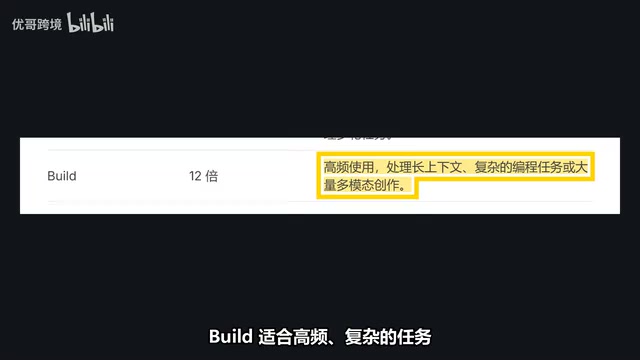
MiniMax's plans changed from Token PlanAd to M-Plan, with three tiers—Go, Explore, Build—monthly prices increasing in order, and annual billing officially described as "save two months." For quotas, the official page only lists multipliers: Explore is 3x Go, and Build is 12x. How many requests you can actually make is not stated; only usage guidance is given: Go suits small-scale code edits, Explore suits daily coding assistance, and Build suits high-frequency complex tasks.
Refresh and Model Migration
MiniMax has two refresh windows: a 5-hour window plus a 7-day weekly window, both of which start counting from first use. They refresh upon expiry, and unused quota does not accumulate. Non-video models require remaining quota in both windows to be usable.
On the model side, there are two things: requests for the M2.5 and M2.7 series will be uniformly routed to M3.1 Flash Preview starting October 19, and will be officially retired on November 18. The official statement says existing plan usage is unaffected. In addition, money already paid will not be automatically refunded, and downgrades are not supported—only upgrades.
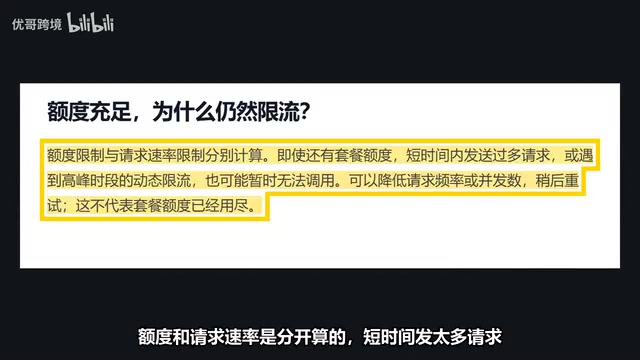
The creator also flagged one point: even with remaining quota, you can still be rate-limited. MiniMax's official documentation states that quota and request rate are calculated separately; sending too many requests in a short period will still be blocked, even though the quota is not exhausted.
Rolling Windows vs. Fixed Windows: MiniMax's 5-hour window and 7-day weekly window are both rolling timers that start from first use and refresh upon expiry, with unused quota not accumulating. This differs from fixed calendar-day refresh—users cannot "stockpile" quota for concentrated weekend use, and actual usable capacity depends on usage rhythm.
Model Retirement and Migration: Requests for the M2.5 and M2.7 series are uniformly routed to M3.1 Flash Preview, which is a platform-side model version iteration. The official statement promises existing plan usage is unaffected, but model behavior, output style, and token efficiency may change; automated pipelines that depend on specific model behavior need regression testing in advance.
Quota and Rate Limits Are Separate: Quota is a total-volume constraint, while request rate (RPM/TPM) is an instantaneous constraint. Even with ample quota, high-frequency requests in a short period will still trigger rate limiting, manifesting as rejected or queued requests—without reducing quota. Users need to implement backoff retries in their code to avoid misjudging it as quota exhaustion.
Three-Way Comparison: Price, Quota Transparency, and Annual Totals
Prices Side by Side
Monthly entry tier: Zhipu highest, Kimi in the middle, MiniMax lowest. The ordering is the same for the mid and top tiers. The creator emphasized that the tier sizes differ across vendors, so this is only a positional comparison—not equivalent benefits. Annual-billing effective monthly prices: the entry tiers of Zhipu, Kimi, and MiniMax decrease in that order.

Quota Transparency
Zhipu is the most detailed, with point and token references; Kimi only states rules and multipliers; MiniMax only states multipliers. On weekly limits: Zhipu has one, MiniMax has one, and Kimi's new plan doesn't—but it has a monthly pool shared across the entire membership.
The Practical Impact of Quota Transparency: Zhipu discloses points and token references, so users can estimate per-task costs; Kimi only gives multipliers and rules, so actual usable capacity requires checking the console; MiniMax only gives multipliers, with even fewer rule details. Transparency differences directly affect selection decisions—for cost-sensitive teams or those needing budget planning, calculability matters more than the sticker price.
Trade-offs Between Weekly Limits and Monthly Pools: Weekly limits cap single-week burst usage but guarantee long-term stability; monthly pools offer greater flexibility but may have coding quota squeezed by other features. Kimi removing the weekly limit in favor of a shared monthly pool essentially transfers quota management responsibility to the user, who must monitor consumption ratios across features.
One-Year Totals
The creator calculated annual-billing effective monthly price times 12: entry tiers come to about 991, 948, and 490 for the three vendors; mid tiers for Zhipu and Kimi are the same as their entry tiers (as stated in the original), and MiniMax is 1190; top tiers come to about 9055, 6708, and 4690 for the three vendors. These are the creator's own calculations; refer to official pages for actual figures.
What to Do When You Run Out: Remediation Paths for Each Vendor
Zhipu: wait for the next 5-hour cycle—it won't deduct other money from your account; after upgrading, quota refreshes immediately.
Kimi: wait for the monthly refresh, upgrade, or buy top-up packs.
MiniMax: wait for the window to refresh, upgrade, or buy point packs (with a minimum purchase price, valid for one year).
Upgrade and cancellation rules also differ. Zhipu refreshes quota immediately to the new tier after upgrading; renewal does not reset it; cancellation must be done three days before the billing date. MiniMax upgrades take effect immediately upon paying the difference, downgrades are not allowed, and once auto-renewal is turned off it cannot be turned back on—you must repurchase. Kimi stops renewing after cancellation upon expiry, and no refund rules are stated on the page.
How to Choose: Match by Usage Pattern
If you want to do the math yourself, choose Zhipu, because the official page spells out points and currency. But note that quota drains quickly during those four peak hours—try to schedule heavy work at other times.
If you're already using Kimi for PPTs and research, start from PLUS—one membership serves both, though coding and other features share a monthly pool.
If you have the lowest budget and want to try it out first, MiniMax's Go tier has the lowest monthly threshold and is even cheaper on annual billing, but quotas are only given as multipliers—use it for a week and check the console before deciding.
Whichever you choose, check three places before subscribing: the price page for that day, the refresh windows in the usage documentation, and whether there are any model retirement announcements. These three spots are exactly where "shrinkage" is most likely to hide in this round of adjustments.
According to the creator's preview, the next episode will cover what remains after GitHub Copilot's free trial ends and how many requests per month you get.
Background Notes
Peak Hours and Dynamic Pricing: Monday to Friday, 2 PM to 6 PM is typically when developers concentrate their use of AI-assisted coding, straining compute resources; platforms use full-price point deductions to regulate demand, while half-price deductions at other times and on weekends effectively use price levers to encourage off-peak usage.
Designated Tool Restrictions: Plan points can only be consumed within officially designated development tools, such as Cloud Code, Codex, and Open Code. This is a boundary set by platforms to prevent point resale or abuse, and it also means users accustomed to other IDE plugins may not be able to use their plan quota.
No Refunds and Renewal Cancellation Windows: Subscription services typically have cancellation windows; Zhipu requires cancellation three days before the billing date for renewals, otherwise the system automatically charges for the next cycle, and payments already made are non-refundable. Users need to set their own calendar reminders to avoid passive renewal.
Related articles

How Did Da Vinci Prove the Sun Is Hot? A Neglected Chapter in Science History
How did da Vinci use a concave mirror experiment to overturn Aristotle's cold sun theory? This article traces this neglected chapter in science history, revealing the embryo of scientific thinking in the 15th century and da Vinci's cold observations on solar heat and the nature of life.
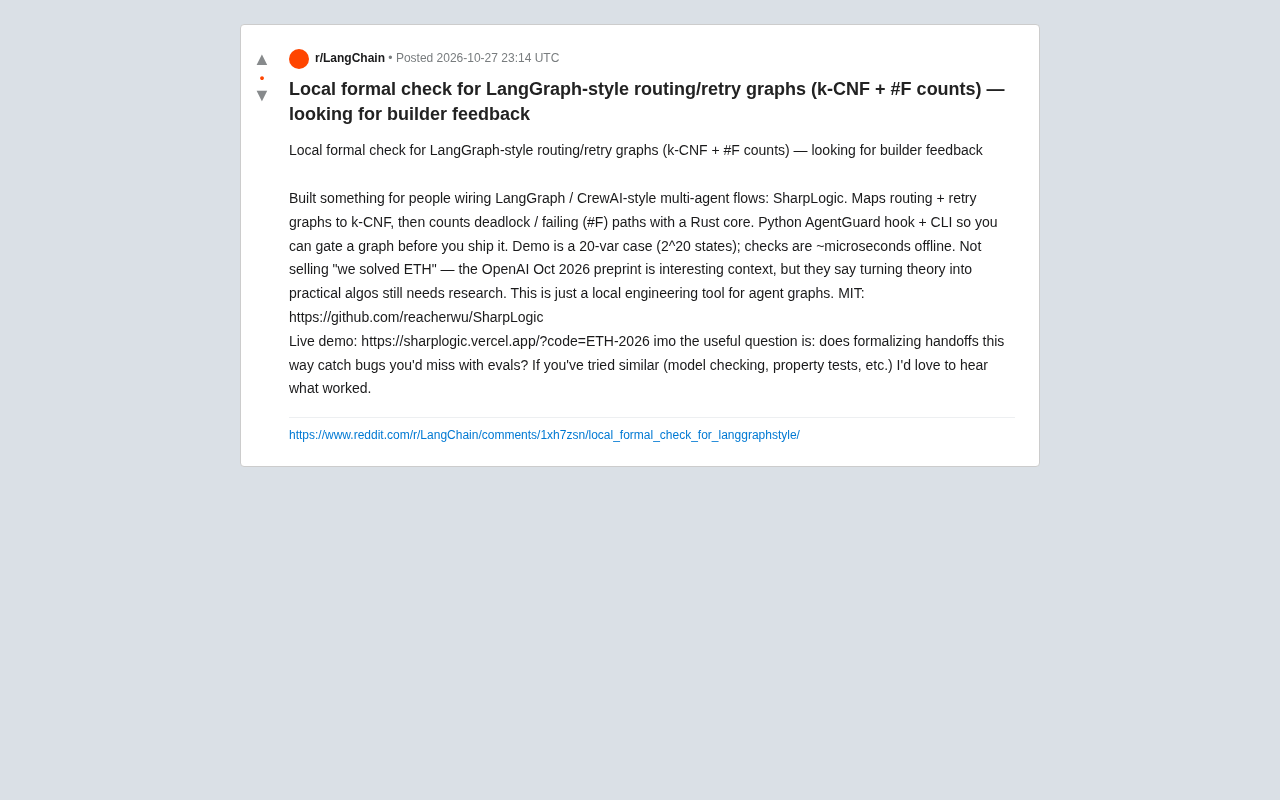
SharpLogic: Formalizing Bug Detection for LangGraph Routing Graphs with k-CNF
SharpLogic, an open-source project, maps LangGraph-style multi-agent routing and retry graphs to k-CNF, using a Rust kernel to count deadlocks and failing paths (#F counting), offering a Python AgentGuard hook and CLI for pre-release formal gate checks. This article analyzes its principles, its complementary relationship with evals, and the community's concern about modeling costs.
PPO Training of a Franka Robotic Arm for Pick-and-Place: A Reinforcement Learning Starter Project
A reinforcement learning project using PPO to train a Franka Panda robotic arm for pick-and-place in PyBullet, covering tech stack choices, task design challenges, and future text/voice command interaction plans—a good reference for beginners.