Doomscrolling Addiction: The Digital Mental Health Crisis in the Age of Information Anxiety
How algorithms exploit our negativity bias to fuel doomscrolling addiction, and what we can do about it.
This article examines doomscrolling — the compulsive consumption of negative content — as a systemic digital mental health crisis. It explores how platform algorithms exploit evolutionary negativity bias to maximize engagement, the research linking passive social media consumption to anxiety and depression, the ethical responsibilities of persuasive technology design, and practical strategies including news time windows, information fasting, and digital minimalism.
We're Swiping Our Way Into Anxiety
"Doomscrolling" — this word didn't enter the mainstream lexicon until around 2020, but the behavior it describes had already permeated the daily lives of billions. A portmanteau of "doom" and "scrolling," the term was sporadically used on Twitter before exploding into widespread use during the COVID-19 pandemic, driven by global lockdowns and surging information uncertainty. It was subsequently recognized by Merriam-Webster as a word of note. The popularity of the term itself reflects a fascinating cultural phenomenon: when a behavior acquires its own name, people become more capable of recognizing they're experiencing it — linguists call this "lexical empowerment," where naming transforms a vague experience into something identifiable, discussable, and addressable.
Every morning when we open our eyes, in the last moments before sleep, and even during restless midnight hours, we unconsciously swipe through our screens, consuming one unsettling piece of news after another. This isn't laziness or a lack of self-control — it's a psychological game meticulously engineered by algorithms.
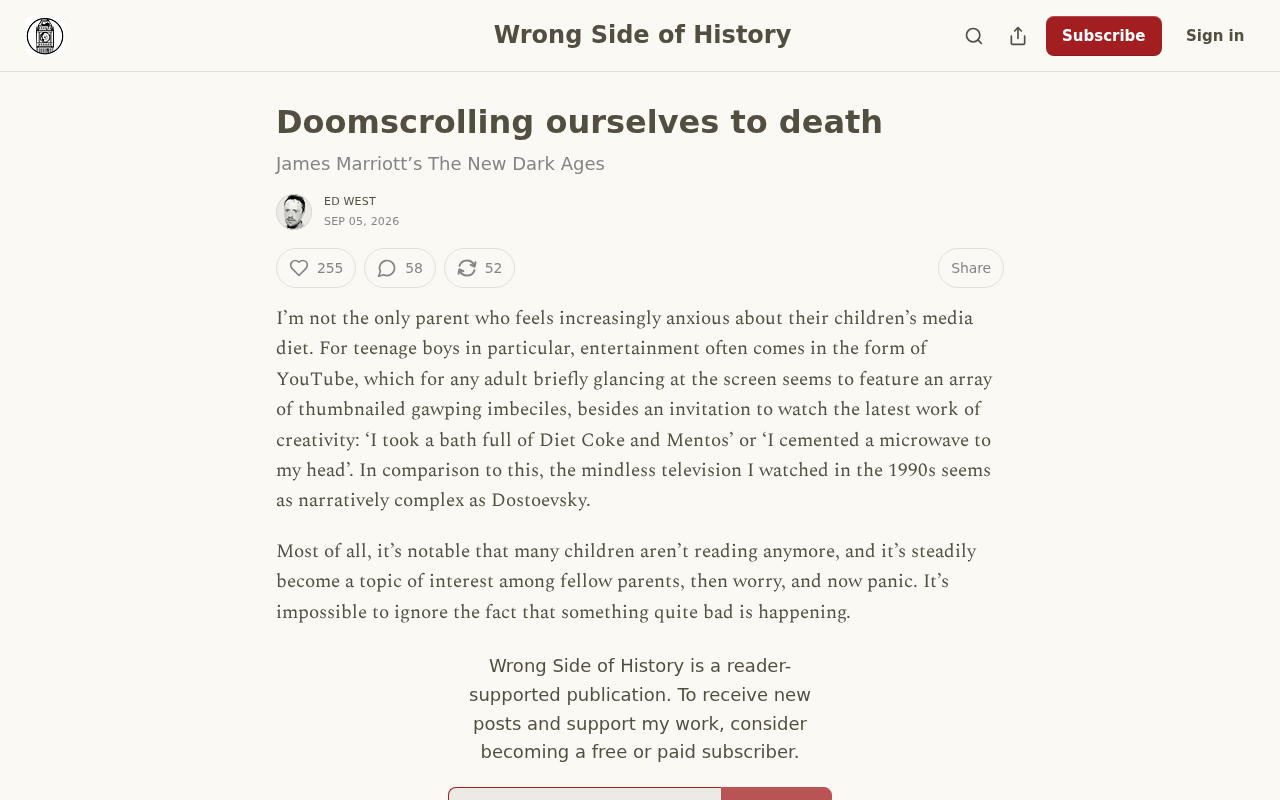
Ed West, in his article Doomscrolling Ourselves to Death, posed a sobering question: when "bad news" becomes the most stable currency in the attention economy, are we actually understanding the world, or systematically eroding our own mental health? The concept of the "attention economy" was first proposed by Nobel laureate Herbert Simon in 1971, when he observed that "a wealth of information creates a poverty of attention." Tim Wu, in his 2016 book The Attention Merchants, systematically traced the commercialization of attention from 19th-century penny papers to modern social media, revealing a core logic: the true product of media isn't content — it's the audience's attention. Content is merely bait; what's sold to advertisers is the audience itself. The article garnered 259 upvotes and 173 comments on Hacker News, resonating widely across the tech community.
How Algorithms Exploit Negativity Bias to Keep You Scrolling
The Human Brain Is Hardwired for Bad News
From an evolutionary psychology perspective, the human brain has a natural "negativity bias" toward threat-related information. In ancestral environments, maintaining heightened vigilance toward danger signals was a survival advantage — missing a leopard's tracks could be fatal. But in the digital age, this instinctive system has been thoroughly hijacked.
Negativity bias isn't merely a psychological concept; it has solid neuroscientific foundations. The amygdala, the brain's emotional processing hub, responds to threatening stimuli approximately 200 milliseconds faster than to positive ones. Psychologists Paul Rozin and Edward Royzman, in their seminal 2001 paper, systematically outlined four dimensions of negativity bias: negative events receive more attention than positive events of equal magnitude (attentional asymmetry), are perceived more quickly (speed asymmetry), are remembered more deeply (memory asymmetry), and dominate overall evaluations in mixed stimuli (evaluative asymmetry). This explains why bad news typically spreads faster and reaches more people than good news.
Platform algorithms understand this well: the engagement driven by anger, fear, and anxiety far exceeds that of calm, positive content. Negative emotions make people linger, lingering means traffic, and traffic means ad revenue. Modern content platforms' recommendation algorithms typically rely on collaborative filtering and deep learning models. TikTok's recommendation engine, for example, tracks hundreds of signal dimensions including dwell time, completion rate, replay frequency, and interaction behaviors, continuously optimizing its push strategy through real-time feedback loops. These systems use multi-armed bandit algorithms to find the optimal balance between "exploring" new content and "exploiting" known preferences. The problem is that the system's objective function is typically user engagement rather than user satisfaction or well-being — and there's a significant divergence between the two. Research shows that the content that keeps people scrolling the longest is often not what makes them most satisfied, but what provokes the strongest emotional reactions.
This creates a closed reinforcement loop:
- User anxiety drives clicks
- Clicks tell the algorithm "this type of content works"
- The algorithm pushes more of the same
- Anxiety intensifies further
This isn't a side effect of the platform — it's a core element of its business model.
Information Overload and the Trap of "Ineffective Awareness"
Modern news consumption harbors a paradox: we are more "informed" than people of any previous era, yet almost powerless to change reality. After scrolling through fifty stories about the climate crisis, geopolitical conflict, or economic recession, the average person doesn't feel more empowered to act — instead, they often develop a sense of "learned helplessness": the world is falling apart and there's nothing I can do about it, so I might as well keep scrolling.
"Learned helplessness" was first proposed by psychologist Martin Seligman in 1967 through animal experiments. Dogs that were repeatedly subjected to inescapable electric shocks eventually stopped attempting to escape even when given the opportunity. Seligman later extended this theory to explain human depression. In the context of doomscrolling, learned helplessness manifests in a new digital form: users are continuously exposed to crisis information of global scale — climate change, war, inequality — problems whose magnitude far exceeds any individual's capacity for action. The repeated experience of "knowing but being powerless" ultimately erodes one's sense of self-efficacy, producing a distinctive form of "global learned helplessness."
Researchers call this state "information anxiety": the gap between the explosive growth of information and an individual's capacity to process and understand it creates a persistent low-grade stress. The concept of information anxiety was introduced by designer Richard Saul Wurman in 1989, well before the social media era. But Cognitive Load Theory from cognitive science provides a more precise framework for understanding this phenomenon. Human working memory has limited capacity — psychologist George Miller's classic "7±2" rule from 1956 established that people can simultaneously process only a very limited number of information chunks. When the rate of information input consistently exceeds processing capacity, the brain enters a state of "cognitive overload," manifesting as declining decision quality, weakened emotional regulation, and fragmented attention. Neuroimaging studies show that sustained information overload activates the brain's stress response system, leading to chronically elevated cortisol levels.
When anxiety itself becomes the driver of scrolling, and scrolling feeds back into anxiety, the cycle closes completely.
Social Media and Mental Health: What the Research Reveals
The Correlations Are Quite Clear
A substantial body of research has established links between heavy social media use and deteriorating mental health. The correlation with depression, anxiety, and sleep disorders is particularly robust among adolescents. The CDC's 2023 Youth Risk Behavior Survey showed that nearly one-third of high school students reported persistent feelings of sadness or hopelessness — a roughly 40% increase from 2011. Jonathan Haidt, in his 2024 book The Anxious Generation, provided a detailed analysis of the cliff-like deterioration in adolescent mental health indicators between 2010 and 2015 — a period that precisely corresponds to the critical adoption phase of smartphones and social media among teens. Notably, this trend shows striking synchronicity across different countries and cultural contexts, and this cross-cultural consistency lends stronger support to the hypothesis that social media is a primary driving factor.
U.S. Surgeon General Vivek Murthy issued a public advisory classifying social media as a significant driver of the youth mental health crisis and called on Congress to enact regulatory legislation. In his 2023 advisory, Murthy specifically stated that children under 13 should not use social media and recommended that Congress require platforms to disclose their internal research on the mental health impacts of their products on minors.
Of course, correlation does not equal causation — people already prone to anxiety may be more likely to fall into doomscrolling. But this distinction has limited practical significance: whether it's the chicken or the egg, intervening in the behavior itself is worth serious consideration.
"Passive Consumption" Is the Key Variable
Research has found that how social media is used matters more than how much. Active creation, interacting with friends, and participating in meaningful discussions show weaker correlations with negative emotions.
What's truly harmful is "passive consumption" — aimless scrolling, watching other people's lives, and absorbing massive streams of unfiltered information. A longitudinal study published by Ethan Kross's team at the University of Michigan in 2013, using five daily random-sample measurements, found that Facebook usage was negatively correlated with moment-to-moment well-being. Subsequent research further distinguished between usage types: a large-scale experiment published in the Proceedings of the National Academy of Sciences in 2018 showed that participants who deactivated Facebook for four weeks reported significant improvements in subjective well-being, primarily driven by reduced passive browsing time. Facebook's own internal research (2017) also acknowledged that the association between passive consumption and negative mental health indicators was stronger than for active interaction. This distinction has important practical implications: the problem isn't whether to use social media, but how to use it.
Doomscrolling is the extreme form of passive consumption: no goal, no endpoint — just continuous stimulation and a persistent sense of emptiness.
The Responsibility of Tech Design: Who's Manipulating Your Attention?
The Ethical Boundaries of "Persuasive Technology"
B.J. Fogg established the Persuasive Technology Lab at Stanford University, systematically studying how design can change user behavior. Fogg's Behavior Model (FBM) posits that behavior occurs when three elements converge simultaneously: motivation, ability, and a prompt. Social media design perfectly leverages all three — push notifications provide the prompt, one-tap access lowers the ability threshold, and negativity bias combined with the need for social validation provides powerful motivation.
Many of his students went on to create products like Instagram and YouTube. Fogg's Stanford lab trained numerous Silicon Valley product designers, including Instagram co-founder Mike Krieger and several former Facebook product leads. This direct pipeline from academia to industry enabled behavioral manipulation techniques to be deployed in consumer products at unprecedented scale and precision. The methodology itself is neutral, but when it's used to maximize usage time rather than user well-being, it enters an ethical gray zone. Fogg himself later expressed concerns about the ethical application of his methods.
Aza Raskin, the inventor of infinite scroll, later publicly expressed regret. Raskin created infinite scroll in 2006, originally to solve the user experience problem of paginated loading. This design eliminated the traditional "next page" button — which actually served as a natural "stopping cue." Behavioral economists describe this as removing "decision nodes": in traditional paginated design, each page turn was a small conscious decision, while infinite scroll completely eliminates these decision nodes, transforming browsing from a series of discrete active choices into a continuous, nearly unconscious passive flow. Raskin estimated this design wastes approximately 20 million additional hours of global user time per day.
He subsequently co-founded the Center for Humane Technology with former Google design ethicist Tristan Harris to bring "attention ethics" into the public discourse. Harris was a design ethicist at Google who, in 2013, wrote a 141-page internal presentation titled A Call to Minimize Distraction & Respect Users' Attention, which circulated widely within the company but failed to drive substantive change. Harris later left Google and became the emblematic figure of the "attention ethics" movement. He compared social media to slot machines — both exploit "variable ratio reinforcement": users never know what the next pull-to-refresh will bring — it might be important news or boring content — and this unpredictability is precisely the most potent addiction mechanism, identical in principle to casino slot machine design. Their collaborative documentary The Social Dilemma (2020) sparked widespread discussion on Netflix.
Regulation Lags Far Behind Reality
Compared to car seatbelts and food nutrition labels, the psychological impact of digital products on users remains virtually unregulated by any mandatory standards. The "screen time" reminder features voluntarily offered by platforms are typically the least conspicuous buttons tucked away in corners — not genuine interventions designed to be noticed.
However, the global regulatory landscape is shifting. The EU's Digital Services Act (DSA), which took effect in 2023, requires large platforms to disclose the transparency of their recommendation algorithms and prohibits profile-based targeted advertising to minors. In the United States, while comprehensive federal legislation is still in progress, multiple states have taken action: Utah passed laws restricting minors' social media use in 2023, and California enacted the Age-Appropriate Design Code Act. China has adopted more direct interventions, limiting minors to no more than 40 minutes per day on short-video platforms. However, these regulatory efforts face common challenges: technology iterates far faster than legislative cycles, and platforms' global operations limit the effectiveness of any single jurisdiction's regulations.
This structural asymmetry — platforms control all behavioral data and design capabilities while users have only willpower — makes individual-level "detox" efforts inherently Sisyphean.
Breaking Free from Doomscrolling: What Individuals Can Do
Cognition First, Tools Second
Acknowledging that doomscrolling addiction is a systemic problem rather than a personal moral failure is the first step out of information anxiety. This isn't about making excuses — it's about accurately understanding the nature of the problem. Only with a correct diagnosis can effective interventions be found.
In terms of specific strategies, research supports the following:
- Set a "news time window": Check news during fixed daily time slots rather than refreshing constantly
- Physically separate content types: Don't install entertainment apps on work devices to reduce the probability of unconscious switching
- Cultivate "deep activities" as a counterbalance: Reading, exercise, crafts, and other activities requiring sustained attention can effectively break the scrolling inertia
The common logic behind these methods: replace passive reactions with active choices.
Information Diet and Information Fasting
Nutrition science has the saying "you are what you eat." The same applies to information consumption — what information you take in each day significantly shapes your cognitive framework and emotional baseline.
Regular "information fasting" — even just one news-free day on weekends — has been shown in some studies to positively impact mood and cognitive function. A randomized controlled experiment published in the Journal of Experimental Psychology in 2019 found that a one-week social media fast significantly reduced participants' anxiety and depression levels while improving subjective well-being. A 2022 study from the University of Bath further found that even just one week without social media produced statistically significant improvements in participants' well-being, depression, and anxiety measures. However, these studies also revealed a paradox: many participants quickly reverted to their original usage patterns after the fast ended, suggesting that willpower-based interventions alone have limited effectiveness — structural design changes and institutional safeguards are needed for lasting solutions.
More importantly, establishing quality standards for information sources — distinguishing between "need to know" and "what the algorithm thinks you'll click" — is one of the most critical digital literacy skills for modern individuals. Cal Newport, in his book Digital Minimalism, proposed a more systematic methodology: first undertake a 30-day complete digital declutter, then selectively and purposefully reintroduce digital tools — not asking "what can I get from this tool?" but rather "is this tool the best way to realize my core values?"
Conclusion: Attention Is the Last Scarce Resource
In an era of relative material abundance, attention has become the truly scarce resource. The essence of doomscrolling is selling this scarce resource to platforms at rock-bottom prices, receiving in return not knowledge, not connection, but a chronic, barely perceptible erosion of well-being through anxiety.
Technology itself isn't the enemy. The real question is: whose interests are driving design decisions? When a platform's business model is in fundamental tension with user well-being, expecting the market to self-correct is unrealistic. This requires both regulatory intervention and each user facing their screens with greater awareness.
We cannot opt out of this era, but we can choose how we exist within it.
Related articles

AI Ghostwriting Government Reports Triggers Trust Crisis: A Deep Dive into the Wellington City Council Incident
Wellington City Council's Deloitte report exposed as heavily AI-generated, sparking debate on consulting transparency, government procurement, and AI accountability.
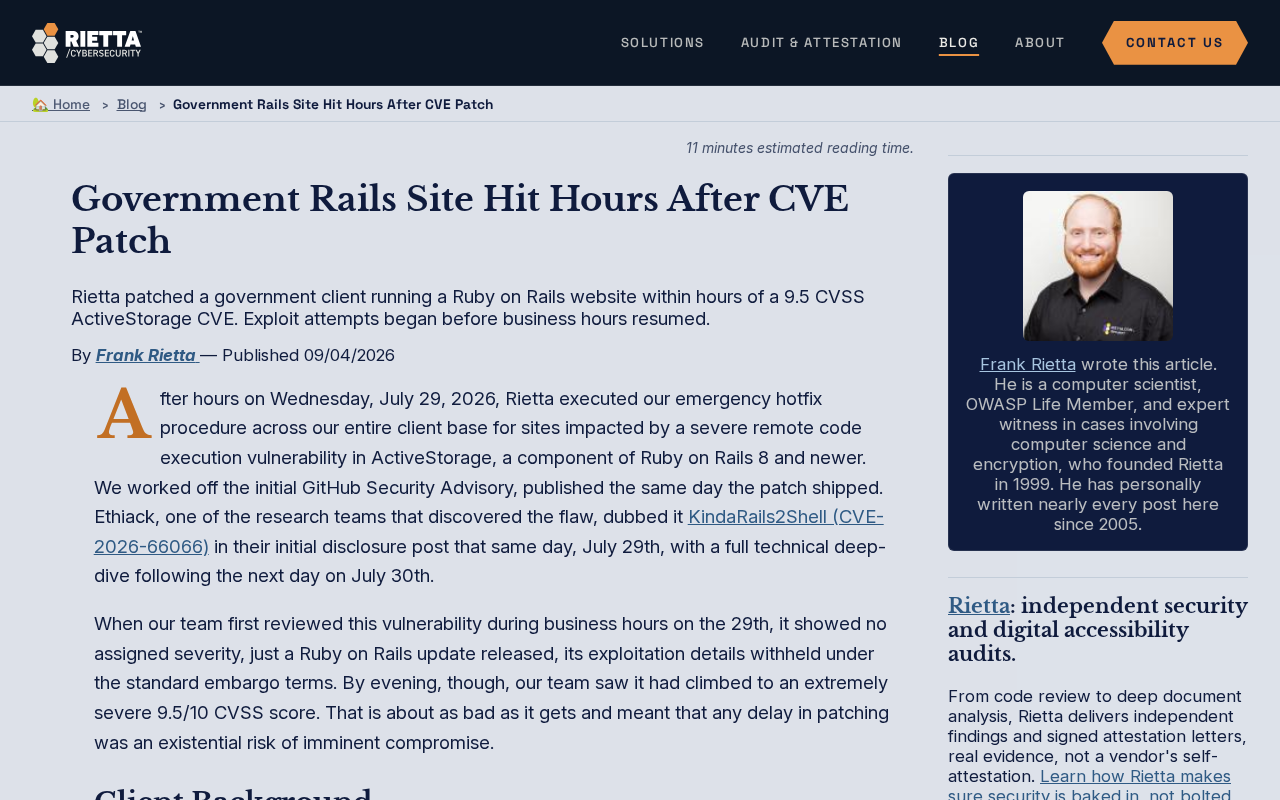
Government Rails Site Breached Hours After Patch Release: A Wake-Up Call on n-day Vulnerability Threats
A government Rails site was breached hours after a CVE patch release. Deep analysis of patch racing, n-day threats, and defense strategies for developers.
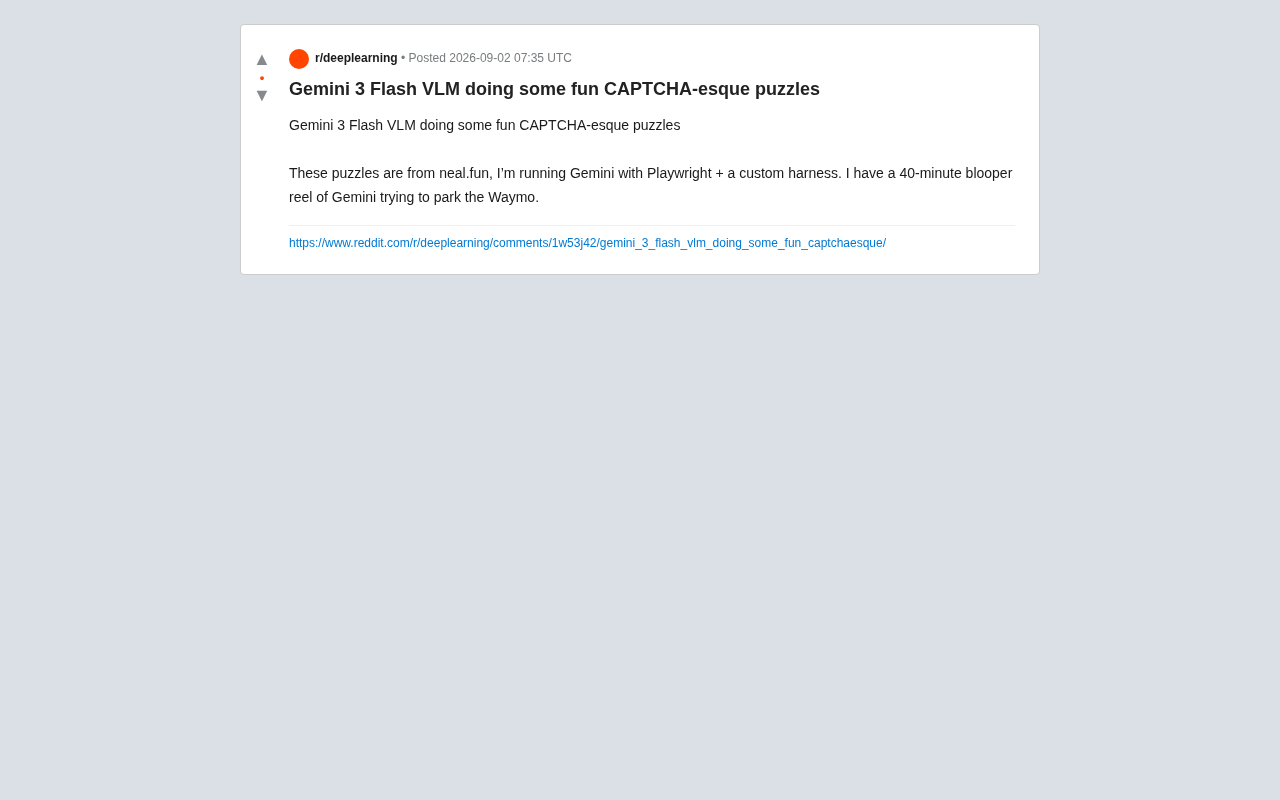
Gemini 3 Flash vs. CAPTCHA Visual Puzzles: Where Are the Limits of Multimodal Agent Capabilities?
A developer tests Gemini 3 Flash on neal.fun visual puzzles using Playwright to build a visual Agent, revealing VLM limits in spatial reasoning and fine control.