Dozens of Oil Tankers and Cargo Ships Hit by Cyberattacks, Iran Top Suspect

Dozens of oil tankers hit by cyberattacks, Iran blamed as source, structural security gaps in shipping exposed.
Security reports show that dozens of oil tankers and chemical tankers have recently suffered cyber intrusions, with Iran listed as the primary suspect, but public reports do not disclose specific ship names, affected systems, or attack methods, making it difficult to determine whether the attacks remained at the IT level or reached OT systems. The article points out structural security shortcomings in the shipping industry: vessel system update cycles are measured in years, patch management is nearly impossible at sea, VSAT satellite links have limited bandwidth and are often shared with crew personal devices, and mandatory cybersecurity standards across organizations remain inconsistent. Such operations are a low-threshold extension of geopolitical conflict into cyberspace, capable of disrupting shipping schedules, causing insurance rate fluctuations, and applying psychological pressure. The article recommends that shipowners enhance observability and response capabilities in three areas: vessel network asset inventory, satellite link access control, and shore-based security monitoring, while insurance and compliance requirements are also tightening.
Within a few weeks, dozens of oil tankers and chemical tankers have experienced cybersecurity incidents, with investigations pointing to a familiar source—Iran. This news, coming from security reports, has pushed the shipping industry's long-neglected cyber risks into the spotlight.
Scale and Attribution of the Attacks
According to related reports, the number of recent intrusion incidents targeting oil tankers and chemical tankers has reached dozens, with affected parties concentrated on the vessel operations side of the maritime transport chain. The reports explicitly identify Iran as the primary suspect behind these cyberattacks.
This judgment continues the previous tracking of Iran-linked hacker activities: energy and shipping infrastructure have long been at the top of high-value target lists, and vessels happen to have threefold exposure surfaces—operational systems, satellite communication links, and shore-based coordination networks.
One detail to note: public reports only give the magnitude of "dozens of vessels" without disclosing specific ship names, owners, affected systems, or attack methods. This means it is currently difficult for outsiders to determine whether the attacks remained at the IT level—email and account compromise—or reached OT systems such as navigation, propulsion, or cargo management.
Why the Shipping Industry Is a Soft Target
The shipping industry's cybersecurity shortcomings have structural causes. A modern oil tanker simultaneously runs bridge navigation equipment, cargo monitoring systems, engine control units, and crew living networks. These systems have update cycles measured in years, and patch management is nearly impossible to execute at sea.
The satellite link between ship and shore further amplifies the exposure surface. Vessels on the high seas rely on satellite communications such as VSAT to maintain connections with headquarters. This link has limited bandwidth, inconsistent encryption configurations, and is often shared with crew members' personal devices. Once an attacker gains a single entry point, they may move laterally to other systems on the vessel.
Industry-level governance also lags relatively behind. Classification societies, port state control, and shipowners each hold partial security responsibilities, but mandatory cybersecurity standards across organizations remain inconsistent, leaving a large number of vessels lacking continuous security monitoring in actual operations.
Difference Between OT and IT Systems: OT (Operational Technology) refers to software and hardware systems used to monitor and control physical equipment. On vessels, this includes propulsion control, cargo handling monitoring, ballast water management, generator management, and more. In contrast, IT systems handle business information such as email, office work, and crew management. The key difference is that security incidents in IT systems typically lead to data breaches or business disruption, while compromised OT systems can directly cause equipment loss of control, cargo accidents, or even casualties. This is why maritime cyber risk cannot simply be addressed with onshore IT security solutions—OT systems prioritize availability far more than confidentiality, and many vessel OT devices do not even support installing conventional antivirus software; patch updates require docking the vessel in a shipyard.
VSAT and Satellite Communication Links: VSAT (Very Small Aperture Terminal) is currently the mainstream satellite communication method for commercial vessels to connect to shore-based networks, establishing links with geostationary satellites through small antennas on the ship's roof. Its bandwidth is typically in the range of a few Mbps, far lower than onshore broadband, so crew often mix operational data and personal internet traffic on the same link, creating security risks. Additionally, if VSAT terminal firmware and management interfaces have not had default passwords changed or encryption enabled, attackers can directly scan and locate terminal IPs of vessels at sea via the internet—such exposures have been repeatedly documented in past maritime security research.
Extension of Geopolitical Conflict into Cyberspace
Placing this incident in a broader context, it is not an isolated technical accident. Energy transport is a direct vehicle for geopolitical maneuvering, and cyber operations against oil tankers can produce multiple effects: disrupting shipping schedules, causing insurance rate fluctuations, applying psychological pressure, while maintaining a lower escalation threshold than physical attacks.
The reports list Iran as the primary suspect, consistent with previous attribution patterns in the energy shipping sector. However, it is important to distinguish that suspicion does not equal completed forensics. Cyberattack attribution relies on cross-verification of communication infrastructure, malware characteristics, and intelligence sources; public information typically presents only conclusions without showing the evidence chain.
This also brings a practical problem: without specific technical details, shipowners find it difficult to determine whether they are on the target list, making it hard to precisely allocate defense investments.
Difficulty of Cyberattack Attribution: Attribution refers to the process of determining who carried out a cyberattack, technically relying on malware code characteristics, command-and-control server infrastructure, correlation between attack timing and geopolitical events, and HUMINT sources held by intelligence agencies. The problem is that attackers can create false leads through jump servers, rented proxies, and forged attack fingerprints, making court-level evidence at the public level nearly impossible. Attribution conclusions given by governments or security companies in public reports are usually based on classified intelligence that cannot be disclosed; outsiders can only see the conclusion without being able to verify the evidence chain—one reason why shipowners find it difficult to judge their own risk based on such reports.
Practical Implications for Operators
For shipping companies and vessel managers, there are three directions to start. First, inventory vessel network assets to clarify which systems are connected and which can be physically isolated, especially the boundaries of bridge and cargo control systems. Second, strengthen access control on satellite links, separate crew personal devices from operational networks, and reduce the risk of lateral penetration from shared bandwidth. Third, build shore-based security monitoring capabilities so headquarters can see anomalous traffic from vessels rather than retrospectively investigating after an incident occurs.
Insurance and compliance are also tightening. As cyber risk is incorporated into the assessment scope of shipowner liability and cargo insurance, vessels lacking verifiable security measures may face stricter underwriting conditions.
Cyber Risk and Marine Insurance: Traditional shipowner liability insurance (P&I) and hull insurance clauses have long excluded cyberattacks as excluded perils. Since 2019, the London insurance market has begun introducing specialized marine cyber insurance add-on clauses, providing limited coverage for hull damage, cargo loss, and third-party liability caused by cyber events. Underwriting conditions typically require shipowners to demonstrate that basic security measures have been implemented, such as asset inventories, access controls, and incident response plans. This means cybersecurity investment is shifting from "best practice" to "insurability threshold"; vessels lacking verifiable measures not only face attack risk but may also have claims denied after an incident.
Conclusion
The magnitude of dozens of vessels affected indicates that cyber operations against shipping have shifted from sporadic probing to large-scale operations. For the industry, the real challenge is not confirming where the attacks come from, but enabling a vessel that sails at sea for weeks to have the same level of observability and response capability as onshore systems.
Related articles
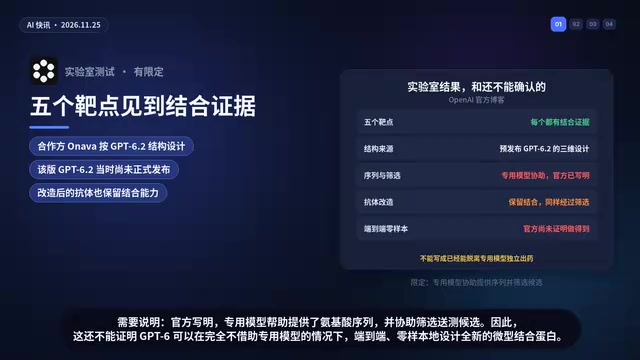
GPT-6 Designs Proteins, Claude Creations Become Apps with One Click, DeepMind Releases New Benchmark
OpenAI says GPT-6 can design protein 3D structures, Anthropic lets Claude creations install as desktop apps, DeepMind's HIP benchmark tests stability on simple questions, Google Workspace opens agent MCP interfaces.

OpenAI Weekly Roundup: GPT-6.2 Rolls Out to ChatGPT, GPT-6 Designs Proteins
OpenAI's week: GPT-6.2 rolls out to ChatGPT, GPT-6 claims independent protein design, agent research share surges, perplexity proposed as a shared metric, and internal safety concerns surface.

Is the Crypto Industry About to "Turn Blue"? The Truth Behind Tech and Politics' Shifting Allegiances
Vergecast discusses whether the crypto industry will shift from the right to the Democrats, revealing the pragmatic nature of tech's politics and the costs of a crypto pivot.