Drug Interdiction on the U.S.-Mexico Border: CBP's Multi-Layered Interception System and Technical Analysis

A deep dive into CBP's multi-layered drug interdiction system combining behavioral analysis, K-9 units, and spectroscopic tech.
This article examines U.S. Customs and Border Protection's drug interdiction operations in the San Diego sector, analyzing their multi-layered interception system that combines behavioral pattern recognition, K-9 detection units, portable Raman/NIR spectroscopy, air cargo inspection, and ground-air coordinated highway pursuits. Real cases illustrate seizures of methamphetamine, fentanyl, and counterfeit goods, while exploring the technical capabilities and policy challenges behind modern border enforcement.
The U.S. Customs and Border Protection (CBP) battles the world's most massive and covert smuggling networks every day. From pedestrian lanes at border ports of entry to air cargo centers and highway pursuit operations, drug interdiction has evolved into a systematic contest integrating behavioral analysis, canine detection, and portable spectroscopic technology. Based on a complete episode of the documentary To Catch a Smuggler, this article examines CBP's multi-layered interception system in the San Diego area, analyzing the technical logic and real-world challenges behind it.
Border Ports of Entry: From Behavioral Recognition to K-9 Collaboration
CBP's first line of defense is built on observing traveler behavior patterns. In one case, a woman who frequently crossed the border with her children drew officers' attention—because this time she was without her kids and appeared unusually nervous and fidgety at the steering wheel. This keen detection of behavioral anomalies in "regulars" is one of the core skills of drug interdiction officers.
In fact, this behavioral analysis capability isn't based solely on experiential intuition but on systematic training. The Transportation Security Administration (TSA) once implemented the SPOT (Screening of Passengers by Observation Techniques) program, training law enforcement to identify dozens of suspicious behavioral indicators, including abnormal sweating, gaze avoidance, excessive friendliness, or excessive nervousness—micro-expressions and body language cues. CBP's border enforcement takes this behavioral analysis further, with particular focus on "baseline deviation"—anomalous changes in a traveler's behavior compared to their historical crossing patterns. This analytical method integrates Paul Ekman's micro-expression theory with anomaly detection logic from intelligence analysis, enabling officers to rapidly screen high-risk targets from tens of thousands of daily border crossings.
One notable detail: the drug-detection dog tested negative on the vehicle but alerted on the person. This reveals a key trend—smugglers are increasingly inclined to conceal drugs on their bodies rather than in vehicles. Officers subsequently discovered a suspicious package wrapped in double layers of black tape in her socks.
K-9 units play an irreplaceable role in border enforcement due to the physiological advantages of the canine olfactory system. Dogs possess approximately 300 million olfactory receptors compared to humans' roughly 6 million; the area of a dog's brain dedicated to analyzing scents is 40 times larger than a human's. This enables drug-detection dogs to detect odor molecules at concentrations as low as parts per trillion. CBP's K-9 training program, based at the National Detector Dog Training Center (NDDTC) in Virginia, typically employs Belgian Malinois, German Shepherds, and Labrador Retrievers, with training cycles generally lasting 10 to 13 weeks. The case where the dog tested negative on the vehicle but alerted on the individual demonstrates the "source localization" capability in modern K-9 training—dogs can not only detect the presence of drug odors but precisely pinpoint the location of highest concentration, i.e., the actual hiding spot.

Portable Spectrometers: Rapid On-Site Drug Identification
A critical step after seizure is rapid confirmation of substance composition. The Thermo Scientific Gemini device used by CBP contains a spectral library of over 200 to thousands of substances, delivering results on-site within seconds. In this case, the device returned a "methamphetamine positive" reading on 21.5 grams of crystalline substance.
These devices primarily rely on two complementary spectroscopic technologies: Raman Spectroscopy and Near-Infrared (NIR) Spectroscopy. Raman spectroscopy works by directing a laser at a sample; when photons interact with molecules, inelastic scattering (Raman scattering) occurs, and the frequency shift of scattered light directly corresponds to the molecule's vibrational modes, forming a unique "molecular fingerprint." NIR spectroscopy identifies substances by measuring the sample's absorption characteristics in the near-infrared wavelength range. The Gemini device's innovation lies in integrating both technologies into a single handheld unit—Raman spectroscopy excels at identifying pure substances and crystals (such as methamphetamine), while NIR spectroscopy is more sensitive to mixtures and organic compounds (such as drugs adulterated with cutting agents). The built-in spectral library uses algorithmic matching between measured spectra and reference spectra of known substances, completing identification in seconds. However, these devices have limitations: dark-colored or highly fluorescent samples may interfere with Raman detection, and components present in low proportions in mixtures may go undetected.
These portable detectors (such as TrueNarc) feature laser capabilities, are compact and field-operable, greatly enhancing enforcement efficiency. A negative case in the episode equally demonstrates the technology's value: a batch of vacuum-sealed powder from Turkey suspected of being the emerging "pink cocaine" (2C-B, a mixture of ketamine and MDMA) ultimately tested as "powdered sugar" on TrueNarc. As the officer noted: "Sometimes we win, sometimes we lose, but we checked."
It's worth noting that "pink cocaine" (tusi or tucibi) is a noteworthy phenomenon in the global drug market in recent years. 2C-B was originally synthesized by American pharmacologist Alexander Shulgin in 1974 and belongs to the phenethylamine class of hallucinogens. However, contemporary street-level "pink cocaine" often bears little relation to pure 2C-B—it's typically a random mixture of ketamine, MDMA, caffeine, and even fentanyl, with pink food coloring added as brand identification. This branding strategy makes it a quintessential drug marketing case of the social media era: consumers literally have no idea what they're consuming. The United Nations Office on Drugs and Crime (UNODC) has identified over 1,100 New Psychoactive Substances (NPS), posing enormous challenges for law enforcement detection, as spectral libraries need constant updating to keep pace with the evolution of novel synthetic drugs.
Air Cargo Inspection: The Dual Battleground of Drugs and Counterfeits
The air cargo center is another high-intensity battleground. A single aircraft may carry approximately 20,000 parcels, while CBP's targeting unit typically flags only 100 to 150 for physical inspection. This fast-paced, high-volume environment demands precision and efficiency from officers—"If we don't stop it, it's gone."
Besides novel drugs like ketamine and pink cocaine, counterfeit goods (intellectual property infringement) are also a focus of air cargo inspection. In the episode, officers opened parcels to find apparently authentic Chanel products and obviously counterfeit "Rolex" watches—genuine items potentially worth $250,000, while smugglers declared them as perfume or cologne valued at just $50.
Tariff Evasion and the Smuggling Supply Chain
CBP officers explained the smuggler's motivation chain in detail: declaring a value below $800 exempts goods from duties and saves customs broker fees. Consequently, massive amounts of merchandise are deliberately under-declared.
This $800 duty-free threshold (de minimis threshold) originates from the Trade Facilitation and Trade Enforcement Act of 2015 (TFTEA), which dramatically raised the threshold from the previous $200. The original intent was to adapt to the surge in small cross-border parcels in the e-commerce era, reducing customs administrative burden and lowering consumer costs. However, this policy produced serious unintended consequences: cross-border e-commerce platforms systematically evade duties by splitting bulk shipments into individual parcels each valued below $800. According to the U.S. International Trade Commission, approximately over 1 billion small parcels entered the U.S. through the de minimis provision in 2023, with CBP able to actually inspect an extremely low percentage. This not only causes massive tariff revenue losses but also provides smugglers with opportunity—mixing drugs and counterfeit goods into the ocean of small parcels drastically reduces the probability of detection. In 2024, the U.S. Congress began reviewing multiple bills aimed at tightening or eliminating this threshold.
Counterfeit goods don't just evade taxes—they're used for money laundering, terrorism financing, drug trafficking, and child labor industries. As the officer emphasized: "Many people think they're getting a bargain, but it's far darker than that."
Highway Pursuit: Ground and Air Coordinated Operations
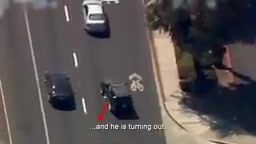
The documentary's most dramatic segment involves the San Diego surveillance team's ground pursuit operations. The team received intelligence that a vehicle suspected of being loaded with drugs had just entered from Mexico and needed to be tracked and located. Since these targets are "mobile," speed becomes critical.
The team coordinated ground vehicles with aerial support, maintaining continuous surveillance as the target entered Interstate 5—the major north-south artery connecting the entire West Coast. I-5 stretches approximately 2,222 kilometers from San Diego at the U.S.-Mexico border to Blaine, Washington at the Canadian border, linking major metropolitan areas including Los Angeles, San Francisco, Portland, and Seattle. For Mexican drug cartels, I-5 is the preferred corridor for distributing drugs entering through Tijuana-San Diego across the nation. The Drug Enforcement Administration (DEA) refers to this corridor as the "Pacific Pipeline," with the Sinaloa Cartel and the Jalisco New Generation Cartel (CJNG) being the most active criminal organizations on this route.
During the pursuit, the team observed a classic "driver swap" operation: one driver handed the vehicle to another, who then retrieved empty duffel bags and cardboard boxes from his own red pickup truck to use as containers for transferring drugs. This practice of repeatedly switching drivers and vehicles is a typical counter-surveillance technique, designed to sever the traceability of the transport chain and make it difficult for law enforcement to connect the entire network. This is precisely why CBP requires ground-and-air coordination with uninterrupted continuous surveillance.
Enforcement Timing and Arrest Decisions
These operations are filled with "real-time decisions." Officers must constantly weigh: when to continue following and when to take enforcement action—situations can "change every minute." The team's patience ultimately paid off—they executed the arrest after the suspects transferred the cargo to the red pickup truck, apprehending two individuals involved. The search results were staggering: approximately 42.9 kilograms of methamphetamine, divided into roughly 90 packages.
Officers noted that the San Diego port of entry accounts for more than half of all methamphetamine seizures nationwide. Had this shipment not been intercepted, it would have flowed into distribution hubs and ultimately spread across the country.
Body Concealment: The Most Dangerous Smuggling Method
The most harrowing cases involve body carriers. A woman was stopped at the pedestrian lane, and the drug-detection dog gave a positive alert. During the search, officers discovered she was wearing men's boxer shorts with drug packages wrapped in black tape and condoms concealed in the seams of her pants, while simultaneously trying to secretly hide another package.
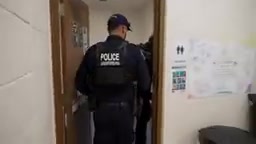
Internal body concealment escalates the situation dramatically. When the suspect requested to use the restroom, officers had to accompany her the entire time, ultimately discovering another internally concealed package. Testing confirmed it was fentanyl, totaling 147.7 grams—a quantity "far beyond personal use," clearly indicating intent for further distribution.
While 147.7 grams of fentanyl may seem like a small number, its lethality far exceeds traditional drugs. Fentanyl is 50 to 100 times more potent than morphine and 30 to 50 times more potent than heroin; just 2 milligrams (roughly the weight of a few grains of salt) can be fatal. By this calculation, this batch of fentanyl could theoretically kill over 70,000 people. This extreme potency-to-weight ratio is precisely why smugglers favor body concealment—small quantities of high-value goods yield enormous profits without needing to transport bulk cargo like marijuana or cocaine. According to data from the Centers for Disease Control and Prevention (CDC), more than 107,000 people died from drug overdoses in the U.S. in 2023, with approximately 70% involving synthetic opioids (primarily fentanyl and its analogs). The vast majority of illicit fentanyl's precursor chemicals originate from China, are processed into finished product by drug cartels in Mexico, and then smuggled into the U.S.
Due to its extremely high value and lethality, fentanyl has become the "drug of choice" for body concealment—smugglers can profit handsomely without carrying large volumes. But this also carries enormous risk: if an internal package ruptures, the carrier may go into shock or suffer organ failure. CBP therefore keeps Narcan (naloxone) on hand to address exposure risks and must rush suspects to medical facilities. As an opioid antagonist, naloxone can reverse fentanyl-induced respiratory depression within minutes. Since 2023, it has been FDA-approved for over-the-counter sale in the U.S.—a decision that itself reflects the severity of the fentanyl crisis.
From Numbers to Lives: The Deeper Meaning of Drug Interdiction
Even in seemingly minor cases, CBP maintains vigilance. A man was stopped for darting eyes and attempting to hide, ultimately yielding THC vape cartridges concealed in his groin area—while minor, this still constitutes illegal cross-border smuggling, resulting in a $500 fine.
This case highlights the complex contradiction between federal and state laws regarding cannabis products in the U.S. THC (tetrahydrocannabinol) is the primary psychoactive component of cannabis. Although 24 states had legalized recreational marijuana as of 2024, cannabis remains classified at the federal level as a Schedule I controlled substance under the Controlled Substances Act—in the same category as heroin and LSD. This means that even if someone carries THC products from a legal state across an international border, it constitutes a federal crime. CBP, as a federal law enforcement agency, strictly enforces federal rather than state law. Additionally, the illicit THC vape market poses extra public health risks—during the 2019 EVALI (e-cigarette or vaping product use-associated lung injury) outbreak in the U.S., many cases were linked to illegal THC cartridges containing vitamin E acetate, resulting in 68 deaths and over 2,800 hospitalizations.
The officers' logic: "By catching small cases, our skills keep getting sharper."
The documentary concludes with the farewell of a team leader being reassigned to Washington. His words capture the essence of this work: "These drugs are hurting real people. They're not numbers, they're not statistics. They have names, they have families. Failure is never an option."
This ongoing contest reveals the complexity of modern border enforcement—it depends on technological tools like spectroscopic detection, drug-detection dogs, and aerial surveillance, while also being highly reliant on human experience, judgment, and patience. Smugglers constantly innovate their methods, and law enforcement must follow suit, always staying one step ahead.
Key Takeaways
Related articles

Qwen3 27B In-Depth Review: A Powerful Reasoner That Overthinks — and How to Fix It
In-depth review of Qwen3 27B's reasoning capabilities and overthinking problem. Analyzes performance advantages, causes of overthinking, and provides practical optimization solutions.

RL for Reasoning Only Changes 1-3% of Tokens? The Truth and Controversy Behind the Claimed 1000x Compute Savings
RL training for LLM reasoning only changes 1-3% of output tokens, with researchers claiming 1000x compute savings. We analyze the deep implications, non-uniform token distribution issues, and the gap between benchmarks and real usability.

AI Algorithm Engineer Self-Study Roadmap: A Complete Plan from Zero to Landing Your First Offer
A detailed AI algorithm engineer self-study roadmap covering foundations, core algorithms, CV/NLP direction selection, and career transition strategies for landing offers.