DSpark Open Source: DeepSeek's Inference Acceleration Tech That Doubles LLM Speed

DSpark open-sources LLM inference tech that doubles GPU concurrency and cuts latency by 50%+ without quality loss.
DeepSeek and Peking University have open-sourced DSpark, an inference acceleration framework that uses a semi-autoregressive architecture and confidence-based dynamic scheduling to accelerate large language model inference by over 50%. Without modifying model outputs, DSpark doubles single-GPU concurrent user capacity, dramatically reducing LLM production costs across the industry.
When the AI Race Shifts from "Intelligence" to "Efficiency"
The AI industry today is largely caught in the same competitive loop: chasing bigger parameters, higher benchmark scores, and smarter models. Yet few are willing to confront a more fundamental question — what actually limits AI adoption isn't the ceiling of model capability, but the floor of engineering efficiency.
Many top-tier LLMs boast impressive reasoning and generation abilities, yet remain plagued by high latency, steep compute costs, and weak concurrency. They thrive in controlled lab environments but struggle to integrate into real-world, production-grade applications. DSpark — a inference acceleration technology recently open-sourced by DeepSeek in collaboration with Peking University — charts a different course. Rather than chasing higher benchmark scores, DSpark uses low-level engineering optimization to make high-end LLMs faster, cheaper, and more stable at scale — without touching the model's native capabilities.
DSpark's core value proposition is straightforward yet transformative: dramatically reduce inference latency, lower compute consumption, and multiply hardware throughput — all without sacrificing any output quality. This signals the end of an era defined by brute-force scaling of compute and parameters.

Where Does Traditional LLM Inference Break Down?
To understand DSpark's breakthrough, we first need to recognize the fundamental inefficiency baked into mainstream large language models. Most current models operate on autoregressive generation — they must produce text token by token, with each new character fully dependent on everything that came before it.
Autoregressive Generation is the core generation paradigm of today's leading LLMs (such as the GPT series, LLaMA, DeepSeek, etc.). At its core, it's a chain decomposition of conditional probabilities: when generating the Nth token, the model must take all N-1 preceding tokens as full context, compute a probability distribution, and then sample from it. This design mathematically ensures textual coherence, but introduces serious engineering challenges — every single token requires a full forward pass, with no possibility of parallelization. In modern Transformer architectures, the KV Cache (Key-Value Cache) mechanism partially mitigates this, but cannot eliminate the fundamental serial bottleneck of token-by-token generation. For long texts or complex reasoning chains, a single request may require generating thousands of tokens, with cumulative latency often reaching tens of seconds — a fundamental engineering constraint that limits real-time LLM applications.
This mechanism ensures coherence and accuracy, but introduces unavoidable efficiency costs:
- Noticeable wait times when generating long outputs
- GPU compute heavily occupied by wasted cycles during traffic spikes, driving down hardware utilization
- Ultimately causing stalls, timeouts, and even service crashes
"Plenty of intelligence, not enough efficiency" — this has been the core bottleneck preventing LLMs from crossing over from technical breakthroughs to widespread industry deployment.
The Binary Deadlock of Traditional Speculative Decoding
Before DSpark, the industry's standard solution — Speculative Decoding — was perpetually trapped in a contradiction: fast but inaccurate, or accurate but slow. Speculative decoding was systematically introduced by Google DeepMind in 2023, drawing conceptually from "branch prediction" in computer architecture — using low-cost guesses to unlock high-value parallel computation. The mechanism works as follows: a lightweight draft model (far smaller than the target model) rapidly generates multiple candidate tokens in sequence, which the main model then verifies in parallel — accepting a valid prefix and rejecting the rest. The EAGLE series represents a significant advance in this direction, but all prior approaches share a common architectural flaw: draft tokens lack intra-sequence cohesion. This manifests as:
- Single-token draft mode: Each token is predicted independently based on the full preceding context. Accuracy is high, but throughput gains are minimal — almost no speedup is achieved in practice.
- Multi-token parallel draft mode: Generation speed increases significantly, but a fatal "suffix decay" problem emerges — batch-generated tokens cannot dynamically adapt to the evolving context, causing logic to unravel toward the end of the sequence.
The official paper gives a vivid example: when a sentence could reasonably continue as either of course or no problem, traditional parallel draft mechanisms easily produce garbled outputs like of problem or no course. Even if the main model eventually corrects these errors, the wasted compute from invalid predictions is a constant drain — the apparent speedup ends up being a net loss.
DSpark's Core Design: Fast Drafts + Precision Review
DSpark's technical core is a comprehensive rethinking of traditional speculative decoding. In plain terms, it introduces a "fast draft + precision review" workflow for LLMs:
Rather than forcing the high-accuracy main model to laboriously generate every token, a lightweight auxiliary model pre-generates batches of draft text, which the main model then verifies and finalizes. Accurately predicted content is reused directly, skipping redundant computation; inaccurate drafts are discarded and corrected by the main model.
The key insight: the auxiliary model is always just a "pre-processing acceleration tool" — it never replaces the main model in making core decisions. The model's original response style, semantic logic, and knowledge accuracy remain entirely intact. DSpark doesn't optimize the "answer itself" — it optimizes the "process of arriving at the answer."
Semi-Autoregressive Architecture: Breaking the Speed-Quality Trade-off
DSpark achieves a dual improvement in inference efficiency and output quality through a semi-autoregressive generation architecture. The team retained the speed advantages of parallel drafting while adding a lightweight sequence correction layer, giving batch-generated draft tokens context-awareness so that subsequent predictions stay tightly aligned with preceding logic — eliminating "suffix decay" at the root.
To accommodate different production scenarios, two correction architectures were designed, reflecting careful engineering trade-offs:
- Markov Head: The Markov Property states that a system's next state depends only on its current state, not its full history. In the sequence correction context, the Markov Head only needs to track the previous token's state to derive correction probabilities for the next — requiring extremely few parameters (typically under 0.1% of the main model), negligible inference latency, and naturally suited for high-concurrency batch processing. Low compute overhead, easy to deploy, highly compatible across scenarios.
- RNN Head: Recurrent neural networks can theoretically capture longer-range sequential dependencies, but their sequential hidden-state propagation makes parallelization difficult, reducing throughput efficiency on modern GPU architectures. Test data shows the draft acceptance rate difference between the RNN Head and Markov Head is only 1-2%, while deployment costs can differ by several times — making it structurally complex, costly to deploy, and offering limited performance gain.
Ultimately, DSpark adopts the Markov Head as its default core architecture — achieving maximum speedup with minimal compute. This reflects the classic "80/20 rule" in mature engineering design: use the simplest structure to capture the vast majority of performance gains, and know where to draw the line.

Dynamic Intelligent Scheduling: Precise Compute Allocation
If the semi-autoregressive architecture solves the "quality degradation and logical incoherence" problem, DSpark's proprietary confidence-based dynamic scheduling mechanism tackles the "severe compute waste" challenge.
Engineering-wise, this mechanism addresses the adaptive guarantee of SLOs (Service Level Objectives). In real-world internet traffic, the biggest challenge for LLM services isn't average load — it's sudden spikes where peak-to-trough traffic ratios can reach 10:1 or higher. Traditional speculative decoding algorithms are rigidly fixed: they always draft 5–6 tokens regardless of difficulty. When the main model only accepts a few of them, verifying the rest becomes pure wasted compute — each invalid verification is equivalent to a full forward pass of the main model. During traffic spikes, every wasted computation squeezes scarce GPU resources, directly causing system throughput to collapse.
DSpark instead builds a dynamic scheduling system:
- Generates a dedicated confidence score for each draft, predicting the probability it will pass the main model's verification
- Dynamically adjusts draft verification length based on real-time server load, GPU idle capacity, and concurrent user volume
- When compute is abundant, extends drafts to maximize speedup; when load is saturated, precisely truncates low-confidence drafts to prioritize core service stability
This mechanism aligns closely with "elastic scaling" concepts in cloud computing — the key difference is that DSpark's scheduling granularity is refined to the token level within individual inference requests, rather than instance-level scaling. This elevates DSpark from a pure inference acceleration technology into a complete AI production infrastructure solution, deeply adapted to the highly volatile traffic patterns of real-world internet applications.

Benchmark Results: Outperforming Industry Leaders
In authoritative offline benchmarks, DSpark was comprehensively evaluated against two leading speculative decoding methods — EAGLE-3 and DeepFlash — covering the full Qwen3 model series (4B/8B/14B) and Google's Gemma 12B, across three domains: mathematical reasoning, code generation, and general dialogue.
The results show that across the Qwen3 series, DSpark's average draft acceptance rate improved by 30.9%, 26.7%, and 30% respectively compared to EAGLE-3, and achieved a consistent 16%–18% improvement over DeepFlash.
Draft acceptance rate may sound dry, but it's the gold standard metric for inference acceleration: a higher acceptance rate means the auxiliary model's predictions are more accurate, the main model wastes less effort on corrections, and overall inference efficiency naturally surges.
Differentiated Performance Across Scenarios
Real-world tests validated the precision of DSpark's dynamic scheduling:
- Mathematical reasoning and code generation: Logically structured, fixed pathways, high predictability — ideal for long-batch draft acceleration
- Open-ended dialogue: Semantically flexible, multiple continuation paths — requires conservative verification and shorter drafts to maintain accuracy
At a draft length of 15 tokens, DSpark achieved efficiency improvements of 30%, 26%, and 22% in math, code, and dialogue scenarios respectively. More impressively, across the full 512–4096 context length test range, extending draft length from 4 to 16 tokens added only 0.2%–1.3% to overall inference latency — essentially zero overhead.
After intelligent filtering, draft acceptance rates improved from 76.9% to 92.5% in mathematical reasoning and from 67.6% to 92% in code generation. The team also applied a sequence temperature scaling algorithm to keep calibration error within approximately 1%.
Real Production Deployment: Concurrent Capacity Doubles Per GPU
Lab numbers are impressive, but live traffic is the ultimate test. DeepSeek benchmarked its DSpark-powered V4 model against the legacy MTP inference architecture in production:
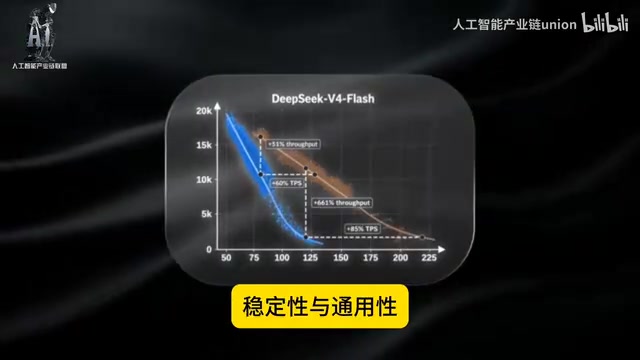
- V4 Flash: At a target of 80 characters/second/user, system throughput improved by 51%; at 120 characters/second, the legacy architecture hit its ceiling while DSpark continued running stably
- V4 Pro: At a 35 characters/second baseline, throughput improved by 52%; at 50 characters/second under heavy load, the traditional architecture collapsed while DSpark maintained stable output
Under identical hardware conditions, DSpark improved end-user generation speed on V4 Pro by 57%–78% and on V4 Flash by 60%–85%.
The industry value of this optimization is highly practical: without upgrading hardware or adding compute, pure algorithmic engineering doubles the number of concurrent users a single GPU can serve — directly cutting LLM production costs across the board.
Open Source Ecosystem and Industry Impact
To accelerate ecosystem development, DeepSeek and Peking University open-sourced the full technology stack, releasing it on both GitHub and Hugging Face. The stack covers the complete pipeline from data preprocessing, model training, and performance evaluation to inference acceleration. It natively supports DSpark, DeepFlash, EAGLE-3, and other leading acceleration methods, is compatible with Qwen, Gemma, and multiple other models, and includes benchmark coverage across GSM8K, Math500, HumanEval, and other authoritative datasets.
This is not a lightweight tool: the default Qwen 4B deployment configuration alone requires approximately 38TB of cache storage and an 8-GPU single-node environment — this is a full-stack production-grade infrastructure.
DSpark's emergence is closely tied to the current macro environment of China's AI industry. Since 2022, as U.S. semiconductor export controls on China progressively tightened, restricting access to high-end inference GPUs like NVIDIA's H100 and A100, "software-defined compute" has become a core technical strategy for China's leading AI companies — maximizing the per-unit output of existing hardware through inference optimization, quantization, kernel fusion, and other engineering techniques. The doubled per-GPU concurrency demonstrated by DSpark is commercially equivalent to halving GPU procurement costs — a strategic value that transcends pure technical merit in an environment of constrained chip supply. This engineering breakthrough precisely addresses the real-world needs of China's AI industry: beyond DeepSeek, companies like Tencent and Xiaomi have each made inference efficiency optimization a top priority — Tencent through attention mechanism and memory cache optimization for low-spec hardware deployment, and Xiaomi through proprietary acceleration technology achieving thousand-character-per-second generation speeds.
Conclusion: Making Cutting-Edge Capabilities Accessible
DSpark never set out to enhance a model's core intelligence. Instead, it installs a "lightweight, efficient, energy-saving" operating system onto what were once bulky, expensive, and inefficient high-end LLMs. It precisely addresses the four pain points that have long plagued the industry: slow speed, high cost, weak concurrency, and poor stability.
The AI industry has long moved past the "intelligence-first" early stage. The competitive logic of the second half has fundamentally shifted: model intelligence is merely the entry ticket, while deployment efficiency, usage cost, and service reliability are the true moats that determine who wins market influence. The future winners in AI will be those who make advanced technology affordable and bring high-end capabilities to the masses.
Related articles
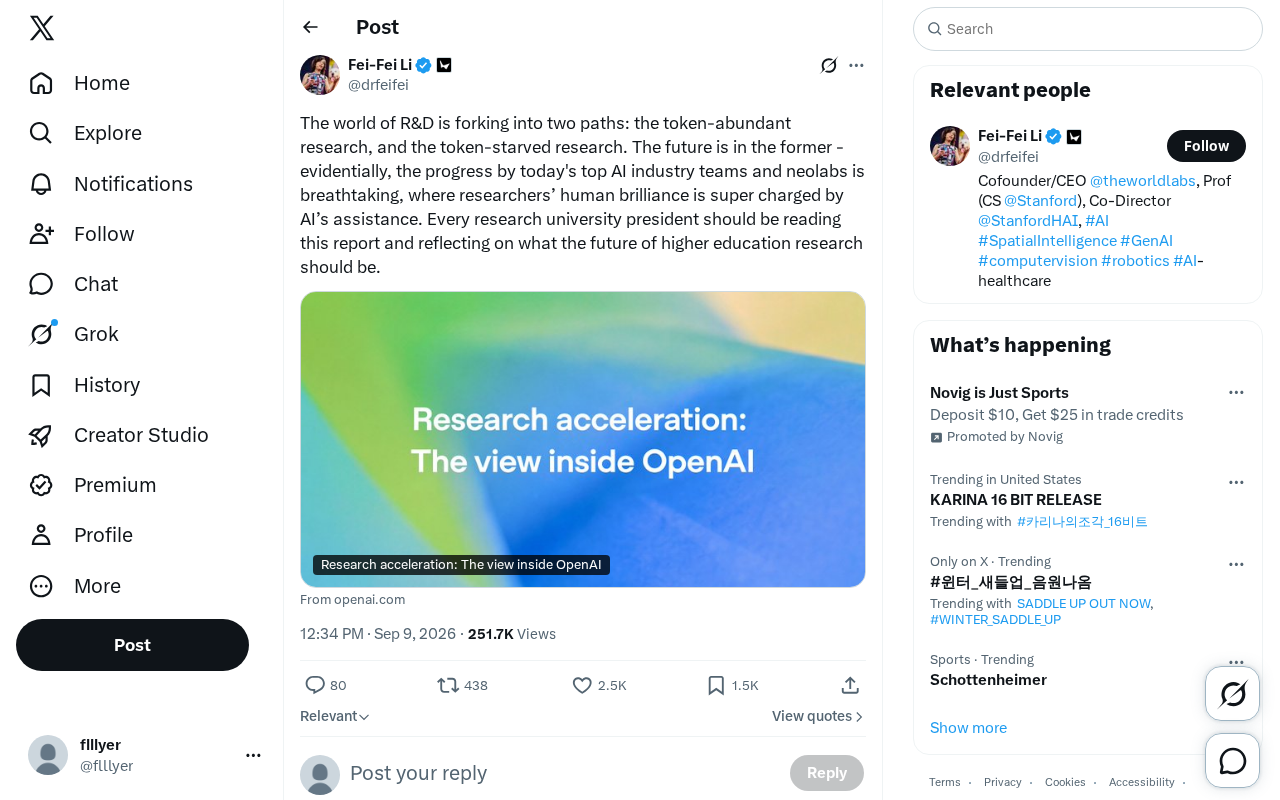
R&D Is Forking: The Coming Battle Between Token-Abundant and Token-Starved Research
R&D is splitting into token-abundant and token-starved research. Top AI labs are pulling ahead—here's what it means for universities and the future of science.

Atlas World Model Explained: How Next View Prediction Unifies Generation and Reconstruction
The Atlas world model uses Next View Prediction as its core to unify pixel-level generation and reconstruction, offering a new approach to spatial intelligence.
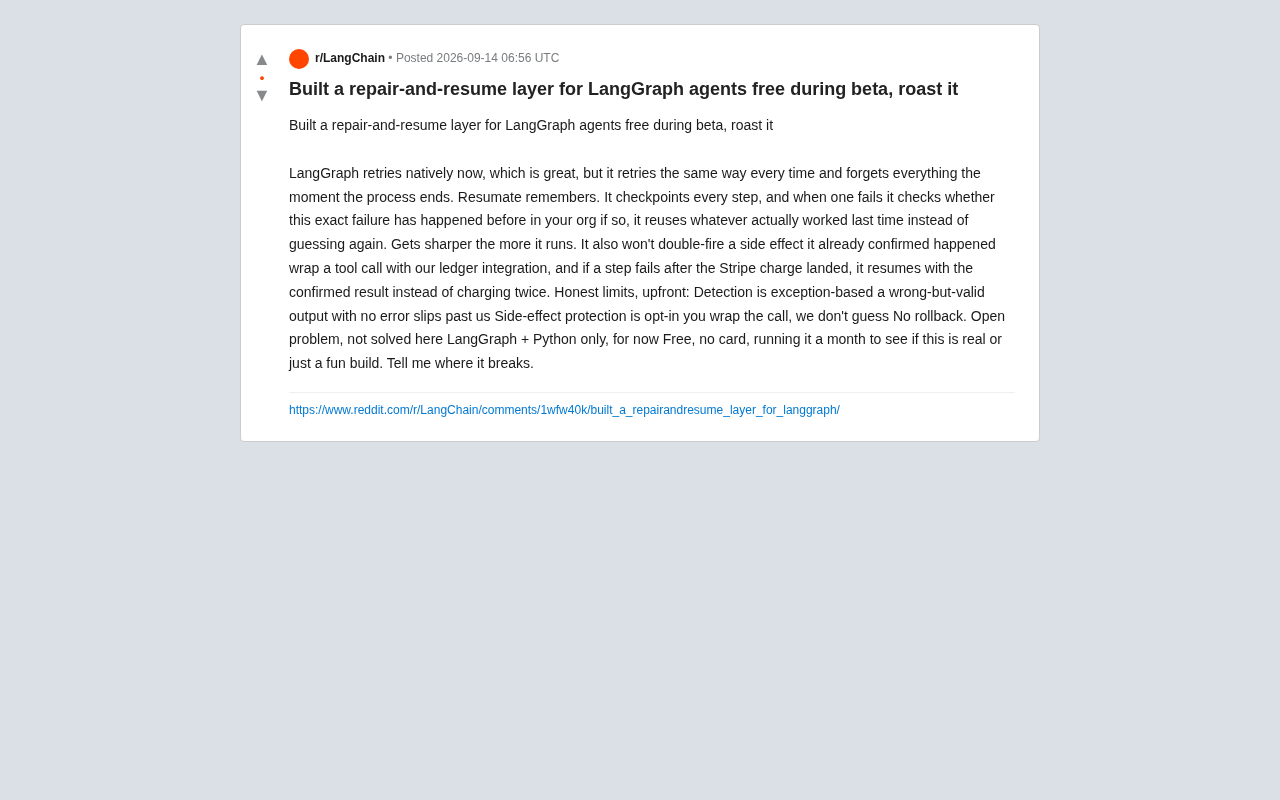
Resumate: A Deep Dive into the Repair-and-Resume Layer for LangGraph Agents
Resumate adds memory-aware checkpointing and idempotent side-effect protection to LangGraph agents, preventing issues like duplicate Stripe charges on retry.