Dutch Government Builds Microsoft Alternative DAWO Based on NixOS

The Dutch government is building DAWO on NixOS to escape Microsoft dependency and pursue digital sovereignty.
The Dutch government is advancing an open-source project called DAWO, using NixOS as its technical foundation to build a government office environment that could replace Microsoft products. The core rationale for choosing NixOS lies in its declarative configuration and reproducible builds, ensuring consistent and auditable system states at scale. Drivers include rising Microsoft licensing costs, compliance risks from overseas data storage, and strategic concerns about single-vendor dependency. Community reaction is mixed — Munich's LiMux rollback serves as a cautionary tale that success depends on user adoption, format compatibility, and sustained political will rather than technical choices alone.
The Netherlands' Digital Sovereignty Experiment
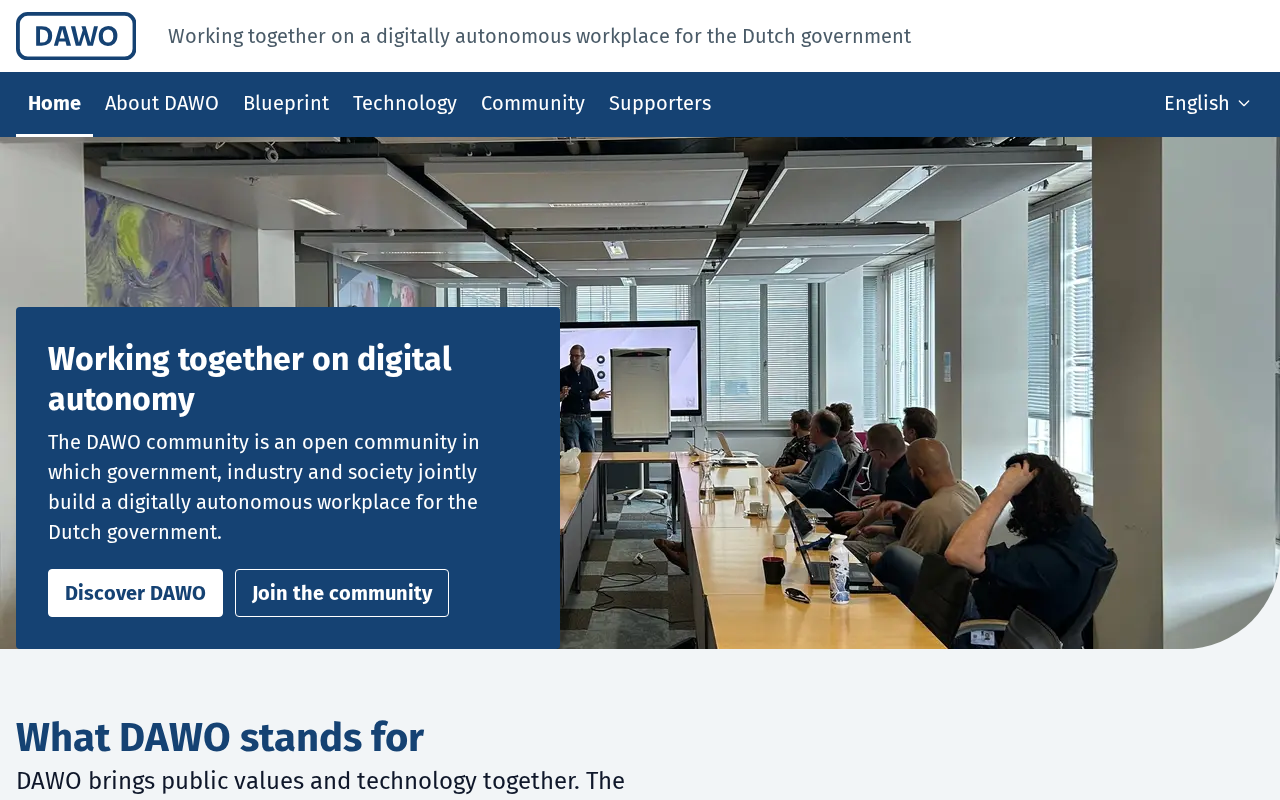
The Dutch government is pushing forward a project called DAWO, which aims to build a digital office environment capable of replacing Microsoft products, using the open-source operating system NixOS as its foundation. The news sparked considerable discussion on Hacker News, with the post receiving 274 upvotes and 121 comments — reflecting the tech community's keen interest in government-scale open-source migrations.
For government agencies that have long relied on Microsoft Windows, Office, and Azure ecosystems, projects like this carry significance well beyond cost savings. They touch on a core issue that Europe's public sector has repeatedly debated in recent years: Digital Sovereignty. When critical government infrastructure is built on proprietary software from a handful of overseas tech giants, questions of data control, compliance risk, and vendor lock-in are never far from the surface.
Why NixOS
DAWO's choice of NixOS as its underlying platform is itself a technically interesting decision. NixOS is a Linux distribution renowned for declarative configuration and reproducible builds — its core philosophy is to describe the entire system state as code through the Nix package manager.
These characteristics hold natural appeal for government IT departments:
- Reproducibility: A single configuration can deploy a completely consistent system state across hundreds or thousands of machines, dramatically reducing operational complexity.
- Atomic upgrades and rollbacks: When a system update fails, you can roll back to the previous stable version with a single command — critical for public services that demand high reliability.
- Configuration as code: The entire infrastructure definition can be placed under version control, enabling auditing and long-term maintenance — perfectly aligned with government requirements for transparency and traceability.
Compared to more conventional choices like Ubuntu or Debian, NixOS has a steeper learning curve. But in large-scale standardized deployment scenarios, its engineering advantages translate into tangible maintainability gains.
It's worth taking a moment to unpack NixOS's underlying logic. Traditional Linux distributions (such as Debian/Ubuntu) use imperative package management: system state is the cumulative result of past operations, and two machines with "identical configurations" often develop subtle differences over time due to different sequences of operations — a phenomenon known as "configuration drift" that plagues enterprise-level operations. The Nix package manager addresses this through a functional approach: each software package is uniquely identified by a hash of all its inputs (source code, dependencies, compilation parameters) and installed in an isolated path in the filesystem, with no shared state between packages. NixOS extends this philosophy to the entire operating system: the /etc/nixos/configuration.nix file describes the complete desired state of the system, and running nixos-rebuild switch converges the system to that description, cleaning up any surplus configuration. This means a single audited configuration file can guarantee that thousands of endpoints are in exactly the same, fully verifiable state — satisfying the strict "system baseline" requirements of government IT compliance audits.
The Real Drivers Behind Escaping Vendor Lock-In
European governments have seen their dependence on Microsoft deepen in recent years, with penetration spanning desktop productivity suites to cloud services. This creates several layers of pressure: continuously rising licensing costs, potential compliance red lines triggered by storing data on overseas servers, and the strategic vulnerability of having critical systems controlled by a single vendor.
DAWO attempts to break this situation with a fully open-source, self-controlled technology stack. In theory, an office environment built on NixOS can achieve complete source code transparency, local data storage, and government-controlled system evolution. This is consistent with open-source migration efforts previously undertaken by public sectors in certain German states, France, and elsewhere.
Divisions in the Community Discussion
The hundred-plus comments on Hacker News reveal that the tech community's attitude toward such projects is far from uniform. Supporters argue this is the right step toward digital sovereignty, and that the open-source, reproducible technical choices reflect mature engineering thinking.
Skeptical voices are equally present. History is littered with government open-source migrations that stalled halfway — most famously, the city of Munich's experience of migrating from Windows to Linux (LiMux), only to migrate back to Microsoft. The success or failure of such projects often has little to do with the technology itself, and everything to do with user training, office software compatibility, long-term funding, and organizational execution.
While NixOS has excellent engineering characteristics, its relatively niche ecosystem and steep learning curve could become real obstacles when deploying at government scale.
Munich's LiMux case is an important reference point for understanding the risks of government open-source migration. In 2003, the Munich city council decided to migrate approximately 14,000 government computers from Windows to LiMux (a Debian-based distribution), paired with LibreOffice. After more than a decade of effort, the migration was largely complete by 2013, with officials claiming savings of approximately €11 million in licensing fees. However, in 2017, a new city council majority voted to migrate back to Windows 10 and Microsoft Office by 2021, citing "incompatibility between departmental systems and reduced work efficiency." Post-mortem analyses generally concluded that technical feasibility was never the core issue — the real causes of failure were the absence of cross-departmental coordination mechanisms, unresolved interoperability issues with Windows-format documents, and the periodic swing of the political pendulum. This lesson applies equally to DAWO: no matter how elegant NixOS is, it cannot automatically solve the twin obstacles of organizational inertia and format compatibility.
A Signal Worth Watching
DAWO is still in its early stages, and its official site (dawo.community) currently presents more vision and direction than concrete deliverables. How many government office scenarios it can ultimately cover, whether it can resolve interoperability challenges with existing Microsoft document formats, and whether it can secure sufficient political and budgetary support for long-term progress — all remain open questions.
But regardless of the final outcome, the fact that a government is willing to bet on open source at such a foundational level of the technology stack is itself a signal that the digital sovereignty agenda is moving from rhetoric toward engineering practice. For practitioners following public sector IT strategy, open-source ecosystems, or NixOS, this project's future development is worth tracking closely.
Related articles

No Code Required: Using AI to Plan Production-Grade Application Architecture
No code, no problem: how to use AI to plan production-grade application architecture — database modeling, agent endpoint design, chat storage, and layered memory.

AI Writes Code, Will Programmers Lose Their Jobs? The Truth About Devin's Autonomous Programming
Devin and other autonomous AI coding agents are changing software development: from Copilot-assisted coding to fully automated engineering agents, the programmer's role shifts from writing code to system design and oversight. This article analyzes the impact of AI programming on employment, code security, and junior developer training, as well as the real direction of programmer demand under the efficiency paradox.

Citigroup's 14,000 Engineers Use Devin, Slashing Tech Outsourcing Bill by 30%
Citigroup's 14,000 engineers used AI coding agent Devin to cut its tech vendor bill by 30% and speed releases 30-40%, while JPMorgan says AI gains aren't in earnings yet.