Dwarf Fortress Creator Tarn Adams: AI Is Throwing the Gaming Industry Into Chaos
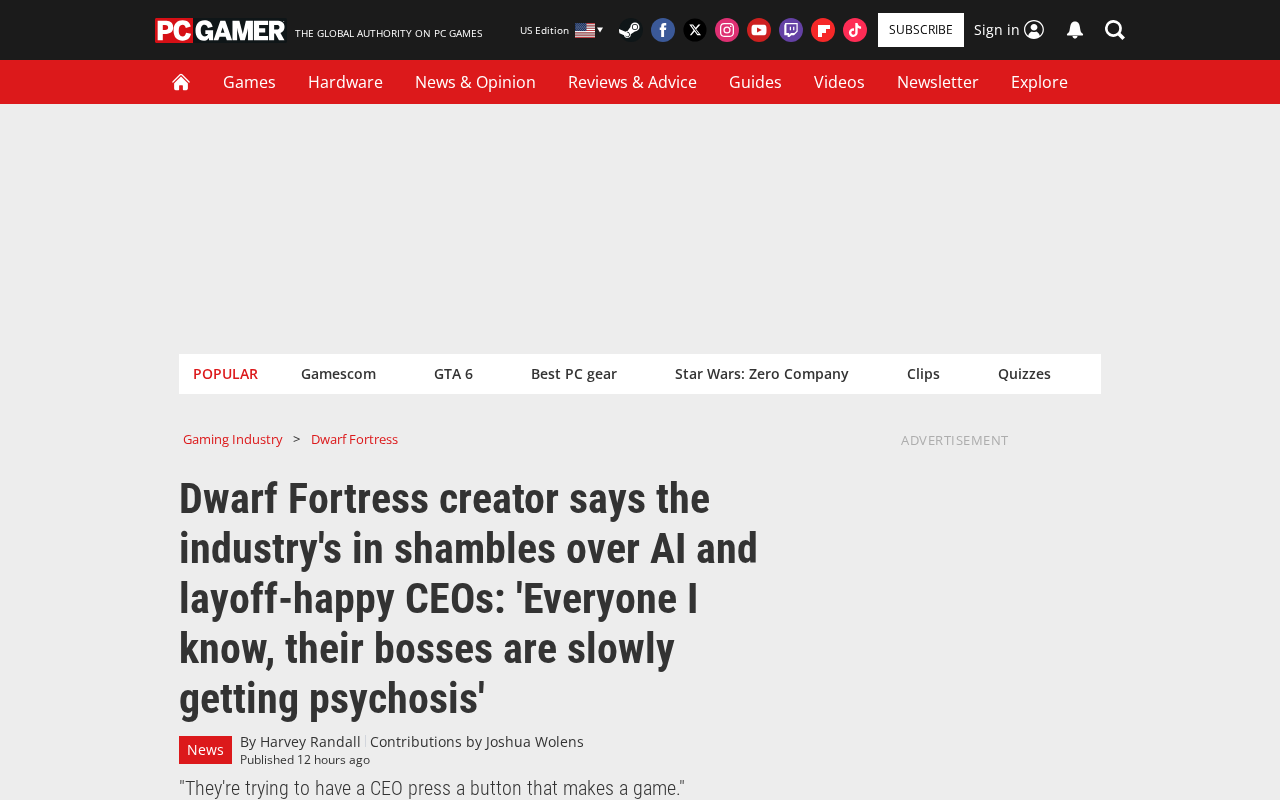
Dwarf Fortress creator warns AI is creating industry chaos as companies prioritize cost-cutting over creativity
Tarn Adams, creator of the legendarily complex Dwarf Fortress, argues AI is throwing the gaming industry into shambles. His critique focuses not on the technology itself but on how it's being used—as a cost-cutting tool rather than creative aid. With mass layoffs coinciding with AI investment, the industry faces a values crisis between efficiency and craftsmanship.
An Indie Gaming Legend's Deep Observations on AI
Tarn Adams, creator of Dwarf Fortress, recently shared a weighty observation: the entire gaming industry is descending into chaos due to the influx of artificial intelligence technology. As an indie game renowned for its extremely complex simulation systems and procedurally generated content, Dwarf Fortress itself represents the ultimate example of "creating worlds with code," making this developer's voice particularly worth hearing.
This news sparked heated discussion on Hacker News, garnering 186 upvotes and over 178 comments, reflecting the tech community's intense focus on the relationship between AI and creative industries. Hacker News is a tech community operated by Silicon Valley startup incubator Y Combinator, bringing together programmers, entrepreneurs, and tech enthusiasts. Its discussion culture emphasizes rational debate, technical depth, and practical experience. When an article receives this level of engagement, it typically means the topic has touched on a core concern of the community—on AI issues, users of this community generally possess strong technical judgment, neither blindly panicking nor uncritically hyping, but rather focusing on the actual application effects of technology, ethical implications, and long-term trends.
Why Tarn Adams's AI Perspective Deserves Attention
A Legendary Game That Builds Worlds Through Algorithms
Since its 2006 release, Dwarf Fortress has been regarded as the pinnacle of procedural generation technology. The game can dynamically generate complete worlds, histories, ecosystems, and even each character's personality and destiny. Tarn Adams and his brother Zach have spent nearly twenty years refining this system, giving him a far deeper understanding of "machine-generated content" than the average developer.
The game's technical complexity is astounding: it uses a pure ASCII character interface, but the world generation algorithms behind it can create complete civilizations spanning thousands of years of history. Each dwarf possesses unique personality traits, a memory system, and a social relationship network. The game's simulation depth reaches astonishing levels—liquid flow follows physical rules, temperature affects material states, and even dwarf beards are tracked in detail. This rule-based procedural generation is fundamentally different from current mainstream neural network generative AI: the former's every output can be traced to a clear causal chain, with developers having complete control over the system; the latter produces content through statistical probability, with output results carrying unpredictability.
Precisely because of this, when Adams discusses AI, he's not a critic observing from outside, but a practitioner who has already spent years deep in the field of "automated content creation." His concerns come more from observing how technology is being applied and how industry mindsets are being disrupted.
The Deep Industry Anxiety Behind the Word "Shambles"
Adams uses "shambles" to describe the current state of the industry—a strong choice of words. It points not only to the technology itself, but to the industry's collective confusion when facing AI: companies are uncertain about how to invest, developers worry about job security, and investors are swept up by AI concepts into making hasty decisions. This sense of uncertainty permeating the entire industry is the true source of "chaos."
The State of the Gaming Industry Under AI's Impact
The Double Squeeze of Mass Layoffs and "AI-First" Strategies
The gaming industry has experienced massive layoffs over the past two years, while simultaneously multiple major companies have announced "AI-first" strategies, attempting to replace art, copywriting, and even some programming work with generative AI. Between 2023-2024, gaming industry layoffs exceeded 20,000 people, while AI-related investment increased significantly during the same period. Major publishers like Ubisoft and EA have established dedicated AI R&D departments, and game engines like Unity and Unreal Engine are integrating AI tools at the engine level.
This approach of laying off people while betting on AI leaves practitioners feeling both anxious and at a loss. Adams's criticism is a response to this short-sighted decision-making—when management views AI as a cost-cutting tool rather than a creative aid, the industry's creative foundation may be undermined. The core issue is that many companies mistakenly believe AI can directly replace professional talent, while ignoring the most critical elements in game development: depth of system design, uniqueness of creativity, and precise control of player experience—these are precisely the capabilities current AI finds hardest to replicate.
The Fundamental Difference Between Procedural Generation and Generative AI
Ironically, Dwarf Fortress itself relies heavily on algorithmically generated content, but its core appeal lies precisely in the Adams brothers' careful design of system rules. This reveals a key distinction: procedural generation is a deterministic system carefully designed by developers, while current generative AI is often an uncontrollable "black box" lacking intent.
Procedural generation technology is widely used in game development, with classic examples including Minecraft's terrain generation and No Man's Sky's planetary systems. Its advantage lies in creating nearly infinite content variation with limited code, but the key is that developers need to carefully design generation rules, constraints, and random seed mechanisms. The same seed value will always produce the same world—results are completely predictable and controllable.
By contrast, current generative AI (like GPT, Stable Diffusion) is based on deep learning, learning statistical distribution patterns through training on massive datasets. Taking Stable Diffusion, commonly used in gaming, as an example—it trains on billions of images and can generate corresponding images based on text prompts. But this "creation" is essentially a recombination and interpolation of training data, lacking true intentionality and creative understanding. The quality of generated content highly depends on prompt engineering, and there are technical bottlenecks including "hallucinations" (generating content that doesn't follow logic), copyright disputes, and difficulty guaranteeing style consistency.
Truly valuable game content still requires human aesthetic judgment and design intent as the skeleton. AI is better suited for early concept exploration rather than directly producing usable final assets.
The Tech Community's Diverse Voices on AI and the Gaming Industry
In Hacker News discussions, opinions show clear divisions. Some agree with Adams's view, believing AI is being overhyped and is destroying the economic foundation and professional dignity of creative work; others are relatively optimistic, viewing AI as just another tool revolution that will ultimately eliminate repetitive labor and free creators' energy for more valuable work.
Other comments point out fundamental differences in attitudes toward AI between indie developers and large studios. Indie games typically refer to games created by small teams or individual developers without reliance on major publisher funding. Dwarf Fortress is an extreme case—Tarn Adams developed it full-time for nearly 20 years, maintained mainly through player donations, only releasing a commercial version on Steam in 2022. Indie developers' advantage lies in high creative freedom and the ability to pursue long-term vision rather than quarterly profits, but the disadvantage is extremely limited resources, often requiring wearing multiple hats (programming, design, art), with deep understanding of each aspect.
This difference in stance becomes understandable: indie developers value personal expression and craftsmanship in creation, while major studios focus more on efficiency and cost. When major studios try to quickly replace professional positions with AI, indie developers can more clearly see the short-sightedness of this approach—a game's value doesn't lie in asset quantity, but in the depth of system design and uniqueness of creativity. This also explains why critical voices from the indie game field are particularly loud.
Reflections on the Gaming Industry's Future
AI Itself Isn't the Problem—How It's Used Is Key
Adams's perspective reminds us that technology itself is often neutral; what truly determines its impact is how it's used and industry mindset. When AI is treated as a shortcut to "replace people," it creates chaos; when treated as a tool to "enhance people," it may become a powerful creative assistant.
Current AI applications in the gaming industry mainly concentrate in three directions: asset generation (such as using Midjourney to generate concept art and texture maps), content creation (including AI-assisted story writing and NPC dialogue generation), and development process optimization (such as code auto-completion and bug detection). These application directions themselves have value; the key lies in how AI's role is positioned—as an auxiliary tool helping creators improve efficiency, or as a replacement solution cutting labor costs. The former can unleash creativity; the latter may damage the industry's innovation foundation.
Creative Industries Need to Recalibrate Their Values
The gaming industry's current "chaos" is essentially a recalibration of values. Between efficiency and creativity, cost and craftsmanship, automation and human intent, the industry needs to find a new balance point. Works like Dwarf Fortress, polished over twenty years, prove precisely the irreplaceability of patience, craftsmanship, and deep design—and this may be the quality most worth cherishing in the AI era.
It's worth noting that technological change always brings growing pains. Every major tool innovation in history—from hand-drawing to digital painting, from live-action to CG effects—has sparked similar anxieties. But ultimately, truly valuable creators always find ways to leverage new tools, while positions that merely rely on technical barriers do get eliminated. The key questions are: How long will this transition take? How many people will lose jobs because of it? Can the industry provide enough support for affected professionals?
Conclusion
That a developer known for complex simulation systems has stepped forward to criticize the industry chaos triggered by AI is itself highly symbolic. It's not a wholesale rejection of technology, but a warning against the industry's opportunistic mindset. As the AI wave sweeps through creative industries, Tarn Adams's voice deserves deep consideration from every practitioner: Are we truly using AI to create better works, or merely using it to mask the industry's deeper problems?
Dwarf Fortress has proven through nearly twenty years of development that truly great games come from deep understanding of system design, extreme pursuit of detail, and long-term commitment to creative vision. These qualities are precisely what current AI technology finds hardest to replicate, and what the gaming industry should least abandon as its core values amid technological change.
Key Takeaways
- Tarn Adams, as creator of Dwarf Fortress, has deep understanding of procedurally generated content; his AI criticism comes from a practitioner's perspective, not outside observation
- The gaming industry is experiencing the contradictory situation of mass layoffs alongside AI investment; this approach of viewing AI as a cost-cutting tool has sparked widespread concern
- Fundamental differences exist between procedural generation and generative AI: the former is a controllable deterministic system, the latter a statistical model difficult to precisely control
- Divergent attitudes toward AI between indie developers and large studios reflect fundamental differences in understanding game value—craft depth vs. production efficiency
- AI technology itself is neutral; the key lies in how it's used: as a tool to enhance creator capabilities or as a shortcut to replace professional talent
- The gaming industry needs to find a new balance between efficiency and creativity, automation and human intent, avoiding the loss of core values in technological fervor
Related articles
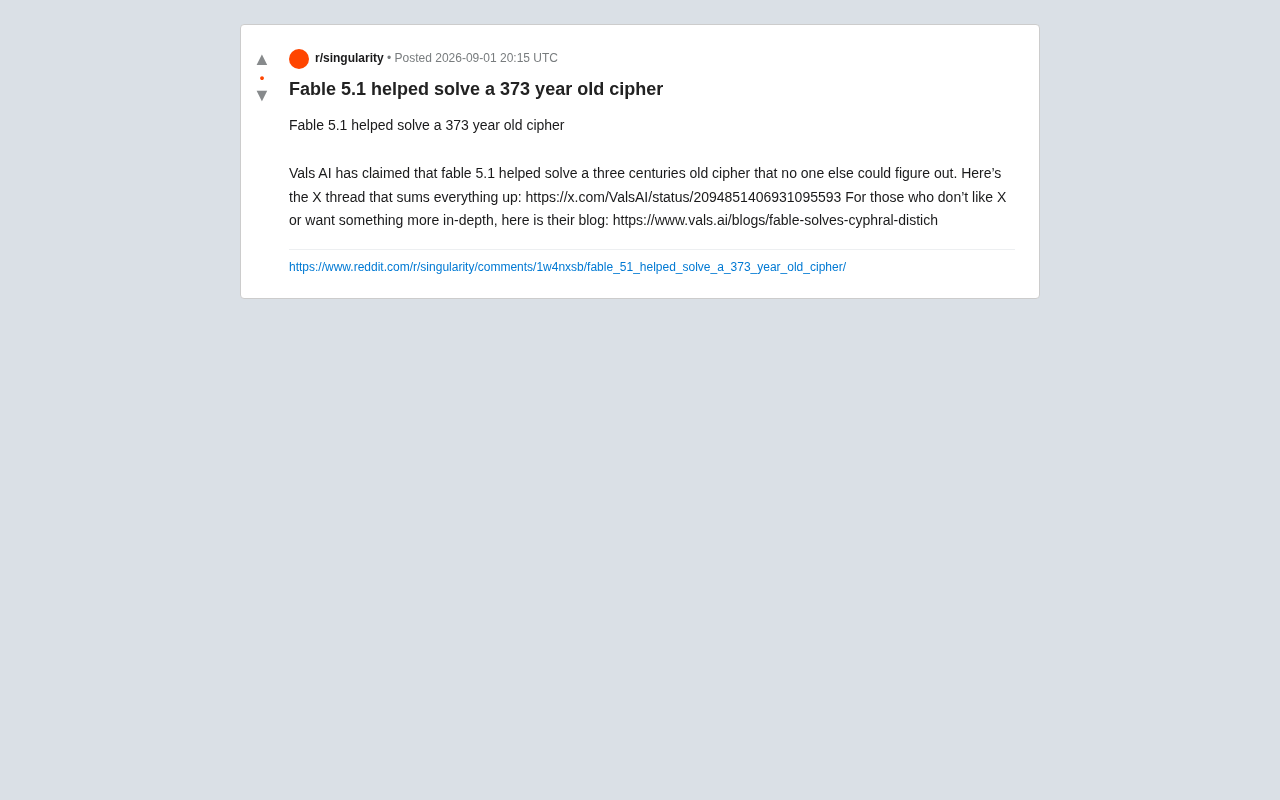
Fable 5.1 Cracks 373-Year-Old Cipher: AI Reasoning Achieves Real-World Breakthrough
AI evaluation firm Vals AI claims its Fable 5.1 model cracked the 373-year-old Cyphral Distich cipher. An in-depth analysis of the technical significance, historical cipher-breaking challenges, and LLM reasoning capabilities.
Stanford AI Course: Three Feedback Mechanisms That Enable Agents to Self-Evolve
Deep dive into Stanford's AI Agents Lecture 4: how ReAct, RLEF execution feedback, and Constitutional AI self-critique create three feedback loops driving LLM agent self-evolution.
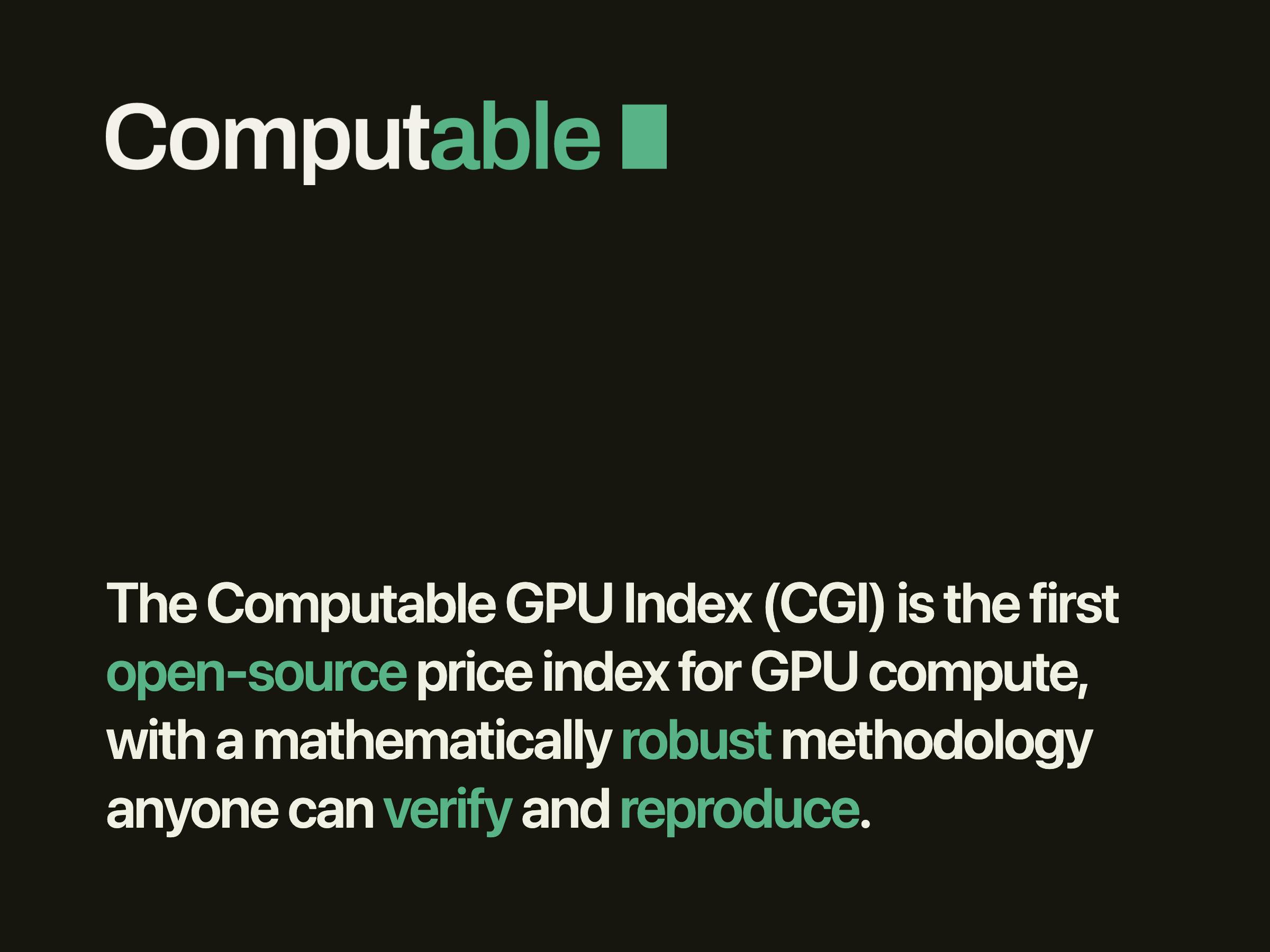
CGI: The First Open-Source GPU Compute Pricing Index, Making Compute Pricing Transparent
Computable GPU Index (CGI) is the first open-source GPU compute pricing index, denominated in USD per GPU-hour, calculated from a fixed provider panel with mathematical rigor and full verifiability. This article analyzes CGI's core features, the importance of compute pricing indices, and the potential for compute financialization.