Dyson 360 Vis Nav Robot Vacuum Drops to $279 — Is It Worth Buying?
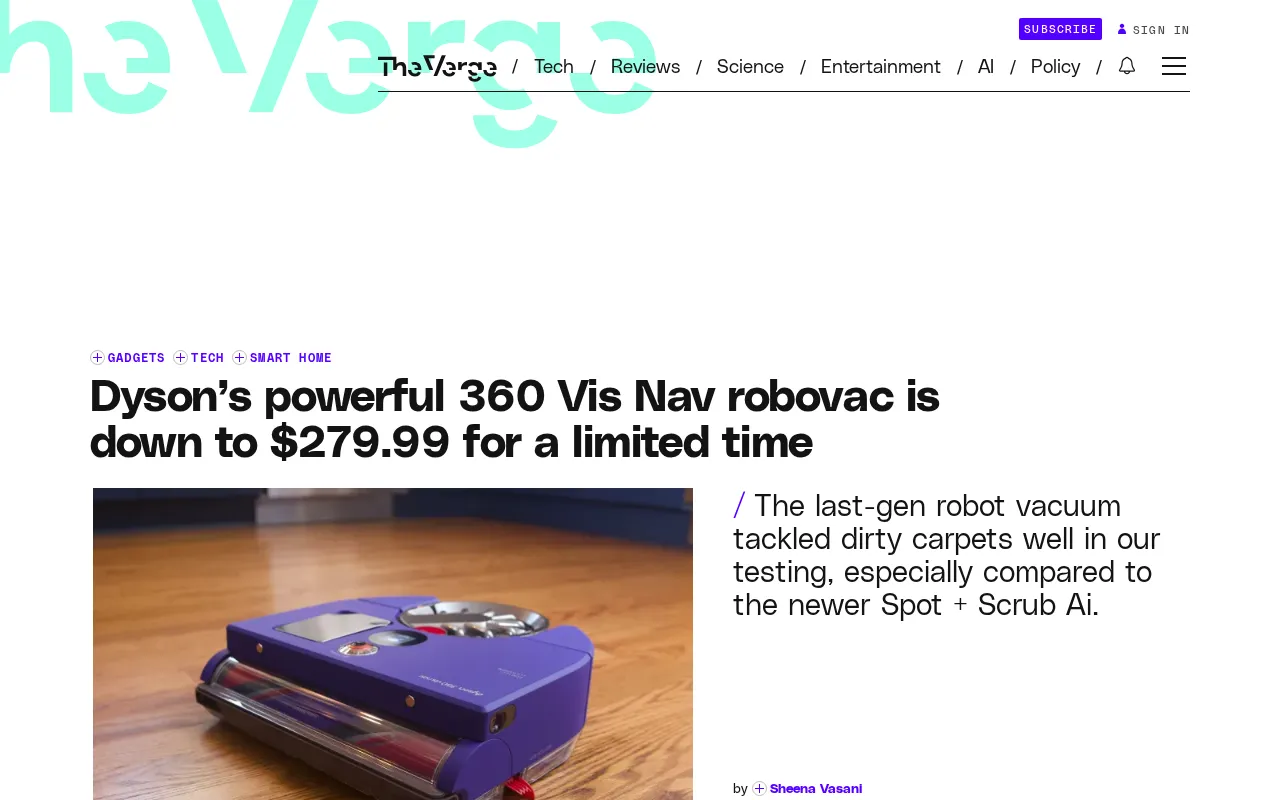
Dyson 360 Vis Nav robot vacuum drops to $279.99 on Woot in a limited-time deal.
The Dyson 360 Vis Nav robot vacuum is on sale at Woot for $279.99 through May 11 or while supplies last. Featuring Dyson's cyclone separation technology and high-speed digital motor, it delivers industry-leading suction especially suited for deep carpet cleaning. Its 360-degree visual navigation system enables intelligent mapping and efficient path planning. Ideal for households with large carpeted areas seeking a thorough clean.
Powerful Suction Meets a Limited-Time Deal
The Dyson 360 Vis Nav robot vacuum is currently on a limited-time sale at Woot for just $279.99. Known for its powerful suction, this Dyson robot vacuum is a compelling option for anyone who struggles with carpets that never seem to get fully clean no matter how many times they're vacuumed.
The promotion runs through May 11 or until stock runs out, so interested buyers should act fast.
Key Advantages of the Dyson 360 Vis Nav
Industry-Leading Suction Power
The Dyson 360 Vis Nav is one of the most powerful robot vacuums on the market today. As a long-established leader in vacuum technology, Dyson has transplanted the motor and cyclone separation technology honed in its corded and cordless stick vacuums into this robot, delivering exceptional deep-cleaning performance on carpets.
Dyson's core technological advantage traces back to founder James Dyson's invention of cyclone separation technology in the 1980s. Traditional vacuums rely on filter bags to collect dust, and suction gradually decreases as the bag clogs. Cyclone separation uses centrifugal force generated by high-speed rotation to separate dust from air, maintaining consistent suction without a filter bag. Dyson later developed multi-cone cyclone technology (Root Cyclone), which uses multiple small cyclones working in parallel to capture even finer particles. On the motor side, Dyson's proprietary digital motor (Dyson Digital Motor) spins at over 100,000 RPM — far exceeding conventional motors — which is the key reason its products significantly outperform competitors in suction power. Miniaturizing these technologies, originally designed for handheld and upright vacuums, and integrating them into a robot vacuum is Dyson's core differentiation strategy in this product category.
For households with large carpeted areas, ordinary robot vacuums often struggle to thoroughly remove dust and debris embedded deep within carpet fibers, requiring multiple passes to achieve satisfactory results. The difficulty of carpet cleaning is closely tied to the physical structure of carpet — fibers (whether nylon, polyester, or wool) form a dense pile layer, and dust, skin flakes, pollen, and tiny debris gradually settle to the fiber base under the effects of gravity and static electricity. Most robot vacuums produce suction in the 2,000–4,000 Pa range, sufficient for cleaning hard floors but often inadequate for particles lodged deep in carpet. True deep carpet cleaning typically requires suction of 6,000 Pa or more, combined with a rotating brush bar that physically agitates carpet fibers to dislodge deep-seated dust before suctioning it away. The Dyson 360 Vis Nav is designed with exactly this combination of powerful suction and a wide brush bar. Its D-shaped body allows the brush bar width to approach the full diameter of the machine, maximizing the cleaning area per pass and achieving deeper cleaning in a single sweep — saving both time and effort.
360-Degree Visual Navigation System
As the "Vis Nav" in its name suggests, this robot vacuum features Dyson's proprietary visual navigation system. The system performs panoramic room scanning and intelligent mapping, helping the robot plan efficient cleaning paths, avoid missed spots or redundant passes, and improve overall efficiency while ensuring comprehensive coverage.
Robot vacuum navigation technology has evolved through several generations. Early products like the iRobot Roomba used random bump navigation, where the robot changed direction randomly upon hitting obstacles — resulting in low efficiency and uneven coverage. The second generation used gyroscopes and accelerometers for inertial navigation, which improved path planning but offered limited accuracy. Today's mainstream navigation solutions fall into two camps: LiDAR navigation, which emits laser beams to measure distances and build room maps with high precision but at higher cost, typically requiring a protruding LiDAR module on top of the robot; and visual navigation (VSLAM), which uses cameras to capture images and applies algorithms for positioning and mapping. The Dyson 360 Vis Nav takes the visual navigation approach — its 360-degree panoramic camera captures complete environmental imagery and uses SLAM algorithms to build and update maps in real time. This enables precise navigation while maintaining a low-profile body design. This technology choice allows the robot to more easily access areas beneath low-clearance furniture like sofas and beds, while also avoiding the privacy concerns that LiDAR modules can raise.
Is the Dyson 360 Vis Nav Worth Buying?
Price Analysis
At $279.99, this is a highly attractive price for a Dyson-branded robot vacuum. Dyson products are known for their premium positioning and higher price tags, with their robot vacuums typically retailing for several hundred dollars or more. This limited-time discount on Woot offers a rare opportunity for budget-conscious consumers who want to experience Dyson's cleaning performance.
Who It's Best For
This Dyson robot vacuum is especially well-suited for:
- Homes with large carpeted areas that need powerful suction for deep cleaning
- Users with high cleaning standards who find ordinary robot vacuums insufficient
- Dyson brand enthusiasts looking to experience Dyson technology at a lower price point
Things to Know Before Buying
It's worth noting that this promotion is on the Woot platform. Founded in 2004, Woot originally gained fame with its "One Deal a Day" flash-sale model, offering just one product per day at a compelling price until it sold out. In 2010, Amazon acquired Woot for approximately $110 million, making it part of the Amazon ecosystem. After the acquisition, Woot expanded its product categories and daily listings but maintained its core model of limited-time, limited-quantity deals. Products on Woot come from various sources, including manufacturer clearance inventory, refurbished items, and special discounts on new products. As an Amazon-owned platform, Amazon Prime members typically enjoy free shipping on Woot purchases, further enhancing its appeal.
Note that Woot's return and exchange policies may differ from those on Amazon's main site, so buyers should carefully review the terms before purchasing. The promotion ends May 11, but may end earlier if stock runs out — those interested should place their orders sooner rather than later.
Conclusion
In an increasingly competitive robot vacuum market, the Dyson 360 Vis Nav maintains a strong edge in cleaning performance thanks to its outstanding suction and intelligent navigation system. The $279.99 limited-time price on Woot further lowers the barrier to entry, making this a deal worth considering for anyone seeking a deep carpet cleaning experience.
Related articles
 Product Reviews
The Programmer's Desk Setup Guide: Building a Workspace That Feels Like Home
Discover how programmers build productive, comfortable workspaces. From multi-monitor setups to ergonomic design, explore the desk philosophy that drives focus and flow.
 Product Reviews
Qoder vs Cursor Real-World Comparison: Which $20/Month AI IDE Is Better?
Hands-on comparison of Qoder vs Cursor AI IDEs: Agent autonomy, human interaction count, and architecture decisions. Qoder needed only 2 interactions vs Cursor's 8.
 Product Reviews
Cursor Cloud Agent Demo: Eliminating Bottlenecks Across the Entire Software Development Lifecycle
Deep analysis of Cursor's Cloud Agent demo showing how cloud VMs, automated test artifacts, and a full-chain control plane systematically eliminate human bottlenecks across the software development lifecycle.