Eckhart Tolle: Finding Inner Power in the Present Moment and Living a Fuller Life
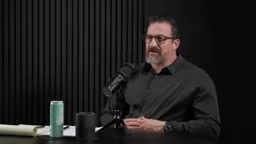
Tolle and Huberman in conversation: attention is pulled from the present by psychological projection, the conceptual self creates suffering, and sensory awareness and consciousness can bring us back to the present.
Neuroscientist Huberman and spiritual teacher Tolle discuss why people are never in the present. Tolle notes that attention is often carried away by psychological projection into the future or past, while the present is the only moment that truly exists. Equating identity with the conceptual self creates fragility and conflict, and having one's opinions questioned is misread as a threat to survival. Tolle offers a sensory awareness practice: purely seeing and hearing, without naming or judging, letting awareness replace thinking. He distinguishes conceptual from non-conceptual knowing, using an Alaskan rainforest experience to show that non-conceptual knowing is inseparable from presence. The triangle model advocates acting in the dualistic world from the apex of awareness without getting lost. The world is not responsible for making you happy—challenges are the curriculum for the growth of consciousness; inner power does not depend on external conditions. Tolle rejects specialness, emphasizing that function is not identity.
Why Are We Never in the "Present Moment"?
Neuroscientist Andrew Huberman engaged in a deep conversation with spiritual teacher Eckhart Tolle. Tolle points out that most people's attention is constantly carried away by psychological projection—either rushing toward the future or drowning in the past, missing the only moment that truly exists: the present.
"The past never really happened—it happened in that moment; the future will never truly arrive—it will happen in that moment." Tolle emphasizes that when we remember the past, we remember it in the present; when we plan the future, we plan it in the present. Life is only the present.
Huberman adds from a neuroscience perspective that the brain is innately wired to label experiences and assign symbols, but this symbolic system is extremely poor at conveying feeling states. "No word can truly encapsulate five minutes of life experience, let alone an entire lifetime."
How the Conceptual Self Creates Unnecessary Suffering
Tolle believes that one root of human suffering lies in equating "who I am" with the collection of concepts in the mind—name, profession, opinions, possessions, body image, and even past experiences. This "sense of self" constructed by thought is extremely fragile, so it constantly needs external validation, needs to distinguish "us" from "them," and even needs enemies to sustain its own existence.
"When others question your opinion, if you take the opinion as your identity, you will experience it as an attack." Tolle points out that this is precisely the psychological mechanism behind personal and even collective conflict.
Huberman analogizes this process to the immune system's "self vs. non-self" recognition mechanism, but notes the problem: we have over-extended this recognition process to the psychological level, misreading differences of opinion as threats to survival.
The immune system's "self vs. non-self" recognition mechanism: The immune system protects the body by distinguishing its own tissues from foreign pathogens. This recognition relies on antigen presentation by major histocompatibility complex (MHC) molecules on cell surfaces. When immune cells recognize self-molecules as "non-self," autoimmune disease results; conversely, if pathogens are misjudged as "self," infection spirals out of control. Huberman uses this analogy to illustrate: the psychological "conceptual self" likewise performs "us vs. them" recognition, but the problem is that this biological defense mechanism has been over-extended into non-survival domains such as opinions and beliefs, thereby misreading disagreement as a threat to survival and triggering unnecessary defensive reactions.
Sensory Awareness: The First Step into the Present
Tolle offers an immediately usable practice: look around, purely see, purely hear, without naming, without judging, without interpreting.
"When you truly give your attention to sensory input, you'll find that mental activity significantly decreases." Tolle says this is not about making you fall asleep, but about letting "awareness" temporarily replace "thinking." You remain awake, but inwardly you become quiet.
The second level is becoming aware of the "awareness itself"—not the personal entity with a history and a story, but the pure consciousness in which perception occurs. Tolle calls this the dimension of "Being."
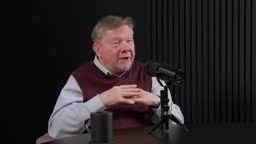
Two Kinds of "Knowing": Conceptual Knowing and Non-Conceptual Knowing
Tolle shares a personal experience from an Alaskan rainforest. A highly knowledgeable naturalist guide explained the name, habits, and history of every plant along the way—an enormous amount of information. But Tolle suddenly realized: he had learned a great deal, yet had not truly "experienced" the forest.
He slowed his pace, let the group walk ahead, and remained alone in the forest. In that moment, conceptual thinking ceased, and the majesty, sacredness, and vastness of the forest presented themselves directly. "That was another kind of knowing—non-conceptual knowing, inseparable from presence."
He invokes the Buddhist metaphor of "the finger pointing at the moon": the teaching is the finger pointing at the moon, but people tend to stare at the finger. Words are signposts; after hearing them, one must let go of the words themselves.
The finger pointing at the moon: A famous metaphor from Buddhist texts such as the Shurangama Sutra. The finger points at the moon, but the finger itself is not the moon; if someone fixates on the finger, they will never see the moon. This means that language, words, and conceptual teachings are merely tools pointing to truth, not truth itself. Tolle uses this to emphasize that conceptual knowledge (such as plant names and habits) is only the "finger," while direct, non-conceptual experience (such as the majesty of the forest) is the "moon." Modern education relies heavily on conceptual transmission, easily leaving people stuck at the "finger" and missing direct apprehension of reality.
The Triangle Model: Finding Balance Between Doing and Being
Huberman poses a sharp question: if one immerses oneself in inner awareness, will one become disconnected from society? Tolle answers with a triangle—the base represents the world of duality (good and bad, positive and negative, engagement and renunciation), while the apex is awareness.
"From the apex, you can act in either direction without getting lost in either extreme." Tolle says this is neither escaping the world nor being swept along by collective thinking. Every interaction and every mundane task in daily life—washing hands, walking, talking with others—can become spiritual practice.
"Don't imagine yourself as a more evolved being than others—that's just the ego sneaking back in through the back door."
Duality and awareness: Duality refers to the human mind's habit of dividing the world into opposing categories—good and bad, right and wrong, positive and negative—and fixating on one side. Tolle's triangle model places this dualistic world at the base, with awareness at the apex—a pure consciousness that does not judge or fixate. From awareness, one can act flexibly in the dualistic world without being swept up by any extreme. This resembles Daoist thought of "embracing the yin and holding the yang" or the Buddhist "Middle Way," but Tolle emphasizes that awareness is not escaping the world; rather, it allows action to flow naturally from clear perception, avoiding being driven by collective thinking or reactive patterns.
The World Is Not Responsible for Making You Happy—It Is Responsible for Awakening You
Tolle states plainly: "The world is not here to make you happy." People often feel when facing challenges that "this shouldn't be happening," but challenge itself is the curriculum for the growth of consciousness. The body does not grow stronger without load, and consciousness does not deepen without challenge.
He quotes Camus: "In the depth of winter, I finally learned that within me there lay an invincible summer." That inner power does not depend on external conditions; find it and connect with it, and external changes will no longer easily shake you.
"Challenges will still come, but they will no longer create unhappiness within you."
The Extraordinary in the Ordinary: Rejecting Specialness
Tolle particularly emphasizes that spiritual awakening does not mean becoming a perfect person. "As a human being, you can never be perfect." Spiritual teachers are projected with images of perfection, often leading to disappointment when the halo shatters—and that too is the ego at work.
He rejects all projections of "special being," insisting on buying his own groceries and living an ordinary life. "Function is not identity. Stepping down from the podium, I am just consciousness, nothing else."
Huberman responds that this thorough rejection of specialness is the most rare and unfakeable quality in Tolle's decades of teaching.
Related articles

Convex Skill Allegedly Uploads User App Ideas to Remote Servers Without Consent
Convex backend skill allegedly sends user app ideas to remote servers without disclosure, sparking Hacker News debate. We analyze the privacy risks and transparency issues.

The Coding Data Market Booms: How Frontier Labs Buy Training Data
The coding data market is rapidly expanding, with frontier labs as major buyers. This article analyzes the types of data traded, labs' procurement logic, and concerns such as licensing compliance and data contamination.

M5 MacBook Air Drops $300 for Black Friday — $999 Is the Best Time to Buy
Black Friday deal: 13-inch M5 MacBook Air (16GB+512GB) drops $300 to $999 at Amazon and Best Buy — the lowest price since Apple's June hike. Details and buying advice inside.