EcoFlow River Gen4 Review: Are the 256Wh/512Wh Portable Power Stations Worth It?
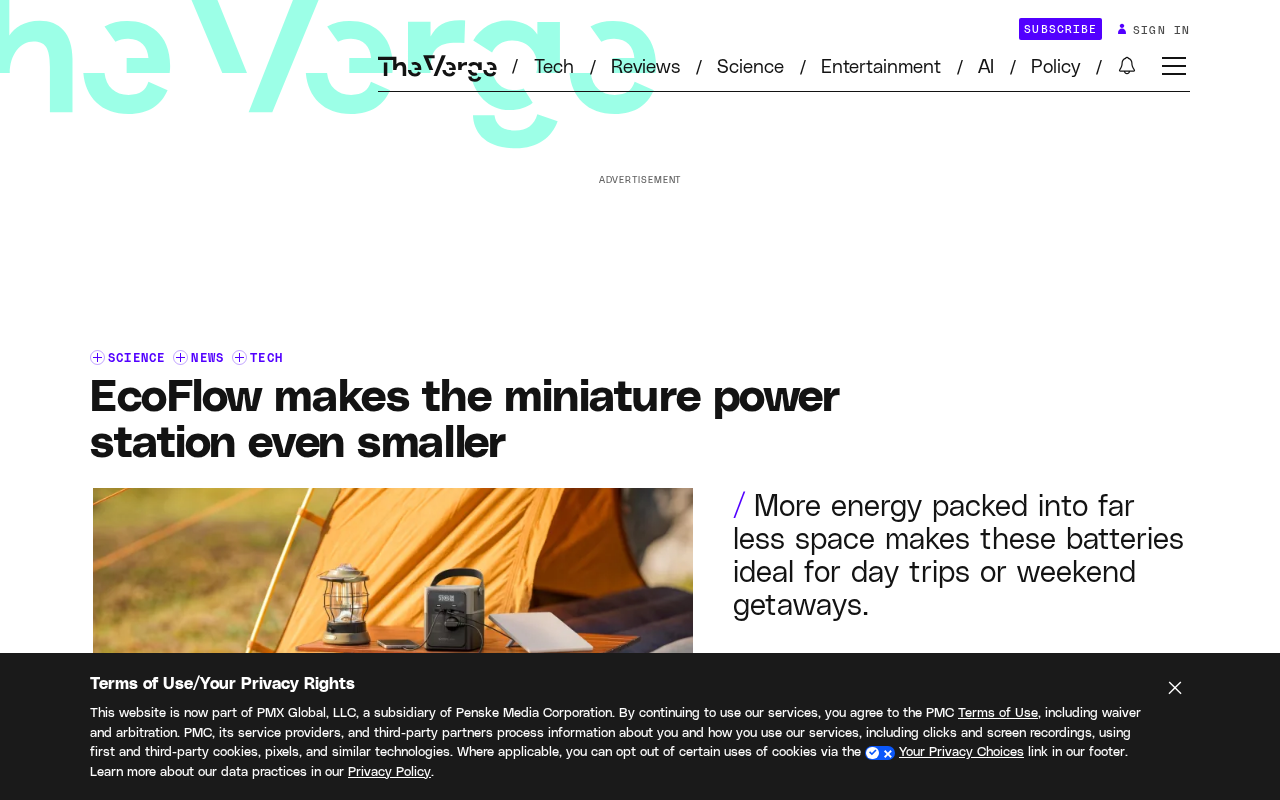
EcoFlow River Gen4 delivers higher energy density in a smaller, more portable power station package.
EcoFlow's fourth-generation River series includes the River 260 Gen4 (256Wh) and River 520 Gen4 (512Wh), offering up to 5x the capacity of previous models while further shrinking the form factor. With significant energy density gains, miniaturized design, and advanced BMS technology, these portable power stations target campers, mobile professionals, and emergency backup users seeking the ideal balance of portability and power.
A New Breakthrough in Portable Power: The EcoFlow River Gen4 Series
If you're looking for a compact yet powerful portable power station, EcoFlow's latest fourth-generation River series deserves your attention. This lineup builds on the brand's deep expertise in portable energy storage while achieving further reductions in size and weight — giving the word "portable" a much more tangible meaning.
According to EcoFlow's official information, the new River series includes two core products: the River 260 Gen4 and the River 520 Gen4. The River 260 Gen4 features a 256Wh battery, while the River 520 Gen4 packs a 512Wh battery. These two models offer approximately 2.5x and 5x the storage capacity of the previous generation's largest unit, respectively — a significant leap in energy density.
Understanding What Wh Capacity Really Means: Wh (watt-hours) is a unit that measures total battery energy storage, representing how many hours a battery can deliver power at 1 watt. Take the River 260 Gen4's 256Wh capacity as an example: a typical smartphone battery is about 15Wh, so theoretically it could fully charge a phone about 17 times; a slim laptop battery is roughly 50–60Wh, allowing about 4–5 full charges. However, keep in mind that real-world usage involves inverter efficiency losses (DC-to-AC conversion typically loses 10%–15%), cable losses, and the charge reserve maintained by the BMS for battery protection. As a result, actual usable capacity is typically 80%–90% of the rated figure. After accounting for efficiency losses, the River 520 Gen4's 512Wh capacity translates to roughly 410–460Wh of usable energy.
Key Technical Highlights of the EcoFlow River Gen4
Massive Energy Density Gains: The Optimal Balance Between Capacity and Size
The biggest advancement in the fourth-generation River series lies in its leap in energy density. Battery capacity has increased dramatically while maintaining — or even shrinking — the unit's physical dimensions. This is the result of dual optimization in both cell technology and overall structural design. For users who frequently need power outdoors, fitting more energy into the same backpack space directly translates to longer runtime and greater versatility across different scenarios.
Energy density is one of the core metrics for evaluating battery performance, typically expressed as Wh/kg (gravimetric energy density) or Wh/L (volumetric energy density). In the portable power station space, higher energy density means more energy stored within the same weight or volume. In recent years, lithium battery energy density has improved at an average annual rate of roughly 5%–8%. However, through iterations in cell chemistry (such as shifting from standard ternary lithium to high-nickel ternary lithium), electrode manufacturing improvements (like dry electrode technology), and structural innovations such as CTP (Cell to Pack — integrating cells directly into the battery pack), some companies have achieved even more substantial breakthroughs. The significant energy density gains claimed by EcoFlow's fourth-generation River series are likely the cumulative result of these underlying technological advances.
The two models are configured for different use cases:
- River 260 Gen4 (256Wh): Ideal for multiple charges of smartphones, tablets, cameras, and other small devices — perfect for light mobile power needs
- River 520 Gen4 (512Wh): Capable of powering mini fridges, drone charging stations, camping lights, and other higher-draw equipment — covering moderate power demands
Miniaturized Design: Pushing Portability to the Limit
EcoFlow has made "miniaturization" a core selling point this time around. While most competitors in the portable power station market chase ever-larger capacities, River Gen4 takes the opposite approach by going smaller — and this actually aligns better with real-world use cases. In camping, travel, and emergency scenarios, most users are more sensitive to portability than to maximum capacity.
A portable power station that easily slides into a backpack and can be carried with one hand offers far more everyday practical value than a large energy storage unit that requires dedicated transport.
Battery Management System: The Safety Backbone Behind Miniaturization
The performance and safety of a portable power station largely depend on its Battery Management System (BMS). The BMS monitors critical parameters such as voltage, current, and temperature in real time, executing functions like overcharge protection, over-discharge protection, overcurrent protection, short circuit protection, and thermal protection. Advanced BMS systems also feature cell balancing capabilities, ensuring voltage consistency across multiple cells to maximize overall capacity utilization and extend battery pack lifespan.
With the trend toward miniaturized designs, BMS integration density and algorithm precision become even more critical — more compact internal spaces mean harsher thermal conditions, requiring the BMS to manage charge/discharge strategies more intelligently to prevent heat buildup. EcoFlow has consistently prioritized BMS technology across its product line, and its intelligent thermal management algorithms and multi-layered protection mechanisms form a key part of the brand's competitive moat.
Who Is the River Gen4 For? Use Cases Explained
The fourth-generation River series is clearly positioned for several core user groups:
- Outdoor Camping Enthusiasts: Power all your electronic devices during camping trips, hiking, and RV adventures — the lightweight body adds minimal burden
- Mobile Professionals: Keep laptops, phones, and other devices running in environments without fixed power outlets
- Home Emergency Backup: Provide temporary power for routers, phones, emergency lights, and other essential devices during outages
- Photographers and Videographers: Continuously power camera batteries, LED lights, monitors, and other professional gear during outdoor shoots
Compared to large-scale energy storage systems, the River series is positioned as a lightweight solution focused on "carry it with you" rather than "keep it at home." This differentiated positioning carves out a unique niche in the fiercely competitive portable energy storage market.
Competitive Landscape and Product Observations
The portable energy storage market has grown rapidly in recent years, with brands like EcoFlow, Jackery, and Anker competing more intensely than ever. The global portable power station market entered a high-growth phase starting in 2020, with a compound annual growth rate exceeding 30%. This market boom has been driven by multiple factors: the global spread of outdoor camping culture (especially in the post-pandemic era), surging demand for home emergency power due to extreme weather events, and the essential need for mobile power created by remote work models.
Among the major players, EcoFlow is known for technological innovation — its X-Stream fast-charging technology and intelligent battery management system enjoy high brand recognition in the industry. Jackery is renowned for its strong value proposition and solar charging ecosystem. Anker has leveraged its consumer electronics brand equity to make a powerful entry into the market. Bluetti and Goal Zero also have their respective strengths. These brands have gradually developed differentiated product matrices: from ultra-light portable units in the hundred-watt-hour range to multi-kilowatt-hour whole-home backup systems, covering various scenarios and budget levels.
Against this backdrop, EcoFlow's decision to double down on the miniaturization niche reflects a precise understanding of real user needs.
It's worth noting that energy density improvements often depend on advances in cell technology. The lithium batteries commonly used in portable power stations fall into two main technology paths: Lithium Iron Phosphate (LiFePO4/LFP) and Ternary Lithium (NCM/NCA). LFP batteries are known for their high safety, long cycle life (typically 3,000+ cycles), and excellent thermal stability, but have relatively lower gravimetric energy density (around 140–180 Wh/kg). Ternary lithium batteries offer higher gravimetric energy density (200–300 Wh/kg), which is more conducive to lightweight design, but are slightly inferior in terms of thermal runaway risk and cycle life. In recent years, the industry trend has been to use high-density ternary lithium in small portable power stations to control size and weight, while favoring LFP in large-capacity home energy storage for long-term reliability. If the fourth-generation River series employs a more advanced lithium battery solution, it could deliver not only capacity advantages but also potential improvements in cycle life and safety.
That said, EcoFlow has yet to release detailed cell specifications, output power ratings, charging speeds, and other key parameters — data that will be essential for assessing the River Gen4's actual competitiveness.
Conclusion: Is the EcoFlow River Gen4 Worth the Wait?
The EcoFlow fourth-generation River series embodies a "smaller yet stronger" philosophy, delivering a meaningful iterative upgrade in the portable energy storage space. The 256Wh and 512Wh capacity options, combined with a further-compressed form factor, make it an ideal candidate for outdoor power and emergency backup.
For users seeking the right balance between portability and practicality, both the River 260 Gen4 and River 520 Gen4 present compelling options. Of course, the ultimate value proposition needs to be evaluated holistically once pricing, output capabilities, and charging efficiency specifications are available — it's advisable to wait for the full specs before making a purchase decision.
Key Takeaways
Related articles

Intent.md Reshapes AI Development: Anthropic's New Paradigm for Agent Collaboration
Anthropic releases an AI-native SDLC handbook using Intent.md to restructure human-AI collaboration across the full development lifecycle, from requirements to maintenance.

Uncle Bob on AI Programming: Taming Agents with Deterministic Tools
Uncle Bob shares his AI programming methodology: using deterministic tools like CRAP scoring and mutation testing to constrain agents, building multi-agent pipelines for 4-5x productivity gains, while emphasizing software architecture fundamentals remain timeless.

OpenAI's Staggering $38.5 Billion Loss: The Financial Truth and Capital Game Before Its IPO
OpenAI faces a reported $38.5B loss before its IPO. This deep dive analyzes compute costs, strategic logic, IPO timing, and what it means for the generative AI industry.