EFF Warns: Don't Rewrite Copyright Law Over AI Hype — Fair Use Principles Must Stand
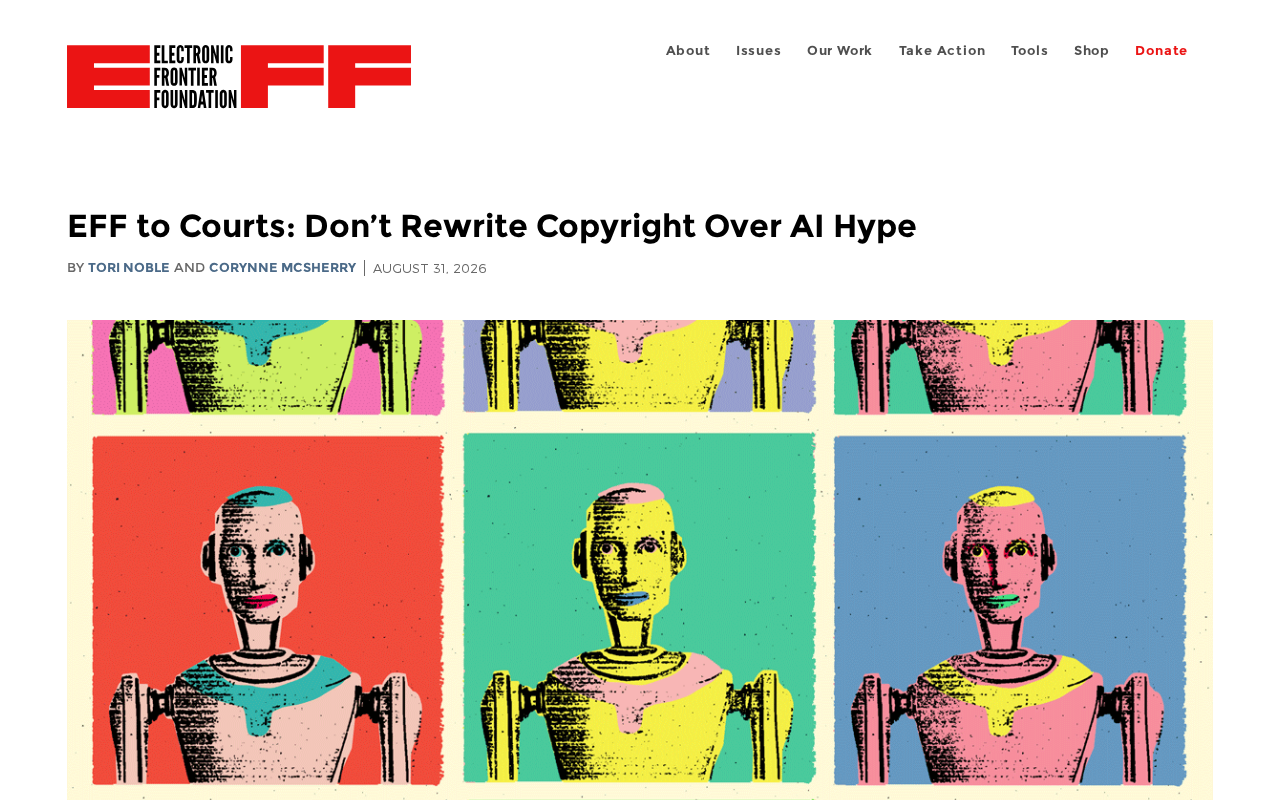
EFF urges courts to apply existing fair use principles to AI training rather than rewriting copyright law.
The Electronic Frontier Foundation (EFF) has called on courts not to rewrite copyright law in response to AI hype, arguing that AI training is akin to learning and falls within existing fair use protections. EFF warns that expanding copyright could stifle innovation, harm open-source communities, and entrench tech monopolies, while creators counter that unauthorized commercial use of their works demands new legal safeguards.
The Copyright Battle in the Age of AI: Why Is EFF Speaking Up?
With the explosive growth of generative AI, lawsuits over whether AI training data infringes copyright have been erupting around the world. Since 2023, copyright lawsuits against AI companies have surged globally. In the United States, the Authors Guild sued OpenAI and Meta for using copyrighted books to train models without authorization; The New York Times sued OpenAI and Microsoft for infringing on news copyrights; and Getty Images sued Stability AI for illegally using its image library to train image generation models. In the EU, publishers and copyright organizations across multiple member states have filed similar lawsuits. The core disputes in these cases include: whether AI training constitutes "copying," whether generated content qualifies as a "derivative work," and whether the fair use doctrine applies to commercial AI training.
Recently, the Electronic Frontier Foundation (EFF) issued a clear call to the courts: do not rewrite copyright law because of AI hype. This position has sparked widespread discussion across the tech and legal communities.
The Electronic Frontier Foundation (EFF), founded in 1990, is one of the world's most influential digital rights advocacy organizations. Headquartered in San Francisco, the organization has long been dedicated to defending civil liberties, privacy rights, and free speech in the digital age. EFF has been involved in numerous landmark digital rights cases, including opposing excessive Digital Rights Management (DRM), protecting encryption technologies, and defending net neutrality. Its legal team frequently files amicus curiae ("friend of the court") briefs to influence the outcomes of important technology law cases.
As a nonprofit organization with a long track record of championing digital rights, EFF's stance is not about siding with AI companies. Rather, it examines the boundaries and original intent of copyright law from a broader perspective. In the heated debate over AI training and copyright, this voice offers a legal perspective worthy of serious consideration. In the AI copyright controversy, EFF's position represents the digital rights community's concern for the freedom of technological innovation and the public interest.
EFF's Core Argument: Upholding Existing Copyright Legal Principles
AI Training Is a Learning Process, Not Simple Copying
EFF's central argument is this: when AI models "read" and analyze copyrighted works during training, the process is fundamentally similar to human learning — not simple copying. Understanding this argument requires familiarity with the technical mechanisms behind generative AI.
Generative AI refers to artificial intelligence systems capable of creating new content, such as the GPT family of language models, Midjourney's image generator, and Sora's video generation model. At the core of these systems are deep learning neural networks that learn statistical patterns and feature distributions by analyzing massive amounts of training data. During training, the model does not "store" copies of the original data; instead, it abstracts the data into mathematical parameters (weights). For example, a language model trained on billions of texts ultimately takes the form of hundreds of billions of floating-point numbers, not the original text corpus. When generating content, the model creates new material based on learned patterns, rather than retrieving and assembling original data. The legal characterization of this mechanism — whether it constitutes "learning" or "copying" — is the technical focal point of the current copyright debate.
The existing copyright law framework, particularly the Fair Use doctrine, already provides sufficient analytical tools for this type of transformative use. Fair Use, established under Section 107 of the U.S. Copyright Act, is a core principle that allows the use of copyrighted works without authorization under certain circumstances. Courts evaluate fair use by considering four factors: (1) the purpose and character of the use (whether it is transformative, whether it is commercial); (2) the nature of the original work (factual or creative); (3) the amount and substantiality of the portion used in relation to the whole; and (4) the effect on the market value of the original work. Historically, Google Books' digital library and search engine web caching have both successfully invoked the fair use doctrine. This principle is regarded as a key mechanism for balancing copyright holders' rights with the public's freedom to access information, and it is an important legal foundation of America's innovation ecosystem.
In other words, EFF believes courts do not need to create an entirely new set of copyright rules for AI. What is truly needed is the careful application of existing legal principles to new technological contexts — not a hasty rewrite of foundational law driven by panic or hype. This involves the assessment of Transformative Use.
Transformative use is a core concept within the fair use doctrine, originating from the 1994 U.S. Supreme Court case Campbell v. Acuff-Rose Music. The principle holds that if a new work adds new meaning, information, expression, or functionality to the original, substantially altering its purpose and value, it may constitute fair use. Classic examples include: thumbnails generated by search engines, parody works that satirize originals, and critical academic analysis of texts. In the AI context, proponents argue that converting millions of works into statistical model parameters for generating entirely new content is highly transformative; opponents question where the transformative nature lies when AI-generated content closely resembles training data. The boundaries of this concept will face new tests in AI copyright cases.
Beware the Dangerous Tendency of "AI Exceptionalism"
EFF specifically warns against a tendency they call "AI exceptionalism" — the notion that AI is so unique it requires entirely different legal treatment. The danger of this thinking is clear: once copyright law is expansively reinterpreted, the impact will extend far beyond the AI sector, affecting all technologies and activities involving information processing, analysis, and transformation.
The Potential Chain Reaction of Copyright Overreach
Fair Use Space Will Be Compressed
If courts rule that AI training constitutes copyright infringement and consequently expand copyright holders' control, the impact won't be limited to AI companies. EFF points out that the following legitimate activities could all be implicated:
- Search engine web indexing and caching
- Text mining and natural language processing research
- Large-scale data analysis in academic research
- Data-driven projects in open-source communities
The fair use doctrine has historically served as a vital buffer for innovation and free speech. Once this space is compressed, the innovative vitality of the entire digital ecosystem could be stifled.
High Licensing Barriers Could Intensify Market Monopolies
Another often-overlooked risk involves market structure. If AI training requires paying high licensing fees for every piece of data, only well-funded tech giants will be able to afford compliance costs. This would effectively push startups, open-source projects, and academic institutions out of the competition, creating de facto industry monopolies.
From this perspective, an overly strict interpretation of copyright would not only fail to protect creators but could actually consolidate the market dominance of a few large companies.
The Other Side of the Debate: Creators' Legitimate Rights
Of course, EFF's position also faces strong opposition. Many writers, artists, and content creators argue that AI companies using their works for commercial training without permission or payment is, in itself, an unfair extraction of value.
Their core challenge is this: When AI can generate content highly similar to training data and directly compete with original creators in the marketplace, does this really still qualify as "transformative use"? This disagreement is the focal point of numerous ongoing copyright lawsuits and the reason courts cannot reach simple rulings. Most of these cases are still being adjudicated with no final verdicts yet, but their outcomes will set important legal precedents for the global AI industry.
Deep Analysis: Where Is This Copyright Battle Heading?
The Long-Term Value of Legal Stability
Behind EFF's call is a deep respect for legal stability and predictability. In an era of rapid technological evolution, hastily rewriting foundational laws often produces unforeseen long-term consequences. By contrast, the gradual application of existing fair use principles can chart a more balanced path between protecting creators and encouraging innovation.
The Boundary Between Legislation and Judiciary: Who Should Lead Rule-Making?
Interestingly, EFF argues that major policy adjustments of this nature should be led by legislatures, not courts. The role of courts is to interpret and apply existing law, not to create entirely new rights frameworks through individual cases. If society truly believes the AI era requires new copyright rules, those changes should come through open, transparent legislative debate — not be hastily shaped in the heat of litigation.
Conclusion: Finding Balance Between Innovation and Protection
EFF's statement injects a dose of calm, rational thinking into the noisy AI copyright debate. It reminds us that when facing new technologies, both panic and hype can lead to poor legal decisions.
Regardless of one's ultimate position, in the contest between AI and copyright law, we need to find that subtle yet critical balance among three imperatives:
- Protecting creators' legitimate rights
- Preserving the public's freedom to access information
- Fostering the continued advancement of technological innovation
This debate is far from over, and its outcome will profoundly shape the trajectory of digital innovation for decades to come.
Related articles
Fable 5.1 Cracks 373-Year-Old Cipher: AI Reasoning Achieves Real-World Breakthrough
AI evaluation firm Vals AI claims its Fable 5.1 model cracked the 373-year-old Cyphral Distich cipher. An in-depth analysis of the technical significance, historical cipher-breaking challenges, and LLM reasoning capabilities.
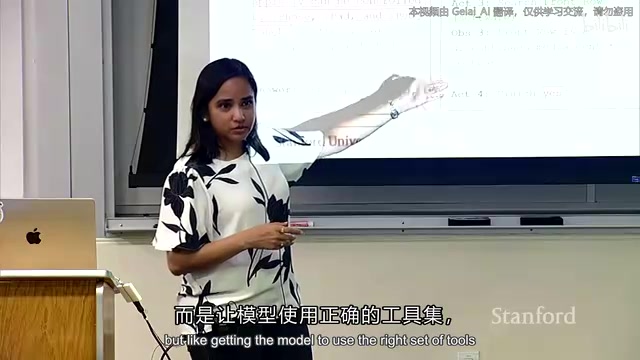
Stanford AI Course: Three Feedback Mechanisms That Enable Agents to Self-Evolve
Deep dive into Stanford's AI Agents Lecture 4: how ReAct, RLEF execution feedback, and Constitutional AI self-critique create three feedback loops driving LLM agent self-evolution.

CGI: The First Open-Source GPU Compute Pricing Index, Making Compute Pricing Transparent
Computable GPU Index (CGI) is the first open-source GPU compute pricing index, denominated in USD per GPU-hour, calculated from a fixed provider panel with mathematical rigor and full verifiability. This article analyzes CGI's core features, the importance of compute pricing indices, and the potential for compute financialization.