Elva: The API Management Tool Built for AI Agents — Can It Replace Postman?
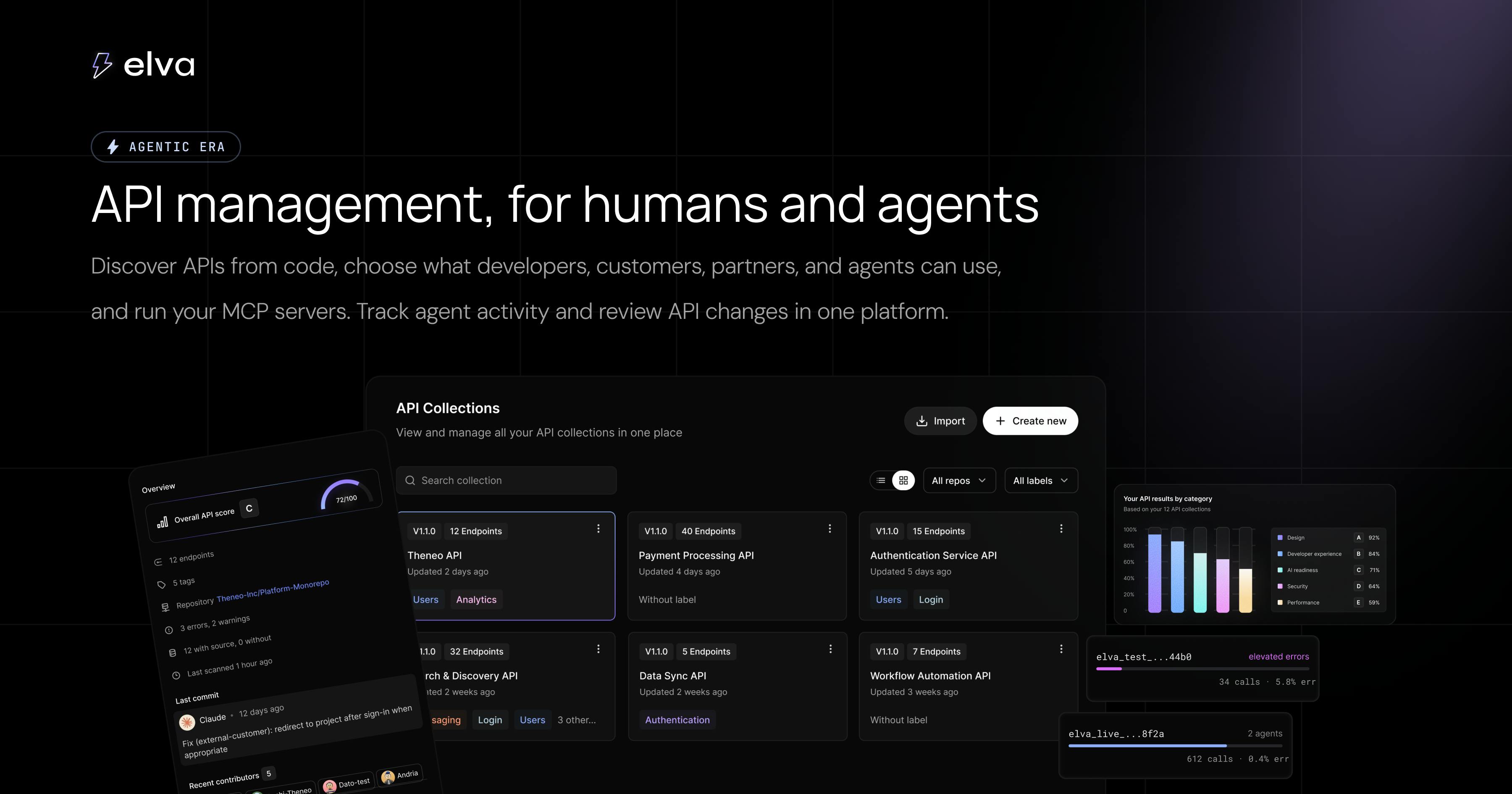
Elva is an API management platform built for the AI Agent era, offering auto-discovery, audience-based auth, and MCP hosting.
As AI Agents become a new class of API consumers, traditional human-centric API toolchains face structural challenges. Elva is an emerging API management platform that positions itself as the answer, combining automatic API discovery from code, audience-based access control, and MCP server hosting with built-in auth and analytics. Rather than a direct Postman replacement, it's more of a unified layer bridging API gateways, MCP hosting, and observability for the dual-audience era of human developers and AI Agents.
When API consumers expand beyond human developers to include AI Agents, the toolchain around APIs begins to restructure itself. Elva, a new product that recently reached #6 on Product Hunt, is making a bold claim: "Goodbye, Postman. Your APIs have new consumers." It aims to solve a core problem: as more and more AI Agents begin calling your endpoints, how do you manage, authorize, and monitor these new "consumers"?
A New Challenge for API Management in the Agent Era
For the past decade or so, Postman has been the default tool for API debugging and testing — built for human developers who manually craft requests, inspect responses, and write test cases. But with the rise of LLM-powered AI Agents, the nature of API consumption has fundamentally changed: Agents autonomously discover, understand, and call endpoints to complete tasks.
This introduces a new set of problems. When a human developer calls an API, there's clear intent and context. Agent behavior is far less predictable and can occur at a much larger scale. Who is calling? What are they calling? Which endpoints should be exposed to Agents, and which should remain internal? Traditional API management tools were never designed for this kind of "dual-audience" scenario. Elva is positioning itself squarely in that gap.
Breaking Down Elva's Core Capabilities
Based on its Product Hunt listing, Elva is built around the goal of "making APIs serve multiple types of consumers," and delivers several key features to that end.
Auto-Discovery of APIs from Code
Elva can automatically discover API endpoints directly from your codebase, meaning developers don't need to manually maintain an interface inventory. As code evolves, Elva also supports reviewing changes — keeping interface modifications in a trackable state. This "code as the source of truth" approach is far more aligned with real engineering practices than manually maintaining documentation.
Audience-Based Access Control
One of Elva's differentiating design choices is its audience-based management model. You can decide which endpoints each type of consumer can access — human developers are one audience, AI Agents are another. This fine-grained permission model directly addresses the core challenge mentioned above: different callers should have different visibility scopes and permission boundaries.
Running MCP Servers with Built-in Auth and Analytics
Elva supports running MCP (Model Context Protocol) servers with built-in authentication and analytics capabilities. MCP is an increasingly important protocol standard for connecting LLMs with external tools and data sources. By wrapping APIs as MCP servers, Elva enables Agents to call these capabilities in a standardized way. The built-in auth enforces security boundaries, while the analytics layer lets you track agent activity — a critical feature as Agent-driven API calls become increasingly frequent.
What is MCP? The Model Context Protocol was proposed and open-sourced by Anthropic in late 2024. Its goal is to give LLMs a unified way to connect with external tools, databases, and services. Before MCP, every AI application required custom integration code for each data source or API, with no interoperability. MCP's core idea is to abstract external capabilities into three primitives: "tools," "resources," and "prompts," allowing LLMs to discover and invoke them in a standardized way. Claude, Cursor, Zed, and other mainstream AI applications already support MCP, and the server ecosystem around it is growing rapidly. Wrapping an API as an MCP server means any MCP-compatible AI client can directly discover and call those endpoints — and this is precisely Elva's technical foothold in the Agent infrastructure space.
Positioning: More Than Just "A New Postman"
Despite naming Postman in its tagline, Elva isn't simply trying to build "a debugging tool for Agents." It looks more like a management platform sitting somewhere between an API gateway, MCP server hosting, and observability tooling. Postman solves "how developers test and debug APIs." Elva is trying to solve "how you unify discovery, authorization, and monitoring when APIs serve both humans and Agents simultaneously."
These are not fully overlapping problems. Calling it a Postman replacement is primarily a marketing anchor — using a familiar reference point to quickly communicate its positioning. The real competition will likely play out in MCP hosting, API gateways, and the emerging Agent infrastructure space.
A note on API gateways: Traditional API gateways are middleware layers in backend architecture responsible for unified API access management — handling traffic routing, authentication, rate limiting, logging, and more. Prominent examples include Kong, AWS API Gateway, and Apigee. Elva's key difference is that it treats "AI Agents as a distinct class of caller," designing its permission model and observability specifically around Agent behavior. Traditional gateways typically distinguish callers by service account or API key, but Agent calls are autonomous, non-deterministic, and potentially high-frequency — requiring more granular behavioral tracking and access control. Elva attempts to layer MCP hosting and Agent-specific analytics on top of gateway capabilities, forming a unified layer for new calling patterns. That's its primary differentiator from existing API gateway products.
Key Things Worth Watching
Elva received 110 upvotes and 30 comments on Product Hunt, ranking #6 for the day — a notable debut for a new face in the API and developer tools category. But as an early-stage product, there are a few dimensions worth monitoring:
First, the accuracy and coverage of automatic API discovery — whether it can truly achieve "zero manual maintenance" depends on how well it adapts to different frameworks and coding styles. Second, the MCP ecosystem itself is still evolving rapidly; whether Elva as a hosting provider can keep pace with protocol iterations remains to be seen. Third, the depth of its analytics and observability — tracking Agent activity sounds straightforward, but delivering meaningful insights (anomalous calls, cost attribution, behavioral analysis) requires substantial data infrastructure.
For teams exploring how to connect their APIs to the Agent ecosystem, Elva offers an interesting angle: rather than patching traditional tools, adopt a management layer designed from the ground up for the Agent era. Whether it can truly make people "say goodbye to Postman" still needs to be validated in real engineering environments.
Summary
Elva's emergence reflects a shift that's already underway: AI Agents are becoming a new class of API consumers, and the tooling around their development, authorization, and monitoring is being redefined. Its combination of automatic code-based discovery, audience-specific authorization, MCP hosting, and activity analytics targets a market that remains largely underserved. Whether the product is mature enough for production use is yet to be proven — but the direction it points toward, rebuilding API infrastructure for Agents, is unquestionably one of the most compelling problems in developer tooling today.
Related articles
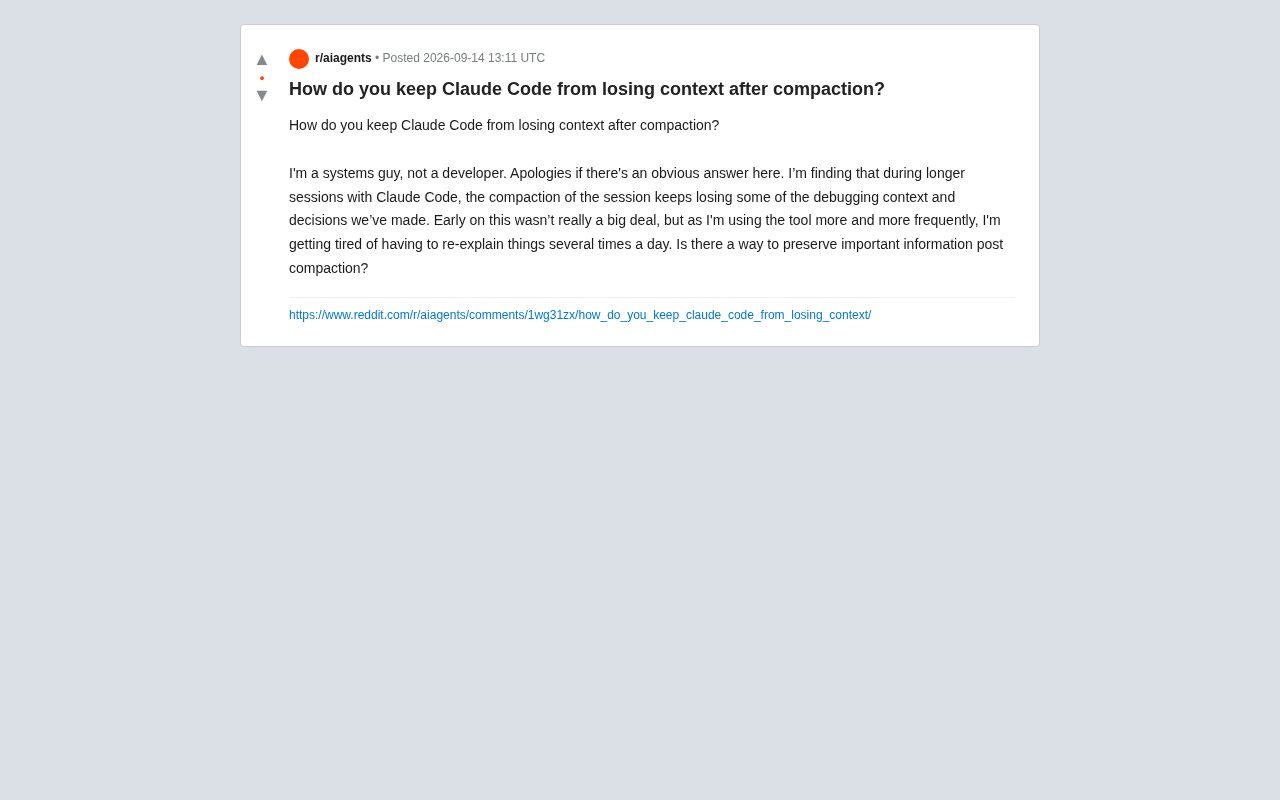
Losing Memory After Claude Code Context Compaction? Practical Solutions Explained
Claude Code losing debugging context after compaction? Learn how CLAUDE.md persistent memory, manual /compact control, session splitting, and external records solve the problem.
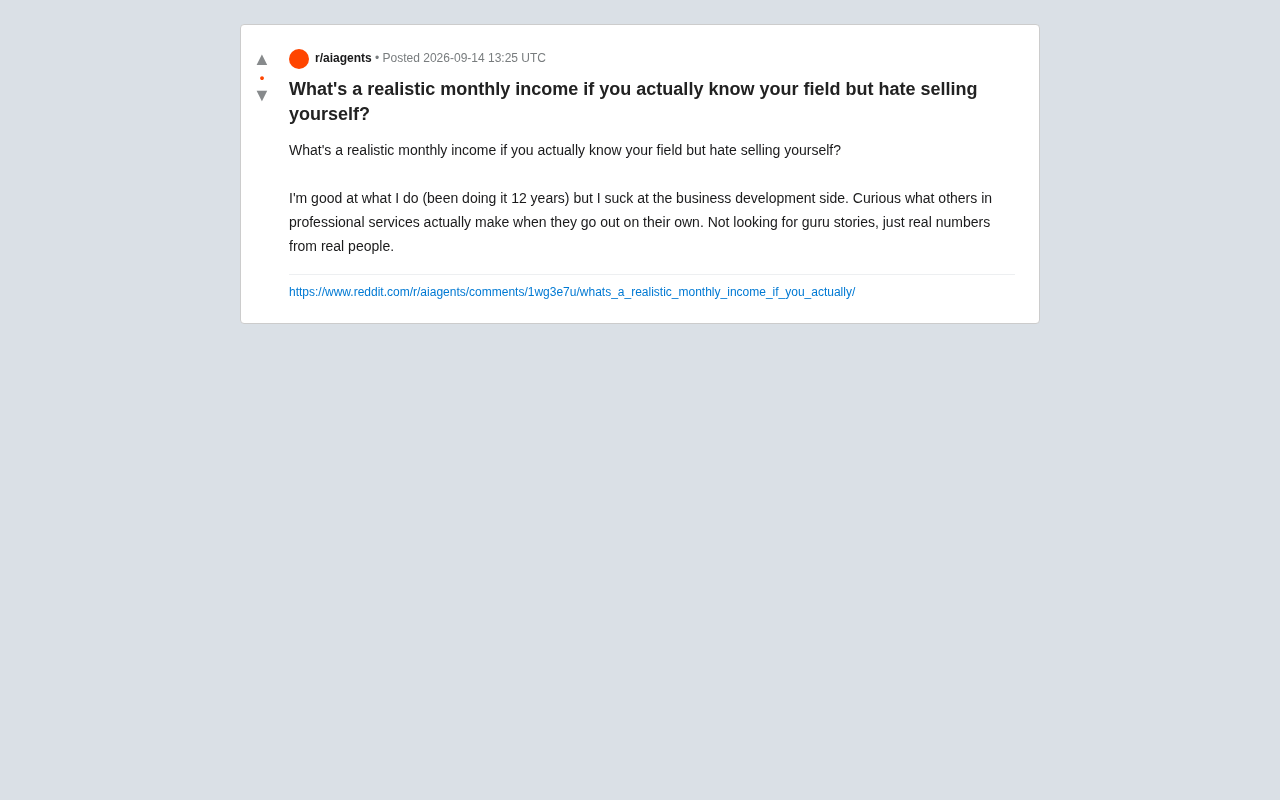
Great at the Work, Bad at the Hustle: A Realistic Look at Monthly Income for Independent Professionals
Can a 12-year professional who hates self-promotion earn well independently? Explore real Reddit insights on income expectations and non-sales client acquisition paths.

COGEXT: A Verification Layer That Gives AI Agents a "Lie Detector"
COGEXT is a verification layer for AI Agents like LangChain that extracts commitments and cross-checks them against Gmail, GitHub, and other external systems to catch agents lying about task completion.