Embodied AI Briefing: Gemini 4 Argon Teaches a Humanoid Robot to Play Sandbag Toss

Multimodal foundation models accelerate integration into robot control, with video-to-simulation pipelines greatly compressing modeling cycles.
This briefing focuses on the accelerating integration of multimodal foundation models with robot control. Google DeepMind demonstrated Gemini 4 Argon enabling the Apollo 2 humanoid to learn sandbag tossing in hours via a Video-to-SIM-to-REO pipeline, landing 7 consecutive hits and compressing weeks of modeling into hours. Neura Robotics released Neuron AI, a Physical AI foundation model fusing five modalities with a memory mechanism. Research advances include Pilot, LoopWAM, and AXIS in single-stage RL, closed-loop learning from failures, and demonstration quality; Aloha's preprint improves contact-rich task success via structured tactile representation. Hardware-wise, BTM's UB108 chip and multiple dexterous hands show compute and actuators remain key bottlenecks.
Video-to-SIM-to-REO: Gemini 4 Argon Lets a Robot Learn Sandbag Toss in Hours
Google DeepMind showcased an internal test on its official YouTube channel: Gemini 4 Argon watches a video of a human playing sandbag toss, builds a simulation environment in MU9, and computes physics and whole-body control policies. The Aptronic Apollo 2 humanoid robot running this pipeline ultimately landed 7 consecutive hits on target. Its core Video-to-SIM-to-REO pipeline compresses a modeling process that traditionally takes weeks into just a few hours.
The value of this case lies not in "a robot can play sandbag toss" itself, but in validating a path—using multimodal large models to directly extract physical priors from human videos, then transferring them to real robots via a simulation closed loop. Traditional robot skill development relies on engineers manually modeling and tuning parameters, whereas Gemini 4 Argon demonstrates the prototype of "learn it after watching once." Of course, the action space of sandbag throwing is relatively limited; whether this pipeline can extend to tasks involving more complex contact and more sensitive dynamics remains unclear, as no public data is available to judge.
REO (Real-to-Environment Optimization) in this context broadly refers to the final stage of transferring simulation policies to real robots, typically including domain randomization, system identification, and online fine-tuning, to bridge the dynamics and perception gap between simulation and reality (Sim-to-Real Gap). In traditional pipelines, this stage heavily depends on engineers' repeated trial and error; Video-to-SIM-to-REO incorporates it into an end-to-end process, letting multimodal large models simultaneously handle physical prior extraction and transfer strategy generation. It should be noted that this term is not a widely recognized standard abbreviation in academia; it is closer to a vendor's branded name for its own pipeline.
Neura Robotics Releases Multimodal Physical AI Foundation Model Neuron AI
According to Robotics & Automation News, Neura Robotics has released the multimodal Physical AI foundation model Neuron AI, fusing five input modalities—3D vision, touch, audio, robot state, and language—and introducing a memory mechanism. The model adopts a Perception-Language-Action architecture, with training data covering three sources: real robot collection, simulation augmentation, and human demonstrations.
The "memory" design of Neuron AI is a direction worth watching. Most current VLA models are "stateless" at each inference, meaning the robot cannot use the context of previous steps to adjust subsequent behavior. Introducing memory means the model can maintain consistency along the temporal dimension, which is crucial for long-horizon manipulation tasks (such as multi-step assembly). However, Neura has not yet published specific benchmark data or model scale, so actual performance remains to be verified.
VLA (Vision-Language-Action) models are a class of models that directly map visual observations and natural language instructions to robot action sequences, typically composed of a vision encoder, a language model backbone, and an action decoding head (e.g., RT-2, OpenVLA). Their "stateless" nature stems from each inference relying only on the current observation window; historical actions are not written into the model's internal memory. Therefore, in long-horizon tasks such as multi-step assembly, context loss and error accumulation are prone to occur. By introducing a memory mechanism, Neuron AI essentially aims to extend VLA from Markov-style decision-making to sequence decision-making with historical state along the temporal dimension—one of the current hot directions in embodied intelligence research.
Hardware and Chip Developments
BTM Completes $14 Million Financing, First Chip UB108 Emerges
According to Robotics & Automation News, BTM has completed a new $14 million seed round, bringing cumulative funding to $18 million, to develop a general-purpose processor for machines that "perceive, think, and act." Its first chip, UB108, contains 256 processing units and uses Samsung's 8nm process, aiming to validate the unified operation of signal processing, AI inference, and real-time control on a reconfigurable array.
Robots' compute needs differ fundamentally from cloud inference: latency-sensitive, power-constrained, and required to handle both signals and control simultaneously. UB108 attempts to cover these three types of workloads with a single reconfigurable architecture—an approach different from traditional "CPU+GPU+FPGA" patchwork solutions. But from tape-out validation to mass production and deployment, there is still a long engineering process ahead.
Dexterous Hands and Bionic Hands: From 15 DOF to 1.4 kg
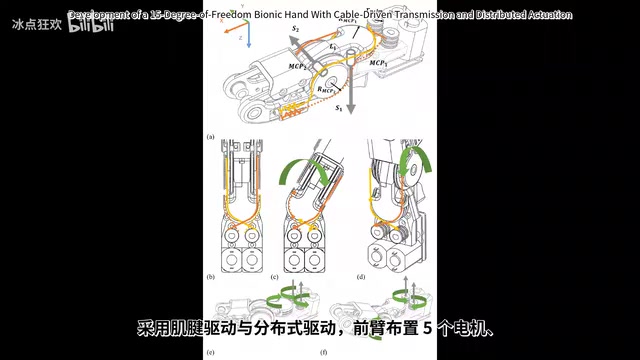
According to a paper in IEEE/ASME Transactions on Mechatronics, a 15-DOF bionic dexterous hand adopts a base-joint actuation and distributed actuation scheme—5 motors arranged in the forearm and 10 motors inside the palm, with the entire hand weighing only 1.4 kg. The paper states that experiments demonstrated dexterous manipulation and grasping capabilities, and plans to add base-joint tension and tactile skin sensors.
Dongyi Technology's official Weibo announced that it will debut its FiveHand series dexterous hands at the Canton Fair, and showcase the multi-site real-world deployment of the FiveBot C series humanoid robot, as well as the special-environment operation capabilities of the FiveBot D series quadruped robot dog. The event runs from October 15 to November 4 at the Canton Fair Complex in Guangzhou.
From Simulation to Deployment: New Advances in Reinforcement Learning and Imitation Learning
Pilot: A Single-Stage Reinforcement Learning Framework for Unstructured Scenarios
The Pilot paper included in IEEE Xplore proposes a unified single-stage reinforcement learning framework for local manipulation of humanoid robots in unstructured scenarios, including a cross-modal context encoder and a MoE (Mixture of Experts) policy architecture. Experiments were conducted in simulation environments and on a 29-DOF Unitree G1 physical robot. The paper claims that it outperforms baseline methods in stability, instruction tracking, and terrain traversability.
LoopWAM: A Closed-Loop World Action Model That Learns from Failure
The Archive preprint LoopWAM proposes a closed-loop world action model that can learn from rollouts of successful, suboptimal, and failed deployments, and unifies behavior learning and action-conditioned world modeling with primitive-dependent noise sampling. The paper reports that after three rounds of deployment training on Robot Challenge Table 30-VR, success rate increased from 23.67% to 43.33%, an improvement of 19.7 percentage points.
World Model refers to a model that learns environment dynamics and can internally predict future states and observations, often used to train policies in imagination to reduce real interaction costs. An action-conditioned world model further takes candidate actions as input conditions to predict what results an action will bring, thereby supporting planning and policy evaluation. The "closed-loop" meaning of LoopWAM lies in: real rollouts generated during deployment (including failure samples) are fed back into training to simultaneously update the behavior policy and the world model, forming a continuous data-model-deployment loop. This is also the key difference from one-time offline training schemes.
AXIS Benchmark: Is Demonstration Quality More Important Than Quantity?
The Archive preprint paper studies how demonstration quality is used in VLA pretraining, compares three strategies—weighting, filtering, and conditioning—and proposes the AXIS benchmark. The paper finds that method-aware episode conditioning on average outperforms ordinary behavior cloning, while long-quantity label fine-tuning can further improve success rate. In real experiments, simulation pretraining increased success rate from 9.6% to over 31.7%.
Behavior Cloning is the most basic imitation learning paradigm: treating state-action pairs in expert demonstrations as supervised data and directly fitting a policy. It is simple and efficient, but extremely sensitive to demonstration quality and state distribution—low-quality or suboptimal demonstrations can directly pollute the policy, and once the policy deviates from the demonstration distribution, it is difficult to recover. The three strategies mentioned in the paper—weighting, filtering, and conditioning—are precisely aimed at this: weighting adjusts loss weights according to sample reliability, filtering directly removes low-quality data, and conditioning uses quality labels as conditional input, letting the model learn to distinguish good from bad demonstrations and adjust output accordingly.
Data and Training: New Paradigms for Tactile and Interaction Variables
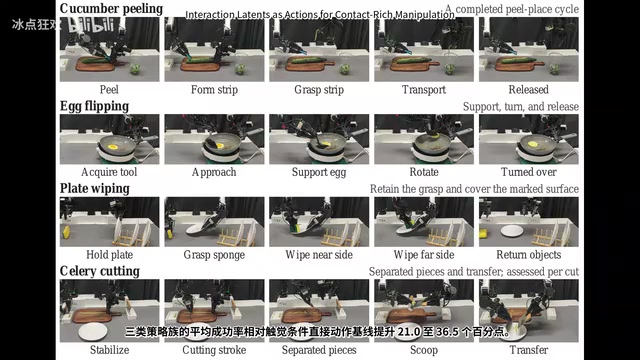
The preprint Aloha proposes decodable interaction latent variables as action units, jointly representing motion, contact, and force, and learns through vision-conditioned action tactile reconstruction. The paper reports that on four types of real contact-rich tasks, the average success rate of three policy groups improved by 21.0 to 36.5 percentage points relative to a tactile-conditioned direct action baseline. This result indicates that structured representation of tactile signals significantly improves contact-intensive manipulation tasks.
The Rob ACT paper from IEET TASE targets robust deployment of robot imitation learning under distribution shift, proposing two modules: dynamic geometric encoding and adaptive gated fusion. Experiments were conducted in five controlled scenarios involving garment manipulation and tool storage tasks. The paper claims its average success rate is 11.4, 20.4, and 35.6 percentage points higher than ACT, INTERACT, and DP, respectively.
Other Notable Developments
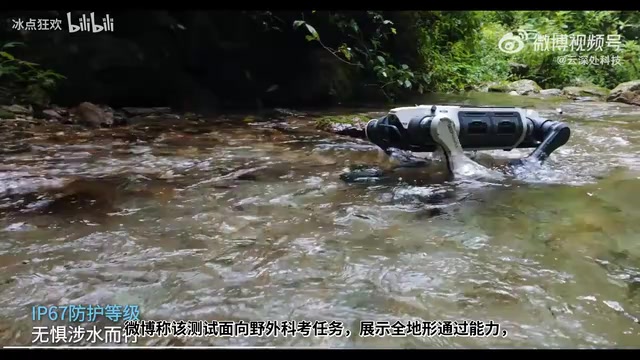
Deep Robotics' official Weibo posted a real-world test of the Lynx M20S robot dog traversing the pristine dense forest of Mount Elau, completing challenges such as climbing steep slopes, crossing dense forests, wading through streams, stepping through mud, and climbing over fallen logs in complex extreme environments, demonstrating all-terrain traversability for field scientific expedition tasks. The material did not provide quantitative metrics.
Symbiotic acquired Germany's Celomation, obtaining its Celovir software-driven decomposition technology. The technology consists of hundreds of independently controlled omnidirectional units that can decide where items go while moving. Symbiotic says it can increase throughput in smaller spaces and reduce equipment costs.
Intrinsic demonstrated at IMTS 2026 an Okuma ORS AI robot cell driven by Physical AI for high-mix CNC machine loading and unloading. Channel information states the solution shortens task setup time from hours to minutes and improves spindle utilization.
Scan Computers partnered with Olo Robotics to combine UniTree robot hardware with Olo's browser-based teleoperation simulation and autonomous navigation platform. The Olo platform runs on ROS2 and requires no installation, aiming to lower the barrier for teams without dedicated ROS developers.
Ulo released the Thinker WM project on Hugging Face, fine-tuned based on ONE 2.2T IRV5B. The paper abstract states that this unified multimodal world model jointly models RGB, depth, and action through a shared Transformer, trained on about 20,000 hours of egocentric video and 10,000 hours of robot data, and ranks first on three benchmarks.
The GitHub project Imtron Robotics Notebooks is a robotics knowledge base and wiki project, providing interconnected knowledge domains and learning paths for motion control, reinforcement learning and imitation learning, VLA, world models, etc. It uses the MIT license, is primarily written in Python, and has seen notable recent star growth.
The INCLET paper from IEET PAMI uses the internal knowledge of large language models to imagine task trajectories and generates task representations through in-context learning, for training embodied robots that follow natural language instructions. Experiments cover Franka Kitchen, CLEVR Robot simulation environments, and real Aloha robots. The paper claims it improves policy performance and training efficiency.
A Nature Communications paper proposes a controllable post-printing debonding curtain and phase separation strategy to prepare highly stretchable and high-strength DLP-printed hydrogels, with a fracture strain of 1100% and tensile strength of 3.7 MPa. The material enables pneumatic actuators with 8x volume expansion and can be used for load transport by soft robots in confined fluid environments.
Summary
The core thread of this briefing is the accelerating integration of multimodal foundation models with robot control: Gemini 4 Argon uses a video-to-simulation pipeline to compress modeling cycles, Neura Robotics' Neuron AI incorporates five modalities and a memory mechanism into a unified architecture, while studies such as Pilot, LoopWAM, and Rob ACT continue to iterate on robustness and data efficiency in reinforcement learning and imitation learning. On the hardware side, BTM's UB108 chip and multiple dexterous hand solutions indicate that compute and actuators remain key bottlenecks for industrialization.
One-line Summary
Multimodal foundation models are accelerating their integration into robot control, with video-to-simulation pipelines greatly compressing modeling cycles.
Paragraph Summary
This briefing focuses on the accelerating integration of multimodal foundation models with robot control. Google DeepMind demonstrated that Gemini 4 Argon, through a Video-to-SIM-to-REO pipeline, enabled the Apollo 2 humanoid robot to learn sandbag tossing in hours and land 7 consecutive hits, compressing traditional weeks-long modeling into hours. Neura Robotics released Neuron AI, a Physical AI foundation model fusing five modalities and introducing a memory mechanism. On the research side, works such as Pilot, LoopWAM, and AXIS made progress in single-stage reinforcement learning, closed-loop learning from failure samples, and demonstration quality utilization, respectively; the Aloha preprint significantly improved success rates on contact-intensive tasks through structured representation of tactile interaction latent variables. On the hardware side, BTM's UB108 chip and multiple dexterous hand solutions show that compute and actuators remain key bottlenecks for industrialization.
Related articles

Workbuddy for Absolute Beginners: How a Desktop AI Agent Fits Into Real Workflows
A beginner's guide to the Workbuddy desktop AI agent: installation, claiming credits, file management, and building automated workflows—compared with CodeX for fit and cost, helping professionals shift from AI question-askers to AI managers.

OpenAI's New Agent Stack: Computer Use, Decisions API, and Ultra-Fast Workflows
OpenAI Dev Day unveiled a new agent stack: Computer Use outperforms humans, Decisions API delivers ultra-low-latency classification via Luna, Agents API opens the same Computer Use capabilities, and GPT-6.1 Sol costs only one-seventh of Astra. Core updates, benchmark data, and developer insights.

Liang Wenfeng Open-Sources DeepInfo Inference Framework, Takes On U.S. Ban
DeepSeek open-sources its DeepInfo inference framework after its models, featuring GPU/CPU cross-pipelining, small-model prediction with large-model verification, and full Huawei Ascend and NVIDIA chip support—facing the U.S. federal ban head-on. This article analyzes its significance for AI deployment and open-source strategy.