Employees Refuse to Train AI: Workplace Ethics Dilemmas and Coping Strategies
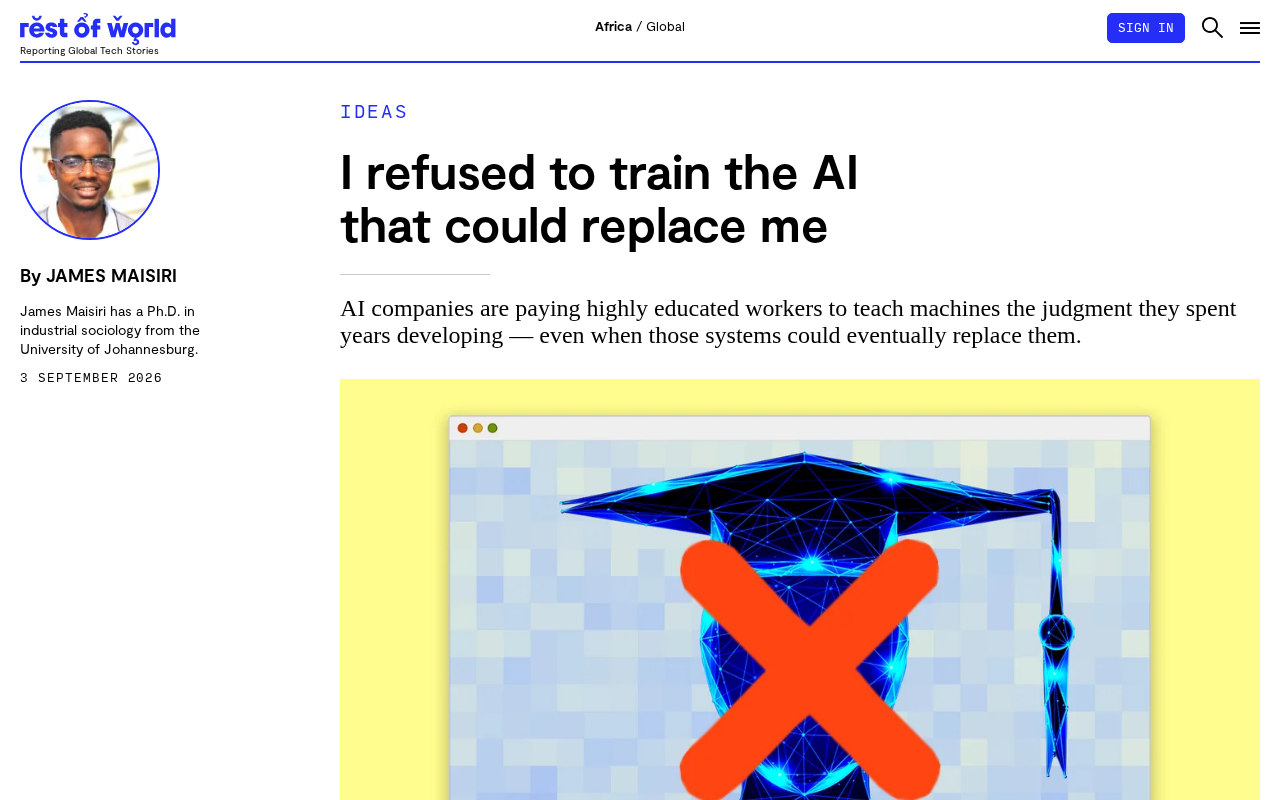
A tech worker's refusal to train their replacement AI sparks debate on workplace ethics in the AI era.
When companies demand employees train AI systems that could replace them, a new workplace ethics dilemma emerges. This article examines a tech worker's refusal on Hacker News, exploring the tension between technological progress and job security, corporate responsibility, and personal coping strategies in the age of AI transformation.
A Workplace Ethics Dilemma: When AI Threatens Your Livelihood
In today's era of rapid AI development, tech workers face an unprecedented moral dilemma: when your company asks you to train an AI system that could replace your own job, what would you choose? A tech professional shared their real experience on Hacker News—they chose to refuse.
About the Hacker News Platform: Hacker News is a tech news and discussion community founded in 2007 by Y Combinator, Silicon Valley's renowned startup accelerator. The platform's primary user base consists of tech professionals, entrepreneurs, and investors, and it's known for high-quality technical discussions and industry insights. Its voting mechanism (upvotes) effectively reflects the tech community's attention to specific topics. While 19 upvotes may seem modest, in HN's culture this indicates considerable resonance, as users are quite selective with their upvotes, typically voting only for truly valuable content.
This brief but resonant post quickly garnered 19 upvotes and multiple comments, reflecting that this is not an isolated case but a collective anxiety sweeping through the entire tech industry.
Employee Stance Amid the AI Replacement Wave
This professional's refusal is essentially a protest against current AI application models. In many companies' AI transformations, existing employees are asked to provide domain knowledge, label data, and optimize processes—yet the ultimate goal of these efforts is for AI to learn their job skills.
How AI Learns Human Work: Modern AI systems, particularly machine learning models, heavily rely on training data provided by humans. This process includes data labeling (tagging images, text, and other data), domain knowledge transfer (converting professional experience into learnable rules), and process optimization (documenting work steps for AI to imitate). For example, a customer service AI needs to learn from thousands of real customer service conversations; a code generation AI needs to analyze numerous coding patterns written by programmers. Within enterprises, those who best understand business processes are often the current position holders, making them ideal data sources for AI training—which is the root of the ethical dilemma.
This phenomenon is especially evident in software development, customer service, content creation, and similar fields. Companies often use labels like "improving efficiency" or "technology upgrade" to have employees participate in AI training, while remaining silent about layoff plans. Employees are in a disadvantaged position of information asymmetry—worried that refusal will be seen as uncooperative, yet afraid that cooperation will accelerate their own career crisis.
Balancing Technological Progress and Job Security
From a rational perspective, technological progress is an unstoppable trend. AI development will ultimately improve overall productivity and create new job opportunities. But this macro narrative often ignores individual pain during transitions—not everyone can smoothly transition to new positions, and new opportunities don't always promptly fill the gaps left by old positions.
Historical Lessons of Technological Unemployment: Technological unemployment refers to job loss caused by technological advancement. From the Industrial Revolution's textile machines to 20th-century factory automation, each technological leap has been accompanied by short-term unemployment pain. Economists hold two views: optimists believe new technology creates more new positions (like how the internet spawned countless new professions), while pessimists worry AI's replacement speed may exceed the creation rate of new positions. Unlike the past, AI's unique aspect is that it's beginning to invade white-collar and creative fields—previously considered safe professional bastions. A 2023 McKinsey study predicts that by 2030, approximately 12% of global jobs may need transformation.
Companies advancing AI applications should bear more responsibility:
- Transparent Communication: Clearly inform employees of the AI project's true goals and potential impacts
- Transition Training: Provide employees who may be replaced with opportunities to learn new skills
- Fair Compensation: If layoffs are unavoidable, provide adequate economic cushioning
Employees' right to refuse should also be respected. Forcing employees to train AI that replaces them is not only morally untenable but will also damage company reputation and employee loyalty in the long run.
Personal Coping Strategies
For tech workers in similar dilemmas, here are some potentially helpful suggestions:
Enhance Irreplaceability: Focus on abilities AI finds hard to imitate, such as creative thinking, cross-domain integration, and complex interpersonal collaboration. Purely execution-type skills are most easily automated.
Proactively Learn AI Tools: Rather than passively waiting to be replaced, actively master AI tools and become a highly efficient "human-AI collaborative" worker. People who can use AI won't be replaced by AI; people who can't use AI will be replaced by people who can.
What is Human-AI Collaboration: Human-AI Collaboration is one of the mainstream paradigms in current AI applications, emphasizing AI as a tool that augments human capabilities rather than a complete replacement. For example, AI assists doctors in reading images but doesn't diagnose independently; AI helps programmers generate code frameworks while humans complete architectural design. This model's core is leveraging respective strengths: AI handles large-scale data and repetitive tasks, while humans handle creative decisions, ethical judgments, and complex situational processing. The success of tools like GitHub Copilot and ChatGPT validates this model. However, this requires workers to continuously learn new tools and shift their work focus from execution to supervision, innovation, and strategic levels—itself a challenging transformation process.
Build a Career Safety Net: Cultivate diverse skills, expand professional networks, and build economic reserves. Don't stake career security entirely on a single employer.
The Industry Needs a New Consensus
The issues revealed by this case far exceed individual choice—they call for the entire industry to establish a new ethical consensus. In the AI era, we need to redefine the relationship between employees and enterprises, the balance between technological progress and social responsibility, and the tradeoff between short-term efficiency and long-term sustainable development.
Institutionalizing AI Ethics Exploration: Increasingly, organizations recognize the need to establish ethical frameworks for AI applications. The EU's AI Act, IEEE's Ethically Aligned Design standards, and others are attempting to regulate AI deployment. Core principles include: transparency (employees have the right to know how AI affects them), fairness (avoiding discriminatory layoffs), accountability (companies must be responsible for AI decisions), and human autonomy (preserving human final decision-making authority). Some forward-thinking companies have begun practicing this—Microsoft's "Responsible AI" principles require assessing each AI project's social impact, and Salesforce established a "Chief Ethical Officer" position. But in reality, most small and medium enterprises still lack such mechanisms, and employee protection depends on corporate self-discipline.
This "refusal" from a tech worker may be just the beginning. It reminds us that AI development shouldn't be driven solely by technical feasibility and commercial interests—it must also consider human dignity, job security, and social equity. Only within such a framework can AI truly become a tool that enhances human well-being rather than a threat that amplifies insecurity.
Related articles

OpenAI Partners with International Organizations to Support Independent Journalism in Ukraine
OpenAI partners with AIRPPU and WAN-IFRA on an AI initiative to boost Ukrainian news organizations' innovation, resilience, and editorial independence amid conflict.
Vercel AI Gateway: A Unified Gateway Connecting 300+ Models and Coding Agents with One Command
Deep dive into Vercel AI Gateway core capabilities: auto-configure 8 coding agents with one command, zero-markup access to 300+ models from 30+ providers, with zero data retention and compliance inference support.
NIXI Policy Changes Spark a Trust Crisis for .in Domains: How Developers Should Respond
NIXI policy changes spark a trust crisis for .in domains. This article analyzes ccTLD governance risks, ownership disputes, and offers practical advice for developers on domain selection and risk mitigation.