Energy Drinks and Cardiac Arrest Reports Surge 11-Fold: Concerns Over the Link
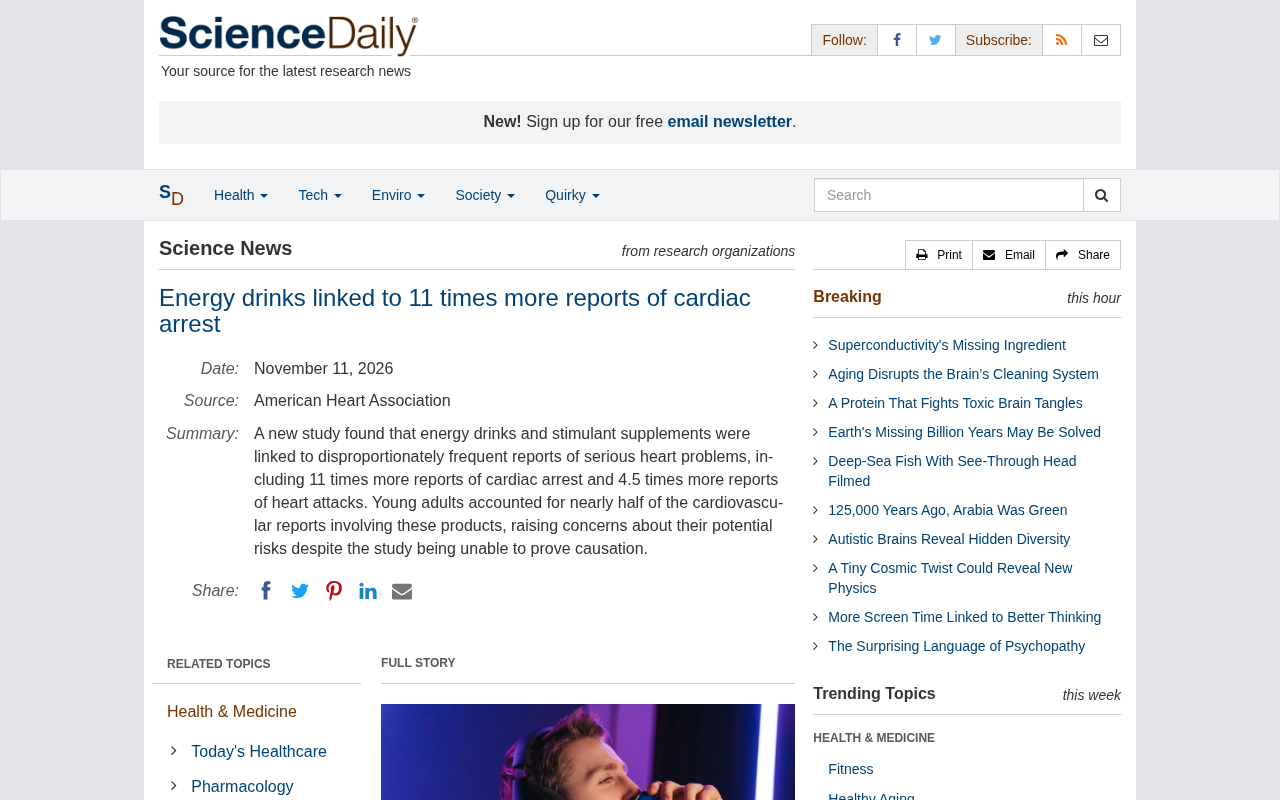
Energy drinks show an 11-fold increase in reported cardiac arrest associations—a signal, not a causal conclusion.
The article discusses a popular Hacker News thread about an "11-fold increase in reports linking energy drinks to cardiac arrest," stressing that the figure reflects report counts, not causation. It analyzes high-dose caffeine's cardiovascular effects, additional risks from drinking contexts, and the limits of pharmacovigilance systems. Community consensus acknowledges risks to youth; debate centers on regulation versus consumer freedom. It advises monitoring caffeine intake and improving industry transparency.
Energy Drinks and Cardiac Arrest: A Signal Worth Heeding
A striking discussion recently appeared on Hacker News: reports linking energy drinks to cardiac arrest have grown 11-fold. Though brief, this popular community thread touches on a long-sensitive topic at the intersection of the functional beverage industry and public health.
It's important to be clear: the "11-fold" figure in the title describes the increase in the number of reports, not a rigorous causal conclusion. In epidemiology and pharmacovigilance, a rise in adverse event reports may stem from multiple factors—a genuine increase in risk, heightened public awareness, more convenient reporting channels, and so on. The number should therefore be understood as a signal warranting further research, not a definitive verdict.
Why Energy Drinks Are Always Tied to Heart Problems
The core ingredients of energy drinks typically include high doses of caffeine, taurine, sugar or sugar substitutes, and B vitamins. Caffeine has the most direct effect on the cardiovascular system—it can temporarily raise heart rate and blood pressure, and in sensitive individuals or those with pre-existing heart conditions, excessive intake may trigger palpitations, arrhythmias, and other issues.
Another often-overlooked factor is the drinking context. Energy drinks are frequently used for late-night work, high-intensity exercise, or mixed with alcohol—behaviors that already place extra strain on the heart. When multiple risk factors stack up, the probability of adverse reactions in an individual rises significantly.
The Role and Limits of Reporting Systems
The value of pharmacovigilance and adverse event reporting systems lies in capturing signals, not proving causation. An 11-fold surge in reports indicates that more people experienced cardiac-related events after consuming energy drinks that warranted reporting—but this may simultaneously reflect a genuine increase in incidence, heightened reporting awareness driven by media coverage, and the statistical convenience of digitized reporting processes. Understanding this is essential to avoid overinterpreting the numbers.
Pharmacovigilance is the science of identifying, assessing, and preventing adverse drug reactions and adverse events, and one of its core tools is the spontaneous reporting system—where healthcare professionals, patients, or companies proactively report suspected events. Such systems have the advantage of broad coverage and the ability to capture rare signals, but they carry clear methodological limitations: first, they record only "reports" without providing a denominator (i.e., the size of the exposed population), so incidence rates cannot be directly calculated; second, reporting behavior is influenced by "notoriety bias"—when an event receives widespread media coverage, similar reports flood in, creating the illusion of a sudden surge; third, report quality varies widely, and causal determination requires additional evidence. Thus, the 11-fold increase should be viewed as a "signal worth investigating" rather than a quantitative measure of risk itself.
The pharmacological effects of caffeine on the cardiovascular system deserve separate mention. Caffeine exerts its stimulant effect by blocking adenosine receptors; adenosine has an inhibitory regulatory function in the heart, and blocking it leads to increased heart rate, vasoconstriction, and short-term blood pressure elevation. For most healthy adults, caffeine intake of up to 400 mg per day is generally considered safe. But the problem with energy drinks is this: a single can may contain anywhere from 80 to 300 mg of caffeine, and it is often consumed rapidly, causing blood concentrations to climb quickly. Moreover, the combined effects of caffeine with taurine, sugar, and other ingredients in energy drinks remain insufficiently studied; some animal experiments suggest that high-dose combinations may prolong the QT interval or induce arrhythmias. Adolescents and young adults, due to lower body weight and immature caffeine metabolism, often have higher exposure per unit of body weight, amplifying the risk accordingly.
Consensus and Divergence in Multi-Source Discussion
In the Hacker News discussion, community members generally agree that energy drinks have potential effects on the cardiovascular system, particularly the risks of high-caffeine formulations for adolescents and young adults. Some commenters noted that regulatory requirements for caffeine labeling on energy drinks differ from those for ordinary beverages, and consumers may not be fully aware of how much caffeine they are consuming.
Divergence centers on the degree of regulation. One side argues that high-caffeine energy drinks should be managed similarly to pharmaceuticals, with age restrictions or more prominent warning labels; the other side worries that over-regulation would restrict adult consumers' freedom of choice, advocating education and transparent labeling as the primary means. This divide has long persisted in the regulation of functional beverages and is unlikely to yield a unified conclusion in the short term.
On the current state of energy drink regulation, countries differ significantly. Since 2014, the EU has required beverages containing more than 150 mg/L of caffeine to be labeled "high caffeine content" with the amount per 100 mL noted; some member states, such as Lithuania, have pushed to ban sales to minors. The U.S. FDA regulates energy drinks as dietary supplements or conventional foods, with relatively lenient caffeine labeling rules; it has held multiple hearings on energy drink safety but has not introduced specific age restrictions. China manages energy drinks as ordinary foods or health foods, with explicit limits on caffeine addition. It is precisely this cross-national regulatory inconsistency that allows both the call to "manage them like pharmaceuticals" and the concern about "avoiding over-intervention" to coexist in community discussion. The fragmentation of regulatory frameworks also means that consumers in different markets face differing levels of informedness and risk disclosure.
Practical Implications for Consumers and the Industry
For ordinary consumers, the most pragmatic approach is to monitor total caffeine intake. Energy drinks are often not the only source of caffeine—coffee, tea, cola, and some supplements can all contribute. Those sensitive to caffeine, pregnant women, adolescents, and people with underlying cardiovascular conditions should be especially cautious about controlling or avoiding high-dose energy drinks.
For the industry, transparent ingredient labeling and clear risk disclosures are the foundation for building long-term trust. As the functional beverage market continues to expand, regulatory discussions around caffeine content, consumption recommendations, and warning information will only increase. This "11-fold reports" event is essentially a reminder: the cardiovascular safety of functional beverages requires more systematic monitoring and research, rather than remaining at the level of case-by-case discussion.
Conclusion
The 11-fold association between energy drinks and cardiac arrest reports is a signal that deserves serious attention but should not be simplistically amplified. It reminds us that while enjoying the short-term alertness boost from functional beverages, we also need to maintain a clear awareness of caffeine intake. Future regulatory developments and research findings will determine whether this topic remains a community discussion or drives substantive changes to industry standards.
One-line Summary
Energy drinks show an 11-fold increase in reported cardiac arrest associations—a signal, not a causal conclusion.
Paragraph Summary
The article centers on a popular Hacker News thread about an "11-fold increase in reports linking energy drinks to cardiac arrest," emphasizing that the figure describes the increase in report counts, not a rigorous causal conclusion. It analyzes the direct cardiovascular effects of high-dose caffeine in energy drinks, as well as the additional risks from drinking contexts such as late nights, exercise, and mixing with alcohol, and notes that while pharmacovigilance reporting systems can capture signals, the surge in numbers—influenced by heightened reporting awareness and statistical convenience—cannot be directly equated with a genuine increase in risk. Community consensus acknowledges the potential risks of high-caffeine formulations for adolescents and young adults, while divergence centers on the degree of regulation: age restrictions and warning labels versus consumer freedom of choice. The article concludes by advising consumers to monitor total caffeine intake and the industry to improve transparency in ingredient labeling and risk disclosure.
Related articles
Has the AI Bubble Burst? A 45-Day, $6 Trillion Loss Post-Mortem
US stocks shed $6 trillion in 45 days—averaging $225B daily for 31 sessions. Has the AI bubble burst? A deep-dive post-mortem of six converging headwinds and what's already priced in.

AI Historical Comic Drama Goes Viral: Why the Zhu Yuanzhang Theme Outperforms Real Actors
An AI-generated historical comic drama went viral on Bilibili, with viewers saying its acting beats real people. We analyze its tech pipeline, narrative logic, and industry impact.

Bin's Live Stream Highlights: Hilarious Interactions from "You Came at the Right Time" to "I'll Support You From Now On"
Bin's hilarious live stream highlights: from "You came at the right time" to "I'll support you from now on," featuring Championship skins, wigs, and other game memes that showcase Bilibili's unique streaming culture.