Enter Pro: A Deep Dive into the AI-Native All-in-One Application Development Platform

Enter Pro offers an AI-native all-in-one platform to go from idea to production-grade software.
Enter Pro is an AI-native application development platform that integrates databases, authentication, payments, hosting, analytics, and localization into a single workspace. Unlike AI tools that only generate prototypes, it aims to deliver production-grade software. This article analyzes its full-stack capabilities, AI-native architecture, differentiation from competitors like Replit and Lovable, and the trade-offs of platform lock-in.
From Idea to Product: A New Paradigm in AI-Native Development
Building software that truly supports business operations has never been as simple as just writing code. Enter Pro, which recently launched on Product Hunt and surged to #2 for the day, takes direct aim at this pain point. This AI-native all-in-one application development platform, backed by 365 upvotes and 65 comments, has become a new focal point in the developer tools and No-Code space.
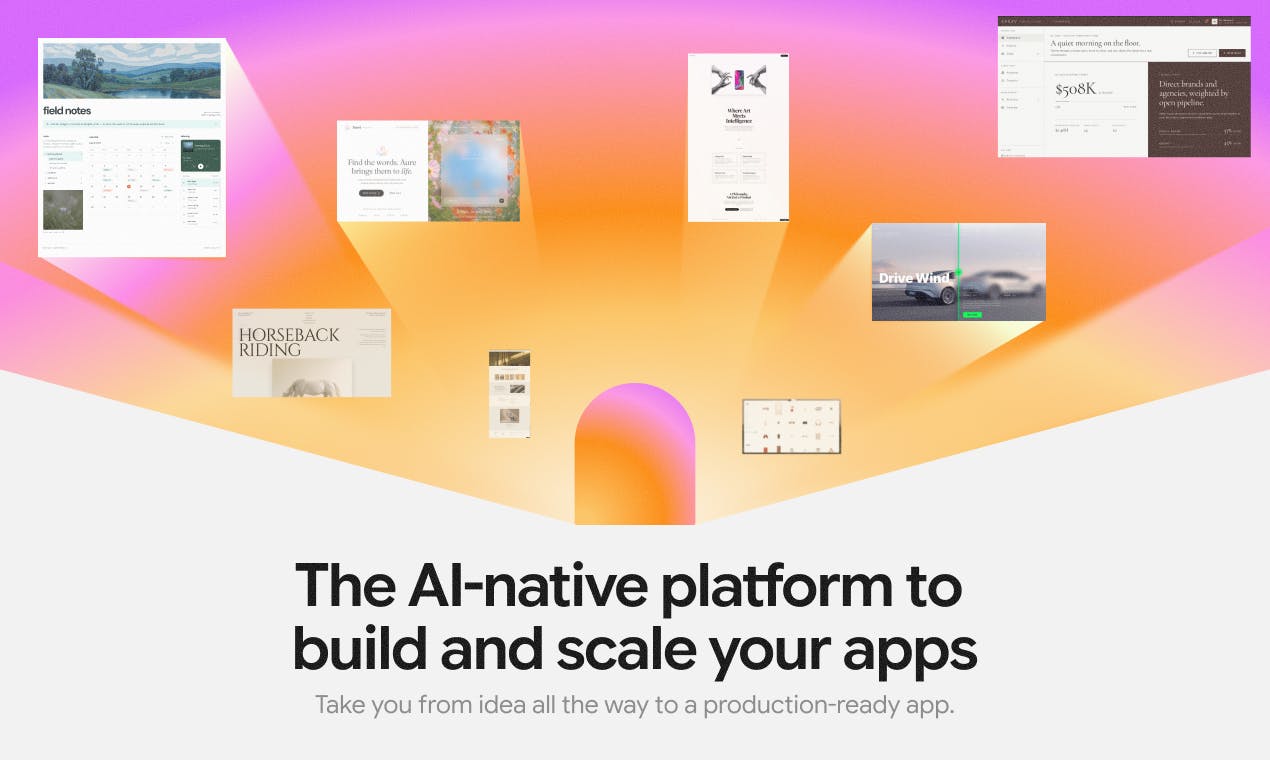
Its core proposition is clear: transform an idea directly into a working product. Planning, building, previewing, launching, scaling — apps, websites, and even custom AI agents — all completed within a single continuous workspace. This end-to-end, all-in-one positioning is fast becoming the high ground that the next generation of AI application development platforms is competing to claim.
The term "AI-native" refers to a software architecture paradigm where artificial intelligence is built in as a core capability from the very beginning, rather than bolted onto traditional software after the fact. The concept draws from the idea of "Cloud-native" — just as cloud-native applications are designed inherently for cloud environments, fully leveraging elastic scaling, microservices, and other cloud characteristics, AI-native applications use LLM reasoning capabilities, natural language understanding, and code generation as their foundational building blocks. In this architecture, every user interaction can trigger model inference, and the system's workflow orchestration, data processing, and interface generation are all coordinated by AI. The developer's core work shifts from writing code to describing intent, reviewing output, and fine-tuning results.
Built-in Full-Stack Capabilities: From Prototype to Production-Grade Software
Unlike many AI coding tools that can only generate prototypes, Enter Pro emphasizes that it delivers "software built for real business." The key to this distinction lies in the platform's built-in, production-grade infrastructure.
In software engineering, there is an enormous chasm between "production-grade" and "prototype-grade." A prototype only needs to prove a concept is viable, while production-grade software must meet a series of stringent requirements: data persistence and backup (ensuring user data isn't lost), authentication and authorization (preventing unauthorized access), HTTPS encryption and security protections (defending against cyberattacks), high availability and load balancing (handling traffic fluctuations), and compliance (such as GDPR data protection regulations). Together, these requirements form the invisible yet formidable wall between a demo and a viable, operational product.
Full-Stack Development Capabilities Out of the Box
According to official descriptions, Enter Pro integrates the following modules directly into the workflow:
- Models: Built-in AI model capabilities for building intelligent applications and custom AI agents
- Databases: Data persistence without additional configuration
- Authentication: User identity and permission management
- Hosting: Direct application deployment and launch
- Payments: Built-in monetization capabilities
- Analytics: Operational data visualization
- Localization: Multi-language support for global markets
The significance of this combination is that teams no longer need to stitch together dozens of third-party services. In traditional development workflows, teams typically need to integrate AWS/GCP or other cloud services for databases, use Auth0 or Firebase Authentication for identity management, connect Stripe for payments, and set up Mixpanel or Google Analytics for data analysis — each layer of integration involving API connections, key management, error handling, and version compatibility issues. The industry calls this work "glue code," which is estimated to consume 40%-60% of total development time in early-stage projects. For most early-stage projects, it's precisely this "glue work" that eats up enormous amounts of time — from technology selection and integration to debugging, it's often more tedious than the core business logic itself. Enter Pro aims to eliminate this friction with a unified workspace, letting developers focus on the product itself.
The Essential Difference Between "AI-Native" and "AI-Enhanced"
Interestingly, Enter Pro repeatedly emphasizes that it is "AI-native" rather than "AI-enabled." There is a fundamental difference between these two concepts, and understanding it helps assess the platform's actual capability boundaries.
AI-Native Architecture vs. Bolted-On AI Features
"AI-enabled" typically means layering AI features onto an existing product — such as adding a chat assistant or code completion. "AI-native" means AI is the core driving force of the entire platform — from the user describing requirements to the system automatically completing planning, generation, and preview, AI permeates the entire process.
In practice, this manifests as an entirely new development interaction model: developers (or non-technical users) express intent through natural language, and the platform is responsible for translating it into a runnable application architecture. This aligns with the rising trend of "Vibe Coding." Coined by OpenAI co-founder Andrej Karpathy in early 2025, Vibe Coding describes a programming approach where developers no longer write code line by line but instead describe functionality and "vibes" to AI through natural language. Karpathy himself described the experience as "fully giving in to the vibes, embracing exponential growth, and forgetting that code even exists." Tools like Cursor and Windsurf have already given this way of working an initial shape, though primarily at the code level. Enter Pro goes further by bringing monetization essentials like payments and analytics into the scope of AI orchestration, attempting to extend the Vibe Coding philosophy across the entire product-building lifecycle.
Built for Business Operations, Not Feature Demos
One line from the official copy carries significant weight: "ship software built for real business, not just prototypes." This hints at a pervasive pain point in the current AI development tools market — generated demos look impressive, but once you try to put them into actual operation, they fall short on production-grade requirements like data management, security, and payments. Enter Pro has staked its differentiation on "deployability."
Market Positioning and Competitive Landscape Analysis
The AI application development track that Enter Pro occupies is fiercely competitive. Today, new players in AI application building platforms emerge almost weekly — from Replit and Lovable to various low-code tools — all vying for the narrative of "enabling anyone to build apps."
Looking at the industry landscape, this track has formed a diversified competitive field. Replit was one of the pioneers, evolving from an online IDE to gradually introduce AI Agent capabilities that allow users to build applications through conversation. Lovable (formerly GPT Engineer) focuses on converting natural language descriptions into full-stack web applications. Bolt.new, launched by StackBlitz, supports generating, editing, and deploying complete applications through AI prompts in the browser. v0, built by Vercel, emphasizes AI generation of UI components. Additionally, traditional low-code/no-code platforms like Bubble and Webflow are actively integrating AI capabilities. These platforms share the common goal of lowering the barrier to software development, but each takes a different angle: some focus on front-end UI generation, others emphasize back-end logic completeness, and still others highlight deployment convenience.
Enter Pro's Differentiating Advantages
Based on publicly available information, Enter Pro's differentiation is primarily reflected in two areas:
First, a continuous, unified workspace. Rather than stitching various stages together, it enables planning, building, previewing, launching, and scaling to flow seamlessly within the same interface, reducing context-switching costs.
Second, deep integration of monetization infrastructure. Built-in payments and analytics mean users can build revenue-generating products from day one, rather than staying at the feature demo stage.
However, it's important to be objective: the ultimate value of such platforms depends on actual generation quality, maintainability, and performance when scaling to complex scenarios — none of which can be verified from launch information alone. The 365-upvote market response confirms that real demand exists, but whether the product can deliver on its "production-grade" promise remains to be proven through long-term use.
Conclusion: The Future Direction of AI-Native Development
Enter Pro represents a clear direction in the evolution of AI development tools: moving from assisting with code writing to end-to-end "running a product." It consolidates capabilities previously scattered across dozens of services into a single AI-driven workspace, aiming to make the path from idea to launch as short as possible.
For independent developers, small teams, and entrepreneurs looking to rapidly validate business hypotheses, the appeal of such all-in-one AI development platforms is obvious. Of course, an all-in-one approach can also introduce lock-in risk — when all infrastructure is tied to a single platform, migration and autonomy become trade-offs to consider. Vendor lock-in is a classic risk in enterprise technology decisions, with deep lessons already learned in cloud computing: many enterprises that deeply adopted AWS-specific services (such as DynamoDB and Lambda) found that migrating to another cloud platform was practically equivalent to rewriting the entire system. For all-in-one AI development platforms, lock-in risk is even more complex, involving not just the infrastructure layer but also whether AI-generated code can be exported, whether data formats are standardized, and what business continuity guarantees exist if the platform ceases operations. Code export capabilities, data portability, and standard API compatibility are becoming increasingly critical factors when users evaluate such platforms.
Regardless, Enter Pro's arrival once again confirms the trend of AI-native development moving from concept to mature product. As development barriers continue to fall, true competitive advantage will return to a deep understanding of user needs and the value proposition of the product itself.
Related articles

Chain of Thought Isn't Just for AI: How Humans Can Use CoT to Improve Thinking Quality
Chain of Thought isn't just a prompt trick for large models. Starting from a Hacker News discussion, this article analyzes why CoT works for human thinking too, breaks down actionable ways to transfer it, and highlights the key differences between human CoT and machine CoT.
Cloudflare Teams Up with OpenAI: Closi…
Cloudflare Teams Up with OpenAI: Closing the Loop from Vulnerability Discovery to Defense with AI
Cloudflare uses OpenAI Daybreak to investigate security vulnerabilities and generate reviewable remediation plans, while developers use Codex to boost coding efficiency and quality.

Orca Multi-Agent Orchestration in Practice: A Guide to Parallel Collaboration with Claude and Codex
Orca is Stable AI's free open-source agent workbench supporting 34 agents like Claude Code and Codex in parallel. Learn its Git worktree isolation, multi-model orchestration, and mobile management.