Escalating Controversy: Why At Least 10 Local Governments Are Dropping Flock Surveillance Cameras

At least 10 local governments dropped Flock surveillance cameras over privacy, data sharing, and procurement issues.
Over the past summer, controversy over AI license plate recognition and surveillance camera vendor Flock spread from public discussion to government decision-making, with at least 10 local governments taking action to abandon or suspend use of its systems. The controversy centers on three issues: privacy concerns—devices continuously record vehicle trajectories and build travel profiles, triggering resistance to "imperceptible surveillance"; opaque data sharing—local governments struggle to control the ultimate destination of data flowing across agencies; and questioned procurement legitimacy—the contract signing process lacks transparency and public participation. The incident shows that AI products in public safety need not only technical performance but also social license in data governance, sharing rules, and procurement transparency—otherwise local government exits may only be the beginning.
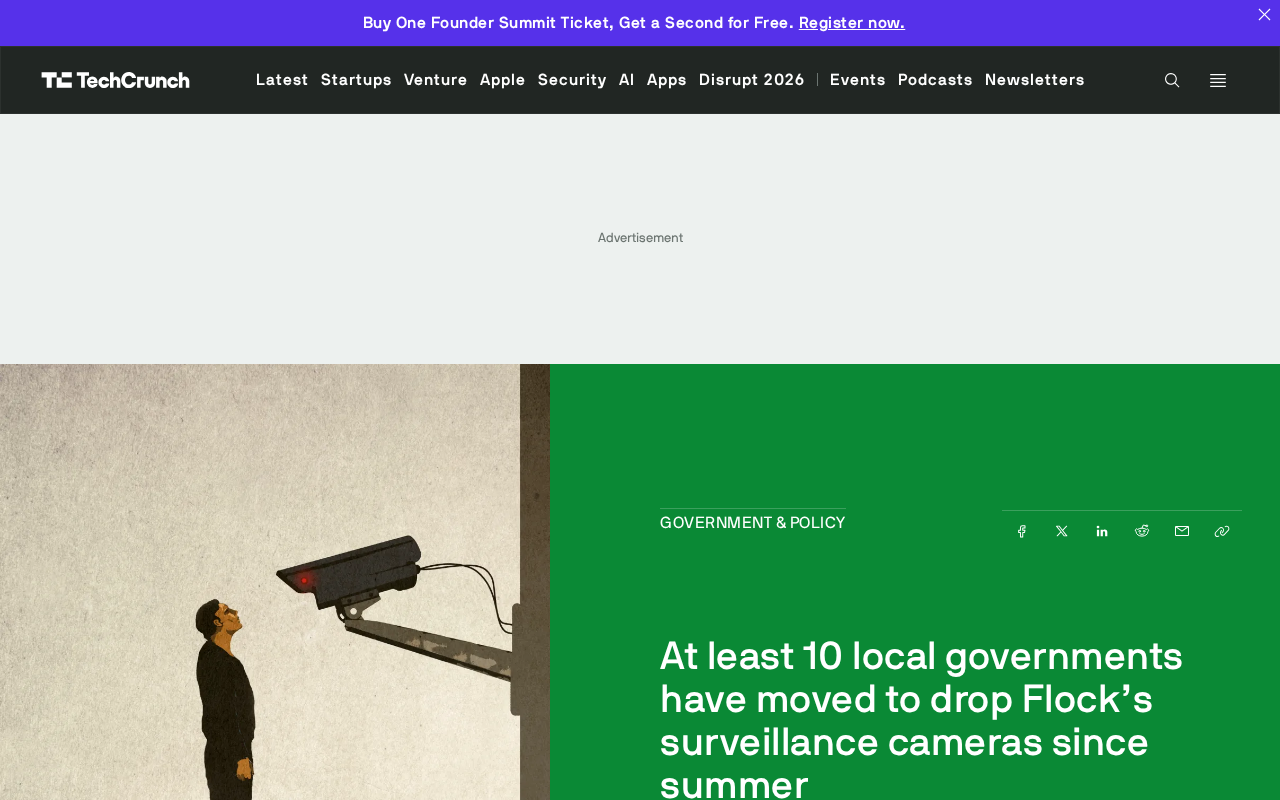
Over the past summer, the controversy surrounding AI license plate recognition and surveillance camera vendor Flock spread from public discussion to government decision-making. According to recent reports, at least 10 local governments have taken action to abandon or suspend use of Flock's surveillance camera systems. At the heart of this uproar is not simply technical merit, but the simultaneous eruption of three issues: privacy boundaries, data-sharing transparency, and government procurement processes.
Privacy Concerns: From "Passive Recording" to "Active Tracking"
The primary concern of local governments about Flock cameras is privacy. These devices typically have license plate recognition and vehicle trajectory analysis capabilities, continuously recording vehicle movements and building searchable travel profiles. As surveillance network density increases, a tool originally intended for case investigation could evolve into systematic recording of the public's daily activities. For local communities that value civil rights, the unease brought by this expansion of capability has exceeded the persuasive force of public safety benefits.
Some local governments, after evaluation, concluded that the scope of device deployment and data retention periods lack sufficient constraints, and community members cannot effectively know when they are being recorded or how long data is retained. This resistance to "imperceptible surveillance" is an important driver prompting multiple local councils to re-examine their contracts.
License Plate Recognition (ALPR) Technology: Automated license plate recognition systems capture vehicle images through cameras, use optical character recognition (OCR) to extract license plate numbers, and record metadata such as time and location. Unlike ordinary surveillance, ALPR data can be stored in structured form and rapidly searched, thereby supporting long-term backtracking of specific vehicle trajectories. This capability enables law enforcement agencies to reconstruct vehicle movements, but it also raises concerns about mass surveillance. Understanding the technical principles of ALPR helps grasp the core of the controversy: data is not only recorded but can be efficiently utilized.
Data Sharing: With Whom and How Much
What alarms decision-makers even more than privacy is the opacity of data-sharing mechanisms. According to reports, local governments' concerns include how data is shared and with whom. When surveillance data may flow across agencies, levels, and even regions, the local governments that originally authorized it find it difficult to control the data's ultimate destination.
These concerns are not unfounded. Once license plate recognition data is connected to a broader sharing network, local communities may unknowingly participate in surveillance activities beyond the scope of local authorization. If data-sharing agreements lack clear boundaries and audit mechanisms, local governments are effectively left with the responsibility and risk while ceding control to vendors and other parties with access.
Data-Sharing Agreements and Audit Mechanisms: In the surveillance data domain, sharing agreements typically specify data access permissions, purposes of use, and retention periods. The absence of audit mechanisms means it is impossible to track who accessed data and for what purpose. Local governments worry that data may be obtained by other agencies (such as federal law enforcement) through the vendor's network, thereby bypassing local authorization. Establishing clear sharing boundaries and independent audits is key to rebuilding trust, and this is one of the focal points of the current controversy.
Procurement Controversy: Procedural Legitimacy Also Questioned
Beyond privacy and data issues, controversy at the procurement level is also fermenting. Reports explicitly point out that local governments' concerns encompass procurement issues. This means some abandonment decisions stem not only from concerns about the technology itself but also involve whether the contract signing process was transparent and whether the terms adequately protect the public interest.
When the procurement of a surveillance technology lacks sufficient public discussion and competitive procedures, even if the technology itself is compliant, it easily gives rise to legitimacy disputes. Local governments choosing to terminate cooperation under dual pressure from public opinion and law are, to some extent, also restoring the credibility of the procurement process.
Due Process in Government Procurement: Public procurement typically requires transparency, competition, and public participation to ensure rational use of public funds and protect the public interest. For surveillance technology, due process also includes privacy impact assessments and community consultation. If the procurement process lacks these elements, even compliant technology may be questioned due to procedural flaws. Local governments terminating cooperation are often seeking to restore procedural credibility and respond to public concerns about the legitimacy of surveillance technology.
Implications for the Surveillance Industry
The fact that at least 10 local governments have successively adjusted their positions in a short period indicates that surveillance technology vendors are facing a stricter scrutiny cycle. Technical capability is no longer the sole selling point; data governance architecture, the explainability of sharing rules, and willingness to cooperate with government procurement transparency are becoming key to retaining public-sector clients.
For Flock and similar companies, this uproar serves as a reality check: for AI products in the public safety domain, social license is as important as technical performance. If convincing answers cannot be provided on privacy protection, data flows, and procurement processes, local government exits may only be the beginning.
Frequently Asked Questions
Why has the Flock camera sparked controversy?
The controversy centers on three points: continuous recording and tracking capabilities at the privacy level, opacity regarding data-sharing recipients and scope, and whether government procurement processes are legitimate.
Does local government abandonment mean surveillance technology is rejected?
Not necessarily. Abandonment reflects more a distrust of governance mechanisms than a wholesale rejection of technological value. If data rules and procurement transparency improve, there is still room for cooperation to resume.
Will this trend spread?
At least 10 local governments have already taken action, creating a demonstration effect. Other regions will likely scrutinize data-sharing terms and privacy protection measures more strictly when renewing contracts or making new procurements.
One-line Summary
At least 10 local governments have dropped Flock surveillance cameras over privacy, data-sharing, and procurement concerns.
Paragraph Summary
Over the past summer, the controversy surrounding AI license plate recognition and surveillance camera vendor Flock spread from public discussion to government decision-making, with at least 10 local governments taking action to abandon or suspend use of its systems. The controversy centers on three issues: privacy concerns—the ability of devices to continuously record vehicle trajectories and build travel profiles has triggered resistance to "imperceptible surveillance"; opaque data sharing—local governments find it difficult to control the ultimate destination of data flowing across agencies; and questioned procurement legitimacy—the contract signing process lacks transparency and public participation. The incident demonstrates that AI products in the public safety domain need not only technical performance but also social license in data governance, sharing rules, and procurement transparency—otherwise local government exits may only be the beginning.
Related articles
 Tech Frontiers
Coldframe: A Honeypot Disguised as a Supermarket Freezer Controller
Coldframe is a honeypot disguised as Danfoss AK-SM 800A and Dixell XWEB freezer controllers, built as a single Python file that detects CVE-2025-41450 attempts and is identified as real devices on Shodan.
 Tech Frontiers
GRFNet: A Lightweight PyTorch Model Designed for Multichannel Time-Series Classification
GRFNet is a lightweight PyTorch model for multichannel time-series classification, originating from EEG decoding research. With only 3,847 parameters, it is based on the ROCKET architecture, combining random convolution kernels with learnable spatial filters, supports arbitrary input lengths, and will soon be evaluated on the PhysioNet dataset.
 Tech Frontiers
CUDA-Accelerated Rocket League Simulator: A Player-Made Hardcore Experiment
A Reddit post shows a "100% Accurate" Rocket League simulator accelerated with CUDA. We analyze its technical context, CUDA's value in game physics simulation, and the significance and limitations of such community projects.