《Everest: The Other Side》Released: Skier Attempts Unskied North Face
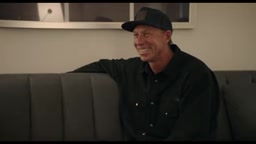
National Geographic documentary follows a skier attempting the first ski descent of Everest's north face in memory of his late partner.
National Geographic's adventure documentary Everest: The Other Side has released a trailer and opened ticket sales, chronicling a skier's zero-margin challenge to ski descend Everest's direct north face. The trailer highlights the north face's status as a blank in the skiing world and reveals the protagonist's bond between the expedition and commemorating his late partner Hillary, hoping to summit on her memorial day. The film emphasizes team collaboration over individual heroism, showing the division of route assessment, logistics, and descent execution. The trailer leaves the outcome of the ski descent unrevealed, creating core suspense. The film suits audiences interested in high-altitude exploration and documentary filmmaking.
National Geographic's latest adventure documentary Everest: The Other Side has released a trailer and opened ticket sales, chronicling an unprecedented challenge—a skier attempting to ski descend the direct north face of Mount Everest. In the trailer, the protagonist admits: "No one has ever skied down Everest's north face. It's a zero-margin route."
Why "The Other Side"
Everest's traditional narrative revolves around the South Col and North Col climbing routes, while the "direct north face" has long been regarded as the ultimate blank in the skiing world. The film doesn't shy away from discussing risk; the trailer directly poses the question: "Don't you think this is irrational, crazy?" The protagonist's response isn't a defense but rather redirects the conversation to emotional drive—the project is tied to his late partner, climber Hillary.

According to the trailer, the protagonist's life changed dramatically after losing Hillary, and the mountains have always helped him keep moving forward. He hopes to summit on Hillary's memorial day and "complete this project for her." This adds a layer of personal commemoration to the film's adventure narrative.
The direct north face of Everest is located on the Tibet side of China and has a more complex climbing history compared to the South Col. The ski route on the north face is considered the "ultimate blank" due to its terrain characteristics: the face averages slopes over 50 degrees, with the upper section covered year-round in hard ice and wind slab, while the lower section features unstable cornices and mixed ice-rock bands. Since the British reconnaissance team first approached the north face in 1921, climbers have mostly chosen the North Col–Northeast Ridge route, and direct routes on the north face only saw sporadic climbing records starting in the 1980s. Ski descents demand extremely stringent snow condition windows, requiring consecutive days of stable low temperatures and low wind speeds—which is why successful descents remain at zero to this day.
Team and Route: A Zero-Margin Skiing Challenge
From the trailer footage, the north face section is "very icy," and the skier must make instant judgments about snow conditions, ice conditions, and exposure. The protagonist emphasizes that this is not a performance of individual heroism—"it's a team that makes this expedition possible," and says being part of this team is "absolutely incredible."

The film also shows the team's collaborative atmosphere: some members handle route assessment, others logistics, while the skier takes on the final descent execution. This division of labor is uncommon in extreme-altitude skiing because the north face's continuous steep slopes and mixed ice-snow terrain leave almost no room for中途退出 (turning back mid-route).
In extreme-altitude skiing, "zero margin" typically means there are no safe platforms to stop or turn back along the route. Everest's north face's continuous steep slopes mean that once the skier enters the descent section, mid-route retreat is nearly impossible—standing stably on the steep slope is unfeasible, and oxygen supply and physical reserves are only sufficient for a single descent. Therefore, the team typically conducts snow condition reconnaissance weeks before the descent, using binoculars and drones to assess crevasse and avalanche risks, and sets fixed ropes and emergency supply points during the window. The skier also carries an avalanche airbag backpack and radio equipment to handle sudden wet avalanches.
Emotional Thread: From Loss to Moving On
The trailer doesn't focus on technical parameters but devotes substantial time to interpersonal relationships. The protagonist mentions "feeling her strength and energy," transforming an extreme ski descent into a promise to the deceased. This narrative approach continues National Geographic's adventure documentary style: binding human极限挑战 (extreme challenges) to personal stories so audiences understand "why go."

For ski mountaineering enthusiasts, the film's value lies in documenting the north face's real snow conditions and decision-making process; for general audiences, it's more like a work about loss, companionship, and moving forward. The trailer doesn't reveal whether the summit or ski descent was completed, leaving that as the core suspense for the film's official release.
National Geographic adventure documentaries often employ a "character-driven" narrative structure, placing extreme challenges within personal emotional contexts. This technique appears in works like Free Solo and Meru: audiences' understanding of technical difficulty is often deepened through the protagonist's motivations and relationship networks. In this film, the name Hillary could easily be confused with Edmund Hillary, but trailer information indicates she is the protagonist's close partner, and her memorial day is set as the summit window, adding time pressure and emotional tension. This narrative also raises discussion: when adventure is tied to commemoration, does decision-making deviate from objective risk assessment? This becomes the film's implicit ethical theme.
Viewing and Extensions
Tickets are now on sale; specific screening schedules and channels are subject to the official ticketing page. Based on information from the trailer, this film is suitable for audiences interested in high-altitude exploration, extreme skiing, and documentary filmmaking. Whether the north face ski descent is ultimately completed, and how the team makes trade-offs within the memorial day window, will be the most noteworthy segments of the film.
Related articles

Cyber Monday Early Deals: Tech Offers Worth Watching
Cyber Monday deals start early as Black Friday discounts continue. We outline tech deal trends and shopping strategies to help you buy wisely this season.

Amap World Model Launched, GPT-6 Protein Design Validated
AI daily roundup: Amap launches interactive world model ABot-World 0.5 with audio-visual sync and natural language reshaping; Tencent open-sources HiMT3 translation model covering 102 languages; OpenAI says GPT-6 can design proteins validated in labs; Anthropic and OpenAI internally concerned about models being too powerful; UK NCSC warns of rising AI-driven cyberattacks.

GPT-6 Designs Proteins on Its Own: 35 of 322 Bind, General Model Challenges Specialized Tools
OpenAI's GPT-6 protein design paper: 35 of 322 small proteins bind, all five targets hit. A general model designs backbones and sequences without specialized tools, but structure prediction and experimental validation remain weak spots—the paper lists four limits.