EverStamp: A Tamper-Proof Tool for Verifiable Timestamps on Photos and Videos

EverStamp uses independent timestamps and browser verification to turn phone-captured photos and videos into verifiable evidence.
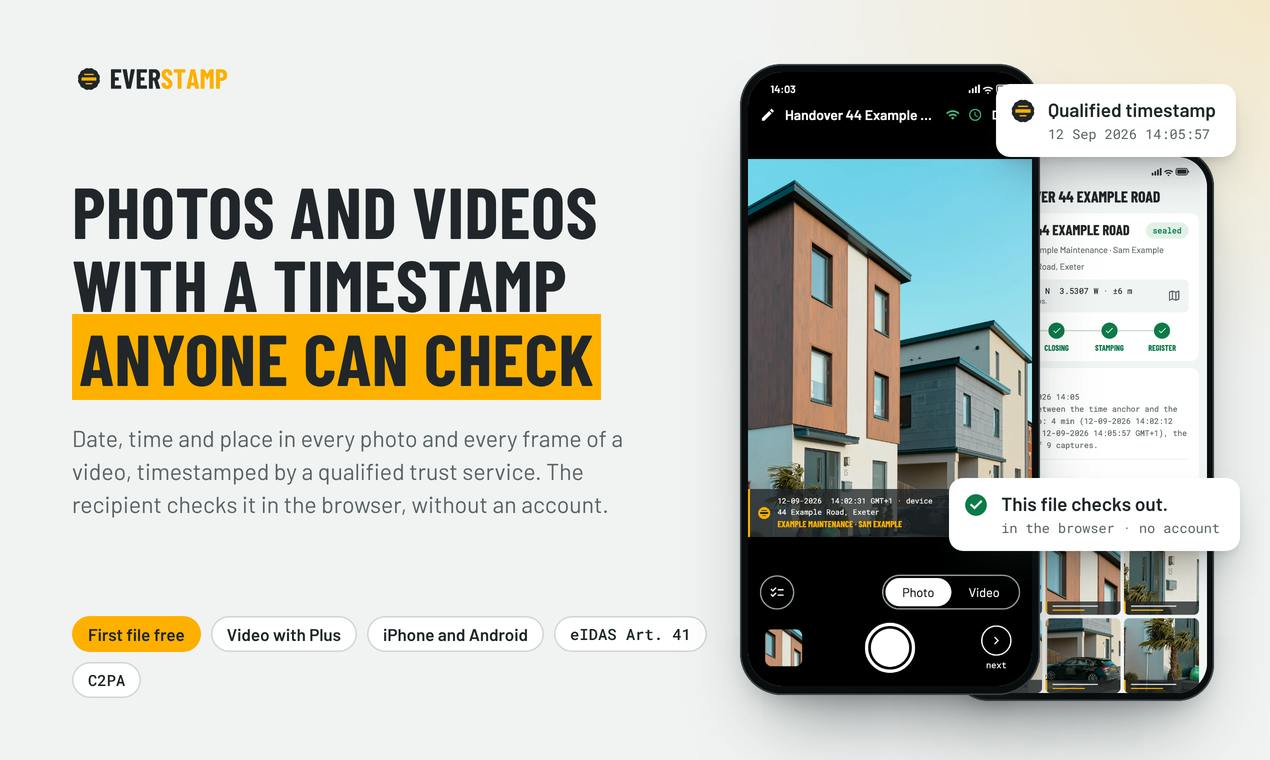
EverStamp is a timestamp camera app targeting the pain point that phone photos and videos in rental handovers, insurance claims, and on-site inspections are easily tampered with and lack credibility. It embeds date, time, and location into files at capture and has an independent third-party service add qualified timestamps, so any later modification is exposed during verification. Recipients can check file integrity in any browser without installing software. Videos also carry C2PA Content Credentials recording provenance and edit history. The enterprise edition offers checklists and a dashboard to standardize evidence collection. Currently Android-only, with details such as the timestamp provider, C2PA compatibility, and pricing undisclosed; early data suggest it is still in an early stage and its reliability awaits broader user validation.
Why We Need Verifiable Timestamps
In scenarios such as rental handovers, insurance claims, and on-site inspections, photos and videos serve as critical evidence. But files captured with ordinary phones are easy to modify, and the time and location information can also be tampered with, greatly undermining the credibility of the evidence. EverStamp, which appeared on Product Hunt, attempts to solve this problem: it is a timestamp camera app that automatically embeds the date, time, and location at the moment of capture and binds this information to the original file, creating a verifiable record.
Core Mechanism: A Closed Loop from Capture to Verification
According to the product page, EverStamp writes the date, time, and location provided by the phone into the photo or video at the time of capture, keeping the captured content as a single file. When the user closes the file, an independent service adds a qualified timestamp to it. Any subsequent modification will be exposed during verification. The recipient can check whether the file has been altered through any browser.
The key to this design lies in "independence": the timestamp is added by a third-party service rather than generated by the app itself, reducing the risk of wrongdoing or error by a single app. In addition, video material also carries C2PA Content Credentials, an industry-standard format for recording the provenance and edit history of content.
Qualified Timestamp is a concept with clear legal and technical meaning. Under the EU's eIDAS regulatory framework, only timestamps issued by a trusted third-party Time Stamping Authority (TSA) and protected by a qualified electronic signature or seal are called "qualified timestamps," and they carry a legal presumption equivalent to a handwritten date among member states. Technically, timestamps are usually based on the RFC 3161 protocol: the app first computes a cryptographic hash (such as SHA-256) of the file, then sends the hash value to the timestamp authority, which binds the hash to an authoritative time source and signs and returns it. Because hashing is one-way, any subtle change to the file will cause a hash mismatch during verification, thereby exposing tampering. This is also the technical basis for EverStamp's claim that "an independent service adds the timestamp, and modifications will be discovered."
C2PA (Coalition for Content Provenance and Authenticity) is an open standard initiated by organizations such as Adobe, Microsoft, and the BBC, aimed at attaching verifiable provenance information and edit history to digital content, often referred to as "Content Credentials." It uses cryptographic signatures to package metadata such as the capturing device, time, and editing operations into a manifest that can be distributed together with the file; by verifying the signature chain, the recipient can determine whether the content was captured by the claimed device and whether it has been edited. C2PA and timestamps are complementary: C2PA proves "who did what on which device," while a timestamp proves "that this record existed at a certain moment and has not been altered." EverStamp's having videos carry C2PA credentials means that its chain of evidence not only has a time anchor but also has provenance traceability.
Enterprise-Oriented Features: Checklists and Dashboard
EverStamp is not only for individual users but also offers enterprise-grade features. Enterprises can create their own checklists and manage capture tasks through a dashboard. The product explicitly mentions that it is suitable for scenarios such as rental handovers, damage claims, and inspections. This means teams can standardize the evidence collection process and reduce disputes caused by missing information or inconsistent formats.
The Practical Significance of Tamper-Proofing and Browser Verification
The convenience of verification is one of the product's highlights. The recipient does not need to install dedicated software and can complete the check in a browser. This lowers the verification threshold, enabling non-technical users to quickly confirm the authenticity of a file. For industries such as law, insurance, and real estate, this lightweight verification method may be easier to implement than complex blockchain solutions.
Potential Limitations and Observations
In currently available public information, details such as which institution specifically provides EverStamp's independent timestamp service, the compatibility scope of C2PA credentials, and the free versus paid model are not yet clear. In addition, the product lists only the Android platform, so iOS users cannot use it for the time being. Early data—19 votes and 9 comments—indicates that the product is still in its early stage, and its actual reliability needs to be verified by more users.
Overall, EverStamp addresses a real pain point: making evidence captured with phones have verifiable time and integrity. If the independent timestamp service is sufficiently authoritative and the browser verification experience is smooth, it is expected to gain adoption in scenarios that require a chain of evidence.
One-line Summary
EverStamp uses independent timestamps and browser verification to turn photos and videos captured with phones into verifiable evidence.
Paragraph Summary
EverStamp is a timestamp camera app that addresses the pain point in scenarios such as rental handovers, insurance claims, and on-site inspections where phone photos and videos are easily tampered with and lack credibility. At the time of capture, it embeds the date, time, and location into the file, and an independent third-party service adds a qualified timestamp, so any subsequent modification will be exposed during verification. Recipients do not need to install software and can check file integrity through any browser. Videos also carry C2PA Content Credentials, recording provenance and edit history. The enterprise edition provides checklists and a dashboard to standardize the evidence collection process. Currently, the product supports only Android, and details such as the independent timestamp service provider, the scope of C2PA compatibility, and the pricing model have not been disclosed. Early data indicate that it is still in an early stage, and its actual reliability remains to be tested by more users.
Related articles
 Tech Frontiers
MuJoCo: An Analysis of DeepMind's Open-Source General-Purpose Physics Simulator
An in-depth analysis of Google DeepMind's open-source physics simulator MuJoCo: high-performance C++ kernel, MJCF modeling format, contact solving principles, MJX GPU acceleration, and robot reinforcement learning use cases.
 Tech Frontiers
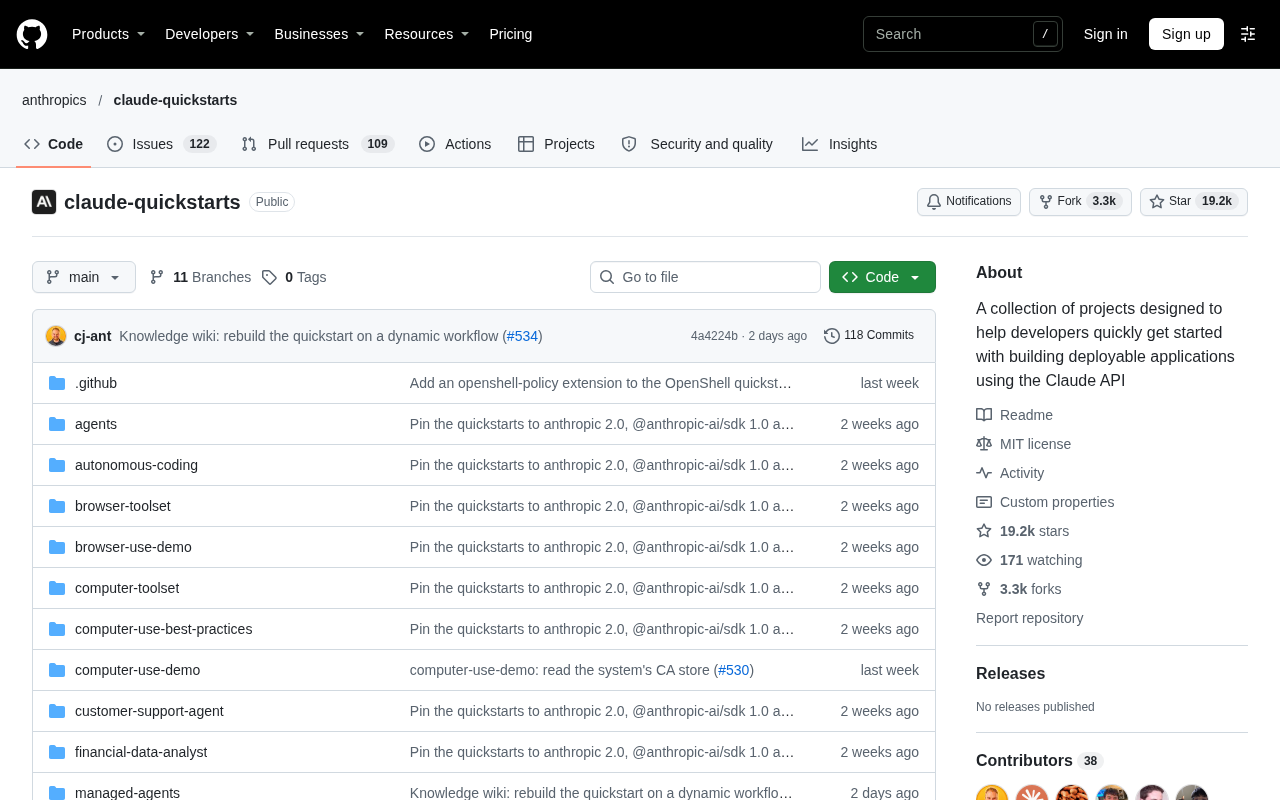
Claude API Quick Start: The Official Quickstarts Project Collection
Anthropic's official claude-quickstarts project collection helps developers quickly build deployable apps with the Claude API. Nearly 20k stars, Python-based, great for beginners and prototyping.
 Tech Frontiers
AI Agents Connecting Directly to APIs: Which Calls Can Be Safely Allowed?
AI agents can call any API, but the real challenge is deciding which calls can be safely allowed. This article analyzes allowance decisions from three dimensions—intent matching, least privilege, and controllable impact—and argues that the control layer should sit outside the agent, combined with audit traceability to build a trustworthy API call governance mechanism.