Every AI Employee Gets Its Own Computer: How aiteam.space Manages AI Teams

aiteam.space gives each AI agent its own computer and manages the AI team via a visual org chart.
aiteam.space is a multi-agent management product ranked #11 on Product Hunt. It equips each AI employee (a Son) with an independent computer running real Claude Code sessions on the user's own subscription, addressing environment isolation in multi-agent systems so agents can build and deploy sites, produce videos, join Google Meet calls, and post daily. Users manage the team via a visual org chart and issue commands from Claude, ChatGPT, Telegram, or Discord. The first Son is free forever; it currently has 70 upvotes and 5 comments. Success depends on resource overhead, task reliability, and genuine multi-agent demand.
As AI agents gradually move from demos to real tasks, how to enable multiple AI agents to work together while each having an independent execution environment has become a key product design question. aiteam.space, ranked #11 on Product Hunt, offers an interesting answer: give every AI employee its own "computer," managed centrally through a visual org chart.
Giving Every AI Agent Its Own Computer
aiteam.space's core premise is that every AI team member (called a "Son") has its own computer. This means each agent is not just a character in a chat window, but an entity with an independent execution environment. Agents run real Claude Code sessions, using the user's own subscription.
This design directly addresses a common pain point in multi-agent systems: environment isolation. When multiple AI agents share the same runtime, state, files, and permissions can easily interfere with one another. Assigning each agent its own computer essentially applies the traditional software engineering ideas of "sandboxing" and "environment isolation" to AI team management, allowing each agent to execute tasks independently without affecting other members.
Claude Code is a command-line coding agent tool released by Anthropic that can directly read and write files, execute terminal commands, run tests, and complete multi-step software engineering tasks. Unlike ordinary conversational AI, Claude Code works in an "agent loop": the model autonomously decides which tool to call next, observes the results, and continues reasoning until the task is complete. It relies on the user's local development environment and API subscription quota to run, so aiteam.space's emphasis on "using the user's own subscription" means agents consume the Claude quota the user has already paid for, rather than tokens resold by the platform. This design both lowers the platform's operating costs and gives agents full tool permissions tied to the user's account, but it also shifts the responsibility for usage and billing to the user.
Environment isolation and sandboxing are infrastructure prerequisites for the stable operation of multi-agent systems. In traditional software engineering, sandboxes prevent a program's errors or malicious behavior from affecting the whole system by restricting the file system, network, and system calls a process can access. The challenge in multi-agent scenarios is more complex: multiple agents may simultaneously modify the same code, compete for the same port, or contaminate each other's state in a shared context. Assigning each agent its own computer (whether a virtual machine, container, or independent cloud instance) essentially trades resource isolation for behavioral predictability. The cost is that each instance has fixed memory, CPU, and storage overhead, and as the number of agents increases, costs grow linearly or even superlinearly—which is also the main economic constraint such products face at scale.
From Building Sites to Joining Meetings: The Scope of Agent Capabilities
According to the product description, these AI employees can handle a fairly broad range of task types: building and deploying websites, producing videos, joining Google Meet calls, and handling daily posting. This already goes beyond pure text generation, pointing to composite agents capable of operating browsers, executing code, and participating in real-time communication.
You may not have noticed that joining Google Meet calls implies agents have real-time audio/video interaction capabilities, while building and deploying sites requires agents to operate the development toolchain. Delegating such tasks to agents with their own computers is logically consistent—because they need a complete runtime environment to perform these operations.
The product currently offers a "first Son free forever" plan, lowering the barrier for new users to try it. For a multi-agent management product still in its early stage, this pricing strategy helps quickly accumulate user feedback.
Having AI agents join Google Meet calls involves real-time audio/video interaction capabilities, with a technical barrier significantly higher than text tasks. Agents need to join meetings as virtual participants, completing the full chain of audio capture and speech recognition, dialogue reasoning, and speech synthesis playback, while also handling real-time issues such as multi-person turn-taking, interruptions, and latency. Common implementations include joining meeting pages through browser automation, or calling Google Meet's API and third-party audio/video SDKs. Compared with asynchronous site-building and posting tasks, real-time meetings have much higher requirements for latency and stability—any lag in any环节 directly affects the call experience. This capability is therefore often seen as a bellwether for measuring an agent's "real-time" level.
Visual Org Chart and Cross-Platform Management
Another design focus of aiteam.space is the management interface. Users manage the entire AI team through a visual org chart rather than configuring agents one by one. This interface metaphor borrows from how human companies are managed, letting users view each AI employee's responsibilities and operating status from a "manager's" perspective.
Management entry points also cover multiple platforms: users can manage the team from Claude, ChatGPT, Telegram, or Discord. This means users don't need to open a dedicated backend, but can issue commands within the chat tools they already use. For teams that have already built their workflows on Telegram or Discord, this integration reduces switching costs.
In terms of product categorization, aiteam.space is listed under three categories—Productivity, Marketing, and Developer Tools—reflecting the diversity of its target scenarios: it serves teams that need automated marketing content (videos, daily posting) as well as technical users who want agents to assist with development and deployment.
A Direction Worth Watching
Judging from Product Hunt data, the product received 70 upvotes and 5 comments, ranking #11—a stage of some early attention but not yet large-scale discussion. The maker is Jeanclaude Aoun.
aiteam.space represents a product approach worth watching: no longer treating AI agents as a single assistant, but as an "employee team" that can be organized and assigned responsibilities. The design of giving each agent its own computer provides the foundation for task isolation and parallel execution; the visual org chart and cross-platform management attempt to solve the manageability problems of multi-agent systems.
Whether this model can succeed depends on several practical factors: whether the resource overhead of independent computers is controllable, the reliability of agents executing complex tasks (such as joining real-time meetings), and whether users really need to manage multiple agents simultaneously. The product's current early positioning and free strategy may help accumulate valuable first-hand experience in validating these questions.
One-line Summary
aiteam.space gives every AI agent its own computer and manages the AI team through a visual org chart.
Paragraph Summary
aiteam.space is a multi-agent management product ranked #11 on Product Hunt. Its core idea is to equip each AI employee (called a Son) with an independent computer that runs real Claude Code sessions and consumes the user's own subscription quota. This design addresses the environment isolation pain point of shared runtimes in multi-agent systems, enabling agents to independently perform composite tasks such as building and deploying websites, producing videos, joining Google Meet calls, and daily posting. On the management side, users view each agent's responsibilities and status through a visual org chart and issue commands from entry points like Claude, ChatGPT, Telegram, or Discord, reducing switching costs. The product offers the first Son free forever and currently has 70 upvotes and 5 comments, placing it in an early-attention stage. Whether its model can succeed depends on the resource overhead of independent computers, the reliability of executing complex tasks, and users' real need for multi-agent management.
Related articles

AI Assistant Misleads Tenant Into Eviction: Where Does Liability Lie for a Landlord's AI?
A landlord's AI assistant told a tenant they could delay rent—then she was evicted. This case reveals a liability vacuum for AI output involving contracts and legal obligations, and the responsibility deployers bear.

Best Black Friday Buys Under $100: 60+精选科技好物推荐
Black Friday on a budget? Here are 60+精选 tech deals under $100, covering accessories and practical gadgets to help you spend smart and avoid impulse buys.
Zhipu GLM-5.4 Released: Loop Transformer Runs 28 Layers Twice
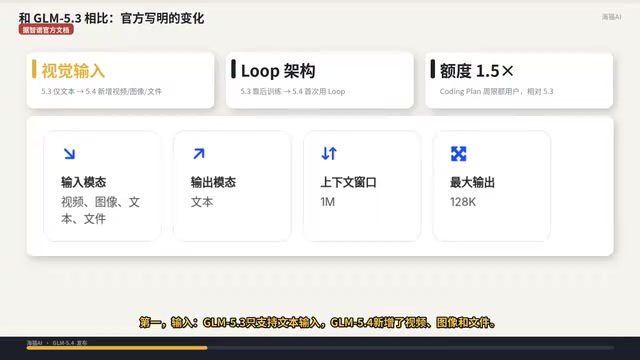
Zhipu releases GLM-5.4, the first Loop Transformer flagship: 28 layers run twice for 2-3T-equivalent intelligence, plus video and image input. API and open weights not yet released.