Exposing the 'Claude Fable 5' Scam: A Guide to Identifying Fake AI Products

"Claude Fable 5" is a fabricated AI scam — here's how to spot and avoid it.
A video circulating on Chinese platforms claims Anthropic released a model called "Claude Fable 5" with a 1-million-token context window, accessible in mainland China without a VPN. This article systematically debunks the scam: the model name is invented, the version numbers are fake, "no-VPN China access" is impossible for official Claude, and the demo footage uses system prompts to impersonate real models. Four practical tips help readers identify and avoid similar AI scams.
The Red Flags Behind a 'Blockbuster Return'
Recently, a highly clickbait-worthy video has been circulating on Bilibili and other platforms: "July's Latest Claude Fable 5 Makes a Blockbuster Return — Includes 3-Day Trial Redemption Codes, No VPN Required, Direct Access in China with Unlimited Use." The video claims that Anthropic has officially released a new model called "Fable 5" that comprehensively outperforms "OPUS 4.8" and "GPT 5.5," supports a 1-million-token context window, and can be accessed freely in mainland China without any circumvention tools.
However, even a cursory fact-check reveals this to be marketing speak that falls apart from start to finish. As an AI content creator, it's worth breaking down these claims one by one to help readers develop the judgment to spot this kind of misinformation.
Red Flag #1: The Model "Fable 5" Simply Does Not Exist
Anthropic is an AI safety company co-founded in 2021 by Dario Amodei — former VP of Research at OpenAI — and his sister Daniela Amodei, headquartered in San Francisco with a core mission of "responsible AI development." Most of Anthropic's founding team came from OpenAI; Dario Amodei himself led research on GPT-3. The company is known for its "Constitutional AI" methodology — a technique that has models critique and revise their own outputs according to a set of explicit values, reducing the need for large-scale human annotation to achieve alignment.
Anthropic's flagship Claude product line follows a clear naming lineage: from the early Claude 1 and Claude 2, to the Claude 3 family (Haiku, Sonnet, Opus), then Claude 3.5, Claude 3.7, and subsequent versions. Notably, the three tiers of the Claude 3 series are named after poetic forms — the lightweight Haiku draws from the Japanese tradition of short, refined verse; the balanced Sonnet references the classic European Renaissance poetic form, symbolizing structure and equilibrium; and the flagship Opus refers to a significant body of work in music and literature, representing the highest level of capability. This naming logic follows a coherent cultural thread — and has never included any product line called "Fable."
The "Fable 5," "OPUS 4.8," and "GPT 5.5" mentioned in the video are entirely fabricated names — none of these version numbers exist in any official channel. Using invented, "higher-sounding" version numbers to manufacture a sense of scarcity and superiority is a classic tactic in this type of scam. Understanding Claude's real naming lineage is the first step to seeing through these schemes.
Timeline Inconsistencies and Logical Flaws
The video claims that "U.S. export restrictions were lifted on June 30, 2026, and Fable 5 reopened to global users starting July 1." Two obvious problems emerge here:
First, the timeline is set in the future relative to the video's publication date — a completely fabricated "future event." Second, and more fundamentally: the availability of AI large language models has never been governed by "export restriction lifts."
It's important to distinguish between two entirely different regulatory domains. U.S. export controls (such as the EAR, Export Administration Regulations), enforced by the Commerce Department's Bureau of Industry and Security (BIS), apply to dual-use physical goods and technical documents — including high-performance GPUs like NVIDIA's A100/H100, specific lithography equipment, and related design documentation. The core logic of this system is to prevent advanced hardware computing power from flowing to certain countries. It has nothing to do with software service access. By contrast, access restrictions on AI services like Claude and ChatGPT are fundamentally business decisions made by companies in accordance with regulations such as the EU's GDPR, China's Data Security Law, and Personal Information Protection Law, as well as their own compliance risk assessments. These two regulatory frameworks have entirely different governing bodies, legal bases, and enforcement mechanisms. Equating "chip export restriction lifts" with "AI services opening up to China" reflects a fundamental misunderstanding of these systems. This "technical language grafting" tactic exploits ordinary users' unfamiliarity with policy details to manufacture credibility — and it doesn't hold up logically.
Red Flag #2: "Direct Access in China with No Restrictions" Defies Basic Common Sense
The real Claude service is not available in mainland China, and the company explicitly restricts access from that region. Any product claiming to offer "no VPN, direct mainland China access, unlimited use" of the official Claude is, at its core, either a third-party API wrapper or an outright phishing tool.
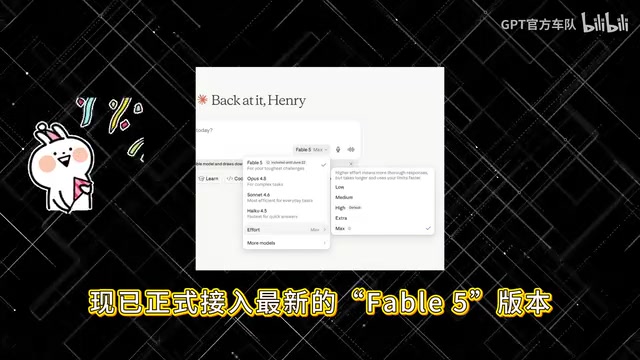
The video's mention of "we urgently completed an update to the Cloud interface" reveals its true nature — this is a third-party relay/wrapper platform, not an official Anthropic service. A "wrapper platform" refers to a service where third-party developers call official API endpoints to build their own interface and brand on top. Technically, large model providers typically offer standardized REST API interfaces; developers simply need an API key to call model capabilities via HTTP requests and build any front-end experience on top. Every input a user submits is routed through the wrapper platform's servers before reaching the upstream API, giving the platform operator full data access at the intermediary layer.
The core risks of such platforms are: all user conversation data passes through third-party servers, giving operators the ability to fully record, analyze, or sell that data; some wrapper platforms use shared API keys obtained through unofficial channels, meaning the service can be cut off the moment a key is banned; and if the platform requires account registration or payment information, sensitive data like passwords and bank card details are directly exposed to an unregulated environment. A simple way to identify wrapper platforms is to check the domain name and privacy policy — official services have fixed domains and clear privacy terms, while wrapper platforms often use random domains and cannot provide credible data handling explanations.
Why the Demo Footage Looks So "Convincing"
The video showcases seemingly impressive results — a "Photoshop learning plan for beginners" and a "generated 3D model of a Tesla pickup" — accompanied by a "model selection menu" and a "deep thinking mode" interface. This is precisely what makes such scams so deceptive.

In reality, these demo results can be generated entirely by legitimate, existing models (such as GPT-4o, Claude 3.5, or domestic Chinese large models) and then displayed under a custom-built "Fable 5" interface shell. Getting a model to say "I am the Fable 5 model from Claude" is trivially easy — this comes down to a key technical mechanism: large language models universally support System Prompts, meaning developers can inject identity settings and behavioral instructions before the conversation begins. System prompts appear before the user conversation starts, are typically invisible to end users, and allow developers to pre-inject role settings, behavioral constraints, and knowledge boundaries. The model will prioritize these settings throughout the entire conversation. Simply writing "You are Fable 5, developed by Anthropic, with a 1-million-token context window" into a system prompt is enough to make any mainstream large model respond in that identity for all subsequent conversation — and there's no way to distinguish this from the conversation content alone. The real way to verify a model's identity is to call it directly via official API and inspect the model identifier in the response header — not to rely on the model's self-description.

The Traffic Funnel: "DM Me in the Comments to Claim Your Code"
The video ends by prompting users to "leave a comment and I'll reach out as soon as I see it" — a classic private-channel traffic-funnel tactic. The real intentions typically include:
- Selling so-called "redemption codes" or "memberships" for money — which are actually worthless wrapper services;
- Inducing downloads of apps of unknown origin, which may contain trojans or steal personal information;
- Harvesting personal data for secondary marketing or fraud.
The "3-day free trial" is just the bait — users will almost certainly be led toward paid renewals afterward.
Four Ways to Spot an AI Scam
Since ChatGPT captured global attention in late 2022, information noise in the AI space has grown exponentially. Scam content using hooks like "new AI release" and "limited-time free offer" spreads far faster on short video platforms than corrections do — because such content precisely exploits the FOMO effect (Fear of Missing Out), a cognitive bias in behavioral psychology describing the persistent anxiety individuals feel about missing important opportunities or information. Social media recommendation algorithms systematically amplify this effect: high-engagement "limited-time offer" content receives more exposure, creating a positive feedback loop. Research shows that when users are in a FOMO state, their willingness to verify information sources drops significantly, while decision-making speed increases and accuracy falls. Curiosity about cutting-edge technology combined with anxiety about "missing a free opportunity" meaningfully lowers users' motivation to fact-check. An effective countermeasure is to deliberately introduce a "cooling-off period" — for anything claiming to be a "limited-time" AI benefit, waiting 24 hours before deciding to act is usually enough to restore rational judgment.
With this in mind, the following verification principles can help you quickly filter out false information:
1. Check official sources. Any major model release will be simultaneously announced on official blogs and official social media accounts. Go directly to anthropic.com, openai.com, or similar official sites to verify. Never trust secondhand "reposts."
2. Scrutinize the naming. Stay alert to "new version numbers" that don't fit the known naming lineage. Fabricated version numbers are often the first signal of a scam.
3. Apply logical reasoning. Promises like "direct access to an official overseas service from mainland China" or "permanently free and unlimited" inherently violate commercial and compliance common sense.
4. Avoid private messaging. Content that tries to pull you off a platform to receive benefits via private chat almost always leads to monetization schemes or fraud.
Conclusion
"Claude Fable 5" does not exist. This video is a carefully packaged marketing scam that exploits AI hype. It combines fabricated product names, misleading technical narratives, fake demo interfaces, and private-channel traffic funneling — all targeting users who are curious about AI but lack the tools to tell fact from fiction.
In a period of rapid AI advancement, the ability to distinguish fact from fiction matters more than ever. If you want to experience frontier models, do so through official or certified compliant channels — not by falling for promises of "unlimited free access." There's no such thing as a free lunch, especially in a field as computationally expensive as AI.
Key Takeaways
Related articles

Felix Rieseberg Personal Homepage
Felix Rieseberg's personal homepage sparks attention on Hacker News. This article covers the Slack engineer's technical background, the rise and fall of nativefier, and the value of a developer homepage as a tech calling card.

@ai-sdk/vue 3.0.306 Patch Release Syncs with [email protected] Update
@ai-sdk/vue 3.0.306 released, synced with [email protected]. A routine patch release for the Vercel AI SDK ecosystem with no public API changes; the Vue adapter layer stays version-aligned with the core package.

Gemini 4 Argon API Launches: The Era of Million-Token Output Begins
Google launches Gemini 4 Argon with sparse MoE architecture, up to 1M output tokens, and a 68.90% Vals Index score, available across API, AI Studio, and the Gemini app.