Fable 5.1 vs GPT-6 Astra: A Hands-On Comparison of 3D Modeling Capabilities

Fable 5.1 outperforms GPT-6 Astra in 3D modeling quality, showcasing the specialist vs. generalist AI trade-off.
A hands-on comparison of Fable 5.1 and GPT-6 Astra reveals that Fable's specialized 3D focus produces superior Blender assets with better topology, UV unwrapping, and polygon distribution. While GPT-6 Astra offers multimodal versatility, it falls short on production-grade 3D details. The test highlights the classic specialist vs. generalist trade-off and suggests hybrid workflows may be the optimal approach for creators.
A New Showdown in AI-Generated 3D Models
The community recently conducted a comparative test of two AI tools' 3D asset generation capabilities: Fable 5.1 and OpenAI's GPT-6 Astra. Based on the actual Blender models generated, the two tools show significant differences in quality, detail, and usability.
AI-driven 3D asset generation represents a major breakthrough at the intersection of computer graphics and deep learning in recent years. Traditional 3D modeling relies on artists manually sculpting, modeling, and texturing using professional software like Maya, Blender, and 3ds Max — a moderately complex character model can take days or even weeks to produce. AI 3D generation technology uses neural networks trained on large 3D datasets to learn geometric structures, material textures, and spatial relationships, enabling the inference of three-dimensional structures directly from text descriptions or 2D images. Current mainstream technical approaches include implicit representations based on NeRF (Neural Radiance Fields), point cloud/mesh generation based on diffusion models, and end-to-end 3D output based on large multimodal models. It's against this backdrop of rapid technological iteration that the comparison between Fable 5.1 and GPT-6 Astra becomes especially meaningful.
Fable 5.1 Shines in 3D Modeling
According to tester feedback, Fable 5.1 demonstrates more consistent output quality in 3D asset generation. Whether it's geometric accuracy, topology optimization, or material detail, Fable 5.1 produces models that are closer to production-grade quality. Testers emphasized that "this holds true across all assets," indicating this is not an isolated case but a systematic capability advantage.
As an AI tool focused specifically on 3D content generation, Fable's deep specialization in this vertical domain gives it a clear edge in modeling professionalism. The generated models typically exhibit the following characteristics:
- More rational polygon distribution: In 3D modeling, polygon distribution directly determines the balance between visual quality and rendering performance. Detail-rich areas (such as faces and hands) require denser polygons to represent fine structures, while relatively flat areas should maintain lower density to conserve computational resources. Fable 5.1 can intelligently identify key areas of a model and allocate polygon density accordingly — a capability that's particularly critical in real-time rendering scenarios like game engines.
- Cleaner UV unwrapping: UV unwrapping is the process of mapping a 3D model's surface onto a 2D plane, similar to unfolding a globe into a world map. U and V represent the two axes of 2D texture coordinates, and this step is the foundation for applying texture maps to 3D models — only with proper UV unwrapping can textures display correctly on the model surface without stretching, compression, or visible seams. Manual UV unwrapping is one of the most time-consuming aspects of 3D production, and Fable 5.1's ability to automatically generate high-quality UV layouts dramatically improves the efficiency of going from generation to production.
- Topology better suited for post-editing: Topology refers to the arrangement and connectivity of polygons on a model's surface. Good topology is crucial for subsequent animation rigging, deformation, and rendering. For example, a character's face needs ring-shaped edge loops to support natural facial animation, and joints require proper wireflow to avoid clipping or collapsing during deformation. Fable 5.1's performance in this area means generated models can go directly into the animation pipeline without extensive manual retopology work.
These characteristics make the 3D assets generated by Fable 5.1 much closer to real production requirements, reducing the time cost of post-production rework.
GPT-6 Astra: The Trade-off Between Versatility and Specialization
GPT-6 Astra, as a multimodal large model, is designed to handle multiple input and output types including text, images, and audio. Multimodal large models use a unified Transformer architecture and gain cross-modal understanding and generation capabilities through large-scale pretraining. While this "one model does everything" design philosophy brings tremendous flexibility, it also faces the challenge of capability dilution — the model's parameter capacity and training data must be distributed across multiple tasks, and depth of performance in any single domain may not match that of a vertical model specifically trained for that domain.
For the vertical task of 3D modeling, while GPT-6 Astra can generate basic three-dimensional structures, it still falls short of specialized tools in professional details like topology quality, UV layout, and material precision. This doesn't mean general-purpose models lack value — rather, it reflects a different design orientation. GPT-6 Astra is better suited as a "Swiss Army knife" in multimodal workflows rather than a "scalpel" for any particular professional domain.
This difference reflects a classic trade-off in AI tool design: versatility vs. specialization. It's also a continuation of the classic "specialist vs. generalist" problem in machine learning, now playing out in the era of large models. General-purpose models need to distribute their capabilities across multiple domains, while vertical tools can concentrate all resources on optimizing specific tasks. For professional users who need high-quality 3D assets, choosing specialized tools often yields higher production efficiency.
Practical Takeaways for 3D Creators
This comparative test provides important guidance for 3D creators when choosing tools:
Task-Tool Fit Is Critical
If the core need is generating production-ready 3D models, specialized tools like Fable are clearly the better choice; if you need to handle multiple modal tasks within the same workflow, GPT-6 Astra's versatility offers more value. In practice, many teams are exploring hybrid workflows — using general-purpose models for concept design and rapid prototyping, then switching to specialized tools to generate final production-grade assets.
Reliable Conclusions Require Multi-Sample Testing
The tester's observation that "all assets" showed similar results highlights that when evaluating AI 3D modeling tools, a single case may be anecdotal — multi-sample validation across different asset types is necessary. An ideal evaluation should cover multiple categories including hard-surface models (such as architecture and machinery), organic models (such as characters and creatures), and scene props, with quantitative comparisons across multiple dimensions like topology quality, texture precision, file size, and engine compatibility.
AI as an Assist, Not a Complete Replacement
Regardless of which tool you choose, AI-generated 3D models at the current stage still require human review and adjustment. Understanding each tool's strengths helps make smarter choices within your workflow, maximizing creative efficiency. AI serves more as an "accelerator," helping creators skip repetitive labor and focus their energy on creative decisions and fine-tuning.
Industry Trends in AI 3D Content Generation
3D content generation is becoming a new battleground for AI competition. As demand for 3D assets explodes across gaming, film and television, XR, and other industries, AI tools capable of rapidly generating high-quality models will hold enormous commercial value. This is especially true in the XR (Extended Reality) space, which encompasses VR (Virtual Reality), AR (Augmented Reality), and MR (Mixed Reality). With the proliferation of devices like Apple Vision Pro and Meta Quest, spatial computing is transitioning from concept to consumer-grade applications. Industry estimates suggest that a mid-sized VR game may require thousands of 3D assets, while metaverse platforms demand content on the scale of millions. Traditional handcrafted production simply cannot fill this content gap — and this is the core driving force behind the industry's intense focus on AI 3D generation technology.
Fable 5.1's performance demonstrates that deep optimization within a vertical domain remains an effective path for building professional-grade AI tools. Meanwhile, the continued evolution of the GPT model series raises expectations that general-purpose models will gradually narrow the gap with specialized 3D tools while maintaining their multimodal capabilities. In the future, we may see a convergence of both approaches — specialized 3D models borrowing semantic understanding capabilities from general-purpose large models, while general-purpose models enhance domain-specific performance through plugin or modular designs.
For 3D creators, tool selection will directly impact creative efficiency and final output quality. Staying attuned to new technologies and verifying tools' real capabilities through hands-on testing is the key strategy for navigating this rapidly evolving landscape.
Related articles

Flown App Review: Flight Log Visualization Maps & Automatic Delay Compensation Alerts
Flown is an iOS flight logging app that plots your journeys on a private map, supports 197-country check-ins, annual flight reviews, and auto-calculates flight delay compensation. Local data storage, no account needed.
Hermes Agent Hands-On: Full Workflow for Building Apps Locally with an Autonomous AI Agent
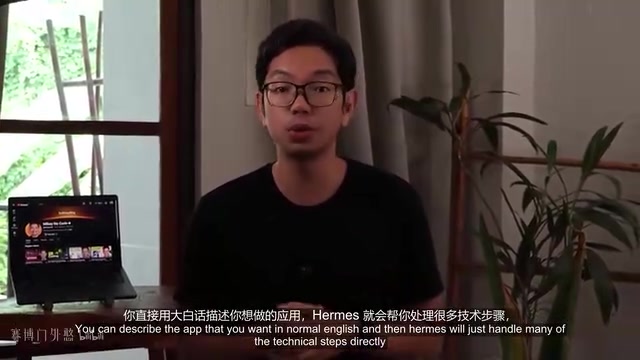
Hands-on review of Hermes Agent: from installation to building a local calorie tracker in three steps. Covers local memory, Anthropic API setup, and progressive prompt workflows.
Building a Game Prototype in 2 Hours with Astra: A Real-World Test of AI Coding Tool Costs and Efficiency
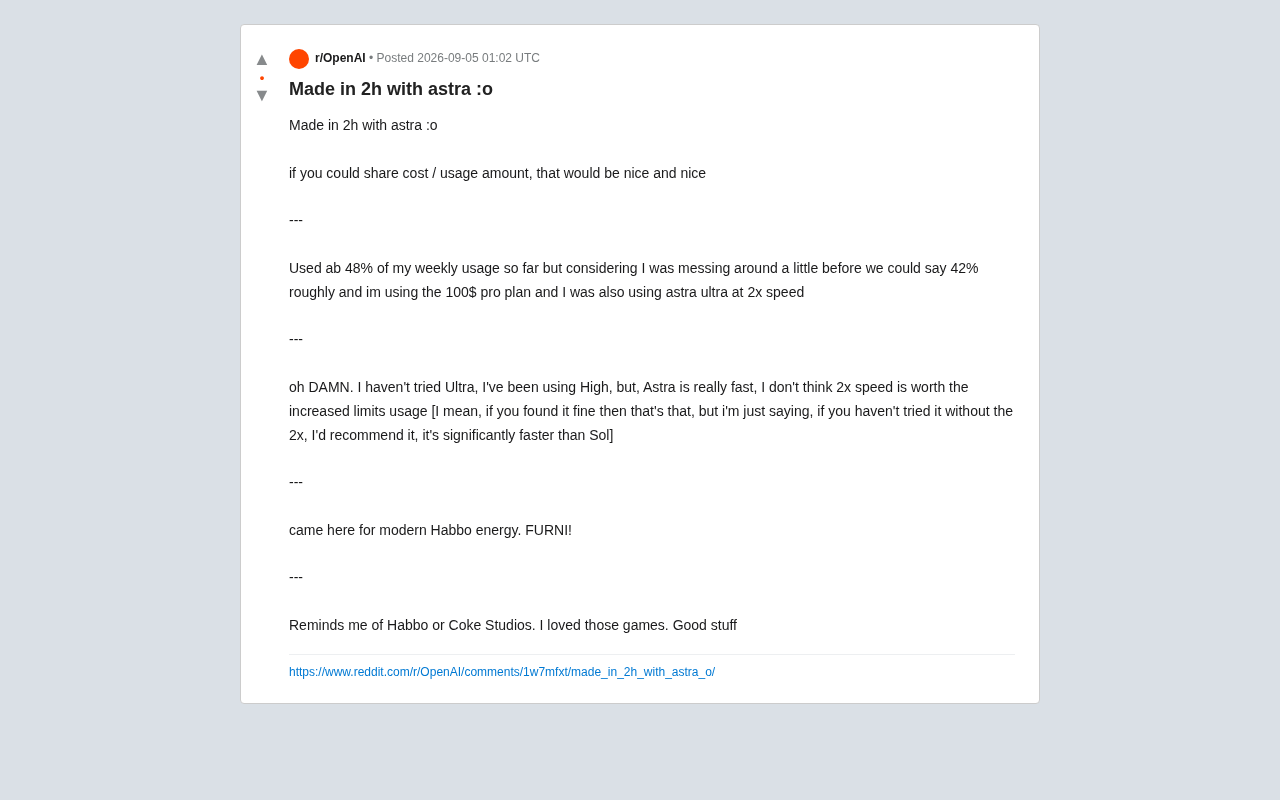
A Reddit developer built a game prototype in just 2 hours using AI coding tool Astra, consuming 42% of the Pro plan's weekly quota. Deep dive into Ultra vs High speed modes, real costs, and optimization strategies.