Fact-Checking AI Skeptic Ed Zitron's Prediction Track Record
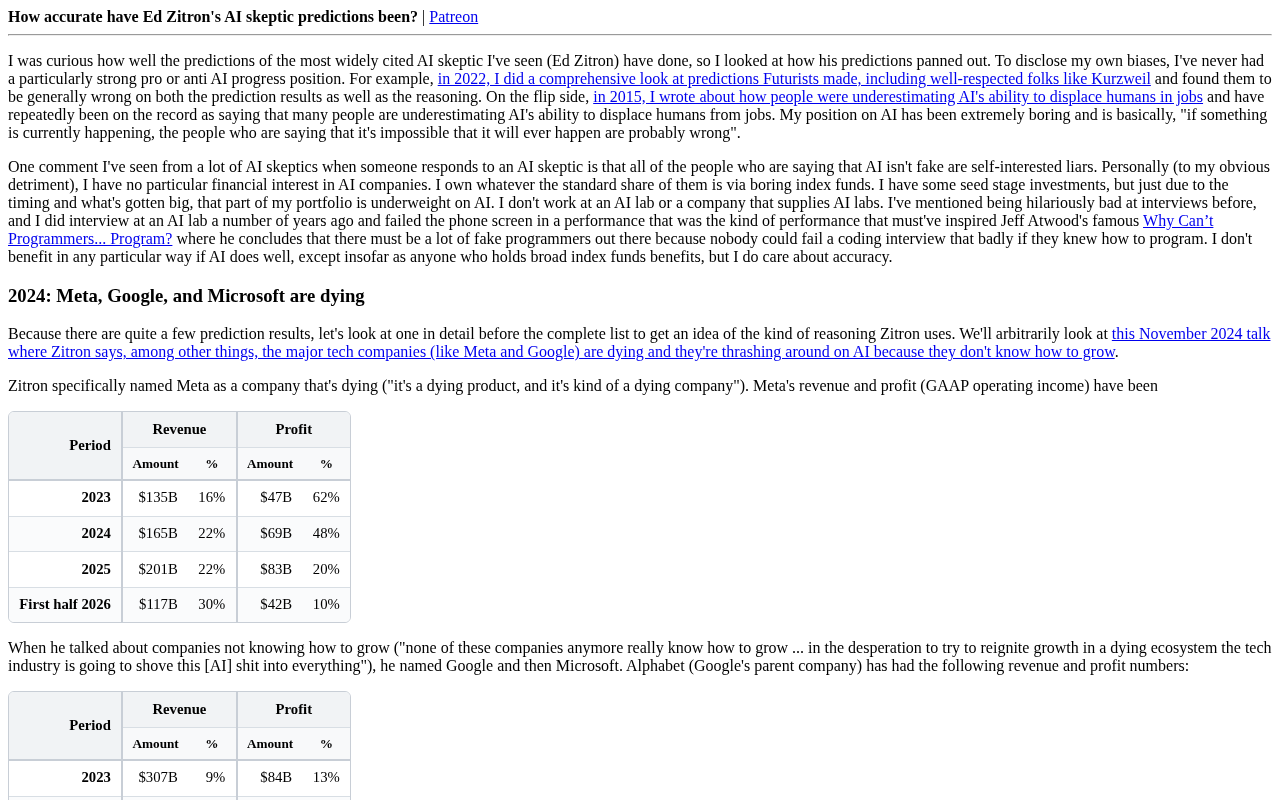
A fact-check of AI skeptic Ed Zitron's predictions reveals a mixed scorecard of valid critiques and missed nuance.
Ed Zitron has persistently argued that the generative AI boom is an unsustainable bubble. Based on a heated Hacker News discussion, this article evaluates his core predictions—on business model viability, overhyped capabilities, and imminent collapse. While his concerns about cost structures and enterprise deployment challenges have merit, his unfalsifiable timeline and failure to account for rapid cost declines and real productivity gains reveal significant blind spots. The takeaway: the truth likely lies between extreme optimism and extreme pessimism, and practitioners should focus on measurable value rather than macro narratives.
A Public Debate About the AI Bubble
At a time when the AI industry is gripped by collective euphoria, some voices choose to swim against the current. Ed Zitron is among the most prominent—and most controversial—of these contrarians. As a tech commentator, he has long attacked the generative AI wave with sharp, sometimes extreme rhetoric, insisting that the current AI boom is fundamentally a massive bubble on the verge of bursting.
Recently, a post on Hacker News titled "How accurate have Ed Zitron's AI skepticism predictions been?" sparked a heated discussion, garnering 281 upvotes and 327 comments. Hacker News, operated by Silicon Valley's premier startup accelerator Y Combinator, has been one of the most important information hubs for tech professionals worldwide since its launch in 2007. Its user base consists primarily of software engineers, founders, venture capitalists, and technical researchers, with a discussion culture that emphasizes rational argumentation and data-backed claims while naturally resisting pure marketing speak and emotional rhetoric. For a post to generate this level of engagement means it struck a collective nerve in this rational community—in a space dominated by engineers and tech practitioners, people weren't rushing to pick sides but rather wanted to test a persistent bear's judgment against the facts.
The core value of this discussion isn't about whether Zitron himself is right or wrong. Rather, it provides a rare opportunity to soberly examine a crucial question: of all the extremely optimistic and extremely pessimistic predictions about AI, how many actually stand the test of time?
Zitron's Core Arguments and Predictions
To evaluate someone's prediction accuracy, we first need to clarify exactly what they predicted. Zitron's skepticism didn't come from nowhere—his arguments primarily center on the following areas.
Questioning the Sustainability of the Business Model
One of Zitron's most frequently repeated core arguments is that companies like OpenAI lack a sustainable path to profitability. He has pointed out repeatedly that these companies' operating costs are staggeringly high—the compute and electricity consumed by inference and training far exceed their revenue, meaning they're essentially sustaining growth through massive fundraising and subsidies.
To understand the technical background of this debate, you need to appreciate the unique cost structure of large language model operations. Training a single GPT-4-class model requires tens of millions or even hundreds of millions of dollars in compute resources, while inference costs—the GPU computation needed every time a user sends a message and the model generates a response—represent an ongoing operational burden. By multiple estimates, OpenAI's operating losses in 2024 may have exceeded $5 billion. This structure of "losing a little money on every user served" means that user growth doesn't dilute costs but actually accelerates losses—a fundamental conflict with the traditional SaaS model where "marginal costs approach zero."
This assessment has genuine data backing it up. OpenAI's annual loss figures and the enormous capital expenditures by major cloud providers on AI infrastructure all confirm the "burning cash for growth" reality. Since 2024, Microsoft, Google, Meta, and Amazon have collectively spent over $200 billion on AI-related capital expenditures alone, primarily for building GPU data centers, purchasing NVIDIA chips, and deploying power infrastructure. This scale of investment has triggered widespread debate on Wall Street: can these massive outlays translate into corresponding revenue returns in the foreseeable future? Some analysts have drawn parallels to 19th-century railroad construction—enormous investments that ultimately created revolutionary infrastructure, but where many early investors lost everything. Critics argue that without a continuous flow of external funding, the business logic of many AI applications simply cannot hold up.
Technology Capabilities Are Over-Mythologized
Zitron's other major claim is that the actual capabilities of generative AI have been severely overestimated by the market. He argues that the "hallucination" problem and reliability deficiencies of large language models make them unable to truly handle the critical business scenarios being so aggressively promoted. In his view, much of the so-called "AI revolution" is more marketing rhetoric than technological reality.
"Hallucination" is one of the most central technical challenges in the large language model space. It refers to the model generating text that states factually incorrect, fabricated, or unverifiable information with a tone of high confidence. The root cause lies in how LLMs work: they are fundamentally probabilistic next-token prediction systems that generate content by learning statistical associations between words from massive text datasets, rather than retrieving and returning verified facts like a database. This means the model doesn't truly "understand" what it generates, nor can it autonomously judge whether its own output is true or false. While techniques like Retrieval-Augmented Generation (RAG) and chain-of-thought prompting have mitigated this problem to some extent, hallucination remains fundamentally unsolved—and it's one of the biggest obstacles to AI deployment in high-stakes scenarios like medical diagnosis, legal documentation, and financial analysis. Zitron seized on this structural flaw to challenge the narrative foundation of the entire industry.
Hits and Misses: A Complex Scorecard
If we judge by a binary standard, Zitron's prediction scorecard is complicated—there are hits, but also clear misses.
What He Got Right
Based on the Hacker News discussion, many acknowledged that Zitron showed genuine foresight on two fronts: "cost structure" and "overhype." The AI industry is indeed rife with slideware startups and inflated valuations, with some high-profile companies generating revenue far short of their promotional claims. As the capital tide recedes, these structural problems gradually surface.
Additionally, his assessment of how difficult enterprise AI deployment would be has partially proven correct. Many enterprises have discovered during actual deployment that reliably integrating large models into production workflows is far more complex than imagined, and ROI (Return on Investment) isn't nearly as immediate as expected. Companies need to invest substantial resources in data cleaning, model fine-tuning, security and compliance reviews, and workflow restructuring, while the resulting productivity gains are often incremental—far less dramatic than what vendor marketing materials suggest.
Where He Likely Got It Wrong
However, the community also produced a chorus of voices pointing out Zitron's fatal weakness: his predictions consistently carry an implicit temporal suggestion of "imminent collapse"—yet that collapse keeps failing to arrive. Critics argue that equating "questionable business model" with "bubble about to burst" is a logical leap. Philosopher of science Karl Popper's concept of "Falsifiability" provides a powerful framework for evaluating such predictions: a high-quality prediction should clearly specify under what conditions, within what timeframe, and what specific events occurring or not occurring would prove it wrong. Statements like "AI will eventually collapse" are nearly impossible to falsify because they lack time constraints and specific criteria—making them closer to a belief than serious analysis.
More critically, AI technology itself continues to evolve. The pace of model capability iteration, the rapid decline in inference costs, and the real productivity gains in specific domains like coding assistance and content generation are all realities that Zitron's pessimistic framework struggles to accommodate. Take inference costs as an example: from GPT-3.5 to GPT-4o to the rise of various open-source models, the cost of equivalent-quality AI inference has dropped by orders of magnitude in just two years. This Moore's Law-like cost curve is fundamentally rewriting the early economic calculus. While he insists there's been "no substantive progress" in the technology, developers in the real world are becoming increasingly dependent on these tools in their daily work.
Why This Debate Matters
This discussion is important because it touches on a deeper question: in an age of information overload, how should we evaluate the value of "expert predictions"?
The Double-Edged Sword of Extreme Positions
Zitron's value lies in playing a necessary "opposing counsel" role. When an entire industry falls into collective mania, a persistent voice throwing cold water helps expose false advertising and reveal risks. His critiques about costs and hype provide an important counterbalancing perspective for the blindly optimistic.
But the cost of an extreme position is the sacrifice of accuracy and nuanced judgment. To make their arguments more impactful, skeptics tend to amplify the negative and ignore counterexamples, making their predictions emotionally compelling but practically useless for decision-making. This phenomenon is known in forecasting research as "hedgehog thinking"—political scientist Philip Tetlock found in his landmark research that "hedgehog" forecasters who cling to a single grand narrative have significantly lower long-term prediction accuracy than "fox" forecasters who are skilled at integrating diverse information and acknowledging uncertainty.
The Truth Usually Lies in the Middle
A relatively mature consensus that emerged from the Hacker News discussion is this: reality is neither the "AGI is just around the corner" picture painted by mindless optimists, nor the "everything will collapse" prophecy offered by Zitron. The more likely scenario is that AI is a real and important technology, but the commercial valuations and short-term expectations surrounding it do contain bubble elements. A bubble bursting doesn't mean the technology has failed—just as the internet reshaped the world after the dot-com bubble burst.
The dot-com bubble of around 2000 is the most important historical reference for understanding the current AI valuation debate. Between 1995 and 2000, the NASDAQ index surged from roughly 1,000 to over 5,000, with massive valuations bestowed on internet companies that had no profitability—or even no revenue. After the bubble burst, the NASDAQ plunged nearly 80% in two years and hundreds of companies went bankrupt. Yet internet technology itself did not die—Google was founded in 1998, Amazon survived through the bubble, and Facebook was born in 2004, after the bubble had burst. The internet ultimately reshaped every dimension of commerce, media, and social life. This history reveals a key distinction: the bursting of a technology bubble is typically a correction in valuations and expectations, not a negation of the underlying technology's value. The current AI industry is likely at a similar historical juncture—the technology is real, but not every participant will survive to harvest season.
Takeaways for Practitioners
For developers, founders, and investors riding the AI wave, this retrospective on Zitron offers several practical insights.
First, be wary of any overly certain prediction, whether it comes from optimists or pessimists. Truly valuable analysis should acknowledge uncertainty and provide specific, falsifiable conditions rather than sweeping emotional judgments. As Tetlock confirmed in the "Good Judgment Project," the best forecasters are those willing to continuously revise their positions based on new evidence, not public intellectuals who pride themselves on being "consistently right."
Second, distinguish between technological value and commercial valuation. A technology can be revolutionary while its market valuation is irrational—these two things can coexist. Electrification changed human civilization, yet a large proportion of people who invested in power companies in the late 19th century ultimately lost everything. Similarly, AI may indeed be "the next electricity," but that doesn't mean every AI startup's current valuation is justified.
Third, let actions and data do the talking. Rather than debating whether a bubble exists, focus on whether AI is genuinely creating value in specific use cases. The accuracy of Zitron's predictions will ultimately be adjudicated by time and real business data. For practitioners, the most pragmatic strategy is to rigorously measure the incremental value AI delivers in specific application scenarios—whether it truly reduces costs, improves efficiency, or creates new revenue streams—rather than being swept up by macro narratives.
Whether you agree with Zitron or not, this years-long debate serves as a reminder: in the noise-filled field of AI, maintaining independent thinking and refusing any single party's monopoly on the narrative is the most rational stance to take.
Related articles

AI Pro Model Release Cadence Is Accelerating — Why Developers Are Collectively Anxious
AI Pro models are shipping faster than ever. We analyze why this acceleration triggers developer anxiety, the competitive dynamics behind it, and where the real opportunities lie.

Can Lakebase Handle ML Real-Time Feature Serving? A Deep Dive into Latency and Concurrency
In-depth analysis of Databricks Lakebase as a real-time ML feature serving database, evaluating latency, concurrency, consistency, and cost versus traditional Postgres with practical selection advice.
The Truth About AI Coding Tools: They'll Only Help You Write Bad Code Faster
AI coding assistants amplify ability, not fix it. Without solid engineering foundations, Copilot and Cursor only accelerate low-quality code production.