Fairphone 6 Plus Review: Modular Design Drops Nearly $100 — Is It Worth Buying?

Fairphone 6 Plus drops to $552.49, with a modular repairable design focused on long-term ownership value.
The Fairphone 6 Plus is a mid-range phone built around modularity and home repairability, now priced at $552.49 (about $98 off, an all-time low). It doesn't lead in processor or camera specs; its edge is DIY component replacement, which extends lifespan and lowers long-term costs. It suits environmental advocates, handy users, and long-term owners — not performance chasers.
Modularity and Repairability: The Core of the Fairphone 6 Plus
In an era of highly integrated smartphones, the Fairphone 6 Plus takes a completely different path. Its core selling point isn't spec-sheet padding, but rather being designed for home repair — internal components can be easily replaced, and users can handle common failures themselves without professional tools or official service centers. This design philosophy directly extends the device's potential lifespan and makes its mid-range pricing seem more justifiable.
According to RSS sources, the Fairphone 6 Plus has now dropped to $552.49, about $98 off the original price (close to a hundred dollars), hitting an all-time low. For a device focused on sustainability, this price point significantly lowers the barrier to entry.
Fairphone's modular design isn't simply about making the back cover removable — it turns high-failure components like the screen, battery, camera, and USB-C port into independent modules that users can replace in minutes with the included screwdriver. This design requires solving engineering challenges around inter-module connection reliability, water and dust resistance (Fairphone models have historically only reached around IP55), and structural strength, which is why the device tends to be thicker and heavier than mainstream phones of the same size.
The home repair (DIY repair) philosophy is backed by the EU's "right to repair" movement: the EU Ecodesign Regulation that took effect in 2024 requires phone manufacturers to provide spare parts for at least 5-7 years and to publish repair manuals. The Fairphone 6 Plus is a pioneer of this trend — it offers an official parts store and step-by-step video tutorials, so users can complete the vast majority of repairs without sending the device back to the factory.
The logic behind the long-term cost-of-ownership advantage is this: once a traditional phone's screen cracks or its battery degrades, official repair quotes often reach 30%-50% of the device price, effectively pushing users to upgrade; Fairphone's module prices are transparent (e.g., a screen module costs about $100), making "repair instead of replace" economically viable and thereby amortizing the average annual cost of ownership.
Price Analysis and Competitor Comparison
At $552.49, the pricing lands right in the crowded mid-range competitive landscape. Compared with mainstream products at the same price, the Fairphone 6 Plus doesn't lead in processor performance or camera specs, but its differentiated value lies in the long-term cost-of-ownership advantage enabled by repairability. Cracked screen? Replace it yourself. Battery degraded? No need to buy a new phone. This implicit economic calculation is exactly the core logic Fairphone has always communicated to consumers.
This price cut of nearly a hundred dollars also further narrows the gap between it and ordinary mid-range phones. For potential users who were previously hesitant because of price, this window is worth paying attention to.
The crowded mid-range competitive landscape typically refers to the $400-600 price band, which is home to the Samsung Galaxy A series, Google Pixel a series, OnePlus Nord series, and numerous Chinese brand models. These products often feature Snapdragon 7-series or Dimensity 8000-series chips, 120Hz OLED screens, and 50MP main cameras, clearly leading the Fairphone 6 Plus (whose processor performance is roughly equivalent to 2022 mid-range levels) on paper.
The implicit economic calculation can be illustrated with a simple model: suppose an ordinary mid-range phone is replaced after 3 years due to battery degradation or a cracked screen, for a total outlay of about 2×500 = $1000; the Fairphone 6 Plus is bought for $552, with one battery module replacement (about $40) and one screen module replacement (about $100) over 3 years, for a total outlay of about $692, and the device can continue to be used for 5+ years. However, this calculation only holds if the user is willing to repair the device themselves and can tolerate some performance lag.
Who Should Choose the Fairphone 6 Plus
This phone is clearly not aimed at users chasing extreme performance. It suits three types of people:
- Environmental advocates: those who embrace the values of reducing e-waste and extending device lifespans;
- Handy users: those willing and able to perform simple repairs themselves;
- Long-term ownership consumers: those who want one phone to last for years rather than chasing the newest model every year.
Conversely, if you care about gaming frame rates, low-light photography, or fast charging speeds, a traditional phone at the same price may be the more pragmatic choice.
E-waste is one of the fastest-growing waste categories globally. According to the UN's Global E-waste Monitor report, the world generated about 62 million tonnes of e-waste in 2022, and while phones account for a small share, their replacement frequency is extremely high. Fairphone officially claims that its modular design can extend the average usage cycle from the industry-typical 2-3 years to 5-7 years, and it uses fair-trade-sourced cobalt, gold, and other materials — the core support for its "sustainability" narrative.
It's worth noting that DIY repair is not zero-threshold: although Fairphone provides tutorials, users still need basic screwdriver skills, attention to electrostatic protection, and acceptance of the reality that repairs may affect water resistance. For users who are completely unwilling to get hands-on, the value of the modular design is greatly diminished.
Editorial Opinion
The significance of the Fairphone 6 Plus goes beyond being just a product — it represents a product philosophy that runs counter to the mainstream. This price cut makes that philosophy more accessible, but consumers still need to soberly assess their own needs — modularity is a bonus, not a panacea.
One-line Summary
Fairphone 6 Plus drops to $552.49, with a modular repairable design focused on long-term ownership value.
Paragraph Summary
The Fairphone 6 Plus is a mid-range phone built around modularity and home repairability, now priced at $552.49 — about $98 off the original price and an all-time low. The article notes that the device doesn't lead in processor performance or camera specs; its differentiated value lies in users being able to replace the screen, battery, and other components themselves, extending device lifespan and lowering long-term ownership costs. It suits environmental advocates, handy users, and long-term ownership consumers, but not performance-oriented users chasing gaming frame rates, low-light photography, or fast charging. The editorial view holds that modularity is a bonus rather than a panacea, and consumers need to soberly assess their own needs.
Related articles
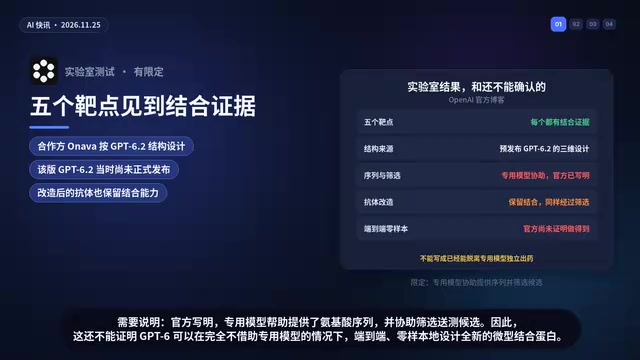
GPT-6 Designs Proteins, Claude Creations Become Apps with One Click, DeepMind Releases New Benchmark
OpenAI says GPT-6 can design protein 3D structures, Anthropic lets Claude creations install as desktop apps, DeepMind's HIP benchmark tests stability on simple questions, Google Workspace opens agent MCP interfaces.

OpenAI Weekly Roundup: GPT-6.2 Rolls Out to ChatGPT, GPT-6 Designs Proteins
OpenAI's week: GPT-6.2 rolls out to ChatGPT, GPT-6 claims independent protein design, agent research share surges, perplexity proposed as a shared metric, and internal safety concerns surface.

Is the Crypto Industry About to "Turn Blue"? The Truth Behind Tech and Politics' Shifting Allegiances
Vergecast discusses whether the crypto industry will shift from the right to the Democrats, revealing the pragmatic nature of tech's politics and the costs of a crypto pivot.