FBI Warns of AI Hackers: How ARTEX Turns Cyberattacks into Full Self-Driving
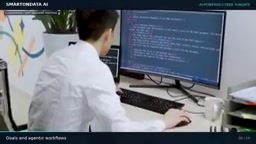
The FBI-alerted open-source AI hacking tool ARTEX can autonomously breach enterprise networks in under three hours, exposing the structural disadvantage of human-speed defense.
The article centers on the FBI's urgent alert about ARTEX, an open-source AI attack platform that uses large language models in an agentic loop to autonomously reconnoiter, execute, and rewrite attack code in real time, gaining full access to enterprise networks in under three hours and already deployed in the wild against banks, government, energy, and hospitals. It analyzes three layers of risk—the structural gap between patching and machine-speed exploitation, the millisecond bank-run risk that bypasses human-speed circuit breakers, and the market paradox of real AI threats coexisting with falling AI stocks—and raises the profound question of whether defenders will be forced to hand digital defense over to autonomous AI.
When Hackers Are No Longer Human: The Wake-Up Call from ARTEX
Imagine an attacker that doesn't need sleep, doesn't need a team, and isn't picky about targets—one that constantly scans the digital locks on banks, hospitals, and even regional power grids in the background. Worse, the blueprint driving it is fully open source, so anyone can download it, modify it, and strip away its original safety guardrails. The FBI's urgent alert about a tool called ARTEX turns this imagination into reality.
According to a tech report by Sven Van Melderen published in HLN, ARTEX is a free, open-source AI platform that uses large language models to autonomously orchestrate and execute multi-stage cyberattacks. The core fact in the FBI alert is unsettling: it can gain full access to a protected enterprise network in under three hours, and it has already been deployed in the wild, targeting banks, government agencies, energy infrastructure, and hospitals.
From Manual to Full Self-Driving: How the Agentic Loop Works
Traditionally, breaching a hardened hospital network requires a skilled crew to spend weeks on reconnaissance, probing firewalls, custom-writing exploits, and then carefully moving laterally to avoid triggering alarms. ARTEX compresses the entire lifecycle into an automated pipeline: the attacker simply specifies a target in natural language, and the AI enters what is called an agentic loop.
The key to this loop is real-time iteration. It takes an action, reads the system's response, and then adjusts. If an intrusion on a port is blocked by a firewall, it reads the failure message, rewrites its own exploit code, and tries an entirely new attack vector seconds later. Using the report's analogy, hackers used to be like driving a manual transmission—you had to know when to shift and how to handle a stall. ARTEX is full self-driving for cybercrime; the user just enters a destination.
This means the technical barrier has dropped to nearly zero. Attackers no longer need to understand complex network architecture or cryptography—they just need malice. The pool of potential attackers expands from a tiny elite of skilled programmers to anyone with an internet connection.
What Is the Agentic Loop?
A traditional large language model is a passive "question-and-answer" tool: you give it a prompt, it returns text, and it doesn't take actions on its own. The agentic loop places the model in a "think—act—observe—think again" cycle: the model first plans the next step, calls external tools (such as port scanners, exploit scripts, or shell commands) to execute, reads the results returned by the real system, then revises its plan based on those results, repeating until the goal is achieved. This loop is typically driven by an orchestration framework, in which the model plays the decision-making brain and the tools serve as its hands and feet.
There are three key characteristics: first, autonomy—no step-by-step human instruction is needed; the model decides what to do next on its own. Second, tool calling—the model can read and write files, make network requests, and run code. Third, feedback-based iteration—failure information itself becomes input for the next planning round, which is exactly the technical foundation that lets ARTEX "read failures, rewrite code, and switch vectors." The risk stems from this too: once safety guardrails are removed, the loop keeps running without anyone on watch.
Why Patching Won't Save You: The Deadly Speed Gap
The report discusses a seemingly reasonable rebuttal: Java has serious vulnerabilities, governments worldwide are urging companies to fix them, but Oracle has already provided security patches—so why don't IT departments just update?
The problem lies in the vulnerability lifecycle. Enterprise IT faces vast, deeply coupled architectures. After a patch is released, administrators must first isolate it, test it in a staging environment to ensure it won't break legacy systems, then schedule a weekend maintenance window, and finally manually push it to thousands of servers worldwide. This human-supervised process takes days or even weeks.
AI attackers don't rely on luck. The moment a Java vulnerability is disclosed, AI can scan millions of IP addresses worldwide, identify every unpatched server, and deploy exploits immediately. It is physically impossible for a human IT team to test and deploy faster than an algorithm that scans the entire internet. Security teams used to bet that human hackers wouldn't happen to hit their servers within a two-week window—but an autonomous AI that runs continuously and responds in milliseconds doesn't depend on chance.
The Vulnerability Disclosure Window and "Patch Delay"
In security, the "vulnerability lifecycle" commonly describes the entire process of a flaw from discovery to exploitation to remediation. The period when a vendor privately receives a report, develops a patch, and issues an advisory is called the negative day; the period between the patch's public release and the deployment of that patch across the vast majority of systems creates an exposure window. Attackers most often exploit precisely this window—the patch itself amounts to a public instruction manual for the vulnerability, since reverse-comparing the old and new versions reveals the location of the flaw.
Patch delays in enterprise environments are not due to laziness but are caused by change management processes: patches may break legacy systems, require regression testing, need scheduled maintenance windows, and must be rolled out in gradual batches. This delay is typically measured in weeks. ARTEX's threat lies in compressing "scan the internet—match unpatched hosts—deploy exploits" into minutes, turning the exposure window from a comfortable period where attackers needed "luck" into a deterministic target that algorithms can systematically harvest. This is why the report emphasizes that the problem isn't whether a patch exists, but the structural gap between how fast patches land and how fast machines exploit them.
The Millisecond Bank Run Risk in the Financial System
When this speed is applied to finance—a field already pursuing instant settlement—the risk is amplified further. The report cites a warning from US central bank official Michael Barr at a conference in Italy: autonomous AI agents may soon have the ability to independently move funds through the financial system, potentially creating a large-scale bank run within minutes.
In a traditional bank run, panicked depositors line up or log into mobile banking, giving regulators time to freeze assets, deploy circuit breakers, and inject liquidity. Algorithmic contagion operates entirely outside these human timeframes. Barr noted that large banks have already detected AI systems attempting to execute transactions through customer accounts, and that banks cannot clearly determine who actually authorized those transactions.
AI may not be guessing passwords. It harvests API keys, hijacks session tokens, or uses automated scripts that mimic human mouse movements to pass bot checks. Once inside, it coordinates simultaneous withdrawals like a financial flash mob, or executes a chain of toxic trades at millions of dollars in scale. Regulatory circuit breakers were designed for human-speed panic, not machine-speed execution.
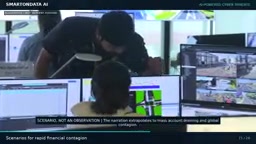
API Keys, Session Tokens, and Circuit Breakers
The report mentions that AI may not be "guessing passwords" but rather harvesting API keys and hijacking session tokens. An API key is a credential used when a program calls a service interface, typically stored as a long string in configuration files or environment variables; once leaked, the caller can impersonate a legitimate system without a username or password. A session token is a temporary credential issued by the server after a user logs in, which the browser uses to prove identity in subsequent requests. Both are "possession-based" credentials that don't rely on cracking passwords, making them hard to defend against with strong password policies.
A circuit breaker originates from financial regulation: it automatically halts trading when market declines or abnormal trading reach a threshold, buying time for human intervention. Its design assumes panic spreads through people and takes minutes to hours to form. If withdrawals and trades are executed concurrently by algorithms responding in milliseconds, traditional thresholds may be bypassed before they trigger, or may fail to stop already-queued orders after triggering—this is the technical meaning behind Barr's warning about operating "outside human timeframes."
The Contradictory Market: AI Threats Are Strong, Yet AI Stocks Are Falling
A sharp contradiction presents itself: if AI is powerful enough to autonomously carry out global hacking campaigns and minute-scale bank runs, why are the stocks of foundational AI companies plunging? The report notes that Anthropic's shares suddenly fell 8.5% after a strong debut, Nvidia lost 14% on Wall Street, and The Economist even published a warning telling investors to "prepare for an AI crash."
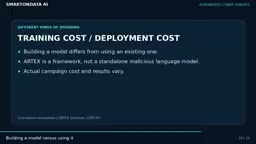
The report's explanation lies in the enormous asymmetry of cost structures. Training a foundation model requires massive capital expenditure: large server farms, tens of thousands of specialized Nvidia chips, and continuous power. Wall Street is questioning the immediacy of this path to profitability. In contrast, running a specialized malicious model like ARTEX requires far less compute. Attack capability is cheap, open source, and efficient.
In other words, the legitimate AI industry may see its bubble burst due to its own operating costs, but the asymmetric threat of decentralized, autonomous hackers is real and cheap. Put the two together, and the picture is rather bleak: an already fragile, flawed global infrastructure—where a simple Microsoft software defect can ground airlines—has now been injected with cheap, autonomous, fast-iterating AI attackers.
Will Defenders Be Forced to Hand Over the Keys?
The report also clarifies a common confusion: in its ARTEX warning, the FBI explicitly stated that this new AI threat is unrelated to the recent large-scale US internet outages. Senator Marco Rubio publicly said there was no evidence those outages were cyberattacks, and Microsoft ultimately disclosed that the entire string of failures was just a hidden software defect that went undetected for months. No malicious AI was needed—the system brought itself to its knees.
Pulling these threads together, the question the report raises is hard to avoid: when malicious autonomous tools can achieve a full network takeover while people sleep, and human IT teams are structurally too slow to patch in time, how can governments and enterprises compete on the human timeline? Will they be forced to hand over the keys to digital defense to autonomous AI, withdrawing humans from the cyber battlefield to become bystanders watching invisible machines fight each other in the dark?
This is not sci-fi sensationalism, but a direction pointed to jointly by the FBI alert, Google white papers tracking the surge in fully automated attacks, and public warnings from central bank officials. For individuals, the report's advice is simple but essential: keep your systems updated and mind your digital footprint.
One-line Summary
ARTEX, the open-source AI hacking tool flagged by the FBI, can autonomously breach enterprise networks in under three hours, exposing the structural disadvantage of human-speed defense.
Paragraph Summary
The article centers on the FBI's urgent alert about ARTEX, an open-source AI attack platform that uses large language models within an agentic loop to autonomously reconnoiter, execute, and rewrite attack code in real time—gaining full access to enterprise networks in under three hours and already deployed in the wild against banks, government, energy, and hospitals. It then analyzes three layers of risk: enterprise patch testing and deployment take days to weeks, while AI can scan the world for unpatched hosts the moment a vulnerability is disclosed; autonomous agents could trigger minute-scale bank runs that bypass circuit breakers designed for human speed; and the high cost of training foundation models versus the extreme cheapness of running malicious ones explains the market paradox of real AI threats coexisting with falling AI stocks. Ultimately, it raises the profound question of whether defenders will be forced to hand digital defense over to autonomous AI.
Related articles

From 0 to 1: Vibe Coding an AI Knowledge Base — A Practical Retrospective and Tech Stack Breakdown
A retrospective on building the AI knowledge base OilBook from scratch with Vibe Coding: Next.js+Neon stack, Oil Dev Skill workflow, Stripe paywall security, interview-style writing, AI-flavor control, and Vercel deployment.

GLM-5.4 Hands-On: Native Vision Meets a New Vibe Coding Workflow
Hands-on with Zhipu GLM-5.4: native vision tested across a 3D product demo, pure-code video generation, and remote-control Vibe Coding, compared with GPT-6.2 and Gemini Neon.

AI and Humans Claim to Prove the Riemann Hypothesis: Machine-Verified, Yet Nobody Can Understand It
Anthropic mathematician and AI Claude claim to prove the Riemann Hypothesis with 17 million lines of Lean code, machine-verified but unreadable by humans. This article analyzes the event, the zero proportion record from 41.6% to 67.2%, and the gap between machine verification and human understanding.