FBI Warns: Open-Source AI Framework Artex Completes Intrusions in Under Three Hours

FBI warns open-source AI framework Artex is used for automated intrusions, with some attacks gaining privileged access within three hours.
The FBI issued an urgent advisory that the open-source AI framework Artex is being used by multiple attackers for real network intrusions, with some attacks reaching privileged access in under three hours. Written in Go and lacking built-in AI, Artex connects to external LLMs like Claude, GPT, DeepSeek, GLM, Grok, and Kimi, letting multi-agent systems autonomously chain attack steps from natural-language goals. The FBI named two campaigns: a ConnectWise Cloud Backup supply chain attack causing login attempts against over 2,250 downstream tenants, and an attack on South Korean financial institutions stealing data on about 67,000 people. Though the original GitHub repo was removed in October, the framework spreads via forks, archived copies, and Artex Pro, with over 1,600 exposed consoles. Defenses include taking login alerts seriously, dropping the "too small to be targeted" mindset, maintaining basic hygiene, and preparing response plans.
The FBI recently issued an urgent warning that an open-source AI framework called Artex is being used by multiple attackers worldwide to automate network intrusions, with some attacks going from target identification to privileged access in under three hours. This is not a lab demo — these are real attacks against real organizations.
What Artex Is: Giving Attackers an AI Brain
According to the FBI's flash advisory, Artex is an autonomous multi-agent penetration testing platform written in Go. It does not ship with AI capabilities of its own; instead, it connects to external large language models — the FBI specifically named Anthropic Claude, OpenAI GPT, DeepSeekAd, GLM, Grok, and Kimi. You can think of Artex as the body and hands, while the language models it connects to provide the thinking.
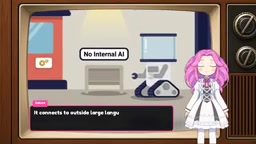
The way it works is no mystery: a user sets a high-level goal in natural language, and specialized agents autonomously break down tasks, distribute subtasks, check results, and move on to the next step, with the entire attack chain requiring almost no human intervention. Each individual step is an old technique familiar to security professionals; what has genuinely changed is the "chaining" — the tool handles the repetitive connective work, never gets tired, doesn't need shift changes, and doesn't take lunch breaks.
Multi-agent architecture is the key background for understanding Artex's capabilities. Traditional automation scripts typically execute linearly along a fixed workflow, whereas a multi-agent system consists of multiple agents each with specific responsibilities — reconnaissance, exploitation, privilege escalation, lateral movement, and so on — that can pass results to one another and negotiate the next action. The larger language model serves as the "decision core" for each agent, outputting the next command based on the current environment and evaluating execution feedback. This design lets the system handle branches that weren't pre-programmed, such as automatically trying another path when a port is closed. The trade-off is higher invocation costs and less predictable behavior, but it is precisely this flexible chaining capability that pushes the automation of attack chains far beyond what rule-based tools could achieve.
What Three Hours Means: Machine Speed vs. Human Response
The FBI's core statement is that Artex "significantly shortens the time required to chain attack techniques, with some intrusions reaching privileged access in under three hours from initial target identification." Note the wording — "some intrusions," not every attack is that fast.
The meaning of privileged access is worth unpacking: it's a master key, not a visitor badge. For a long time, security planning assumed that a serious intrusion would take a human team days or even weeks, which left a window to notice something strange, investigate, and respond. When machines compress that window into a single afternoon, it narrows considerably.

In its analysis of the advisory, TechCrunch noted that Artex-related attacks may be "noisy" — that is, they trigger defenders' alerts. It's not a silent ghost; it's more like an extremely fast burglar who knocks over furniture. The problem is that speed makes it hard for human defenders to keep up — alerts pour in one after another, each requiring someone to look at it, think, and decide. The real race is between machine speed and human attention.
Privileged access in a security context usually refers to administrator-level accounts, domain controller permissions, or high-privilege roles on cloud platforms — holders can create accounts, modify configurations, read sensitive data, or even deploy persistent backdoors. Escalating from an initial foothold (such as a regular employee account or an exposed VPN entry point) to privileged access typically requires credential theft, exploitation of privilege escalation vulnerabilities, lateral movement, and other stages — precisely the bottleneck that traditional defenders rely on to buy response time. When this process is compressed to under three hours, security operations models that depend on manual inspection and tiered approvals face structural pressure, because alert triage alone can take hours.
Two Real Attacks: Supply Chain and Financial Data
The FBI named two attack campaigns. The first was a supply chain attack affecting ConnectWise Cloud Backup customers; according to the advisory, the campaign resulted in login attempts against more than 2,250 downstream tenants. Tenants are the isolated spaces for customers within a cloud service; "login attempts" does not mean all of those companies were compromised. In an October 21 security blog post, Microsoft attributed the campaign to the cluster it tracks as Storm09 and described the use of Artex. Microsoft and subsequent reports said the cluster is linked to the Chinese government, but that is Microsoft's attribution — the FBI's advisory did not state this.
The second had a different motive: a financially motivated attack targeting South Korean financial institutions that resulted in the theft of personal information belonging to approximately 67,000 people. Placed side by side, the two cases point to a clear conclusion — one used a trusted service to reach many customers, the other targeted money and personal data; same type of tool, vastly different objectives.
The Risk You Can't Delete: Once Code Is Out, It Keeps Spreading
The original developer once said the tool could not be deleted, but removed Artex's GitHub repository in October after malicious use was publicly disclosed. That sounds like the end of the story — it isn't. The FBI noted that the framework is still circulating through community forks, localized variants, archived copies, and a commercial version called Artex Pro. As of early November, researchers had identified more than 1,600 publicly exposed Artex console instances, and the FBI said total Artex Pro deployments number around 3,000. Taking it down did not make the threat disappear — once software is released into the world, copies tend to keep traveling.
The open-source fork mechanism explains why deleting the original repository cannot stop Artex's spread. On platforms like GitHub, a fork is a complete copy of a repository created by another user, with its own commit history and access URL; after the original repository is deleted, existing forks usually remain and can continue to be cloned. In addition, code archiving services, container images, forum attachments, and localized translation versions all create additional copies. For security tools, this distributed retention means any takedown action can only affect official distribution channels and cannot recover code that has already leaked out. The more than 1,600 publicly exposed console instances counted by the FBI are a direct manifestation of this spread at the level of internet scanning.
What Ordinary Teams Should Do: Take Small Alerts Seriously
For ordinary users and teams, the actionable conclusions are not complicated.
Take unusual login alerts seriously. If a service warns of a login attempt from an unfamiliar location, or you receive a login approval request you didn't initiate, don't just swipe it away. In an environment where fast tools are rampant, small signals are early warnings — and early is when they're most valuable.
The assumption "we're too small to be targeted" is weakening. When tools can automate a great deal of the connective work, the cost of trying more targets drops accordingly. This doesn't mean every small business will be attacked immediately, but "being inconspicuous" is less effective as a shield than it used to be.
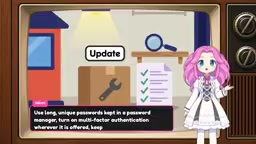
Basic hygiene still works. Use a password manager to store long, unique passwords, enable multi-factor authentication, keep software updated, and quietly review who has access to what. These habits aren't glamorous, but they make it harder for humans or machines to take the first step.
Prepare your response process in advance. A serious intrusion no longer necessarily looks like a weeks-long manual operation. If you maintain systems for a team, make sure that before the alert arrives, someone already knows what to do when it does.
The FBI's advisory did not say that any specific organization has been affected. This is not a reason for panic — it's a reason for a bit more preparation. Artex is not a magic hacker button, and no one has proven it succeeds every time, but it is fast enough, still circulating, and requires all of us to take a closer look at those small alerts.
The value of multi-factor authentication (MFA) against this kind of automated attack deserves specific mention. MFA requires both a password and a second credential at login — such as a phone push approval, a one-time verification code, or a hardware key — so that stealing a password alone is not enough to complete a login. But attackers are evolving countermeasures too, including MFA fatigue attacks (repeatedly pushing approval requests until the user mistakenly taps one) and man-in-the-middle phishing proxies. That is why the FBI advisory emphasizes "don't just swipe away login approval requests you didn't initiate" — it addresses this reality. For teams, prioritizing phishing-resistant hardware keys or number-matching push notifications for high-privilege accounts and admin backends will do more to block the critical jump from initial access to privilege escalation than rolling out ordinary SMS verification codes everywhere.
One-line Summary
FBI warns that open-source AI framework Artex is being used for automated intrusions, with some attacks achieving privileged access within three hours.
Paragraph Summary
The FBI issued an urgent advisory stating that the open-source AI framework Artex is being used by multiple attackers for real network intrusions, with some attacks reaching privileged access in under three hours from target identification. Artex is written in Go and does not contain AI capabilities itself; instead, it connects to external large models such as Claude, GPT, DeepSeek, GLM, Grok, and Kimi, setting goals in natural language and letting multiple agents autonomously break down and chain attack steps. The FBI named two campaigns: a ConnectWise Cloud Backup supply chain attack that led to login attempts against over 2,250 downstream tenants, and an attack on South Korean financial institutions that stole personal information from about 67,000 people. Although the original GitHub repository was taken down in October, the framework continues to spread through forks, archived copies, and the commercial Artex Pro version, with more than 1,600 publicly exposed console instances. Defensive recommendations include taking unusual login alerts seriously, abandoning the "too small to be targeted" assumption, maintaining basic security hygiene, and preparing response processes in advance.
Related articles

Prompt Engineering for Beginners: From Writing Prompts to Engineering Thinking
Starting from the essence and four functions of prompts, this article systematically explains the six-step process, four success criteria, learning value, and practical limitations of prompt engineering to help you build a complete understanding.

Anthropic Launches Nasdaq IPO: AI Giant's Listing and Risk Disclosures
Anthropic officially launches its Nasdaq IPO under ticker ANT, with market valuation expected to potentially exceed SpaceX's record. The prospectus devotes nearly 100 pages to AI risks, while first-half revenue grew over 14x but net losses widened sharply, reigniting the AI bubble debate.

Rust cURL Clone Uses 4,832 unsafe Blocks—Is the Memory Safety Myth Broken?
A Rust cURL clone uses 4,832 unsafe keywords, challenging Rust's memory safety narrative. We analyze what unsafe really means, compare Fil-C, and examine rewrite motives.