FDE (Forward Deployed Engineer): A Beginner's Guide to One of AI's Highest-Paying New Careers

FDE bridges AI technology and enterprise business — here's the 4-step path to break into the role.
FDE (Forward Deployed Engineer) is an emerging AI-era career focused on deploying large model capabilities into real enterprise business contexts — not building foundational algorithms. The role is in high demand at major tech companies worldwide and is accessible to non-CS backgrounds. The four-step entry path covers: prompt engineering, building RAG-based private knowledge bases, constructing Agent-based automated workflows, and building a portfolio through real-world projects. The article also cautions readers to stay realistic about "quick path to high salary" claims — genuine engineering execution ability takes sustained practice to develop.
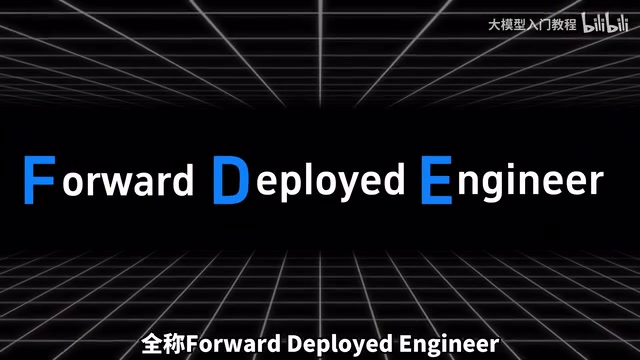
What Is an FDE: A Rising Role in the AI Era
While most people are anxious about which jobs AI will replace, a new role is quietly emerging — the FDE (Forward Deployed Engineer). This is a brand-new career path being created by the AI era, with impressive salaries and strong market demand.
According to the video tutorial this article references, FDE positions start at ¥35,000/month, and the role is relatively protected from direct AI replacement. Domestic tech giants like ByteDance, Meituan, Alibaba, and Tencent are all actively recruiting for this role. Overseas, top AI companies like OpenAI and Anthropic are competing fiercely for talent — OpenAI's FDE compensation reportedly reaches up to $400,000 per year.
What makes this role even more noteworthy is that FDE positions don't strictly require a technical degree — they're relatively accessible to candidates from humanities backgrounds. This lowers the barrier to entry for people looking to break into the AI industry and makes it a realistic on-ramp for catching this technological wave.
What Does an FDE Actually Do: Bridging AI and Real Business
To understand the FDE role, the key phrase is "forward deployed." Its core value isn't about building foundational algorithms from scratch — it's about actually putting large language model capabilities to work in real enterprise business contexts.
In other words, an FDE is the bridge between "AI technology" and "business needs." Enterprises have countless vague, fragmented pain points, and the FDE's job is to translate those needs into AI solutions that actually run and deliver value. This ability to "make the technology really work" is precisely what's most scarce in today's market — and hardest for AI itself to replace.
This also explains why FDEs don't need to dive deep into complex foundational algorithms right away. The role prioritizes engineering execution, business understanding, and rapid delivery — which is actually an advantage for people without a traditional CS background.
A Four-Step Path: From Using AI to Commanding AI
Based on the learning roadmap outlined in the video, here's a clear, step-by-step path for breaking into the FDE role.
Step 1: Master Prompt Engineering
The first hurdle is Prompt Engineering. The goal here is to understand how to get large language models to produce the outputs you want — reliably and predictably.
Once you complete this step, you'll be able to build your first real, working AI application — things like auto-generating daily reports, analyzing user reviews, or drafting sales scripts. The core shift at this stage is: moving from "using AI" to "directing AI." It sounds basic, but it's the foundation for everything that follows.

Prompt Engineering refers to the systematic design and optimization of text instructions given to large language models to control output quality and direction. Core techniques include: clearly defining a role (telling the model who it is), providing examples (Few-shot Learning), using Chain-of-Thought prompting to guide step-by-step reasoning, and setting output format constraints. For enterprise applications, prompt engineering also involves designing System Prompts that lock in the model's behavioral boundaries and keep it focused on the business context. The real value of this skill: with the same underlying model, a well-crafted prompt versus a poorly written one can produce dramatically different results — which directly determines whether an AI application is actually useful in a real business setting.
Step 2: Build an Enterprise Private Knowledge Base
Step two is knowledge base construction. The core idea is "feeding" the company's own proprietary data to the AI, so the model's answers are grounded in real information rather than hallucinated.
After completing this step, you'll be able to build a private knowledge base for a team. The video emphasizes that this is the most commonly used — and most impressive — skill FDEs bring to enterprise deployments. Because what businesses care about most isn't what a general-purpose model can chat about; it's whether AI can provide reliable answers based on their own business data.

The technical foundation of enterprise private knowledge bases is typically a RAG (Retrieval-Augmented Generation) architecture. Here's how it works: internal company documents (contracts, product manuals, FAQs, etc.) are chunked and converted into vectors stored in a database. When a user asks a question, the system retrieves the most relevant text segments from the vector store and feeds them into the prompt for the large language model to generate a grounded response. This approach directly addresses the "hallucination" problem — the model no longer answers from imagination but from real company data. Common tools in this stack include: LangChain / LlamaIndex (orchestration frameworks), Chroma / Milvus / Pinecone (vector databases), and Embedding APIs from various LLM providers. RAG-based knowledge bases are currently one of the most mature and in-demand enterprise AI use cases — and one of the easiest entry points for FDEs to deliver tangible results.
Step 3: Build Agent-Based Automated Workflows
Step three advances to Agent workflows — chaining multiple AI components into an automated pipeline so that an entire task, from input to output, runs end-to-end without manual intervention.
This step is described in the video as the most critical delivery capability of an FDE: taking a vague business requirement and turning it into a working automated process. Compared to the first two steps, this requires more systematic engineering design thinking — and it's the key dividing line between an FDE and an ordinary "AI user."
The core idea behind Agent (intelligent agent) workflows is to enable large language models to not just "answer questions" but to "autonomously plan and use tools to complete tasks." A typical Agent flow looks like: receive a goal → break it into subtasks → invoke external tools (search engines, database queries, code execution, sending emails, etc.) → adjust the plan based on intermediate results → produce a final output. When multiple specialized Agents collaborate on complex tasks, you get a "multi-agent workflow" — for example, one Agent handles data collection, one handles analysis, and one generates and sends a report. Common tools and platforms include: Dify, Coze, n8n, and LangGraph for code-level implementation. The technical bar for this layer is noticeably higher than the first two steps — it requires both an understanding of AI's capability boundaries and a foundational grasp of engineering system design.
Step 4: Build Your Portfolio with Real-World Projects
The final step is hands-on practice. Rather than waiting for someone to guide you through every detail, pick a real workflow from your own work or life and rebuild it completely with AI.
The benchmark the video offers is refreshingly straightforward: if it actually runs, it's no longer a toy — it's a piece of your FDE portfolio. And that portfolio will be your strongest asset in any job interview.

A Moment of Sober Reflection
As an emerging role, FDE genuinely reflects a real market need in the AI deployment process — enterprises need people who can translate technology into productivity. The four-step learning path outlined in the video also follows a logical progression from "using tools" to "delivering systems," and is worth referencing.
That said, claims like "¥35K starting salary," "$400K annual comp," and "zero to expert in seven days" deserve a healthy dose of skepticism. High salaries typically come with high and well-rounded capability requirements, and real engineering execution ability is built through sustained practice — it rarely comes from a crash course.
For anyone seriously considering this path, the more practical approach is: treat these four steps as a capability framework, work through each one with genuine practice, and pay special attention to Step 4 — building demonstrable results from real projects. That's what cuts through the noise and builds actual career competitiveness.
Related articles

Claude Code Adds Agent View: A Research Preview for Unified Session Management
Claude Code's new Agent View feature (research preview) consolidates all coding sessions into a unified list, advancing AI tools toward multi-agent orchestration.
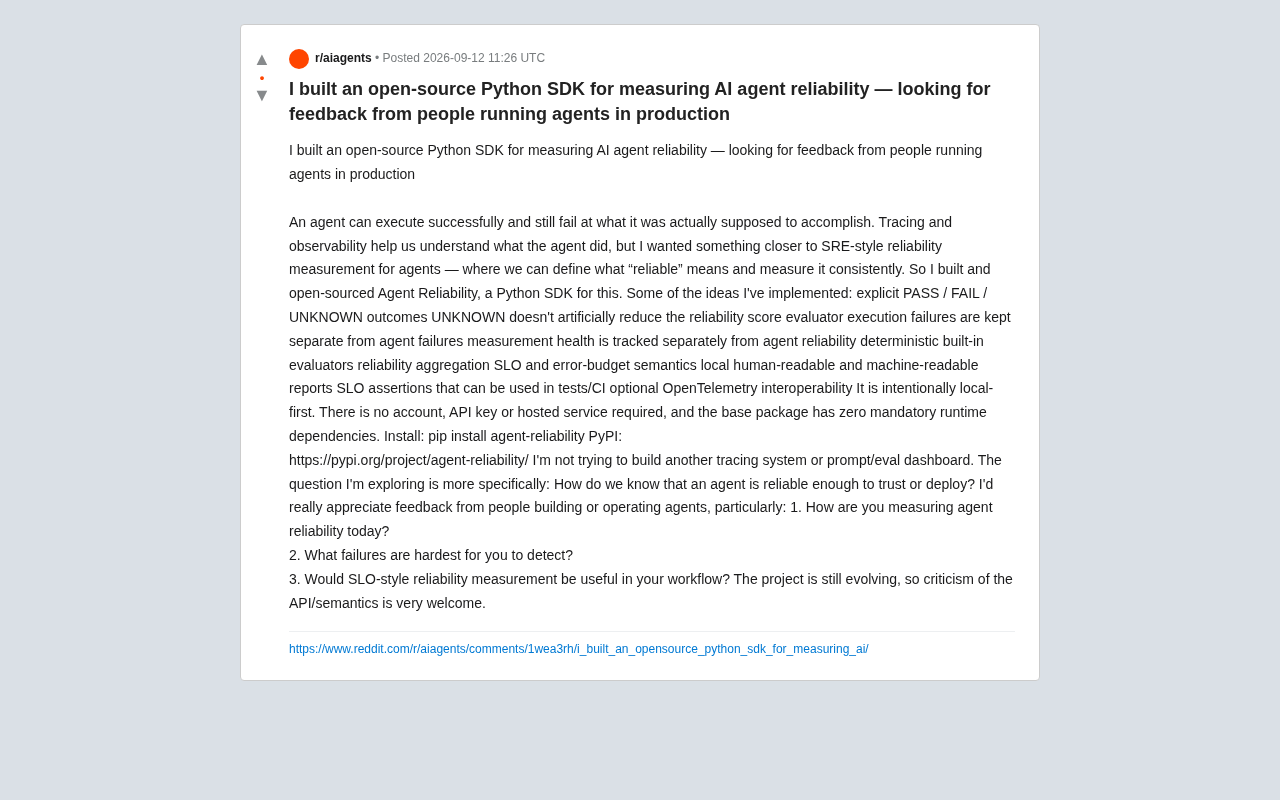
Open-Source Python SDK: Measuring AI Agent Reliability with SRE Principles
Agent Reliability is an open-source Python SDK that applies SRE's SLO and error budget concepts to AI Agent evaluation, with PASS/FAIL/UNKNOWN states, CI assertions, and zero forced dependencies.
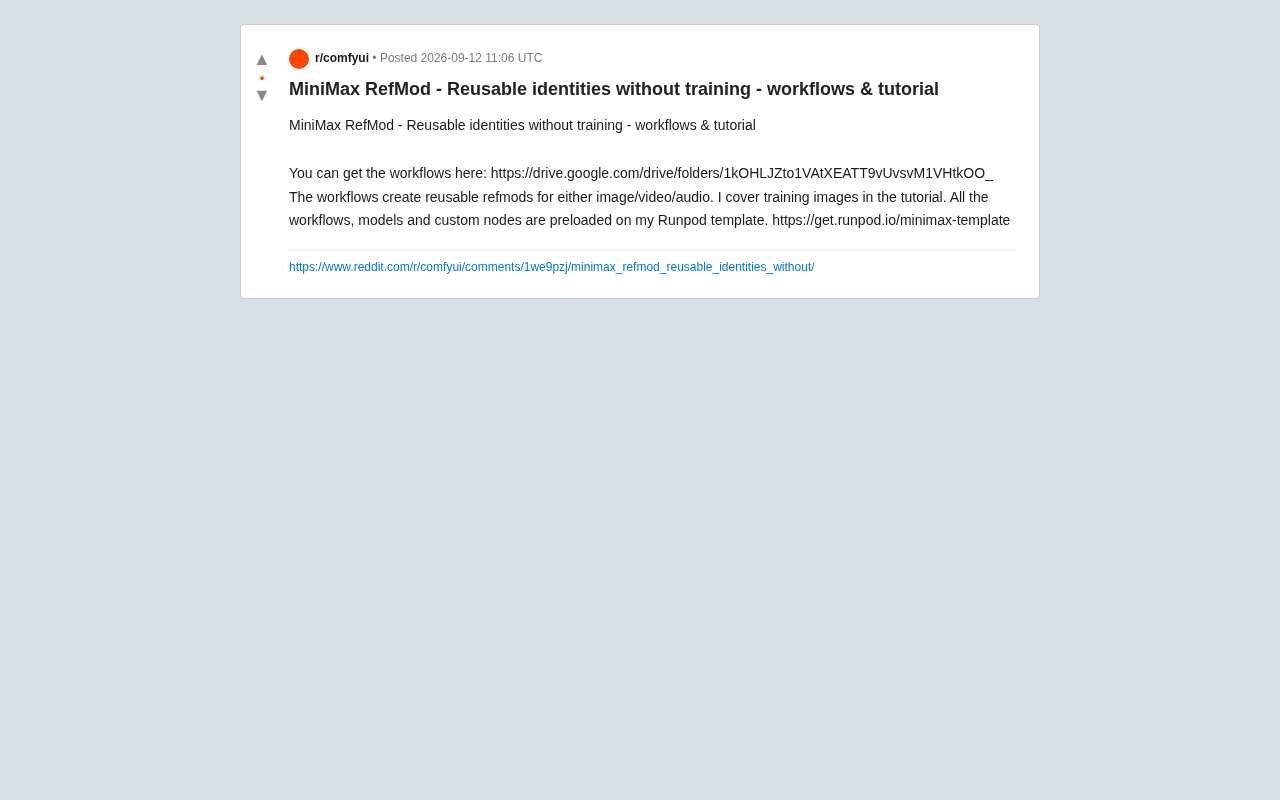
MiniMax RefMod: A Complete Guide to Training-Free Reusable Identity Workflows
MiniMax RefMod offers training-free reusable identity workflows for image, video, and audio generation. Includes Runpod template and tutorial for quick setup.