FDE Forward Deployed Engineer: A Complete Guide to AI's Hottest New Role

FDEs are engineers embedded on-site at clients, responsible for truly landing AI in enterprise business.
The article explores FDE (Forward Deployed Engineer), a rapidly rising role. It opens with the industry pain point of "unclear requirements, wrong delivery," explaining the fundamental difference from regular engineers: FDEs face people, requiring on-site presence, proactive needs discovery, and real-time code fixes. It traces the model to Palantir's experience serving government intelligence agencies, and notes that the LLM era has revived this approach, with OpenAI, Anthropic, SenseTime, and Volcano Engine all building related teams. Finally, it outlines FDE core skills and growing demand, arguing that for technically solid programmers willing to face clients directly, this is a worthwhile new direction.
A product manager hands over a requirements doc and says "just build it like this." You pull three all-nighters and ship it. The client's first words: "This isn't what I wanted." And when you ask what they actually want, they can't articulate it either. This scene, replayed endlessly across the software industry, explains why a new role is rising fast: FDE (Forward Deployed Engineer).
The term comes from military jargon, originally meaning sending personnel straight to the front lines. In the AI industry, the logic is identical: a research team builds an AI system that runs beautifully in the demo environment, but falls apart at the client's site — data formats don't match, environments are configured differently, business processes aren't sorted out. During remote calls, the dev team says "it works fine on our end," and the client says "then what do I need you for?" So sending people directly to the client's site became the most effective solution.
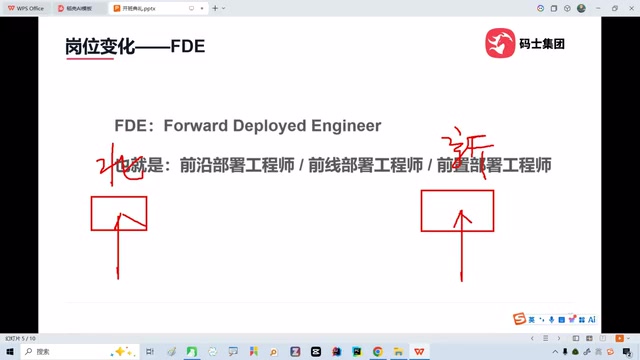
What Exactly Is an FDE?
A Human Bridge
FDE isn't about business trips — it's about being embedded on-site. They work alongside clients, attend meetings together, eat together, write code on-site, fix code on-site, and demo on the spot. The core value of this approach: it genuinely connects AI models with the client's business.
Many traditional enterprises have strong AI needs but lack internal LLM talent and don't know how to implement it. The FDE exists so companies don't have to build capabilities from scratch — instead, an embedded engineer handles the entire process from deployment to operations.
How FDEs Differ Fundamentally from Regular Engineers
Regular engineers face a requirements document. Once delivered through the process, an email and a workflow ticket marks completion. FDEs face people — they proactively uncover needs at the client site, show results immediately, and fix things on the spot if they don't work.
In other words, regular engineers deal with "requirements"; FDEs deal with "people." This difference means FDEs need both technical skills and communication skills, able to help clients untangle their real problems when the client can't articulate what they want.
Where This Role Came From
The Palantir Playbook
The FDE model traces back to software company Palantir. In its early days, the company served government agencies and intelligence organizations — clients that simply couldn't do remote meetings. Classified environments typically run on internal networks, where email and phone use are restricted.
More critically, their problems were often the most complex and most classified — you couldn't imagine what would come up on-site from a remote desk. After deploying engineers there, Palantir discovered these engineers could not only solve problems but also bring client pain points back to the product team, making the product better and better. So the model was institutionalized, and these people got a dedicated name: FDE.
Background on Palantir: Palantir is an American data and software company founded in 2003, initially backed by PayPal co-founder Peter Thiel and others. Its core business is providing data integration and analytics platforms for governments, intelligence agencies, and large enterprises. Its best-known products include Gotham for government and defense, and Foundry for commercial clients. Because most clients are classified organizations, engineers couldn't collaborate through conventional remote methods, so Palantir developed the practice of "sending engineers directly to the client's site." These engineers were responsible not only for software deployment but also for deeply understanding clients' business processes and data characteristics, and bringing frontline feedback back to the product team. The industry widely considers Palantir's model to be the prototype of the FDE role, later adopted by many AI and SaaS companies.
Why It's Booming Now
The LLM era has brought the FDE model back into the spotlight. No matter how well it runs in the demo environment, the client's real environment is a different story. Only having people on-site can truly complete deployment.
Currently OpenAI sends people to large enterprises for on-site LLM deployment. Anthropic (the company behind Claude) similarly uses on-site embedding to help clients complete deployment. Domestically, companies like SenseTime and Volcano Engine are also building FDE teams aggressively.
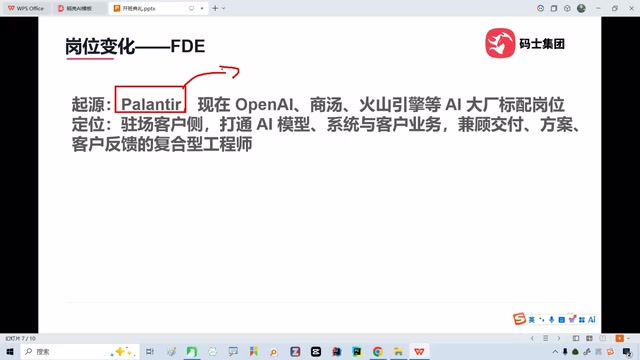
How OpenAI and Anthropic Deploy: As LLMs enter the enterprise deployment phase, leading model companies like OpenAI and Anthropic have ramped up on-site support for enterprise clients. OpenAI has solutions and deployment teams for enterprise clients, sending engineers to help with model integration, data preparation, prompt engineering, and security compliance. Anthropic also uses on-site or deep collaboration to help clients integrate the Claude model family into actual business systems. The common thread: the model's capabilities are just the baseline — what really determines success is whether it can connect with the client's data, workflows, and permission systems. FDEs are exactly the ones handling this "last mile" deployment task, which is why demand is rising rapidly in the LLM enterprise services space.
Role Requirements and Skills
Growing Demand
According to recruitment platform data, FDE job demand has grown several times over compared to the past year. Searching "FDE" or "Forward Deployed Engineer" on Boss Zhipin reveals nationwide hiring demand with quite attractive salary levels.
Core Skills Checklist
Working backward from the role's positioning, FDEs need several key capabilities:
- LLM deployment and tuning: Able to complete model deployment, debugging, and optimization in client environments
- Business understanding and needs discovery: Able to proactively identify real pain points when clients can't articulate their needs
- On-site problem solving: Able to troubleshoot and fix environment, data, and configuration issues on the spot
- Communication and collaboration: Able to build rapport and trust with client teams
- Rapid delivery: Fix code on the spot, demo on the spot, shortening the feedback loop
LLM Deployment and Tuning: In the LLM context, this typically includes model selection and private deployment, inference service performance and cost optimization, fine-tuning or retrieval-augmented generation (RAG) built on client data, as well as prompt engineering and evaluation. RAG means having the model retrieve relevant information from the enterprise knowledge base before answering, then generating a response based on the retrieved results, improving accuracy and timeliness. Fine-tuning means using the client's own data to continue training the model, making it fit specific business needs better. FDEs need to judge which approach to use in a given project and be able to complete debugging, monitoring, and iteration at the client site, ensuring the model's stability and usability in real business environments.
A New Direction for Programmers
Technology changes, tools change, and job roles inevitably follow. FDE offers a direction worth watching: it's no longer about sitting at a desk waiting for requirements, but charging to the client site and bonding technology with business.
If you have solid technical skills and are willing to work directly with clients, FDE could be a track worth investing in. It demands not just coding ability, but the ability to truly land AI in enterprise business — which is exactly what's scarcest in the market right now.
Related articles

ChatGPT Space Launches: Team Collaboration and New Pages Features Explained
ChatGPT Space is OpenAI's new team collaboration feature with Pages, real-time collaboration, and Slack/Google Drive sync. We break down its privacy design, multi-platform integration, and the full workflow from conversation to document.

Migrating Apache Spark UDFs to GPU Acceleration with AI Agents
NVIDIA developer blog explains how AI Agents rewrite Apache Spark UDFs for GPU acceleration, covering migration criteria, agent rewriting and verification workflows, plus pitfalls like result consistency and CPU-GPU transfer overhead.

Zed Editor v0.40.4-rc2 Released: Usage Credits Now Available Without Upgrading
Zed editor releases v0.40.4-rc2, allowing users to use usage credits for AI features without upgrading to a paid plan, lowering the trial barrier.