Fei-Fei Li on AI: Visual Intelligence, the Boundaries of Creativity, and Human Agency

Fei-Fei Li explores how vision shaped AI, where AI falls short of human cognition, and why agency matters most.
In a Huberman Lab podcast conversation, Stanford's Fei-Fei Li traces AI's roots to visual neuroscience and her landmark ImageNet project, explains why AI's pattern recognition differs fundamentally from human learning, highlights promising healthcare applications, and argues that preserving human agency—not replacing it—should be the guiding principle of AI development.
In a deep-dive conversation on the Huberman Lab podcast, Fei-Fei Li—Stanford professor and widely regarded as the "Godmother of AI"—joined neuroscientist Andrew Huberman for a discussion spanning visual science, the evolution of AI technology, and the future of humanity. As director of Stanford's Human-Centered AI Institute (HAI), Li is both a founding figure of modern AI and a steadfast advocate for placing ethics and responsible use at the core of technology. HAI was co-founded by Li and former Stanford Provost John Etchemendy in 2019, bringing together over 200 faculty members from computer science, philosophy, political science, medicine, education, and other disciplines. It represents an alternative path for AI development—one that emphasizes governance, fairness, and multi-stakeholder participation rather than purely commercial incentives. This conversation not only clarified the boundaries of AI's capabilities but also raised a crucial proposition: AI should augment, not replace, humans.
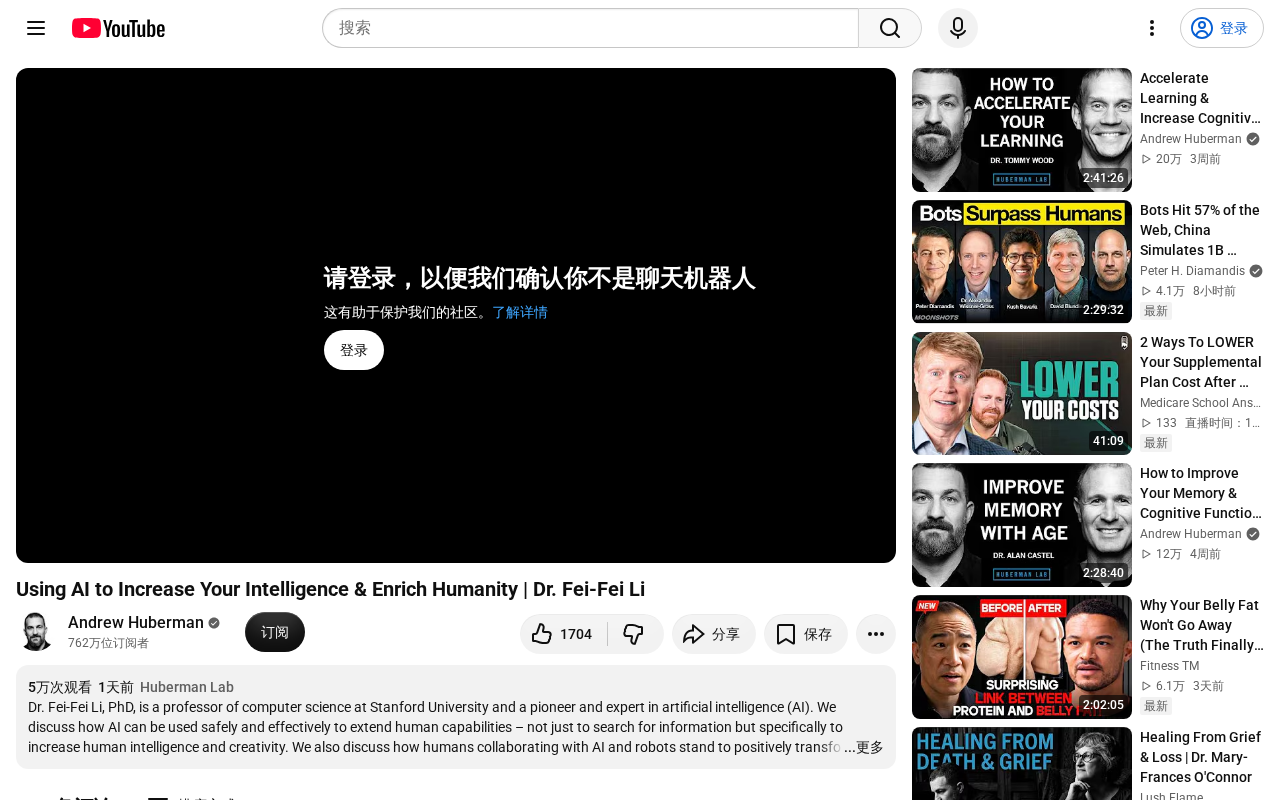
Vision: The Foundation of Intelligence
Li views vision as the intersection of two parallel threads in the development of intelligence. From an evolutionary perspective, 540 million years ago, when ocean animals "saw the first ray of light," the emergence of this perceptual capability directly triggered the Cambrian Explosion. The Cambrian Explosion is one of the most significant events in the history of life on Earth—within just tens of millions of years, nearly all modern animal phyla suddenly appeared in the fossil record. Oxford zoologist Andrew Parker's "Light Switch Theory" proposes that it was the evolution of eyes that triggered this explosion of biodiversity. Once the first animals gained vision, the arms race between predators and prey escalated dramatically, driving the rapid evolution of complex features such as hard shells, locomotion, and camouflage. Perceiving the external world transformed animals' self-awareness and survival strategies—you can see food, but you can also become someone else's food. By her estimate, roughly half of the human brain's cortical activity is related to visual function, and children learn to "see" before they learn to speak.
From the AI technology thread, vision played an equally critical role. In the 1950s, Hubel and Wiesel recorded the hierarchical structure of visual cells in mammalian brains, a discovery that inspired the design of neural network algorithms. David Hubel and Torsten Wiesel were neurophysiologists at Harvard who inserted microelectrodes into the primary visual cortex (V1) of cats and monkeys, discovering the hierarchical structure of visual processing: "simple cells" respond to edges at specific orientations, while "complex cells" respond to moving edges regardless of precise position. This concept of hierarchical processing from simple to complex features directly inspired the convolutional neural network (CNN) architecture developed by Yann LeCun and others in the 1980s. Hubel and Wiesel were awarded the 1981 Nobel Prize in Physiology or Medicine for this work. Although today's neural networks running on hundreds of billions or even trillions of parameters have far surpassed the biological visual pathways recorded back then, their origins are intimately connected to neuroscience.
ImageNet: The Ignition Point of Modern AI
Li recounted her landmark work—ImageNet. In 2006, as a junior faculty member at Princeton, she noticed that algorithms were learning from far too little data, so she turned to cognitive neuroscience literature to study human visual learning capabilities. Research showed that by age six, humans can recognize tens of thousands of object categories. Inspired by this, her team built the ImageNet dataset containing 15 million images. The project ultimately covered over 20,000 categories, organized according to WordNet's hierarchical semantic structure, with annotation work leveraging Amazon Mechanical Turk's crowdsourcing platform and mobilizing nearly 50,000 annotators from 167 countries.
In 2012, the convergence of neural network algorithms, the ImageNet dataset, and GPU computing—these "three elements"—became the defining moment of modern AI. GPUs (Graphics Processing Units) were originally designed for gaming and graphics rendering; their architecture contains thousands of small computing cores naturally suited for the massively parallel matrix operations in neural network training. After NVIDIA released the CUDA programming framework in 2007, researchers began using GPUs for general-purpose computing. In 2012, Alex Krizhevsky's team used the deep convolutional neural network AlexNet on two NVIDIA GTX 580 GPUs to slash the ImageNet challenge error rate from 26% to 16%, reducing training time from weeks on CPUs to days. This breakthrough is widely considered the starting point of the deep learning revolution. She specifically clarified one data point: in the challenge of recognizing one thousand object categories, the human error rate is approximately 4%, and machines didn't truly surpass human performance until around 2015.
AI's Capabilities and Limitations: The Boundaries of Pattern Recognition
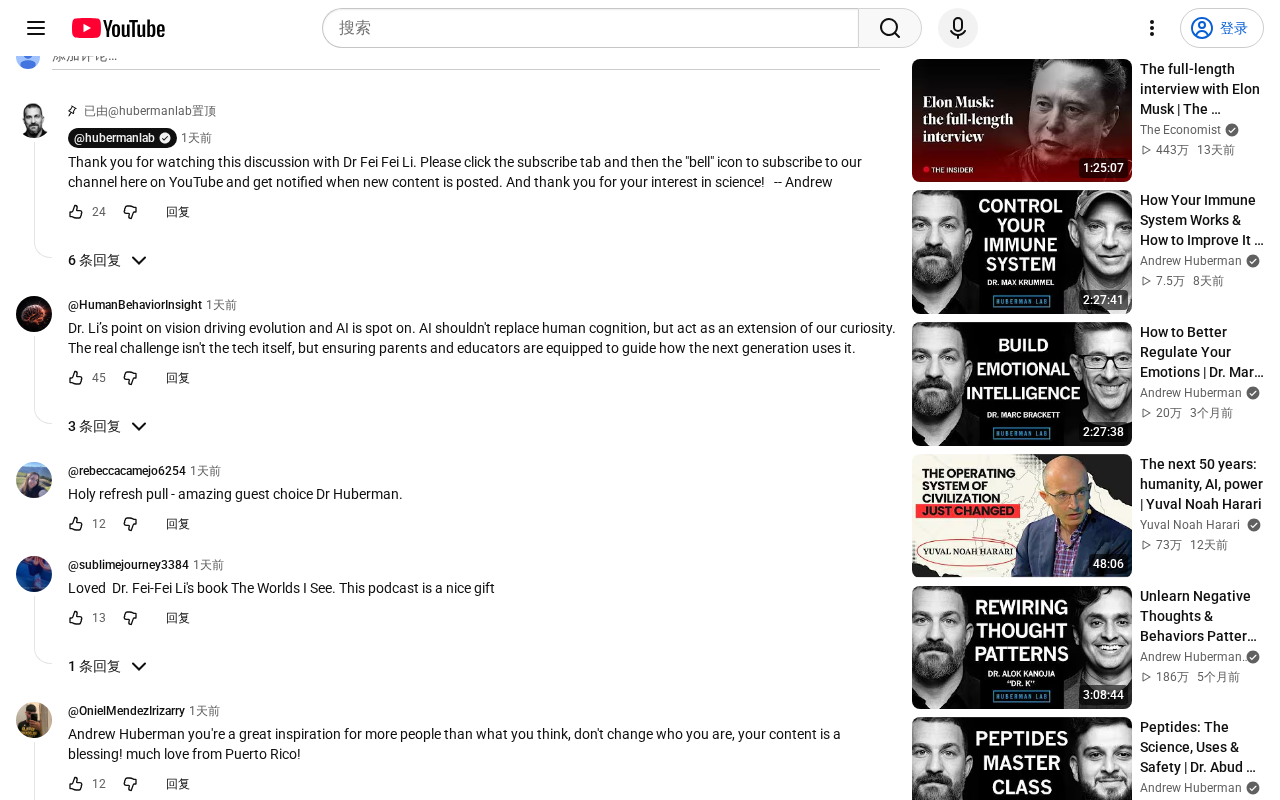
The most philosophically profound portion of the conversation explored the fundamental differences between AI and the human brain. Li candidly acknowledged that today's AI is essentially pattern recognition and synthesis based on massive amounts of data. When AI sees "a cat's tail peeking out from behind a bookshelf" and identifies it as a cat, it's because it has "downloaded" countless cat images from the internet. A child, however, may have seen only three to ten cats yet can make the same judgment through an entirely different learning pathway.
"This is exactly where we as neuroscientists part ways with AI," Li emphasized. "These mechanisms we have not yet fully cracked." This observation echoes research on "few-shot learning" in cognitive science—human children seem to possess powerful inductive biases, able to extract essential features from very few samples and generalize to new situations. This ability may rely on innate cognitive structures endowed by evolution rather than pure statistical learning.
The Nature of the Internet and AI's Cognitive Blind Spots
Li offered a brilliant definition of "the internet": it's not a random collection, but rather "the largest record of human behavior in multimodal form"—text, images, video, sound. AI is powerful precisely because it trains on this vast repository of human knowledge.
But she pointed to domains AI cannot reach: those highly personalized aspects of human cognition that have never been captured, never uploaded to the internet. When Picasso had a profound creative insight, which brain region did that thought come from? We don't know. "That thought was so personal, so unique, it was never captured, so it's not on the internet, and AI has never seen it. This is exactly where humans remain unique."
She used AlphaGo's famous "Move 37" to illustrate AI's creativity. In March 2016, during the second game against Korean Go champion Lee Sedol, DeepMind's AlphaGo played a move that was assessed by the policy network as having only a one-in-ten-thousand probability of being chosen by a human player, yet held profound strategic value. Li pointed out that this is a special form of creativity, arising from Go's clear mathematical rules and AI's extraordinary memory and computational power—essentially an exhaustive search and value assessment of the rule space. But it should not be conflated with human creativity, which springs from cross-domain association, emotional drive, and unconscious processing.
Healthcare and Scientific Discovery: AI's Most Exciting Applications
Li considers scientific discovery one of AI's most exciting uses. For a long time, scientific discovery has relied on clever human brains retaining limited knowledge and working at "the speed of muscle." AI can synthesize vast amounts of information across disciplines—something the human brain struggles to do.
Huberman shared a personal example: a few months earlier, AI helped him distinguish between vertigo and low blood pressure—while an ENT specialist who studies the vestibular system had made the wrong diagnosis. It turned out to be a mild adverse reaction to a blood pressure medication. For issues like drug interactions and side effects that are repeatedly documented in databases, AI can help through rapid retrieval and pattern matching, especially for people without immediate access to healthcare. In areas with scarce primary care resources, AI has the potential to become an important diagnostic support tool.
Human-Machine Collaboration Beats Going Solo
Li's father recently underwent a Da Vinci robot-assisted liver surgery at Stanford, with blood loss ten times less than traditional surgery. The Da Vinci Surgical System, developed by Intuitive Surgical, has been used in over 12 million surgeries worldwide since receiving FDA approval in 2000. It is not an autonomous robot but a teleoperation system: the surgeon sits at a console and performs minimally invasive surgery through 3D high-definition vision and precision mechanical arms. The system scales down the surgeon's hand movements and filters out physiological tremors, achieving sub-millimeter precision.
But through in-depth conversations with surgeons, she revealed an important fact: liver vasculature is extremely complex and varies greatly between individuals. Even if you gathered all liver surgery data worldwide, it might not be enough to train an AI capable of performing surgery autonomously.
"When patterns aren't rich enough, we must know how to use or not use AI," she summarized. In such cases, human-robot collaboration far outperforms a "half-trained" robot operating independently. This embodies the core principle of human-machine collaboration: AI excels in domains rich with data and clear rules, but in highly personalized, data-scarce scenarios, human expert judgment and adaptability remain irreplaceable.
Agency: The Central Issue of the AI Era

The keyword running throughout the conversation is "agency." In philosophy and cognitive science, agency refers to an individual's capacity to act autonomously, make choices, and exert influence on the world. Li repeatedly emphasized that AI should be viewed as a tool to enhance human agency, not strip it away. "People leading AI today shouldn't talk as if this work will take away people's agency."
She sounded an alarm about the misuse of language: AI does not have emotions. When a machine says "I'm sorry you're feeling sick today," that's merely a pattern it learned from data—large language models generate seemingly emotional responses by predicting the next token, but underneath lies statistical probability, not subjective experience. When your friend says the same thing, it's because they genuinely hope you'll recover. "We must distinguish this and not confuse the public." This view also echoes philosopher John Searle's "Chinese Room" thought experiment: a system can produce outputs that appear to demonstrate understanding without actually "understanding" anything.
Hopes and Concerns for the Younger Generation
As an educator, Li is hopeful about the younger generation. She criticized the tendency of "older generations always lamenting the next one," arguing that throughout human history, we have generally been trending in a positive direction.
But she identified two dangers: first, improper use of AI that strips young people of their learning agency and motivation—addiction to short-form video scrolling, passive consumption; second, in the name of protecting agency, denying students the opportunity to use tools out of fear of cheating. She recalled her own painful experience studying organic chemistry—if she'd had an AI study companion that could answer questions at any time, her learning efficiency would have improved dramatically.
Li specifically called on society to pay attention to forgotten groups—teachers, parents, and students. When ChatGPT launched in November 2022, the first thing she did as an insider was proactively reach out to the principal of her child's elementary school, offering to give a guest lecture for teachers and students. "No investor, no trillion-dollar company is going to think: what about the teachers in our community? But we need to have conversations with teachers and empower them."
Spatial Intelligence: AI's Next Frontier
Li's startup World Labs represents what she considers the "next chapter" beyond language intelligence—spatial and physical intelligence. Spatial intelligence refers to the ability to understand and reason about the three-dimensional physical world, including the shapes, positions, movements, physical properties, and interactions of objects. In cognitive science, this closely relates to Jean Piaget's "sensorimotor stage" (ages 0-2): infants build spatial cognitive models through interaction with the physical world before learning language. Humans develop pre-linguistic abilities before language; evolution took 500 million years to develop linguistic communication.
World Labs was founded in 2024 and is dedicated to building "Large World Models" capable of generating and understanding 3D/4D environments, serving content creators, robot training, architectural design, and other fields. This goes beyond the limitations of current large language models that only process text and 2D images, pointing toward the next technological frontier of Embodied AI and physical world understanding. It not only captures images of the real world but also allows people to transform "worlds imagined in the mind's eye" into interactive environments through a sentence, an image, or a sketch.
Regarding AI applications in creative fields like filmmaking, Li takes a cautious stance. She emphasized that the technology is already advanced enough to generate video footage from scripts, but the profound humanity in storytelling—emotion, craft, unique ways of seeing the world—is what truly matters. "Technology should make creators' work better, empower their creativity, not replace their work."
Conclusion: Maintaining Clarity Amid Technological Hype
Li's position is clear yet measured: she opposes both fear-mongering "doomsday narratives" and the belief that technology is always right ("utopian narratives"). "We should return to the middle ground and talk about what this technology is, how to use it, and how we collectively retain the agency to guide the future." This is perhaps exactly the voice needed at this "civilizational moment"—as technology accelerates, what we need is not just more powerful models, but the collective wisdom to know when to use them and when to exercise restraint.
Related articles
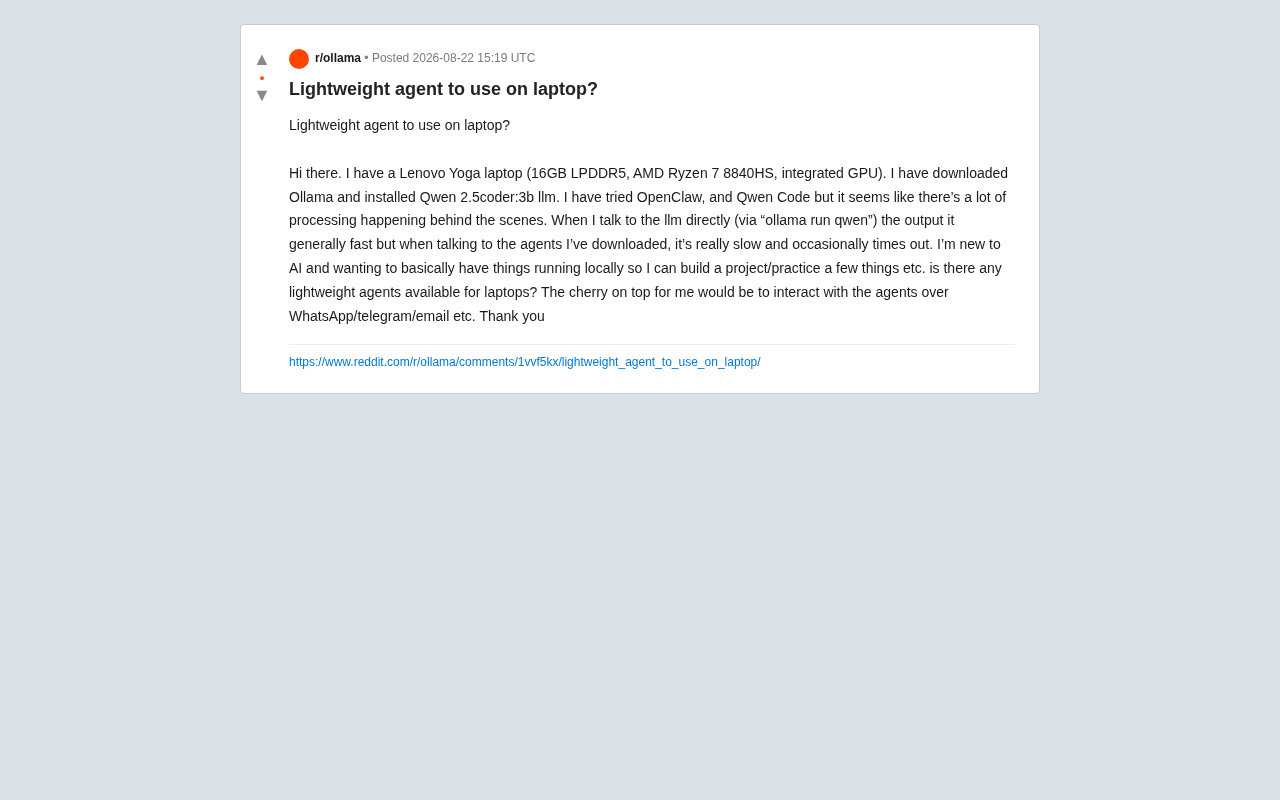
Local AI Agent Deployment Too Slow? A Lightweight Optimization Practical Guide
Local AI Agent deployment slow and timing out? This guide covers Agent framework overhead, hardware bottlenecks, and practical optimizations including context trimming, quantization, and Telegram Bot integration.

Choosing a Laptop for AI Studies: MacBook vs NVIDIA Laptop — An In-Depth Comparison Guide
In-depth analysis for AI students choosing laptops: MacBook Air M5 with remote GPU vs NVIDIA laptop, comparing CUDA support, portability, battery life, and value.

Self-Hosted LLM Tech Stack: A Complete Guide to Managing Your Local AI Cluster from the Terminal
A deep dive into self-hosting LLM tech stacks: inference engines, model management, vector databases, and how to manage your local AI cluster from the terminal.