Ferrari's First EV, the Luce, Is Sold Out Through 2027 — Controversy and Strong Demand Coexist

Ferrari's first EV, the Luce, sells out before delivery with allocations locked through 2027, sparking debate on supercar electrification.
Ferrari's first all-electric model, the Luce, has yet to be delivered, but CEO Benedetto Vigna confirms its production allocation through 2027 is fully allocated. Despite being one of the brand's most controversial models due to electrification, orders exceed expectations. The sellout partly reflects Ferrari's deliberate supply-side scarcity management. The Luce offers a reference case for ultra-luxury brands' electric transition, though the real test lies in post-delivery sentiment, residual values, and collector culture acceptance.
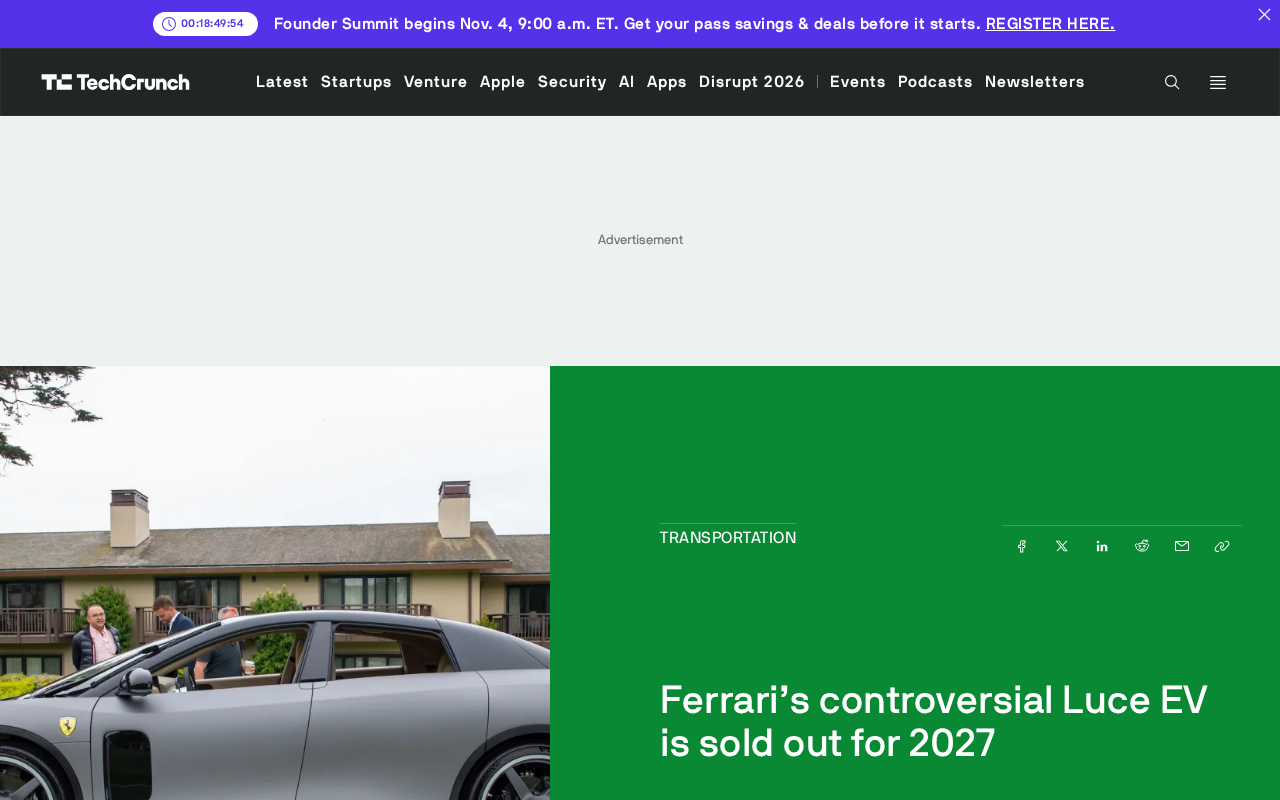
Ferrari's first all-electric model, the Luce, has yet to begin deliveries, but it has already locked up the next two years of production capacity. According to CEO Benedetto Vigna, the highly controversial EV is fully allocated through 2027. For a supercar brand renowned for its V12 engine roar and mechanical purity, such a market response is quite dramatic.
A Transformative Model Amid Controversy
Since its debut, the Luce has been tagged as "polarizing." Among Ferrari's core customer base, many remain skeptical of electrification — they argue that electric motors lack the soul of an internal combustion engine, and that the silent driving experience runs counter to the sensory thrill a supercar should deliver. Yet the order data tells the opposite story: at least for the next two years of production scheduling, the number of buyers willing to pay for this "silent Ferrari" has exceeded available supply.
This coexistence of controversy and strong sales precisely reflects the delicate position of ultra-luxury brands navigating the electric transition. On one hand, brands must preserve their traditional DNA and the emotional value cherished by loyal customers; on the other, electrification is an irreversible industry trend and a new growth window. The Luce's "fully allocated" status shows that, at least on a commercial level, Ferrari's electric venture has already gained sufficient early acceptance.
"Polarizing" in the automotive industry context typically refers to a model's design or technical approach provoking sharply divided market opinions. For the Ferrari Luce, this divide is not just about aesthetics but touches on identification with the brand's core values: some consumers see electrification as a betrayal of Ferrari's racing heritage and mechanical artistry, while others view it as the inevitable choice for embracing a new era. Notably, polarizing does not equate to market failure — many epoch-making models sparked fierce debate in their early days yet ultimately became landmark products of their brand's transformation.
The Signal Behind the CEO's Statement
Benedetto Vigna's public confirmation deserves a closer reading. As the primary driving force behind Ferrari's electrification strategy, his decision to announce the sold-out allocation before the Luce has even entered large-scale delivery serves both as a response to outside skepticism and as a vote of confidence in the brand's electric roadmap.
It is worth noting that Ferrari's capacity planning has always been restrained. Limited volume and scarcity are core tools for supercar brands to maintain premium pricing, and the Luce's "sellout" is to some extent a continuation of this strategy — not that market demand is infinite, but that supply is deliberately kept tight. Therefore, the fact that "all allocations through 2027 are locked up" is better interpreted as Ferrari's cautious balancing of output against market acceptance in the early phase of electrification, rather than a pure surge in demand.
"Fully allocated" is a term with specific meaning in the ultra-luxury automotive industry, referring to a situation where a model's entire production allocation for a given period has been reserved by dealers or customers, and the manufacturer is no longer accepting new order configurations. This status differs slightly from "sold out": it emphasizes that capacity distribution has been completed, not that all vehicles have been delivered to end users. For supercar brands with limited production, fully allocated is often a deliberately engineered market state used to reinforce scarcity expectations and brand desirability.
The Market Logic of Electric Supercars
From a broader perspective, the Luce's order performance offers an observational sample for the electric supercar segment. Previously, many traditional ultra-luxury brands were slow to electrify, fearing that electric models would dilute brand value. Ferrari's case demonstrates that as long as product positioning and brand tone are handled properly, electrification does not necessarily conflict with scarcity and premium pricing power.
Of course, locking in orders is only the first step. The real test lies in post-delivery customer sentiment, used-car residual values, and whether electric models can gain a firm foothold in Ferrari's collector culture. Whether the Luce can evolve from a "controversial model" into a "classic" still requires time to verify. But for now, at least, Ferrari has cast a vote for the feasibility of supercar electrification with a sold-out order book.
One-line Summary
Ferrari's first EV, the Luce, sells out before delivery with allocations locked through 2027, fueling debate on supercar electrification.
Paragraph Summary
Ferrari's first all-electric model, the Luce, has yet to begin deliveries, but CEO Benedetto Vigna has confirmed that its production allocation through 2027 is fully allocated. Although the Luce has become one of the brand's most controversial models due to electrification — with traditional customers harboring reservations about losing the soul of the internal combustion engine — order performance has exceeded expectations. The article notes that Ferrari's traditionally restrained capacity strategy means the sellout partly stems from deliberate supply-side scarcity management rather than pure demand surge. The Luce's commercial performance provides a reference sample for traditional ultra-luxury brands' electric transformation, but the real test lies in post-delivery customer sentiment, used-car residual values, and acceptance within collector culture.
Related articles

Axion 1.0: A Minimalist Training Recipe for a 35B Open-Source Agent Foundation Model
Axion 1.0 is ByteDance's fully open 35B agent foundation model trained with a minimalist two-stage SFT plus RL recipe—no mid-training, DPO, or OPD—with data construction, validation, and training code released, competing with commercial models on agent benchmarks.

Get SMS Alerts for Codex Quota Resets and Stop Wasting Usage | Reset Alerts
Reset Alerts is a free tool that sends SMS and Telegram reminders when OpenAI Codex usage resets, helping developers use up remaining requests before the reset. No app needed—just text START to subscribe.

Jelly Sheet: Why mrdoob's Physics Simulation Experiment Is Drawing Attention
Jelly Sheet is a browser-based soft body simulation experiment by Three.js founder mrdoob, earning 301 points and 77 comments on Hacker News. This article analyzes its technical challenges, interaction feel, and dissemination path in the creative coding community.