Financial Independence Calculator: Figure Out How Long Until You Can Retire Early

A lightweight calculator that quantifies exactly how long until you reach Coast FIRE or full retirement.
A developer posted a financial independence calculator on Hacker News that lets users input income, expenses, and expected returns to quickly see how many years remain until Coast FIRE or full retirement. Coast FIRE — where saved principal grows via compounding without additional contributions — is a nearer milestone than full retirement. The tool uses compound interest models and the widely cited 4% safe withdrawal rate rule, offering directional guidance rather than guarantees. The article notes that raising savings rates and avoiding lifestyle inflation are typically more impactful levers than chasing higher returns.
A Question That Hits Every Worker Where It Hurts
"How much longer do I need to keep working at my current salary before I can take a real break — or retire altogether?" It's a question almost every employee has quietly done the math on. A developer recently published a tool on Hacker News (Show HN) designed to answer exactly that, earning 29 upvotes and 21 comments and sparking a broader conversation about financial planning tools.
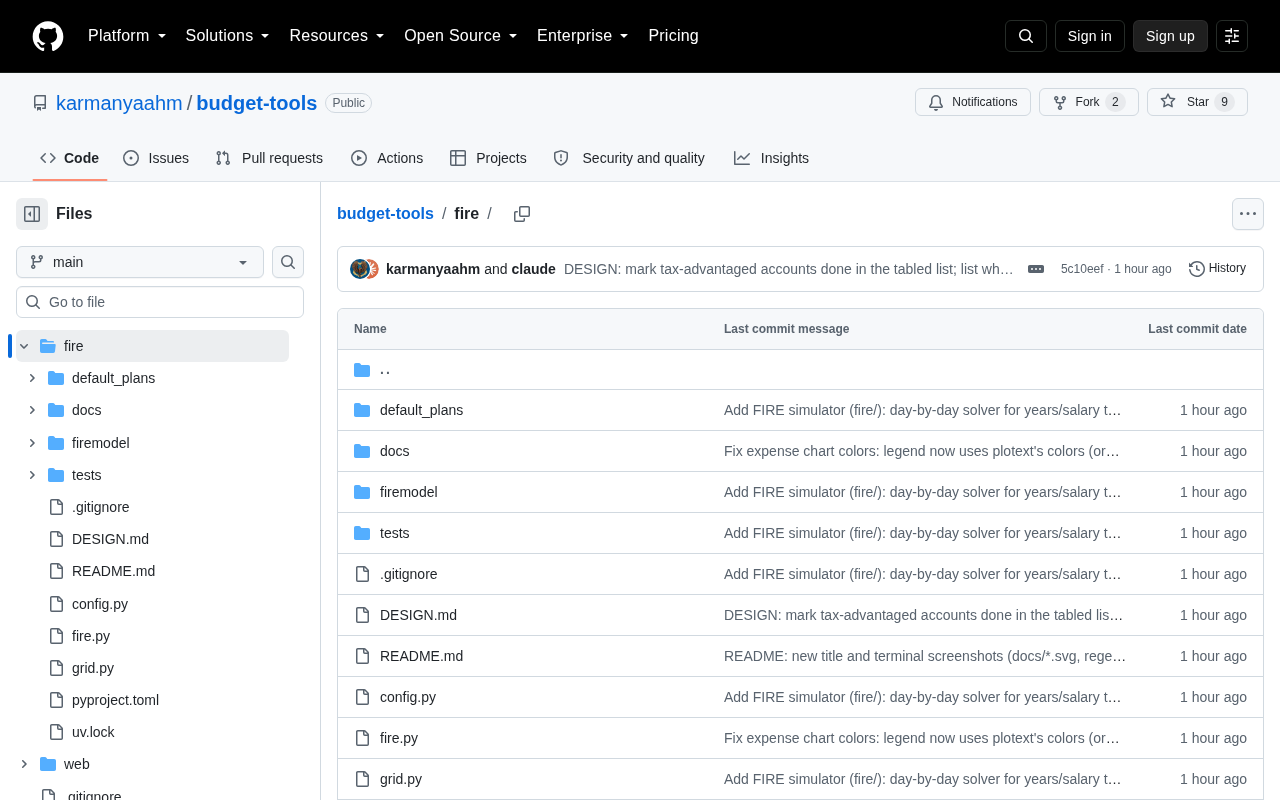
The tool's core idea is straightforward: enter your income, expenses, savings, and expected investment returns, and it calculates how long until you reach two milestones — "coast" and "retire." Compared to traditional, feature-heavy financial software, it takes an abstract life question and turns it into a number you can see in seconds.
The Difference Between Coast and Retire
Understanding this tool comes down to distinguishing between two concepts. Full retirement (Retire) means accumulating enough assets to cover all living expenses for the rest of your life, with no need for any earned income. This is the ultimate goal of the FIRE movement — Financial Independence, Retire Early.
Coast FIRE is a gentler, more attainable milestone. It means you've already saved enough principal that, even without adding another dollar in savings, your existing investments can grow through compound interest alone to fund a comfortable retirement by traditional retirement age. After reaching Coast status, you still need to work to cover day-to-day expenses, but you no longer have to save aggressively for retirement — which means you have the freedom to take a lower-paying job you actually enjoy, or simply work fewer hours.
This distinction matters because it transforms "financial independence" from a distant, monolithic goal into a series of measurable stages. Many people may be years away from full retirement but closer to Coast FIRE than they realize.
The FIRE movement traces its roots to the 1992 book Your Money or Your Life, and spread rapidly in the 2010s through the rise of personal finance blogs. The movement has since branched into several flavors: Lean FIRE targets early retirement on a minimalist budget with a lower asset target; Fat FIRE maintains a higher standard of living and requires a much larger portfolio; Barista FIRE, similar to Coast FIRE, involves covering daily expenses through part-time or low-stress work while letting investments continue to grow. These variations reflect the reality that "financial independence" isn't a single destination — it's a spectrum where people can plant their flag based on their own risk tolerance and lifestyle expectations. For most people, Coast FIRE is especially appealing because it dramatically lowers the target number you need to accumulate. By saving a sufficient principal early enough for compounding to do its work, time itself becomes the most powerful lever.
The Math Behind the Tool
Calculators like this one are built on compound interest models and retirement withdrawal rate assumptions. The key variables typically include:
- Current total savings and annual savings rate: How much principal you have now and what percentage of income you save each year
- Annual investment return rate: Long-term expected returns from stocks, index funds, and similar assets — commonly assumed at 5%–7%
- Annual expenses: How much you'll need to cover your lifestyle in retirement
- Safe withdrawal rate: The widely cited "4% rule" holds that withdrawing 4% of your portfolio annually leaves it very likely to last 30+ years
Plug those parameters in, and the tool works backward to calculate how many years it will take to hit your target. The value isn't in producing a precise, guaranteed answer — returns and expenses will always fluctuate — but in giving users an intuitive feel for how different variables affect the outcome: save a little more, spend a little less, and by how much does your retirement date move up?
The 4% rule originates from a 1994 study by MIT financial planner William Bengen, later reinforced by the "Trinity Study." Based on backtested data from U.S. stock and bond portfolio performance, the research found that withdrawing 4% of the initial portfolio value annually resulted in a very low probability of running out of money over a 30-year horizon. However, the rule carries important caveats: it's based on U.S. market data and may not translate to other countries; the 30-year window is clearly insufficient for anyone retiring before 40; and the recent low-interest-rate, high-valuation environment has led some researchers to suggest a more conservative rate of 3%–3.5%. When using a calculator, running the numbers with lower return and withdrawal rate assumptions gives a more conservative — and arguably more realistic — picture of how far you are from your goal.
Why Tools Like This Resonate
In a community like Hacker News, dominated by tech workers, FIRE has always been a popular topic. High salaries paired with high-pressure work cultures have many people seriously weighing whether trading years of intense work for long-term freedom is worth it. This tool found its way onto the front page precisely because it takes a question everyone cares about — but few bother to actually calculate — and delivers an answer in a matter of seconds.
From a product perspective, its strength is focus. Financial planning software on the market tends to be feature-bloated and intimidating to new users. This Show HN project answers exactly one question, and answers it well. It's a reminder that a great tool doesn't need to do everything — it just needs to nail one real pain point and deliver immediate, useful feedback.
What to Keep in Mind When Using These Tools
It's worth noting that any projection built on assumptions has real limitations. Market returns are never guaranteed, inflation erodes purchasing power, and unexpected large expenses — medical emergencies, family needs — can disrupt even the best-laid plans. The number of years the tool gives you should be treated as a directional reference, not a promise.
A more practical way to use it is as a sensitivity analysis tool: adjust your savings rate, return assumptions, and other parameters, and watch how much the results shift. This helps you understand which variables have the biggest impact on your financial independence. For most people, increasing the savings rate and avoiding lifestyle inflation tends to be more controllable — and more effective — than chasing higher investment returns.
Closing Thoughts
This calculator may be a lightweight little tool, but the question it addresses carries real weight: why do we work, and can we ever truly choose to stop? Putting a number to that question gives people something concrete to plan toward and work for. For anyone weighing career against life, spending a few minutes running the numbers might be more eye-opening than expected.
Related articles

Is the Agent Harness Dead? Cursor's Early Engineer Breaks Down the Real Architecture of AI Coding Agents
Cursor early engineer Jediah breaks down the real architecture of the agent harness: why "the harness is dead" is only half right, how the data flywheel lets the harness obsolete itself, and how Grokbot, software factories, and primitive design open new frontiers for agents.

Python Visitor Pattern and Better Alternatives Explained
A deep dive into Python's visitor pattern and four alternatives: method pattern, pattern matching, dictionary mapping, and functools.singledispatch. Choose the best decoupling design by change frequency.

357 Days of Deep Experience: Why Omarchy Made Me Stop Distro-Hopping
A 357-day deep dive into Omarchy: 59-second install, out-of-the-box audio and GPU support, the Quattro QuickShell rewrite migration pains, and why Arch users should try it.