Fish Audio Releases Live 3: Full-Duplex Speech Model with 186ms Response Time

Fish Audio releases full-duplex speech model Live 3 with 186ms response and interruption distinction.
Fish Audio launches Live 3, a full-duplex speech model for voice agents that listens while speaking, cuts response latency to 186ms, and claims to distinguish backchannels from genuine interruptions. Traditional half-duplex interaction requires waiting for the model to finish, while full-duplex brings rhythm closer to human conversation. However, Live 3 is English-only at launch and details on model size, deployment, and pricing are undisclosed, so its interruption accuracy still needs real-world testing.
Title
Fish Audio Releases Live 3: Full-Duplex Speech Model with 186ms Response Time
Meta Description
Fish Audio releases Live 3, a full-duplex speech model that listens while speaking, with a minimum response time of 186ms. It can distinguish backchannels from genuine interruptions. Initially English-only. This article analyzes its capabilities, latency performance, and the boundaries of voice agent deployment.
Article Content
Fish Audio recently launched Live 3, a full-duplex speech model designed for voice agents. It can continuously listen while speaking, distinguish meaningless backchannels from genuine interruptions, and compress response latency to 186 milliseconds. At launch, it supports only English.
Full-Duplex: From "Taking Turns" to "Listening While Speaking"
Traditional voice interaction mostly uses half-duplex mode: the system first captures audio, then processes it, then plays back a response, and users must wait for the model to finish before interjecting. This approach feels stiff in real conversations, especially when users want to correct or add something—the sense of waiting gets amplified.
The core change in Live 3 is its full-duplex architecture. The model keeps listening to input audio while outputting speech, so it can capture user signals in real time during the conversation. This means the voice agent is no longer a "polling-style" Q&A machine, but closer to the overlapping, corrective, and instant-feedback rhythm of human conversation.
According to a MarkTechPost report, Live 3 is designed specifically for voice agent scenarios, emphasizing real-time responsiveness during dialogue rather than merely pursuing the naturalness of speech synthesis.
The Communication Meaning of Half-Duplex and Full-Duplex
Half-duplex and full-duplex originate from the communications field. Half-duplex means both parties share the same channel and only one can transmit at a time—typically like a walkie-talkie: when you press the talk button you can only transmit, and you must release it to receive. Full-duplex allows both parties to send and receive simultaneously, typically like a telephone: both can speak and listen at the same time without waiting for the other to finish. In voice interaction, traditional systems use half-duplex mode and must complete a serial process of audio capture, recognition, generation, and playback; a full-duplex model, like a phone call, can continuously receive and process input audio while playing speech, thereby achieving "listening while speaking."
186ms Response and Distinguishing "Real vs. Fake Interruptions"
186 milliseconds is the minimum reaction time publicly disclosed for Live 3. This magnitude is already close to the interval of natural turn-taking in human conversation; for voice agents, the lower the latency, the higher the fluency and credibility of the conversation.
More noteworthy is how the model handles interruption behavior. In everyday conversation, users emit backchannels like "mm-hmm" to indicate they are listening, and they also interrupt the model when they genuinely want to interject. Live 3 claims to distinguish between the two: treating backchannels as permission to continue speaking, and treating genuine interruptions as a signal to yield the turn. This distinction capability directly determines whether a voice agent appears "empathetic" or "talking to itself."
The source material does not disclose the specific implementation of this distinction mechanism, nor does it provide quantitative metrics such as misjudgment rates, so its actual performance still needs to be tested in real scenarios.
Turn-Taking and Feedback Signals
In conversation analysis, "turn-taking" refers to the alternation of speaker roles. In everyday conversation, listeners often emit brief feedback signals such as "mm-hmm" or "right" to indicate they are listening and encourage the speaker to continue; this does not constitute a request for a turn transition. A genuine interruption, by contrast, is when the listener attempts to seize the turn. If a voice agent cannot distinguish between the two, it will either misjudge backchannels as interruptions and frequently yield the turn, causing fragmented conversation, or misjudge genuine interruptions as backchannels and keep talking to itself, appearing impolite. Live 3 claims to distinguish these two types of signals precisely in order to manage turn-taking more naturally.
English-Only Launch and the Deployment Boundaries of Voice Agents
Live 3 supports only English at launch, which limits its scope to some extent. For voice agent developers working in Chinese or other languages, direct migration is not possible in the short term.
From a product positioning perspective, Live 3 targets the voice agent niche. The combination of full-duplex and low latency suits scenarios requiring multi-turn natural conversation, such as customer service, real-time assistants, and voice practice partners. But such scenarios have high requirements for interruption-judgment accuracy—a single misjudgment could interrupt the user or plunge the conversation into awkwardness.
The information Fish Audio released this time focuses on capabilities and latency; details about model size, training data, deployment methods, and pricing were not elaborated in the original report. For evaluating whether it is suitable for production environments, this information is equally critical.
Quick Summary
Live 3 packages full-duplex, 186ms response, and interruption-distinction capabilities into a single speech model, a direction aligned with voice agents' pursuit of natural conversation. The English-only launch and limited technical disclosure mean it is more of a capability showcase than an immediately usable general solution. The real test lies in whether it can reliably distinguish "backchannels" from "interruptions" in noisy, unpredictable real conversations.
One-line Summary
Fish Audio releases the full-duplex speech model Live 3, supporting listening while speaking, 186ms response, and interruption distinction.
Paragraph Summary
Fish Audio launches Live 3, a full-duplex speech model for voice agents that can continuously listen while speaking, compresses response latency to 186ms, and claims to distinguish "mm-hmm"-style backchannels from genuine interruptions. The article notes that traditional half-duplex voice interaction requires waiting for the model to finish before interjecting, whereas the full-duplex architecture brings conversational rhythm closer to human interaction. 186ms is close to the natural turn-taking interval, and the interruption-distinction capability determines whether the agent appears empathetic. However, Live 3 launches English-only, and details such as model size, deployment method, and pricing are undisclosed; the accuracy of its interruption judgment still needs real-world testing.
Related articles

FBI and USDA Hit by Cyberattacks: Critical Infrastructure Security Alarms Sound Again
FBI and USDA reportedly hit by cyberattacks; the FBI was breached for the second time in recent months, this time targeting the National Crime Information Center (NCIC). This article analyzes the incident details, NCIC's strategic value, and common security challenges facing government agencies.

How Do UK Grid Battery Storage Systems Make Money?
How UK grid battery storage makes money: stacking frequency response, capacity market, and wholesale arbitrage revenue, plus operational trade-offs and market risks.
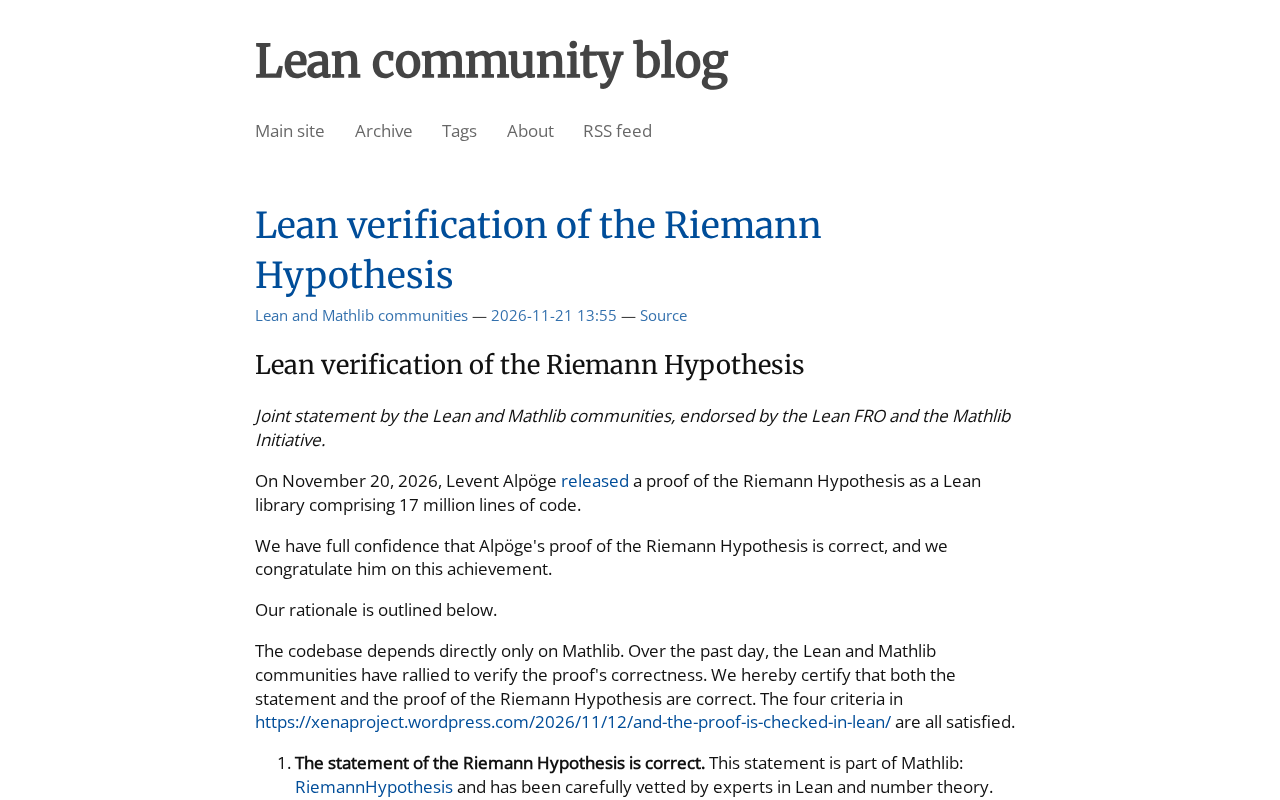
Riemann Hypothesis Formally Verified in Lean? Joint Statement Sparks Heated Debate
The Lean community blog published a joint statement on formal verification of the Riemann Hypothesis, sparking heated discussion on Hacker News with 359 points and 263 comments. This article analyzes the background of Lean and mathlib formal verification, polarized community reactions, and why one should not conclude the Riemann Hypothesis has been proven before reading the original text.