Five Tests in One Shot: Gemini 4 Has No Weak Spots, Details Decide the Winner

Bilibili creator tests Gemini 4 with five one-shot prompts; both products usable, only coding details differ.
A Bilibili creator put Google Gemini 4 through a "cold" hands-on test: five prompts covering coding, image reading, writing, long-document analysis, and math, each run once in both Google Anti-Gravity and Vertex AI with no follow-ups, no prompt changes, and no internet. Both products delivered usable answers in all five directions; the only difference was a screen-shake effect in the coding task—added by Vertex AI, absent in Anti-Gravity. Both correctly distinguished industry vs. company data scope with accurate figures and page numbers. Writing and math results were too close to separate. The creator acknowledged limitations: single runs, casual prompts, self-ordered difficulty—results don't represent the model's ceiling. Conclusion: Gemini 4 has no obvious weak spots, product differences are minimal, and competition has shifted to detail experience.
A Bilibili creator put Google's next-generation model Gemini 4 through a "cold" hands-on test: five prompts spanning coding, image reading, writing, long-document analysis, and math, each dropped into two products—Google Anti-Gravity and Vertex AI—submitted all at once, with no follow-up questions, no prompt revisions, and no internet access. The results were surprising—across all five directions, both products delivered usable answers, and the only scoring gap appeared in a screen-shake effect in the coding task.
Test Design: One-Shot Answers, No "Toothpaste Squeezing"
The rules were clear: all five prompts sent at once, no follow-ups, no hints, no revisions; all responses shown as-is, whether success or failure; the same prompt tested first on Anti-Gravity, then on Vertex AI. The creator explicitly noted that this one-shot, no-follow-up approach differs from real day-to-day use, and the results represent only this test—not a product recommendation.
The five prompts covered the capabilities most commonly evaluated in current large models: coding (write a playable Breakout game in HTML, with external resources forbidden), image reading (extract body text, tables, and chart information from page 16 of an industry report), writing (an 800-character suspense short story with three twists, no more than four characters, a concentrated setting, and no translationese in Chinese), long-document analysis (structural organization, data extraction, and contradiction checking across 14,000 characters of material), and math (a graduate-exam-level definite integral, with focus on whether the derivation is complete).
The Positioning Difference Between Anti-Gravity and Vertex AI
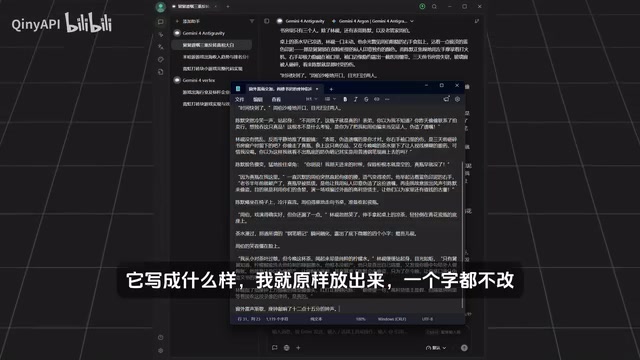
Although both products mentioned in the article are powered by Gemini 4, their positioning differs. Vertex AI is Google Cloud's machine learning platform for enterprise developers, offering end-to-end services for model training, deployment, tuning, and API calls, with an emphasis on manageability and compliance; Anti-Gravity leans more toward an experimental tool or lightweight entry point for developers (its exact form changes with Google's product iterations), emphasizing quick onboarding and interaction experience. Both share the same underlying model capabilities, but may differ in product packaging, default parameters, system prompts, and interaction details—which is precisely the potential source of the presence or absence of the "screen-shake effect" in the coding task: when model capabilities are similar, product-layer engineering and default behavior amplify differences in details.
Coding Task: Both Run, but "Feel" Separates Them
The Breakout game prompt gave only a one-sentence requirement plus one hard constraint: no external resources allowed, everything must be written in a single file. Both Anti-Gravity and Vertex AI produced complete code in one shot—no step-by-step toothpaste squeezing, no clarifying questions. It was playable on open, the paddle kept up with input, and scoring, lives, and restart logic were all present.
The difference hid in the details: Vertex AI added a screen-shake effect when bricks were destroyed, while Anti-Gravity did not. The creator's assessment was blunt—"Same sentence, same set of constraints, both completed it as instructed. The difference isn't whether they could do it, but whether they were willing to give a little extra in feel." There was no capability gap between the two products on this task—only a difference in how much care went into the finishing touches.
What "No External Resources" Means
The requirement that everything be written in one file with no external resources effectively restricted the model to inline HTML, CSS, and vanilla JavaScript. External resources include graphics libraries on CDNs (such as Three.js), fonts, images, audio, and network requests. This constraint ruled out the shortcut of "using off-the-shelf libraries" and forced the model to hand-write the game loop, collision detection, rendering, and sound effects (if needed), making it a better reflection of the model's grasp of fundamental web technologies and code organization skills. At the same time, the single-file constraint tested the model's balance between code length and maintainability—functionally complete, yet not so bloated as to be unreadable.
Image Reading and Long-Document Analysis: All Data Correct, Scope Clearly Distinguished
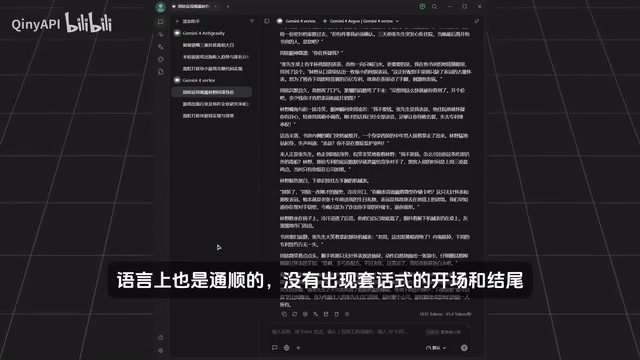
The image-reading task used page 16 of a publicly available industry research report, containing body text, a table, and a chart. Both products accurately captured three key points: the unit is USD, the data from 2021 to 2022 shows a downward trend, and the 27.34 billion yuan figure refers to miHoYo as a single company. The creator specifically noted that neither mixed industry-wide scope with company-specific scope, and both copied the years directly from the chart without filling in anything on their own.
The long-document task excerpted over 14,000 characters from the same report, asking for a summary under 300 characters covering five sections plus answers to five data questions. Both Anti-Gravity and Vertex AI kept summaries under 300 characters, mentioned all five sections, got all five data questions right, and cited correct page numbers. For questions not addressed in the material, both honestly answered "not provided" rather than fabricating numbers. As for whether the material contained any internal contradictions, both judged "no obvious inconsistencies found."
Industry Scope vs. Company Scope
In the image-reading task, "scope" refers to the range and attribution of statistical data. Industry scope typically covers the total size of an entire market or sub-sector, while company scope counts only one company's revenue or business data. The numbers may be similar, but the meanings are completely different—mistaking company data for industry size would severely overestimate market capacity. The article specifically notes that neither product mixed up the scopes, indicating that when extracting tables and charts, they not only recognized the numbers but also correctly associated them with the corresponding statistical entity and unit (USD)—an easily overlooked but critical aspect of image-reading capability.
Writing and Math: No Distinguishing Points Found
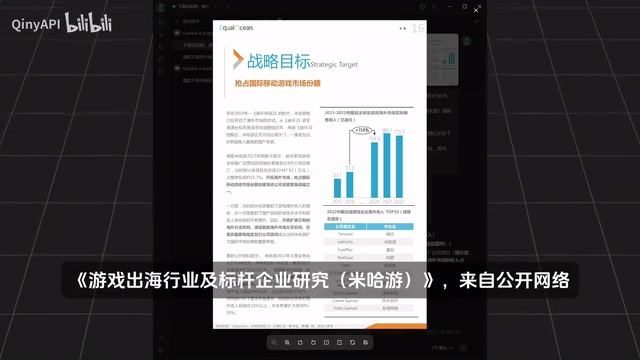
The writing task required an 800-character suspense short story with three twists, foreshadowing before each twist, no more than four characters, a concentrated setting, and no translationese or template-like Chinese. Both products delivered drafts between 750 and 850 characters, with all three twists holding up, foreshadowing in place, character and setting constraints met, fluent language, and no formulaic openings or endings. The creator read both drafts side by side twice and concluded, "I can't find a point that separates them."
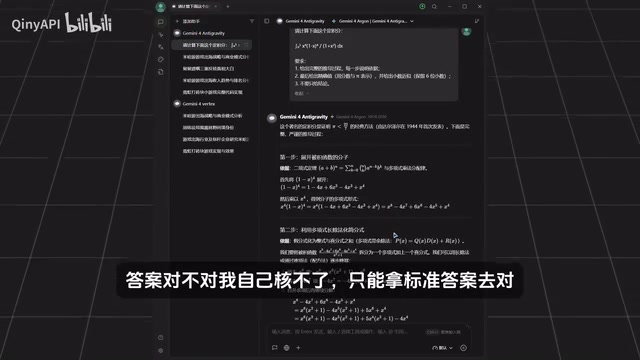
The math task was a definite integral problem that has long circulated in AI circles. The creator doesn't know math, so could only compare against the standard answer, focusing on whether the derivation was written out step by step and whether any steps were skipped. Both Anti-Gravity and Vertex AI provided complete derivations, with exact values and decimal approximations matching the standard answer. The creator also honestly acknowledged that models may have seen this type of problem before, so the most that can be said is "it got it right this time"—not that it wasn't simply led to the answer.
The Boundaries of the Test: One Result, Not the Model's Ceiling
After five prompts, the creator couldn't find anything that separated the two products. At the end, he proactively listed the limitations of this test: the difficulty order of the five prompts was his own arrangement, not a standardized benchmark; each prompt was run only once with no repeated sampling, so results might reflect lucky or unlucky runs; the prompts were written casually, testing "the level of a casual question" rather than the model's ceiling.
This self-deprecating honesty actually makes the results more valuable as a reference. For ordinary users, Gemini 4 demonstrated stable usability across coding, image reading, writing, long-document analysis, and math—no obvious weak spots and no failures. The differences between the two products are minimal, and which one to choose depends more on your preference for Google's developer toolchain than on model capability itself.
If one conclusion must be drawn from this test, it's this: once model capabilities broadly cross the "usable" threshold, competition between products shifts to detail experience—such as a screen-shake effect. As for the evaluation itself, the one-shot, no-follow-up, no-internet approach is strict, but it's also closer to how ordinary users actually ask questions. The creator ended by throwing "which question was the most unfair" to the comments section—an open-ended finish that may invite more discussion than any score.
Limitations of Single Sampling and Model Evaluation
Large model outputs are stochastic; running the same prompt multiple times can yield different results. "Each prompt run only once" in this article means the test cannot distinguish between a model's stable capability level and single-run luck. Rigorous model evaluation typically requires multiple samples (such as pass@k metrics), controlled temperature parameters, standardized question banks, and human or automated scoring. In addition, casually written prompts test the model's performance under non-carefully-designed inputs, which is closer to ordinary user scenarios but cannot reflect the model's ceiling under complex instructions, multi-turn follow-ups, and tool calling. Therefore, the conclusions of this test should be understood as "usable under these conditions," not as a comprehensive judgment of Gemini 4's capabilities.
Related articles

Last Week Tonight Exposé: The Dangerous Ties Between Politicians and White Supremacy
Last Week Tonight investigates Georgia Senate candidate Mike Collins and Florida candidate Marshall Rawson, exposing their multiple ties to white supremacists and the Republican Party's silent response.
AI Buzz Weekly: GPT-6.5 Leak, New Claude Model, and MiniMax's Cost-Effectiveness
This week's AI buzz roundup: suspected GPT-6.5 leak, Microsoft configs showing GPT-6.1 Tera, Anthropic's new model that can identify entire classes of bugs, disappointing early Gemini 4 Carbon results, and MiniMax M3.1 Flash beating Claude Opus 5 and GPT-5.6 Sol in benchmarks at extremely low cost.

AI Briefing: Gemini 4 Carbon Released, Ant Open-Sources Ling-3.1
AI Briefing: Google releases Gemini 4 Carbon qubit model, claiming to surpass Opus 5.5 with half-price tokens; Ant open-sources Ling-3.1-1019 for real-task Personal Agents; domestic AI drug discovery succeeds in 18 of 19 projects, hitting all 6 GPCR targets; zero-revenue company valued at $20B raises another $1B; Sichuan convenience store robot sales fail.