Fixing the Portobello Police Station Clock: A Hardcore Engineering Case Study

A Scottish police station clock repair post went viral on Hacker News, showcasing engineers' love for hands-on, cross-disciplinary problem solving.
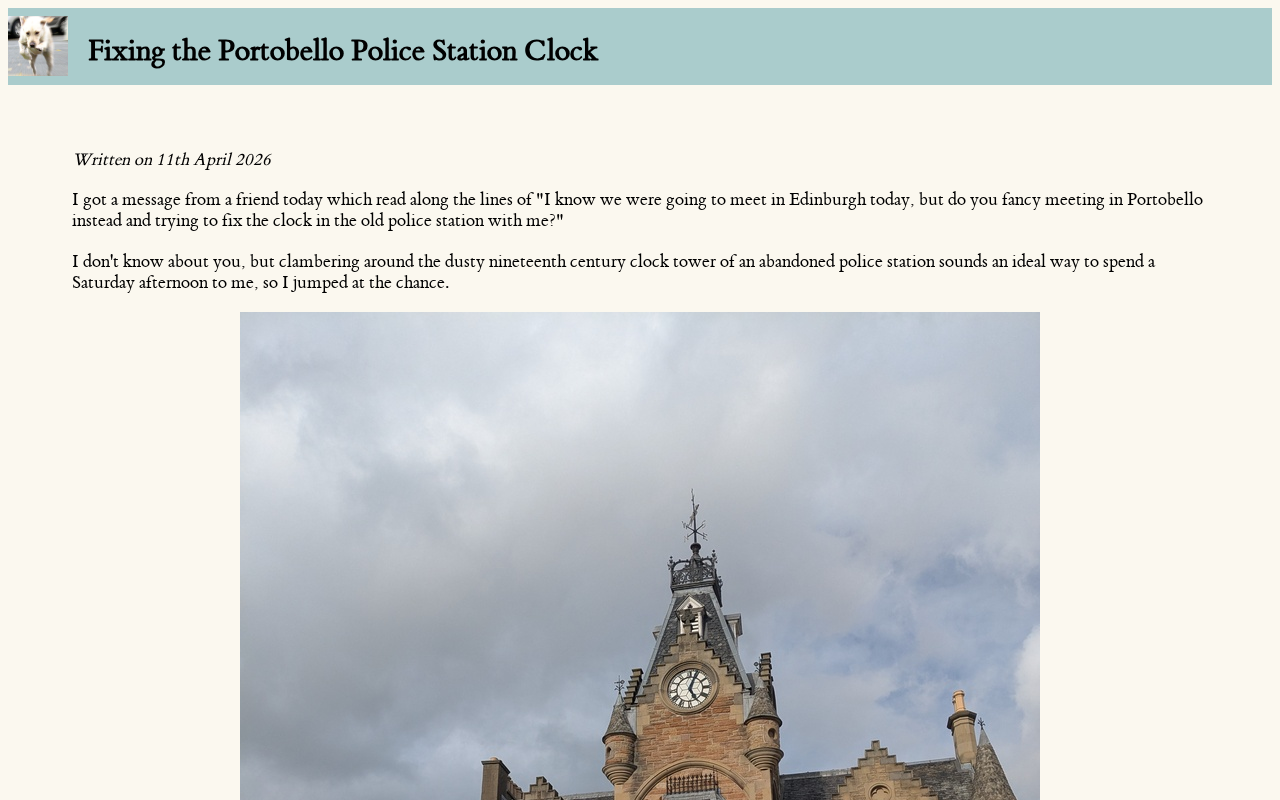
A post about restoring the Portobello Police Station clock earned 284 upvotes and 67 comments on Hacker News. It resonated in a software-dominated community because it hits at the engineer's core instinct: systematically understand something broken and fix it. Public mechanical clocks are composite systems spanning a century of technology, and restoring one involves diagnosing mixed mechanical and electronic faults, reverse engineering without documentation, and modernizing timekeeping accuracy. From a software perspective, the project offers rare full-stack thinking from the physical layer up — and more developers are turning to hands-on physical projects as a meaningful counterbalance to purely digital work.
A Clock Repair Story That Got Hacker News Talking
A post titled Fixing the Portobello Police Station Clock recently made waves on Hacker News, racking up 284 upvotes and 67 comments. Content like this — niche engineering practice at first glance — tends to perform surprisingly well in technically minded communities because it taps into something fundamental to the engineering mindset: figure out what's broken, then fix it.
Unfortunately, based on the available source material, only the article's title, source link, and community engagement data could be retrieved. The full technical details require visiting the original post at pointinthecloud.com. What follows is an extended analysis based on the general patterns of this type of restoration project, to help readers understand what makes it compelling.
Why Public Clock Repair Becomes a Talking Point in Tech Communities
Large mechanical clocks on public buildings are composite systems that blend mechanical drive trains, motor control, and modern timekeeping logic — spanning a century or more of technological evolution. Restoring an aging police station clock means the restorer must simultaneously understand classical mechanical principles and modern electronic control systems.
There are three core reasons this kind of project resonates on Hacker News. First, it's an engineering problem with clear boundaries and a concrete goal — reproducible and verifiable. Second, it almost always involves reverse engineering: reconstructing the system's original design intent through observation and reasoning, without access to original blueprints. Third, it carries a certain "return to the physical world" appeal in a digital age, striking a chord with engineers who spend their days immersed in code.
Typical Technical Challenges in Restoring Old Clocks
Mixed Mechanical and Electronic Diagnostics
Historic public clocks are rarely purely mechanical or purely electronic. A restorer typically needs to determine whether a fault lies in worn gear trains, degraded motor drivers, or failed control circuitry. This diagnostic process demands systematic investigation — not random parts replacement.
Reverse Engineering Without Documentation
Technical documentation for many older installations has long since been lost. Restorers often have little to go on beyond their experience with similar systems and whatever physical clues remain on-site, piecing together the original design step by step. This "archaeological" approach to engineering is exactly the part that technical enthusiasts find fascinating.
In the context of hardware restoration, reverse engineering typically means reconstructing a system's design logic through disassembly, measurement, and observation — rather than relying on manufacturer documentation. Common techniques include tracing PCB traces with a multimeter to draw schematics, calculating gear ratios to reconstruct drive train specifications, and cross-referencing surviving materials from the same era and manufacturer. For clocks over a century old, some components may conform to obsolete industry standards — such as early BSI specifications in the UK or Swiss Ebauche dimensions — and identifying those standards is often the pivotal step in moving a restoration forward. Professional horological communities (such as the British Horological Institute, BHI) and historical mechanical engineering archives are invaluable external resources throughout this process.
Timekeeping Accuracy
The core metric for any clock is timekeeping accuracy. Modern restorations may introduce more stable time sources — such as radio time signals or GPS disciplining — to improve reliability while preserving the original appearance. How to strike the right balance between "restore to original" and "upgrade the performance" is one of the most compelling dimensions of these projects.
Radio time signals broadcast standard time via dedicated shortwave or longwave frequencies. Well-known examples include the UK's MSF signal (60 kHz), Germany's DCF77, and China's BPC. Receivers with built-in decoding chips can automatically synchronize and correct accumulated drift to millisecond-level accuracy. GPS disciplining leverages satellite atomic clocks for even higher precision, though it requires a clear sky view for the antenna. A common compromise in older public clock retrofits is to retain the original mechanical dial and hands while fitting a stepper motor driver board inside the movement, fed by periodic calibration pulses from an external radio or GPS receiver module — achieving modern timekeeping accuracy with minimal visible alteration.
What This Kind of Project Teaches Developers
From a software engineering perspective, hardware restoration projects offer a rare form of "full-stack" thinking. They require the practitioner to reason upward from the physical layer, understanding the real mechanisms behind every layer of abstraction — a logic that maps closely onto debugging a complex software system.
Many developers shared similar experiences in the comment thread, reflecting a broader trend: more and more software professionals are channeling their spare energy into tangible engineering projects as a counterbalance to purely digital work. This kind of cross-disciplinary, hands-on practice often feeds back directly into everyday skills like problem decomposition and systems thinking.
Conclusion
The viral reception of Fixing the Portobello Police Station Clock is yet another reminder of the enduring appeal of quality engineering narratives. A concrete, real-world technical story with a documented solution beats any number of abstract conceptual discussions. If you're interested in the specifics, head straight to the original article for the full diagnostic and restoration walkthrough.
(Note: This article was written based on limited available source material. For specific technical details, please refer to the original post.)
Related articles

Chain of Thought Isn't Just for AI: How Humans Can Use CoT to Improve Thinking Quality
Chain of Thought isn't just a prompt trick for large models. Starting from a Hacker News discussion, this article analyzes why CoT works for human thinking too, breaks down actionable ways to transfer it, and highlights the key differences between human CoT and machine CoT.
Cloudflare Teams Up with OpenAI: Closi…
Cloudflare Teams Up with OpenAI: Closing the Loop from Vulnerability Discovery to Defense with AI
Cloudflare uses OpenAI Daybreak to investigate security vulnerabilities and generate reviewable remediation plans, while developers use Codex to boost coding efficiency and quality.

Orca Multi-Agent Orchestration in Practice: A Guide to Parallel Collaboration with Claude and Codex
Orca is Stable AI's free open-source agent workbench supporting 34 agents like Claude Code and Codex in parallel. Learn its Git worktree isolation, multi-model orchestration, and mobile management.