Flash Lightweight Models vs Pro Full Version: How Big Is the Real-World Performance Gap?

Flash models trade reasoning depth for speed—not suitable for complex analytical tasks requiring long context.
A Reddit user's experience switching from Flash to Pro highlights critical trade-offs in lightweight AI models. While Flash excels at speed and cost for simple tasks, it struggles with long-context processing, multi-file analysis, and deep reasoning required for complex work like financial quantitative analysis.
A Power User's Decision to "Switch Back"
Recently, a Reddit user shared their experience switching from a newer AI model (referred to as "3.7 Flash" in the post) back to the older "3.1 Pro" version, sparking significant discussion and resonance. The user's core point was simple and direct: the new Flash lightweight model performed far below expectations in their actual use cases, even using emotionally charged language like being "gaslit."
Their use case is both typical and highly demanding—reviewing coursework for a Master of Science in Finance (MS Finance), requiring the upload of over 20 files in a single conversation while conducting extensive quantitative (quant) learning analysis. Financial quantitative analysis involves substantial mathematical modeling, statistical inference, time series analysis, and risk measurement, placing extremely high demands on AI models. Such tasks typically require models to have precise mathematical calculation capabilities, multi-step logical reasoning chains (such as from hypothesis testing to parameter estimation to model validation), deep understanding of financial terminology and formulas, and the ability to cross-reference and synthesize information across multiple documents. This differs fundamentally from everyday conversation or simple text processing—the latter has high error tolerance and short reasoning chains, whereas in financial quantitative analysis, any simplification or omission in any step could lead to fundamentally incorrect final conclusions. Under such high-load, long-context, strong logical reasoning tasks, they found the Flash model "constantly forgets content, ignores key information, and produces overly brief outputs." After switching back to the Pro full version, they frankly stated they were "really happy today."
Although the version naming in the post (3.7 Flash / 3.1 Pro) isn't official standard nomenclature, this type of "Flash lightweight" versus "Pro full version" tiering is precisely the product strategy commonly adopted by mainstream large model providers. For example, Google's Gemini series is divided into Ultra, Pro, Flash, and Nano tiers; OpenAI has GPT-4o, GPT-4o mini, and other tiers; Anthropic's Claude has Opus, Sonnet, and Haiku distinctions. This tiered strategy borrows from traditional cloud computing's "pay-as-you-go" business logic—by offering models at different performance levels, lightweight tasks use low-cost models while complex tasks use high-performance models, thereby optimizing overall resource utilization efficiency. However, this also introduces a potential pitfall: motivated by cost control, platforms may tend to default-guide users toward cheaper lightweight models rather than the high-performance versions users actually need. Behind this complaint lies a question worth deep exploration: What exactly is sacrificed in lightweight models?
The Positioning and Capability Trade-offs of Flash Lightweight Models
Design Trade-offs Made for Speed and Cost
So-called "Flash" series models are typically streamlined versions launched by vendors to reduce inference costs and improve response speed. They often achieve faster throughput and lower calling prices through smaller parameter scales, more aggressive quantization, or distillation techniques.
Two key model compression techniques need explanation here. Quantization refers to converting model weights from high-precision floating-point numbers (such as FP32 or FP16) to low-precision representations (such as INT8 or even INT4), thereby significantly reducing memory footprint and computational load. Knowledge Distillation involves having a small model (student model) learn the output distribution of a large model (teacher model), allowing it to retain as much capability of the large model as possible with far fewer parameters than the original model. Both techniques inevitably introduce information loss, and this loss is amplified especially in tasks requiring fine-grained reasoning.
For many lightweight tasks—such as simple Q&A, text summarization, and daily conversation—these models indeed offer excellent cost-effectiveness. But the flip side of cost-effectiveness is capability trade-offs. When tasks shift from "simple" to "complex," the shortcomings of Flash-type lightweight models become concentrated:
- Degraded long-context processing capability: Facing massive input of 20+ files, models easily "lose" information in the middle segments, the phenomenon commonly known as "lost in the middle" in the industry. This phenomenon stems from important research published in 2023 by Stanford University and other institutions, which found that when large language models process long documents, their attention to the beginning and end of input content is significantly higher than the middle portion, presenting a "U-shaped curve" effect similar to human memory. This means key information placed in the middle of the context is more likely to be ignored or forgotten by the model. For lightweight models, due to their smaller attention mechanism parameter capacity and possibly more aggressive context window compression strategies, this problem is often more severe. This also explains why the Flash model frequently omits key content after the user uploads over 20 files.
- Insufficient deep reasoning capability: Financial quantitative analysis requires multi-step logical chains, and lightweight models are more prone to "cutting corners" in such scenarios, providing general or simplified conclusions.
- Compressed output content: To save computational resources, some lightweight models tend to generate shorter responses, which runs counter to users' expectations for detailed analysis. Behind this are multiple technical and business reasons: each generated token consumes GPU inference power, and longer outputs cost more, so lightweight models may be intentionally guided to generate more concise answers during training and alignment. If the detailed outputs of the teacher model are over-compressed during distillation, the student model will learn a tendency to be "brief and to the point." Additionally, the design of reward signals in the RLHF (Reinforcement Learning from Human Feedback) process also affects output length—if evaluators generally prefer brief answers, the model will learn to be "economical with words." This is particularly detrimental to academic scenarios requiring detailed derivation processes.
Where Does the Feeling of "Being Misled" Come From?
The user mentioned suspecting "Google's bots are pushing cheaper, inferior models in the community to help the company save money." While this conspiracy-theory-like speculation lacks evidence, it reflects a genuinely existing user anxiety: vendors increasingly tend to push lightweight models in default settings, while ordinary users often find it difficult to detect they are using a "castrated version."
When community opinion universally praises a new model as "fast and good," users who encounter problems in professional, complex scenarios experience a strong cognitive disconnect—"what everyone says is good is completely different from what I'm experiencing." This disconnect fundamentally stems from limitations in AI model evaluation systems: mainstream benchmarks (such as MMLU, HumanEval, etc.) often focus on standardized knowledge Q&A or programming tasks, making it difficult to comprehensively reflect model performance in real complex scenarios like long contexts, multi-file interactions, and domain-specific deep reasoning. A Flash model that scores close to the Pro version on benchmarks may experience significantly degraded performance in actual professional use.
AI Model Selection Guide: No "Best" Only "Most Suitable"
Use Case Determines Everything
The user actually left a rather objective statement at the end of the post: "Maybe for other use cases, 3.7 Flash is better." This is precisely the most crucial insight from this entire incident.
Model capability is not a single dimension of "good" versus "bad," but rather a result of multi-dimensional trade-offs:
| Dimension | Flash/Lightweight | Pro/Full Version |
|---|---|---|
| Response Speed | Faster | Relatively slower |
| Calling Cost | Lower | Higher |
| Long Context Processing | Weaker | Stronger |
| Complex Reasoning Capability | Average | Superior |
| Output Completeness | Tends to be brief | More complete |
For financial learning scenarios requiring processing of massive files and rigorous quantitative analysis, the strong reasoning and long-context capabilities of Pro full-version models are the real necessity, while speed and cost are secondary considerations. For chatbots, simple retrieval, and other scenarios, the low-latency advantages of Flash lightweight versions are more valuable.
It's worth noting that this selection dilemma has also spawned an emerging technical solution at the AI application level—Model Routing. Some cutting-edge platforms are experimenting with automatically allocating requests to different tiers of models based on the complexity of user input: simple questions go through the Flash channel to save cost and time, while complex questions are automatically upgraded to the Pro channel to ensure quality. If this intelligent routing mechanism becomes mature enough, it may alleviate users' selection anxiety in the future.
Practical Selection Advice for Users
- Clarify task type before selecting a model: For complex, multi-file, strong-logic tasks, prioritize Pro full versions; for lightweight, high-frequency, time-sensitive tasks, Flash lightweight versions are suitable.
- Beware of platform default settings: Many platforms will default to switching to cheaper models; users should actively check which version they're currently using.
- Real testing beats reputation: Community reviews are often based on specific scenarios and may deviate from your actual needs; personally comparing and testing is most reliable.
- Make good use of A/B testing: Run the same complex question through both versions to intuitively experience the capability gap.
- Pay attention to effective context window utilization: If tasks involve many files, try placing the most critical information at the beginning and end of the input to mitigate the impact of the "lost in the middle" effect on results.
Conclusion: Rational Return in the Wave of Lightweightization
This user's decision to "switch back" is essentially a rational act of user self-rescue. In an industry frantically chasing "faster, cheaper" lightweightization, they use personal experience to remind us: optimization of speed and cost should not come at the expense of core reasoning capabilities, at least not happening quietly without users' knowledge.
From a more macro perspective, this also reflects a fundamental tension the AI industry currently faces: the "ceiling" of model capabilities is still determined by parameter scale and computational volume, while commercial implementation urgently requires cost reduction and efficiency improvement. How to find the optimal balance between these two is a question every AI vendor must answer.
For AI vendors, being transparent in product tiering and letting users clearly understand what they're using and what they can get may be more important than simply piling on "faster models." The ideal approach is to clearly label the capability boundaries of model tiers in the interface, or even proactively recommend appropriate model versions based on task complexity. For users, breaking the myth that "new equals better" and returning to the simple judgment that "suitable is best" is the correct approach to mastering AI tools.
Key Takeaways
- Flash lightweight models sacrifice long-context processing and deep reasoning capabilities in exchange for speed and cost advantages, making them unsuitable for complex professional scenarios
- The "lost in the middle" phenomenon is particularly severe in lightweight models, which can easily miss key information when handling multiple files
- Model selection should be based on actual task complexity rather than blindly pursuing new versions or cost-effectiveness
- Platforms should improve model capability transparency to avoid users unknowingly using "downgraded versions"
- Model routing technology may become an important direction for solving the dilemma between user experience and cost control in the future
Related articles

Enterprise-Level Agent Development: Six Core Competencies for Interview Success
Deep dive into core interview topics for enterprise-level Agent development, covering streaming interruption handling, high-concurrency architecture, multi-tenant isolation, observability, and other engineering challenges to help AI large model job seekers build complete capability systems.

Deep Learning on Brain DICOM Datasets: A Guide to Choosing Between 2D and 3D Approaches
Comprehensive guide to choosing between 2D, 2.5D, and 3D CNN approaches for brain DICOM medical imaging deep learning. Covers ADNI dataset preprocessing workflows including resampling, registration, and skull stripping.
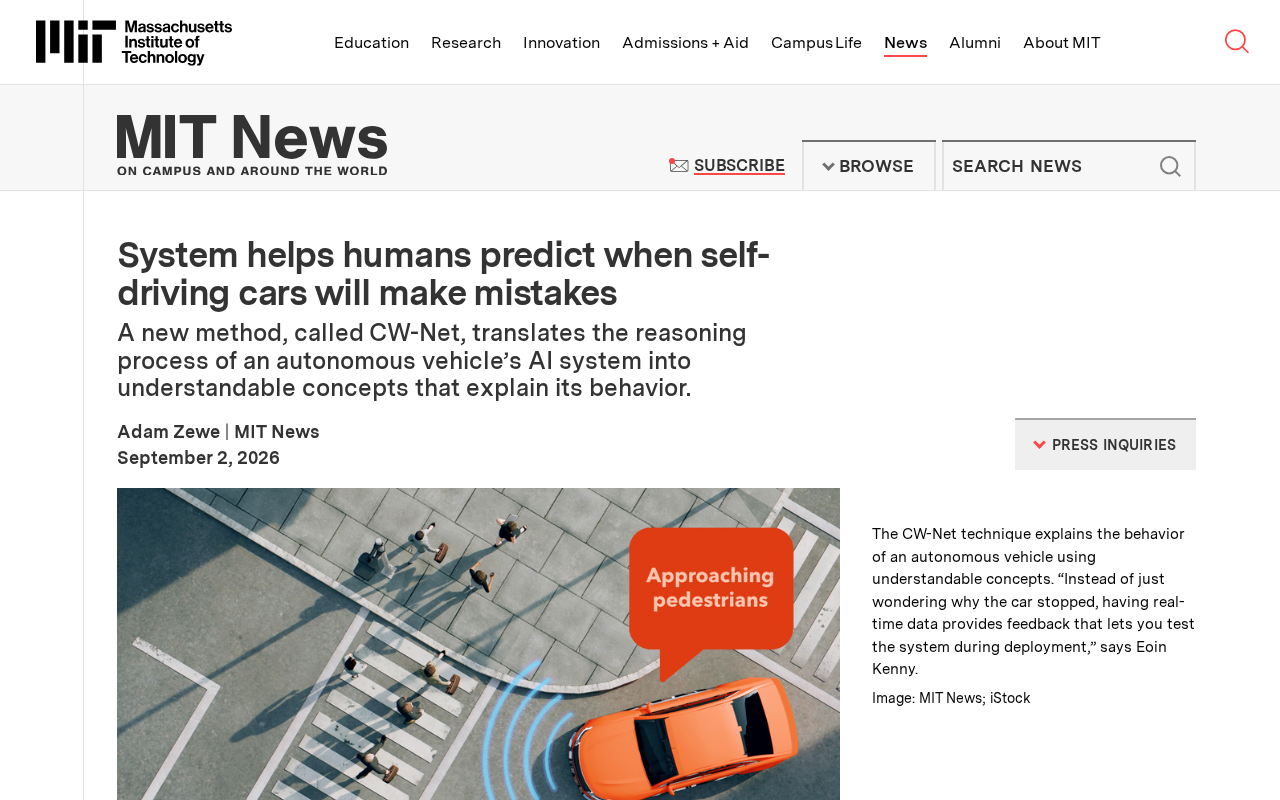
MIT Proposes CW-Net: Making Autonomous Driving AI Decision-Making Explainable and Predictable
MIT researchers propose CW-Net concept warning network, transforming autonomous driving AI's black-box decisions into human-understandable concepts, enabling error prediction and human-machine collaboration. This article analyzes its working principles and practical implications for regulatory compliance, safety redundancy, and public trust.