FLEX: Teaching Robots to Move Beyond Literal Instructions and Learn to Reason
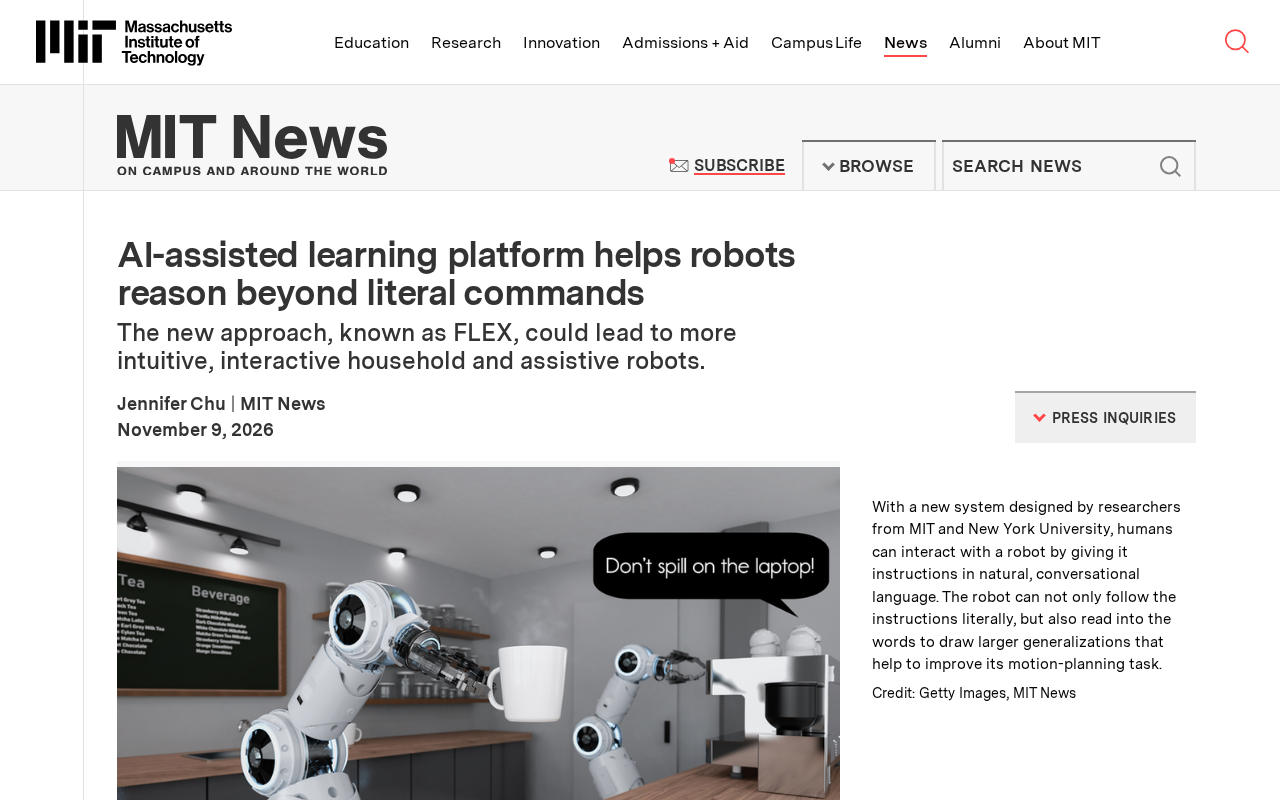
FLEX tries to shift robots from literal execution to intent reasoning, driving home robot adoption.
The article explores a new approach called FLEX and the shift in robot instruction understanding from "doing as told" to "thinking it through." Traditional robots rely on semantic parsers to map natural language into action sequences, and tend to fail with implicit intent or common-sense reasoning. FLEX is positioned as an AI-assisted learning platform that treats reasoning ability as a learning objective rather than a byproduct, targeting home and assistive robot scenarios for more intuitive, interactive user experiences. The article also notes that public information is limited, technical architecture and evaluation results are undisclosed, and balancing misjudgment risks from reasoning with behavioral constraints remains a key challenge to practicality.
From "Doing as Told" to "Thinking It Through": The Bottleneck in Robot Instruction Understanding
The hardest part of deploying home and assistive robots often isn't the hardware—it's the understanding. When a user says "tidy up the table," a human knows to first figure out what should be kept, what should be thrown away, and what should go in a drawer. But robots typically can only execute literal, clearly bounded instructions like "put the cup on the table." Once an instruction carries implicit intent or requires common-sense reasoning, the system tends to get stuck.
According to an RSS source report, a new approach called FLEX attempts to solve this problem. Its core goal isn't to teach robots more actions, but to give them reasoning ability when receiving instructions—moving toward more intuitive and interactive home and assistive robots.
What FLEX Is Actually Doing
Publicly available information is currently limited, but several key points can be extracted from the positioning described in the report.
Reasoning Takes Priority Over Execution
FLEX is described as an "AI-assisted learning platform." This wording is worth noting: it emphasizes a learning platform rather than a simple controller or policy network. In other words, FLEX is more likely to serve as a training framework that lets robots acquire reasoning ability from data and interaction, rather than a hard-coded instruction-parsing rule.
Traditional robot instruction parsing relies on semantic parsers to map natural language into action sequences, and fails when it encounters ambiguity. FLEX's approach is to have the model build a reasoning chain between the instruction and the scene, combining "what the user said" with "what's actually in the environment" to make judgments.
Semantic Parser is the core component of traditional robot instruction understanding. Its role is to map natural language sentences into structured action sequences or logical expressions through syntactic analysis and semantic annotation. A typical pipeline includes part-of-speech tagging, dependency parsing, and semantic role labeling, ultimately generating an instruction chain like "grasp(cup) → move(table) → place." Such methods rely on predefined grammar rules and ontology libraries, and are extremely sensitive to sentence variations and ambiguous expressions—once a user's phrasing falls outside the template coverage, parsing fails. The reasoning-first approach represented by FLEX essentially seeks to replace this rule-driven mapping with a data-driven reasoning chain, thereby escaping dependence on instruction templates.
Aimed at Home and Assistive Scenarios
The report explicitly states that this method could drive more intuitive and interactive home and assistive robots. What these two scenarios share is a high demand for natural interaction, unstructured environments, and users who are often not technical people. In such scenarios, the limitations of literal instructions are most obvious: an elderly person saying "I'm a bit cold" expects a window to be closed or the temperature adjusted—not a reply of "noted."
FLEX targets precisely this kind of interaction that requires intent inference.
Unstructured Environment is a concept contrasted with structured scenarios such as factory assembly lines. In a structured environment, object positions, lighting, and obstacle distribution are all pre-designed, and robots can rely on precise maps and fixed workflows. Home environments, by contrast, are full of uncertainty: furniture placement changes with user habits, objects appear in arbitrary locations, and pets and children intervene at any time. This means robots cannot cover all situations through pre-programming and must rely on real-time perception and common-sense reasoning to understand "what is happening now" and "what the user actually wants." The home and assistive scenarios FLEX targets are the most typical representatives of unstructured environments.
Why This Matters
The robotics field has made notable progress in recent years with the boost of large models, but there remains a gap between "language understanding" and "physical execution." In many demo videos, robots can understand complex sentences, but fail when moved to another room or when the phrasing changes. The reason is that the model learns language patterns, not causal relationships in the scene.
The approach FLEX represents makes reasoning ability a learning objective rather than a byproduct. If this direction holds, robots' generalization ability will come more from understanding situations rather than from covering instruction templates. This has direct significance for lowering deployment costs and improving user experience.
It should be noted that the currently public material only provides directional descriptions and does not disclose the specific technical architecture, training data scale, or evaluation results. Therefore, one should remain cautious about FLEX's actual effectiveness—it is more of a research direction worth tracking than a validated product solution.
Generalization in robot learning refers to a model's ability to adapt to new scenarios, new instructions, and new objects outside the training distribution. Many current robot demo systems perform well in fixed rooms with fixed phrasing, but fail when the expression or room changes, indicating that what they learn is surface language patterns rather than transferable causal relationships. Common paths to improving generalization include expanding training data diversity, introducing scene graphs or world models as intermediate representations, and having the model actively collect feedback during interaction. FLEX treats reasoning ability as a learning objective, precisely attempting to improve generalization at the representational level rather than through data coverage.
Questions Still to Be Answered
From "can reason" to "reliably reasons," there remain many engineering and safety challenges. Once a home robot acts based on inference, the cost of an incorrect inference may be higher than not acting at all—throwing away something that shouldn't be thrown away, or misjudging user intent and causing distress. How to strike a balance between reasoning ability and behavioral constraints is a topic this kind of approach must confront on the path to practicality.
Another observation point is interaction itself. The report emphasizes "interactivity," suggesting that FLEX may support robots actively asking follow-up questions when uncertain, rather than forcing execution. If true, this detail would be a more valuable design than simply improving understanding accuracy.
FLEX currently offers limited information, but the problem it points to is real: for robots to enter the home, they must first learn to understand people, not just sentences.
Related articles
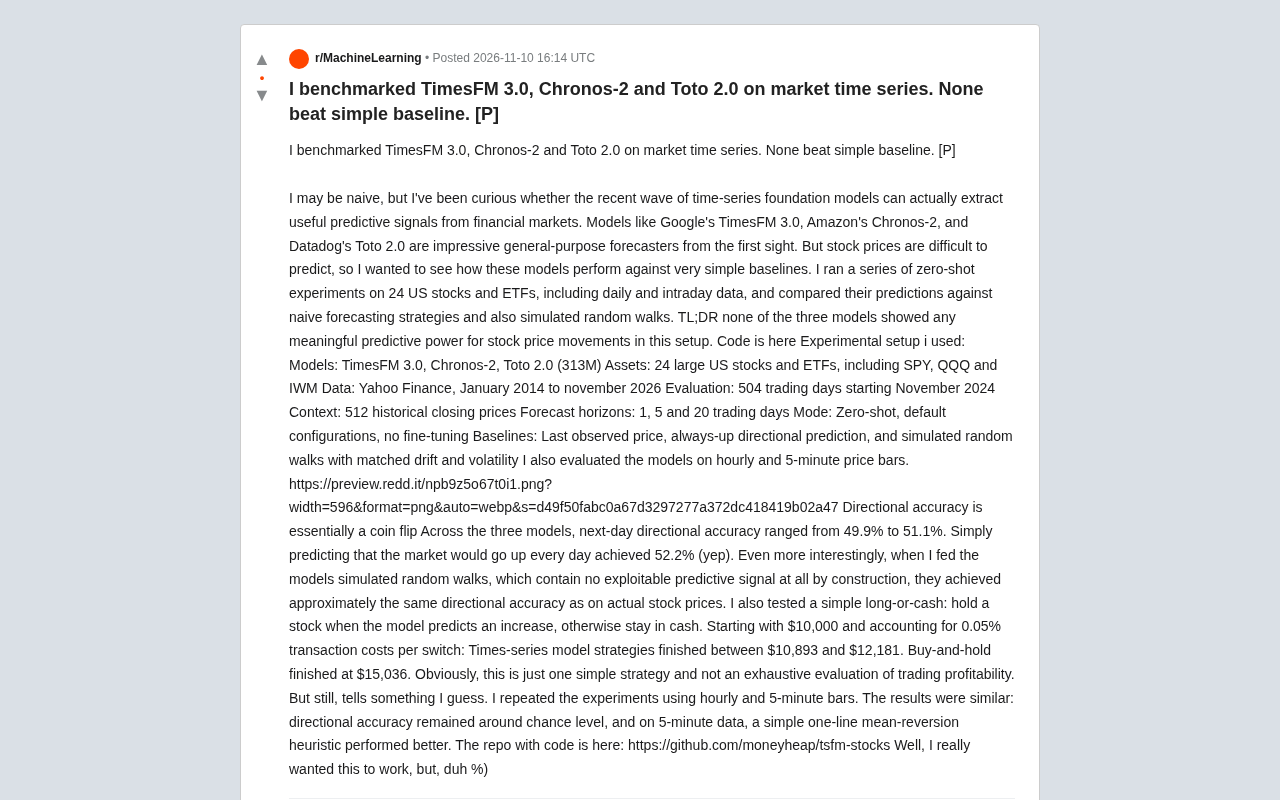
Putting TimesFM 3.0, Chronos-2, and Toto 2.0 to the Test: Time-Series LLMs Can't Beat Simple Baselines
A developer's zero-shot benchmark of TimesFM 3.0, Chronos-2 and Toto 2.0 on 24 U.S. stocks and ETFs: directional accuracy of just 49.9%-51.1%, and simulated trading underperformed buy-and-hold. Time-series foundation models show no edge over simple baselines on financial data.
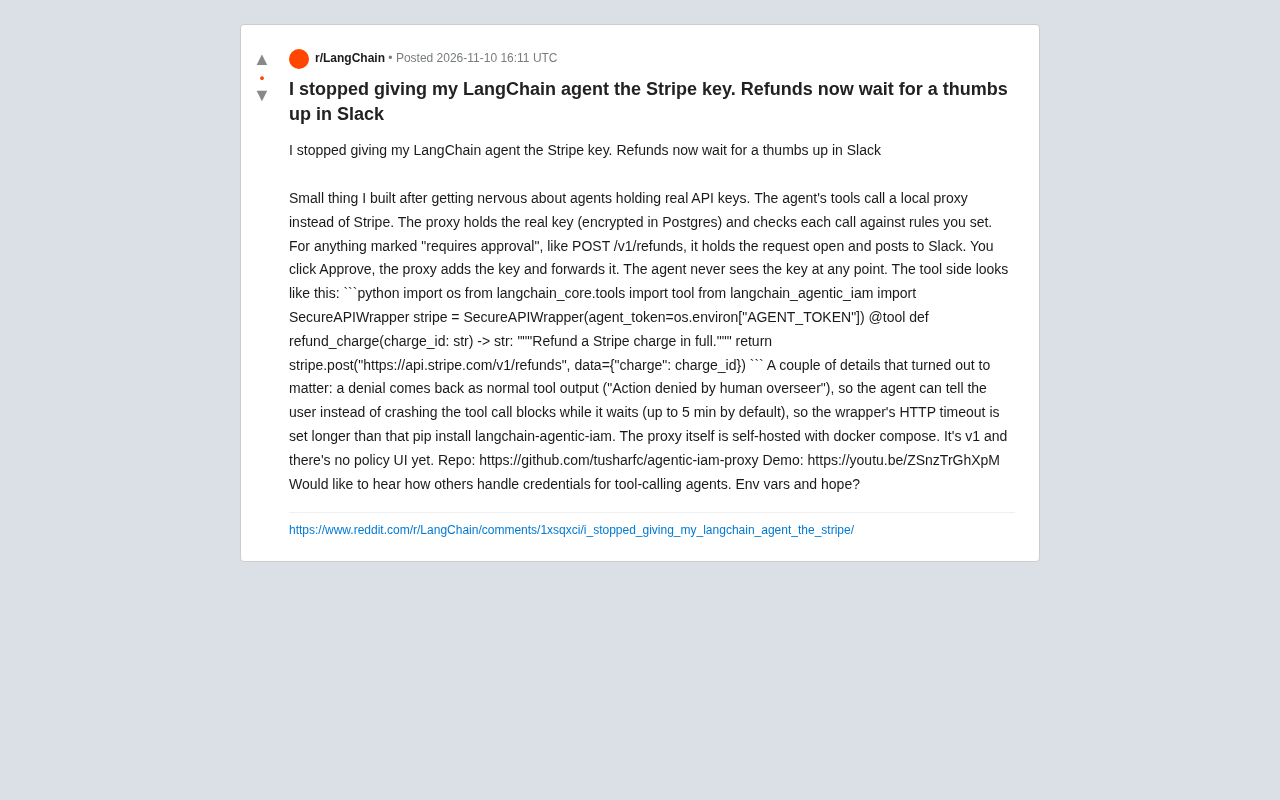
LangChain Agents No Longer Hold Stripe Keys: Refunds Require Slack Approval
A developer shares a credential management approach for LangChain agents: agents don't hold Stripe keys, and sensitive operations like refunds are forwarded through a local proxy and only executed after human approval in Slack, with code examples and engineering details.
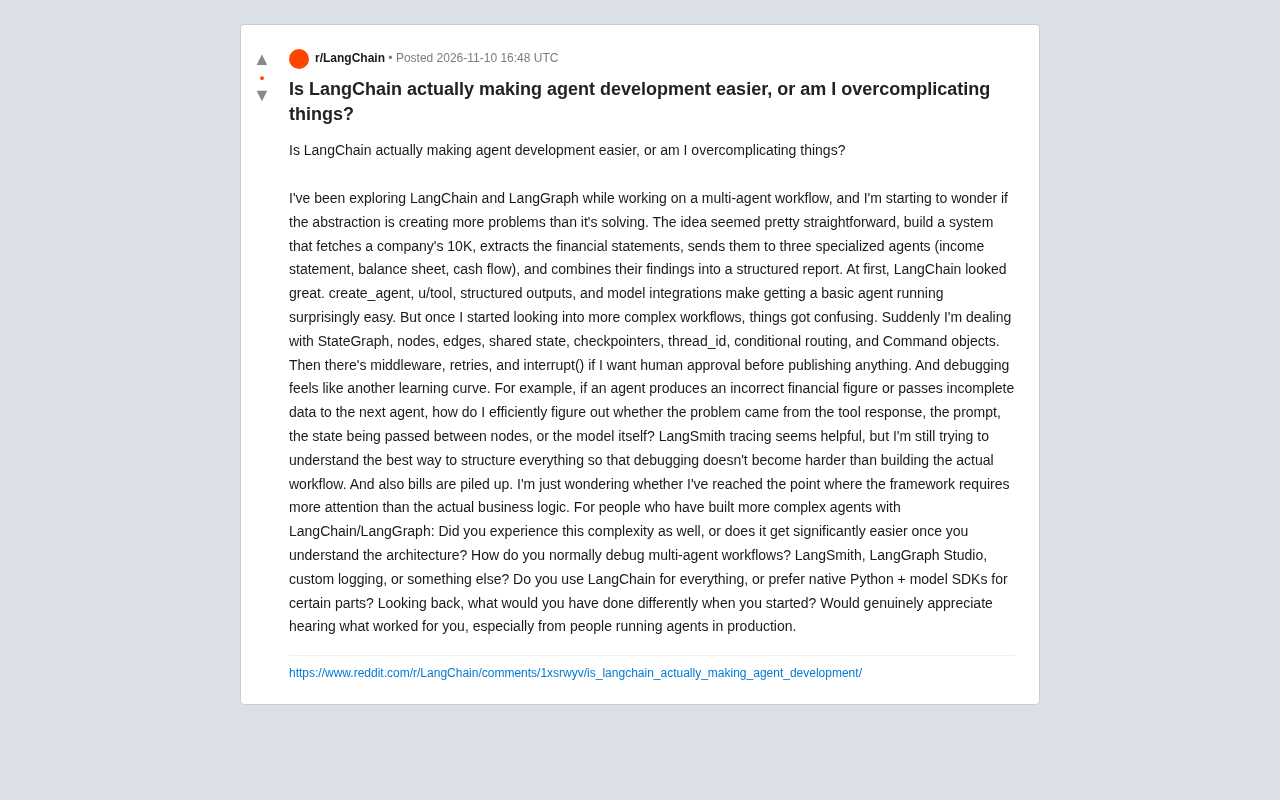
Does LangChain Really Make Agent Development Easier? A Developer Reflects on the Cost of Abstraction
A Reddit developer reflects on the abstraction cost of LangChain and LangGraph in multi-agent workflows: easy to start, but StateGraph, state management, debugging, and cost control add new complexity. The discussion covers debugging methods, whether to mix native Python + model SDKs, and production trade-offs.