Flock Camera Controversy: Reporter Filmed Public Installation, Got Police Called on Them
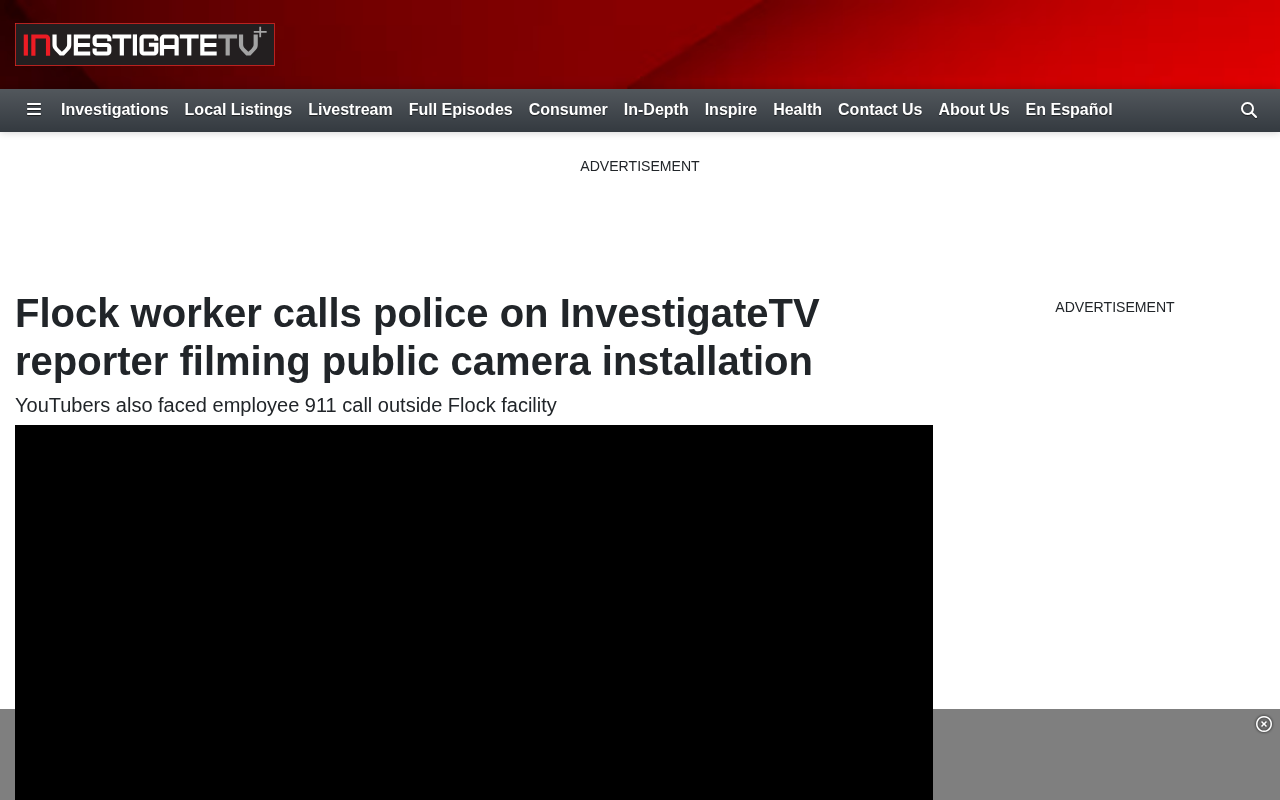
Reporter filming a Flock license plate camera installation had police called on them, exposing surveillance's one-way transparency problem.
Workers for Flock Safety, a U.S. surveillance tech company, called police on a reporter filming the installation of an Automatic License Plate Recognition (ALPR) camera. The incident, reported by InvestigateTV, sparked lively debate on Hacker News. The central irony: Flock cameras are mass-deployed in public spaces to continuously track vehicles, yet the company's staff strongly resisted being documented themselves. Under U.S. law, filming a public installation in a public space is generally protected by the First Amendment, making the police call legally dubious. The episode reflects three systemic issues in the commercialization of surveillance infrastructure: a lack of accountability and transparency, a power asymmetry between the watcher and the watched, and a potential chilling effect on press freedom and the public's right to know.
The Incident: Why Filming a Public Installation Brought the Police
According to a report by InvestigateTV, a journalist filming the installation of Flock surveillance cameras had police called on them by the workers on site. What appeared to be a routine on-location news gathering conflict quickly sparked heated debate on Hacker News, racking up 309 upvotes and over 200 comments — touching a nerve around public surveillance, privacy boundaries, and press freedom.
The core contradiction worth examining: Flock cameras are themselves installed in public spaces to conduct large-scale surveillance of the public — yet when a reporter turned the lens on that very installation process, those involved pushed back hard. This asymmetry of "one-way transparency" — where those doing the watching can freely record the public, but anyone recording the watchers faces resistance — is precisely what sparked such widespread discussion.
What Is Flock: The License Plate Recognition Network Spreading Across America
Flock Safety is a surveillance technology company that has been rapidly expanding across the United States. Its core product is an Automatic License Plate Recognition (ALPR) camera. These devices are typically deployed on roadways, neighborhood entrances, and public areas, automatically capturing the license plates, colors, make, and other characteristics of passing vehicles, then uploading that data to a cloud database accessible by law enforcement agencies.
As Flock cameras have been densely rolled out across American towns and cities, the controversy surrounding them has continued to grow. Critics worry that these systems build a vast vehicle-tracking network capable of logging ordinary citizens' travel patterns over long periods of time — without explicit legal authorization — effectively constituting mass surveillance.
The Heart of the Conflict: The Right to Film in Public Spaces
Under the U.S. legal framework, filming in public spaces — including documenting police activity, the installation of public infrastructure, and work visible from a public vantage point — is generally considered a right protected by the First Amendment. A journalist filming a surveillance device being installed in a public space should, by all accounts, be a lawful act of newsgathering.
The workers' decision to call the police reflects a telling disconnect: those responsible for deploying surveillance equipment showed clear discomfort and defensiveness at being "surveilled" themselves. A large share of the Hacker News community's comments centered on precisely this irony — the operators behind technology widely used to monitor the public appear unable to tolerate the same level of public scrutiny applied to themselves.
Why This Kind of Incident Deserves Attention
This event resonated so strongly with the tech community because it distills several deep-seated issues in the mainstream spread of surveillance technology.
First, there is a lack of accountability and transparency. When surveillance infrastructure is rapidly deployed through commercial channels, the public often has no way to learn where devices are placed, how the data is used, or how long it is retained. On-the-ground reporting by journalists is one of the few tools available to open up that black box.
Second, there is a fundamental power asymmetry. Surveillance systems inherently grant their operators the ability to observe others — and the defensiveness exposed when that power faces a reverse gaze illustrates precisely why oversight mechanisms are necessary.
Third, there is the risk of a chilling effect. If simply filming a public surveillance installation is enough to get police called, future investigative reporting and public oversight will face a much higher bar — posing a potential threat to society's collective right to be informed.
Conclusion
This is more than just a friction between a reporter and some workers on a job site. It is a snapshot of the contradictions playing out as surveillance technology scales across our physical world. As city streets fill with automated recognition devices, questions of who watches the watchers — and how the public retains the right to record and question — are only going to become more urgent. Companies like Flock, as they expand their business, will inevitably have to confront growing public demands for transparency. After all, technology capable of seeing everything should itself be capable of being seen.
Related articles
Gluetun VPN Disconnection Troubleshooting: Version-Pinned Users Should Upgrade to v3.41.3
Gluetun version-pinned users may face silent VPN disconnections breaking their arr stack. Learn how upgrading to v3.41.3 fixes the issue and tips to avoid it.
Trump Downplays AI Extinction Risk: 'Whoever Wins AI Wins' Sparks Controversy
Trump downplays AI extinction risks with 'Whoever wins AI wins,' sparking fierce debate over whether AI safety is an urgent reality or a future hypothetical.

David Sacks on AI Regulation: Frontier Models Don't Need Mandatory Legislative Constraints
David Sacks argues OpenAI and Anthropic can self-regulate frontier model development without external legislation. A look at the logic, controversy, and governance dilemmas involved.