Flock License Plate Recognition Controversy: Woman Arrested After Speaking at City Council Sparks Privacy Debate

Woman arrested after speaking against Flock ALPR at city council, highlighting AI surveillance vs. civil liberties tensions.
A woman was arrested and forcibly removed from a city council meeting after speaking out about Flock's Automatic License Plate Recognition (ALPR) system, sparking widespread discussion in the tech community. Flock Safety is one of the most widely deployed ALPR solution providers in the U.S., building a cross-regional vehicle movement data network through a subscription-sharing model that spans thousands of law enforcement agencies. Controversy over the system centers on insufficient data transparency, inadequate oversight of cross-agency sharing, and potential erosion of Fourth Amendment privacy protections. The incident stands out for simultaneously striking two raw nerves — the unchecked expansion of government surveillance and the suppression of citizens' speech when they dare to question it — revealing the threat AI surveillance technology poses to democratic discourse when adequate accountability mechanisms are absent.
Overview
A story from the Hacker News community has sparked widespread discussion: a woman was arrested and forcibly removed from a city council meeting after speaking out about Flock's license plate recognition system. While the original report contained limited details (the post received 22 upvotes and 3 comments on Hacker News), the core issues it raises — the tension between AI-powered Automatic License Plate Recognition (ALPR) systems and civil privacy and free speech — are increasingly at the center of tech ethics debates.
It's worth noting that, given the limited information in the source material, this article focuses primarily on the broader context of surveillance technologies like Flock, helping readers understand why a public comment about a surveillance system could escalate into such a dramatic confrontation.
What Is Flock: A Ubiquitous License Plate Recognition Network
Flock Safety is a tech company that provides Automatic License Plate Recognition (ALPR) solutions, with its products widely deployed by local police departments and community organizations (such as HOA homeowners associations) across the United States. These cameras are mounted on streets, intersections, and community entrances, automatically capturing license plates, colors, vehicle types, and other identifying features from passing vehicles, then uploading the data to a cloud database.
Unlike traditional surveillance cameras, Flock's system builds a cross-regional, searchable network of vehicle movement data. Law enforcement can quickly query when and where a particular vehicle was spotted by entering its license plate, and can even reconstruct its travel history. While this capability helps solve crimes, it also means the daily movements of ordinary citizens are continuously recorded.
ALPR technology itself is not new — early prototypes appeared in the UK as far back as the 1970s — but it wasn't until the AI image recognition breakthroughs of the past decade that costs dropped low enough for widespread civilian deployment. Flock Safety was founded in 2017, and its key business model innovation lies in a "subscription plus networked sharing" approach: police departments and HOAs that purchase its hardware gain access not only to local data, but also to data from other nodes across the entire Flock network, effectively creating a national vehicle movement database. As of 2023, the company claimed partnerships with more than 4,000 law enforcement agencies across the United States, with cameras numbering in the hundreds of thousands. This network effect multiplies the value of any single deployment, while also meaning that any vehicle traveling through an area equipped with Flock devices will have its location data shared and retained by multiple agencies — entirely without the driver's knowledge.
The Core Controversy: Where Convenience Ends and Surveillance Begins
The debate around Flock centers on several key issues. Data retention periods and access permissions lack transparency, and many community residents are unaware that their streets are already covered by such cameras. Cross-agency and even cross-state data sharing means that data originally collected for local law enforcement purposes may be used for entirely different ends.
For privacy advocates, systems like this — which collect location data on citizens at scale without clear judicial oversight — represent an erosion of the spirit of the Fourth Amendment (protection against unreasonable searches). Supporters, on the other hand, argue that vehicles on public roads carry no reasonable expectation of privacy, and that the technology is genuinely effective at locating missing persons and tracking suspect vehicles.
The Fourth Amendment to the U.S. Constitution prohibits the government from conducting "unreasonable searches and seizures," traditionally requiring law enforcement to obtain a court warrant before collecting personal information. However, courts have long applied the "third-party doctrine" to hold that information voluntarily disclosed to third parties — such as banks or phone companies — is not protected by the Fourth Amendment. The controversy surrounding ALPR systems lies in whether driving on a public road constitutes a "voluntary disclosure" of location data. In 2018, the U.S. Supreme Court applied stronger privacy protections to cell phone location data in Carpenter v. United States, and some legal scholars argue this precedent should extend to ALPR systems — that long-term, systematic location tracking can reveal a person's religious activities, political participation, and medical visits, making it far more intrusive than observing a single trip in a public space, and therefore deserving of constitutional protection. However, this interpretation has yet to be uniformly adopted across state judicial practice.
How a Public Comment Turned into an Arrest
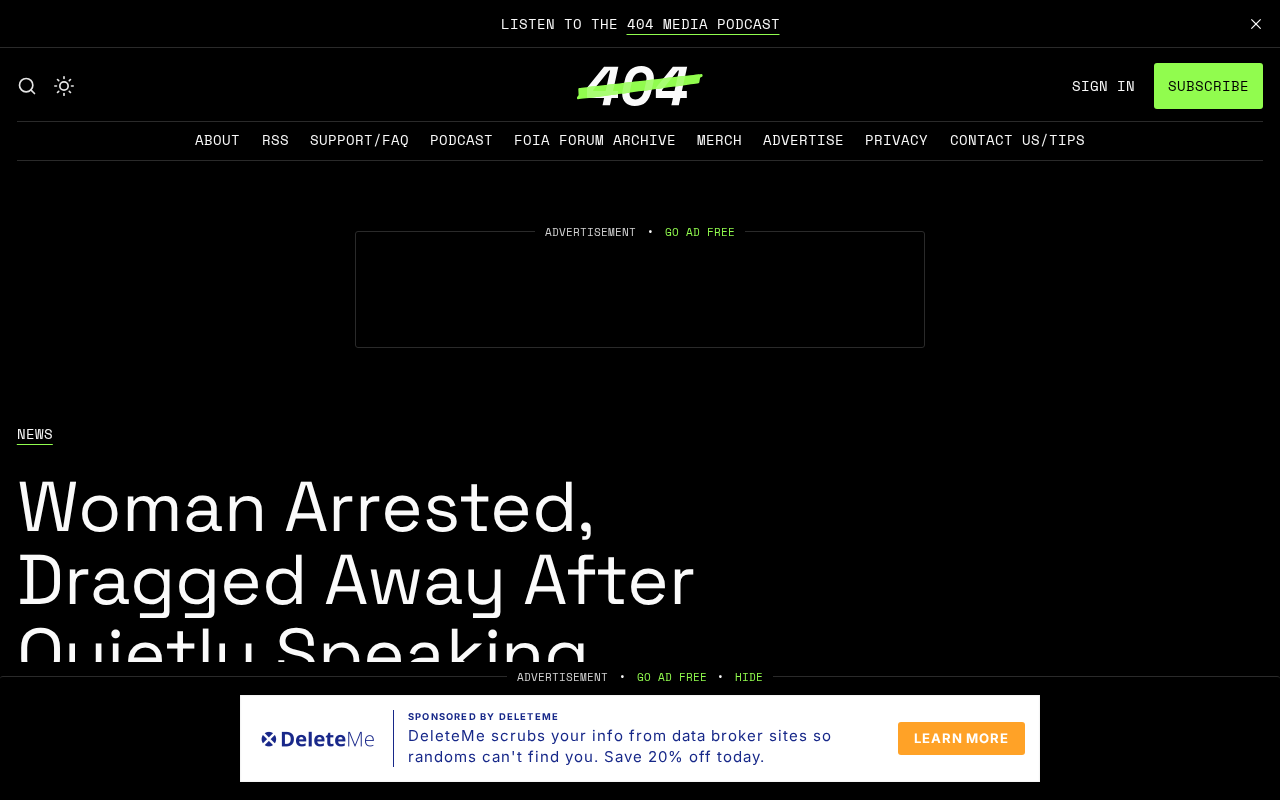
City council meetings are a formal channel through which citizens express concerns and participate in local governance. According to the report, the woman in question was arrested and removed while speaking about the Flock system at exactly such a forum. Whatever the specific details of what occurred, the image itself carries powerful symbolic weight: a public discussion about a surveillance technology ended with the speaker being forcibly removed.
This scenario resonates with the tech community because it simultaneously strikes two raw nerves — wariness about the expansion of government surveillance technology, and concern about the shrinking space for civic speech. When the very act of discussing surveillance technology can invite suppression, public trust in that technology can only erode further.
The Public Comment period at American city council meetings is an important institution of local democracy. Citizens are typically granted 2 to 3 minutes to speak, and anyone may express views on municipal matters both on and off the agenda, protected by First Amendment free speech rights. However, this right is not without limits: speakers must follow procedural rules, and presiding officers have the authority to stop a speaker or ask them to leave on grounds of "disorderly conduct." The problem is that the threshold for "disorderly conduct" is highly elastic and can easily be used in practice to suppress critical voices. In recent years, multiple cases have emerged across the U.S. of citizens being arrested at city council meetings for criticizing police departments or questioning surveillance programs. These incidents have repeatedly drawn legal intervention from the American Civil Liberties Union (ACLU), with the core dispute typically being: was the authority maintaining order, or engaging in selective enforcement against a particular viewpoint?
Implications for the Governance of AI Surveillance Technology
This incident is a reminder that deploying AI surveillance technology cannot remain purely a matter of technical capability and law enforcement efficiency — it must be accompanied by robust mechanisms for public awareness, transparency, and accountability. Before adopting such systems, local governments should thoroughly solicit community input and clearly define data uses, retention periods, and oversight procedures.
For the tech industry, companies that provide surveillance solutions bear social responsibility as well. Technological neutrality does not equal exemption from accountability — how data access permissions are designed, how misuse is prevented, and how public concerns are addressed are all questions that cannot be avoided. As AI sensing technologies like ALPR and facial recognition become widespread in cities, striking the right balance between public safety and civil rights will be one of the defining challenges of the coming years.
Conclusion
Due to the limited information in the original report, this article cannot reconstruct the full details of the incident or its aftermath. But even so, this conflict over the Flock system serves as a useful entry point for discussing the ethics of AI surveillance. The greater the power of a technology, the more the public discourse surrounding it needs to be protected — not suppressed.
Related articles

Kimi K3.1 Hands-On Test: Open-Source Model Nears Opus, Video Generation Steals the Show
Kimi K3.1 completed motion graphics, 3D rendering, mini-games, and video generation in a live test. Analysis of its 2.8T MoE architecture, gap vs Opus/GPT, and hidden video generation.

Sam Altman: Why Life's Biggest Advice Should Still Come from Humans
OpenAI CEO Sam Altman on the limits of AI advice: AI can talk you out of an impulsive email, but life's biggest advice should still come from humans.

"Black October": Did AI Uncover 3% of All Critical Vulnerabilities Ever?
A Reddit post claims 3% of all critical software vulnerabilities ever were found in the past month, dubbed 'Black October.' We break down the statistical issues, how AI-assisted code auditing accelerates discovery, and how developers should respond.