Flock License Plate Recognition System Fails: 71% of Alerts Are False Positives, Raising Doubts About AI Surveillance Reliability

Flock Safety's license plate readers produce 71% false alerts, exposing critical flaws in AI-powered law enforcement surveillance.
A California town's data reveals that Flock Safety's automatic license plate recognition system generates false alerts 71% of the time, meaning police receive overwhelmingly incorrect information. The article examines technical causes of misidentification, real-world consequences including wrongful felony stops of innocent people, the lab-to-field performance gap in AI products, and the urgent need for independent audits, transparency, and human oversight in high-risk AI surveillance deployments.
An AI Surveillance Myth Debunked by Data
Automatic License Plate Recognition (ALPR) technology has rapidly proliferated across U.S. law enforcement in recent years, with Flock Safety being a leading player in this space. The company promises to help police track suspect vehicles and solve crimes using AI-powered cameras. However, a dataset from a small California town has cast serious doubt on the system's reliability.
ALPR technology traces its origins to a 1976 prototype system developed by British police. After nearly 50 years of development, it has become an important tool for law enforcement and traffic management worldwide. The technology typically consists of three components: high-speed infrared cameras, image processing units, and backend database matching systems. Cameras capture images of passing vehicles at dozens of frames per second, use edge detection algorithms to locate license plate regions, and then employ OCR technology to convert characters in the image into searchable text. In the United States, ALPR deployment exploded after the 2010s, with billions of license plate scan records now stored in various databases nationwide, sparking privacy controversies around mass location tracking.
According to a report that circulated and sparked heated discussion on Reddit, the Flock system in this California town had a staggering 71% license plate misidentification rate among alerts sent to police. In other words, over 70% of the license plate information in alerts received by law enforcement did not match the actual vehicles. This isn't merely a matter of technical precision—it touches on deeper controversies surrounding civil rights, fair law enforcement, and the boundaries of AI surveillance technology.
Flock Safety was founded in 2017 and is headquartered in Atlanta, Georgia. By 2024, its valuation had exceeded several billion dollars, making it one of the fastest-growing security tech startups in the United States. Its business model primarily targets two customer segments: law enforcement agencies and community homeowners' associations (HOAs) and private properties. Flock's cameras use solar power and LTE wireless backhaul, enabling rapid deployment without wiring. The company claims its system covers over 5,000 communities and 2,000 law enforcement agencies across the U.S., processing hundreds of millions of vehicle images daily. Its core selling point goes beyond license plate recognition to include vehicle characteristic identification (color, make, model, stickers, etc.), forming what it calls "Vehicle Fingerprint" technology.

What a 71% False Positive Rate Really Means
The Technical Perspective on License Plate Recognition Errors
For an AI system whose core value proposition is "assisting law enforcement," a 71% error rate is nearly catastrophic. It means the system's "signal" is overwhelmingly drowned out by "noise." In theory, license plate recognition is a relatively mature computer vision task—fixed character sets, standardized dimensions, limited font styles—which should yield very high accuracy.
However, real-world scenarios are far more complex than laboratory conditions: lighting variations, plate damage, shooting angles, motion blur from vehicle speed, and weather interference all significantly reduce OCR (Optical Character Recognition) accuracy. While OCR technology is highly mature in controlled environments like document scanning (achieving accuracy rates above 99%), outdoor license plate recognition presents unique challenges. U.S. license plate designs lack uniform standards—50 states plus special plate types create thousands of style variations, with different background patterns, fonts, and color combinations that greatly increase the difficulty of character segmentation and recognition. Furthermore, motion blur is one of the primary interference factors—when a vehicle passes at 60 mph, camera exposure time must be extremely short, which causes signal-to-noise ratios to drop sharply in low-light conditions. Mud, snow cover, plate frame obstruction, and reflective material differences on temporary plates are all physical factors that cause the system to output erroneous results with confidence below threshold. When the system is deployed in real road environments and pursues high coverage rates, the cumulative effect of false positives is dramatically amplified.
The Law Enforcement Risks Behind False Positives
More concerning is how these false positives directly impact law enforcement actions. When a misidentified license plate happens to hit a "hotlist" (a database of vehicles flagged by police), the system sends an alert to officers. Hotlists used by law enforcement typically integrate multiple data sources: the stolen vehicle database (NCIC), vehicles registered to wanted suspects, vehicles with unpaid fines, vehicles registered to people with suspended licenses, and vehicles related to AMBER Alerts (missing children). When the ALPR system identifies a plate number, it cross-references these databases within milliseconds. The problem is that if the OCR misreads a "B" as an "8," or a "D" as an "O," the incorrect character string may still match a real flagged plate in the hotlist, triggering a false alert. Update lag in the hotlists themselves is also a problem—recovered stolen vehicles or plates associated with resolved cases that aren't promptly removed also generate meaningless alerts.
An innocent driver could face a traffic stop, questioning, or even a more serious confrontation because of a single AI misread. In the United States, there have been multiple cases where ALPR false positives led to innocent people being stopped at gunpoint. In 2009, a Black woman in San Francisco was stopped by multiple officers at gunpoint and ordered to lie on the ground due to an ALPR mismatch—her vehicle ultimately had nothing to do with the stolen car in question. In 2020 in Colorado, a mother driving with her four children was misidentified by an ALPR system as driving a stolen vehicle; the entire family, including young children, was ordered to lie face-down and was handcuffed. These incidents reveal a systemic problem: when officers receive a "stolen vehicle match" alert, they tend to execute high-threat-level procedures (a so-called felony stop), placing the person stopped directly at gunpoint without first questioning whether the system might be wrong. When 71% of alerts are erroneous, this risk is no longer a low-probability event—it's a systemic hazard.
The Trust Crisis Facing AI Surveillance Technology
The Massive Gap Between Vendor Claims and Actual Performance
Flock Safety has long marketed its "smart security network" to thousands of American communities and law enforcement agencies, emphasizing case-solving rates and deterrent effects. But the data exposed in this case reveals a critical issue: the performance metrics touted by vendors are often measured under ideal conditions, not in real deployment environments.
This performance gap is known in the AI industry as the "Lab-to-Field Gap" or "Benchmark-Reality Gap," and it's a universal problem faced by virtually all AI products. In machine learning research, models are typically evaluated on carefully labeled, uniformly distributed standard datasets, but real deployment environments contain numerous "Out-of-Distribution" samples. For license plate recognition, training data might predominantly feature daytime, sunny weather, and clean plates, but the actual proportion of nighttime, rainy conditions, and damaged plates on real roads may far exceed the training data distribution. Additionally, vendors often cite "character-level accuracy" rather than "plate-level accuracy" in their marketing—even if single character recognition accuracy reaches 97%, for a 7-character plate, the probability of completely correct recognition is only 0.97^7 ≈ 80.8%, and this doesn't account for additional real-world interference.
This reminds us that when evaluating any AI system, we must distinguish between "benchmark performance" and "production environment performance." The lack of independent third-party audits and transparent error rate disclosure is a widespread problem among current AI surveillance products.
Who Is Accountable for AI Errors?
When AI systems make mistakes, accountability becomes blurred. Is it an algorithm problem? A deployment issue? Or a judgment failure by the officer using it? Without clear accountability mechanisms, AI surveillance technology easily becomes a gray zone for buck-passing—successes are credited to the system, while errors are dismissed as isolated incidents.
Currently, U.S. legislation on AI surveillance accountability remains fragmented. A few cities like San Francisco and Oakland have passed Surveillance Technology Ordinances requiring government agencies to conduct impact assessments and obtain city council approval before procuring and deploying any surveillance tools. In 2023, the White House released the "Blueprint for an AI Bill of Rights," proposing five principles: safety, anti-discrimination, privacy protection, notice, and human alternatives—but the document is not legally binding. The EU's AI Act classifies remote biometric identification systems in law enforcement as "high-risk," requiring mandatory compliance assessments and human oversight, but the U.S. has no similar federal-level legislation. In this regulatory vacuum, ALPR vendors face virtually no independent performance auditing requirements.
The 71% false positive rate has sparked widespread discussion precisely because it transforms an abstract ethical issue into a concrete number. The public has every reason to ask: why is such an unreliable system authorized to monitor vehicles passing by every day?
Key Lessons for AI Technology Deployment
High-Risk Scenarios Demand Higher Accuracy Standards
This incident serves as a wake-up call for all AI applications in high-risk domains such as public safety, law enforcement, and healthcare. In these scenarios, the cost of errors isn't merely degraded user experience—it could mean infringement on civil liberties or even endangering lives. Therefore, such systems should be subject to stricter accuracy thresholds, independent audits, and continuous monitoring.
Transparency Is a Prerequisite for Rebuilding Trust
Truly worthy AI surveillance technology should proactively disclose its real error rates, false positive handling procedures, and correction mechanisms. Independent auditing of AI systems is still in its early stages. Academia and civil society organizations (such as the ACLU and the Electronic Frontier Foundation/EFF) have long called for mandatory third-party audits of law enforcement AI tools, including: regularly testing system accuracy under real deployment conditions; analyzing differential distribution of false positive rates across race, region, time period, and other dimensions; and publishing audit reports with public comment periods. Similar to external audit systems in the financial industry, AI surveillance auditing needs to establish third-party evaluation bodies independent of both vendors and purchasers, employ standardized testing methodologies, and tie results to continued operating permits. Currently, some cities have begun requiring ALPR deployers to submit annual usage reports, but the detail and verifiability of these reports varies widely.
Only when technology vendors are willing to accept public scrutiny can the public and regulators make rational judgments. Black-box algorithms hidden behind "trade secrets" are destined to continuously erode social trust.
Humans Must Always Be the Final Decision-Makers
No matter how advanced AI assistance tools become, final law enforcement decisions must be made by humans. Alerts issued by the system should serve only as reference leads, not direct bases for action. Officers must independently verify before taking any enforcement measures. This protects not only innocent civilians but also the officers themselves.
Conclusion
That 71% from a California town is a resounding alarm bell. It reminds us that AI technology deployment cannot rely solely on vendor marketing—it must be validated with real-world data. When technology touches the boundary between public authority and civil liberties, transparency, accountability, and human oversight are all indispensable. While embracing the convenience of AI surveillance, society must also build an institutional framework capable of constraining technological abuse and correcting technological errors. Otherwise, the "smart security" we pursue may instead create new insecurities.
Related articles
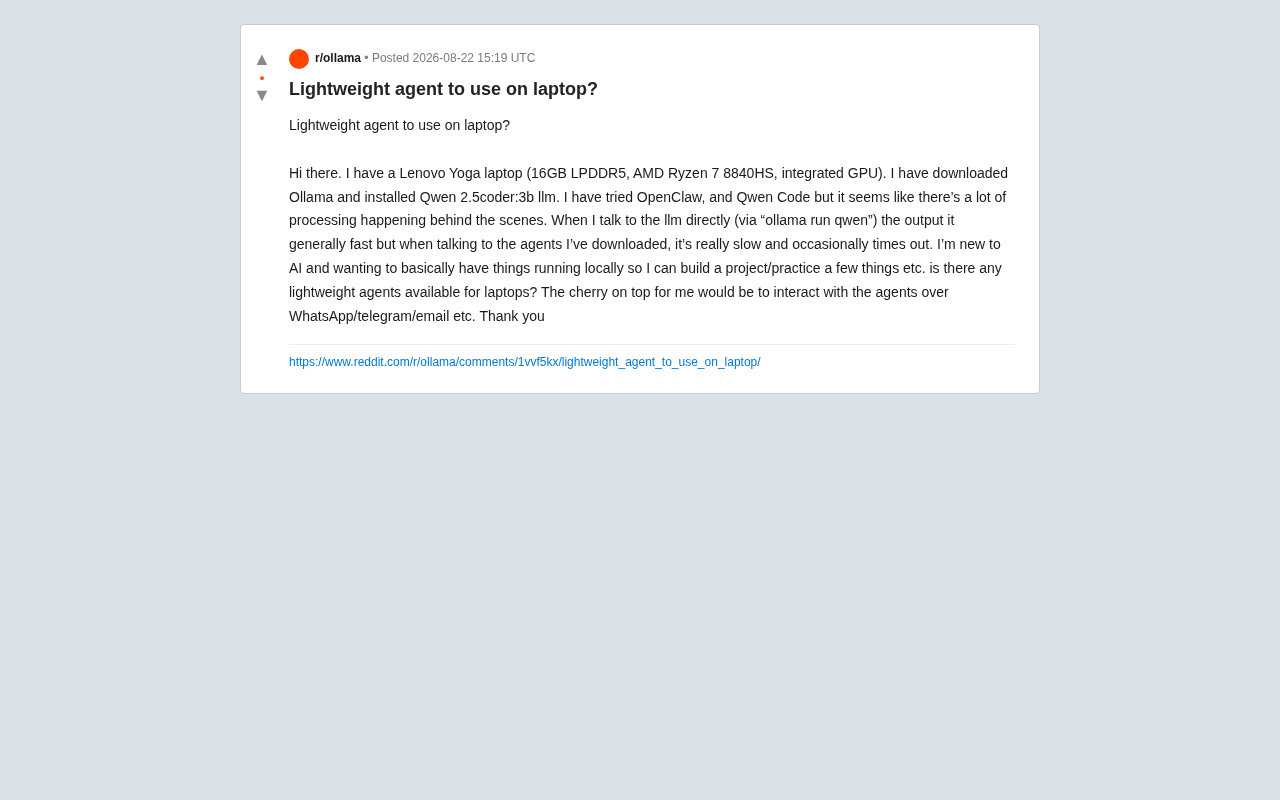
Local AI Agent Deployment Too Slow? A Lightweight Optimization Practical Guide
Local AI Agent deployment slow and timing out? This guide covers Agent framework overhead, hardware bottlenecks, and practical optimizations including context trimming, quantization, and Telegram Bot integration.

Choosing a Laptop for AI Studies: MacBook vs NVIDIA Laptop — An In-Depth Comparison Guide
In-depth analysis for AI students choosing laptops: MacBook Air M5 with remote GPU vs NVIDIA laptop, comparing CUDA support, portability, battery life, and value.

Self-Hosted LLM Tech Stack: A Complete Guide to Managing Your Local AI Cluster from the Terminal
A deep dive into self-hosting LLM tech stacks: inference engines, model management, vector databases, and how to manage your local AI cluster from the terminal.