Forward Deployed Engineer (FDE): The High-Paying AI Role With 700% Job Growth
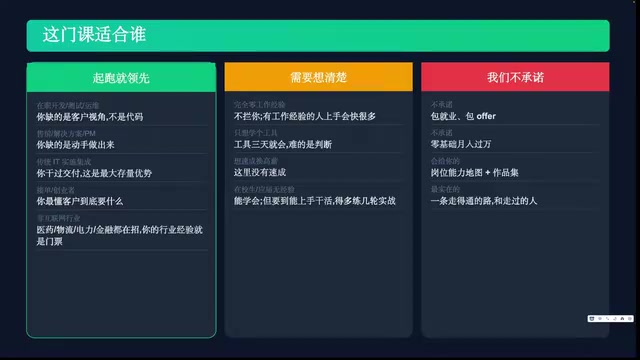
FDE is the AI era's "last-mile" delivery role, combining requirements analysis, system design, and production deployment.
Forward Deployed Engineer (FDE) is a fast-rising hybrid role driven by surging demand for real-world AI adoption. FDEs go on-site with clients to turn vague requirements into production-ready AI systems, owning the full lifecycle from discovery to deployment. Unlike pre-sales, ops, or outsourcing, they're directly accountable for business outcomes. A seven-step hands-on demo illustrates the FDE workflow, and the article argues that industry experience — not just technical skills — is the biggest competitive advantage for anyone looking to make this transition.
What Is an FDE? The High-Paying Role With 700% Job Growth in One Year
A role called FDE (Forward Deployed Engineer) has been quietly taking the job market by storm. According to a popular AI practitioner on Bilibili, there are over 5,330 related job listings on major aggregator platforms, while LinkedIn data shows a 729% increase in hiring volume over the past year. In China, a sample of dozens of job postings shows monthly salaries ranging from ¥10,000 to ¥100,000, with most major tech companies clustering in the ¥30,000–¥70,000 range.
So what exactly does an FDE do? In one sentence: Using AI tools, they go on-site with clients to turn vague requirements into a system that actually runs in production. This is fundamentally different from roles focused on researching models — FDEs don't study models themselves; they're responsible for making models work in real-world business contexts.

Why Is There Suddenly a Shortage of FDEs?
The bottleneck in AI adoption has never been model capability — it's always been the so-called "last mile." There are four core challenges:
- Vague requirements: Users want AI, but can't articulate what they actually need;
- Messy data: Real production data has missing fields and conflicting definitions;
- Fragmented systems: Existing business systems don't connect with each other;
- No accountability for delivery: After go-live, no one dares to own the outcomes.
None of these can be solved by AI alone. As OpenAI's own job postings state, FDEs are responsible for the entire lifecycle: "from Discovery and Technical Scoping to System Design & Building and production deployment."
The Three Things FDE Is NOT: How It Differs From Pre-Sales, Ops, and Outsourcing
To understand the FDE's value proposition, it helps to clarify how it differs from three familiar roles:
First, FDE is not pre-sales. Pre-sales pitches a solution and hands it off after signing. FDE work begins after the contract is signed — and they're accountable for the final outcome. Tencent's job description puts it directly: "lead delivery and go-live support."
Second, FDE is not operations. Ops keeps systems running. FDEs decide what a system should look like and what it should do — they make independent architectural decisions.
Third, FDE is not on-site outsourcing. Outsourcers sell time by the person-day and take orders from the client. FDEs are accountable for the client's business outcome metrics. A key distinction: "Are you selling your time by the day, or are you responsible for results? Those two things have completely different ceilings."
Interestingly, FDE comes in two forms: on-site FDE, who work directly at client locations, and internal FDE (sometimes called AI BP at certain companies), who drive AI adoption within their own organizations. This means transitioning into an FDE role doesn't necessarily require changing jobs — you can become the person at your current company who "makes AI work for what the business actually needs."
The FDE Workflow in Practice: From a One-Line Brief to Production
Here's a complete FDE workflow walkthrough — building an "FDE Job Radar" that consolidates 28 requirements from major tech company job postings with user voting data on a single page, then calculates which skills to prioritize. The process unfolds in seven steps, small in scope but complete in structure.

Steps 1–3: Requirement Clarification and Data Processing
S1 – Clarify Requirements: Before writing a single line of code, prompt AI to act like an FDE and clarify the requirement — who it's for, what problem it solves, what's out of scope, and three verifiable acceptance criteria. The prompt explicitly instructs the AI to "never ask follow-up questions — if unsure, write an assumption instead," preventing the AI from getting stuck in endless back-and-forth.
S2 – Define the Contract: Feed the two voting API docs to AI and have it produce a PRD, including JSON field design and mapping tables. This step is described as "the most FDE-like part of the daily job."
S3 – Handle Dirty Data: This step is refreshingly realistic. Four major tech companies each use a different name for essentially the same role — Tencent calls it "AI Forward Deployment Engineer," Alibaba Cloud says "Forward Deployed Engineer," Ant Group uses "Customer Technical Solutions Architect (FDE Track)," and ByteDance doesn't use FDE at all, filing it under a "Delivery Center." If you search only for "FDE" when job hunting, you'll miss a huge number of openings. Recognizing the different aliases for the same role is itself a valuable job-search skill.
Steps 4–7: Build, Self-Test, and Deploy
S4 – Build: Have AI create a single-file HTML job radar with zero external dependencies. Four hard acceptance requirements: API failures must show a visible fallback, silent degradation is never acceptable, zero-vote items must still display, and the page must show the sample size N without displaying percentages (given the small sample).

For reproducibility, the demo uses the free domestic tool WorkBuddy. However, during the S5 self-test phase, WorkBuddy struggled when asked to "find its own bugs," failing to produce useful output. This perfectly illustrates an important point: FDEs aren't locked to any single tool. In real work, you switch between Claude Code, Codex, Trae, WorkBuddy, and others — use whichever fits the situation.
S6 – Deploy: Because WorkBuddy's sandbox can't execute cloud deployment commands, you run two commands manually to upload the single-file output to a remote server. The result: a public URL accessible on mobile showing live data that exactly matches the local version — 24 samples of project delivery status, 9 samples of skill gap distribution, all clearly visible.
S7 – Acceptance Sign-off: Go back and verify each acceptance criterion one by one, confirming that the delivery is genuinely complete.
Who Should Transition Into FDE? Industry Experience Is Your Biggest Asset

Different professional backgrounds each bring their own strengths and gaps to an FDE transition:
- Current developers / testers / ops engineers: Already understand code — just need the "client perspective";
- Pre-sales / project managers: Understand requirements — just need hands-on delivery skills, which AI helps fill in;
- Traditional IT integration professionals: Already do delivery work — a natural fit;
- Non-tech industry professionals (pharma, logistics, energy, finance): Your industry knowledge is your trump card, because "AI adoption always lands in a specific industry, not in generic conversation."
A note for those starting from scratch: Fresh graduates and career changers can learn the skills and get up to speed, but shortcuts aren't realistic. The real barrier to entry for FDE is deep industry experience and judgment. AI tools themselves can be learned in a matter of days — the hard part is accumulating the experience.
The Bigger Picture: Why Everyone Will Need FDE Skills
One trend worth watching: FDE capabilities may eventually be universal. The core logic is that as AI becomes more powerful, one person can do the work that previously required a team of four or five — handling everything from requirements to system design, development, and deployment delivery independently. For companies, "one person doing the work of five while being paid like three" benefits everyone. For small businesses, hiring one FDE who can independently deliver AI solutions beats maintaining an entire development team.
This also explains why FDE compensation is so high: it's not a single-skill role — it's a combination of requirements analysis, system design, development delivery, and client communication. By comparison, Agent development is just one piece of that puzzle. The most practical takeaway: you don't have to hold the title of FDE, but you need to have FDE capabilities — that may be the core requirement for every technical professional in the age of AI.
A note of caution: The source material for this article comes from a livestream that included course promotion. Some figures (such as "700% growth") are based on LinkedIn's overseas data and may not reflect the domestic Chinese market. Readers should evaluate this information in the context of their own circumstances.
Related articles
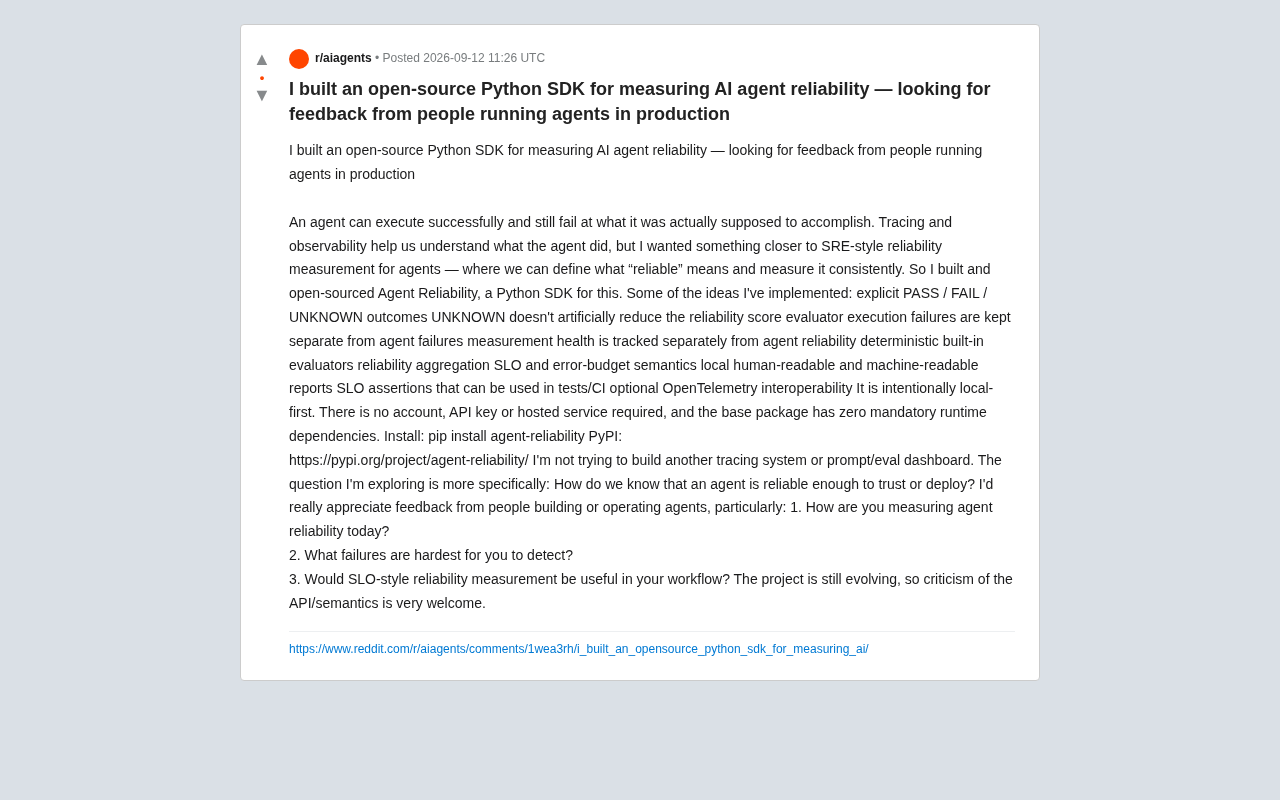
Open-Source Python SDK: Measuring AI Agent Reliability with SRE Principles
Agent Reliability is an open-source Python SDK that applies SRE's SLO and error budget concepts to AI Agent evaluation, with PASS/FAIL/UNKNOWN states, CI assertions, and zero forced dependencies.
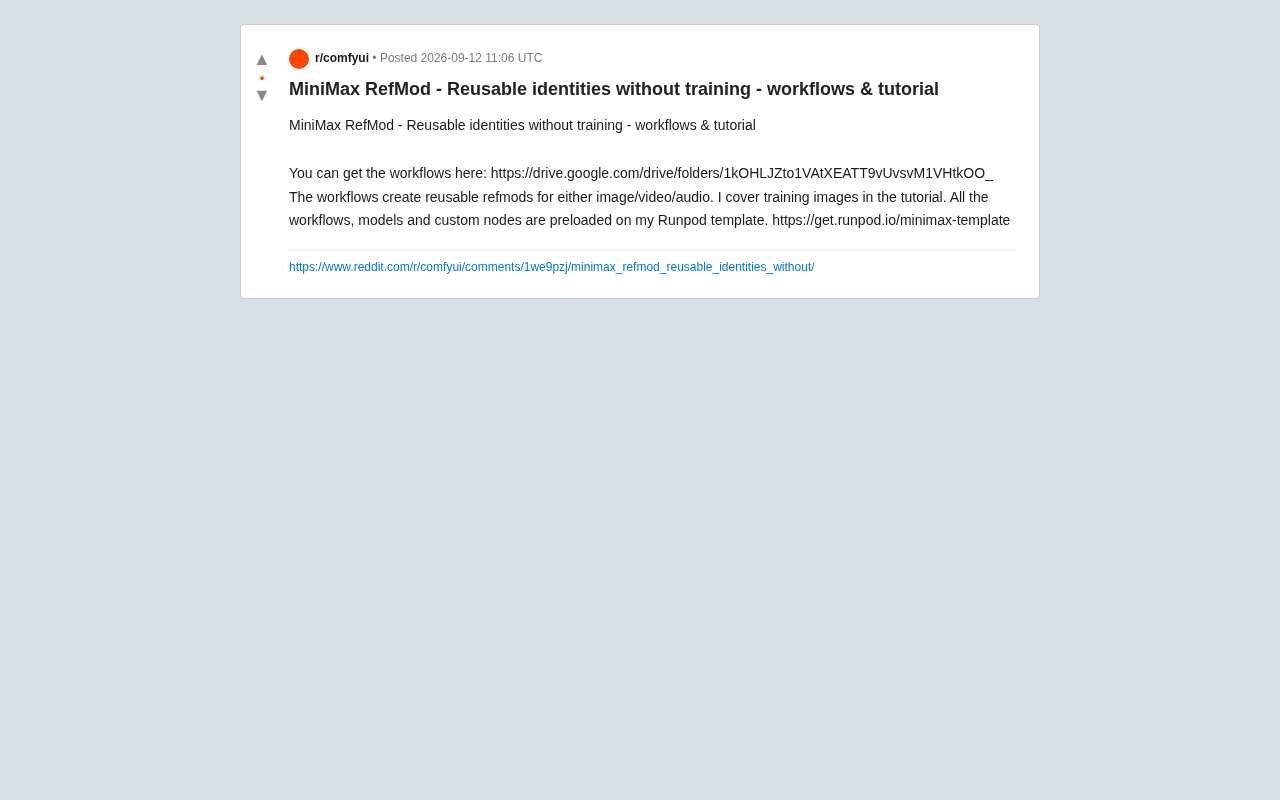
MiniMax RefMod: A Complete Guide to Training-Free Reusable Identity Workflows
MiniMax RefMod offers training-free reusable identity workflows for image, video, and audio generation. Includes Runpod template and tutorial for quick setup.

Invalid Source Material Notice
The source material provided lacks substantive information and is unrelated to AI/tech topics, making it impossible to produce a complete professional article.