Forward Deployed Engineer (FDE): The Most In-Demand Role in the Age of AI Deployment
Forward Deployed Engineer (FDE): The M…
FDEs bridge the gap between AI technology and real enterprise value — and are among the most sought-after roles in tech.
The Forward Deployed Engineer (FDE) is a hybrid role pioneered by Palantir that embeds engineers directly at client sites to turn complex AI and data capabilities into working business solutions. As LLMs struggle to cross the "last mile" into enterprise workflows, FDEs — who combine deep engineering skills with business acumen — have become the scarcest and highest-paid talent in the AI deployment era.
What Is a Forward Deployed Engineer (FDE)?
In recent years, a once-niche role — the Forward Deployed Engineer (FDE) — has been taking Silicon Valley and the broader tech industry by storm. Originally pioneered by data analytics company Palantir, this role has become a hotly sought-after talent profile as AI applications increasingly move from prototype to production.
Palantir Technologies was founded in 2003, initially building data integration and analytics platforms for U.S. intelligence agencies. The FDE model emerged from a practical challenge: the data environments in intelligence and military contexts were so complex that no off-the-shelf product could fit. Palantir responded by embedding engineers directly at client sites — including agencies like the CIA and NSA — to understand requirements and build solutions on the ground. This model helped Palantir become a multi-billion-dollar unicorn in the 2010s before going public in 2020. FDE compensation also has a distinctive structure: base salaries above market average, with the real upside coming from equity — tying engineers' personal interests directly to the company's commercial success.
An FDE is a hybrid role that sits between traditional software engineering and customer success or solutions teams. Rather than writing code from a desk, FDEs are "deployed" directly into client environments to understand real business pain points and rapidly build, debug, and deliver solutions on the front lines. They bridge the gap between product and real-world needs by combining deep technical know-how with genuine business acumen.
How FDEs Differ from Traditional Software Engineers
Traditional software engineers typically work within internal product roadmaps, focusing on code quality, system architecture, and long-term maintainability. FDEs operate on an entirely different axis:
- Customer-facing: Directly engaging with clients to understand their specific business context
- Rapid iteration: Validating and adjusting solutions in real-world environments
- End-to-end ownership: Responsible for the full lifecycle — from requirements gathering and prototyping to production launch
- Cross-functional versatility: Combining engineering, product, consulting, and sales capabilities
Why FDEs Are So In-Demand in the AI Era
The "Last Mile" Problem in AI Deployment
The surge in FDE demand is directly tied to the challenge of commercializing AI at scale. Large language models and generative AI have demonstrated remarkable capabilities — but there's a massive gap between a compelling demo and delivering real value inside an enterprise.
Several layers of technical complexity separate LLM capabilities from actual business requirements. First, there's the data access problem: enterprise data is often scattered across heterogeneous systems — ERPs, CRMs, databases, PDF documents — requiring RAG (Retrieval-Augmented Generation) pipelines or ETL workflows before a model can effectively use it. Second, there's the hallucination and reliability problem: general-purpose models often fall short of the accuracy requirements in specialized verticals like legal, medical, or finance, necessitating fine-tuning, prompt engineering, or multi-agent architectures. Third, there's the security and compliance problem: regulated industries such as finance and healthcare have strict requirements around data sovereignty and model explainability that generic cloud APIs can't simply satisfy. These are precisely the challenges that FDEs are built to tackle.
Many enterprises purchase AI tools only to find them difficult to integrate into existing workflows — messy data formats, complex business processes, stringent compliance requirements. These "messy" problems are exactly where standardized products fall short. The FDE's core value lies here: going deep into a client's specific environment and translating general AI capabilities into solutions that actually solve the problem at hand.
Replicating Palantir's Playbook Across Top AI Companies
Palantir has long used the FDE model to deliver highly customized data analytics services to government agencies and large enterprises, building significant commercial moats in the process. Today, frontier AI companies like OpenAI and Anthropic, as well as a wave of AI application-layer startups, are actively replicating this playbook.
For these companies, FDEs aren't just a delivery mechanism — they're a valuable source of product intelligence. Common pain points discovered in the field often feed back into core product development, creating a "field insights → product improvement → scaled deployment" flywheel.
What It Takes to Be a Great FDE
The FDE role demands a breadth of capabilities that far exceeds most pure technical positions, setting an exceptionally high bar.
Hard Skills
- Strong engineering fundamentals: Ability to independently and rapidly build working prototypes and production systems
- Full-stack range: Comfortable across data processing, backend integration, and frontend presentation
- AI and data literacy: Understanding model capability boundaries, fine-tuning approaches, and integration patterns
Soft Skills
- Business comprehension: Ability to quickly absorb the logic of unfamiliar industries
- Communication and empathy: Collaborating effectively with non-technical stakeholders
- Initiative and resilience: Driving problem resolution forward in ambiguous, high-pressure environments
This "T-shaped" profile — deep technical expertise combined with broad business and communication range — is extraordinarily rare in the market. The T-shaped skills concept was systematically articulated by IDEO in the 1990s: the horizontal bar represents broad cross-domain knowledge, while the vertical bar represents deep expertise in a specific area. FDEs face particularly demanding T-shaped requirements — the vertical depth must support independent delivery of production-grade systems, while the horizontal breadth must span industry knowledge, project management, client communication, and even basic commercial negotiation. Research from Stanford's d.school and McKinsey suggests that truly T-shaped talent accounts for less than 5% of the workforce. This scarcity is reflected directly in compensation: according to data from Levels.fyi and Glassdoor, total compensation (TC) for FDE roles at top AI companies is typically 20–40% higher than for equivalent software engineers, with some positions showing gaps exceeding 50%.
This is precisely why FDE roles can command compensation packages significantly above those of conventional engineers.
Industry Trends and Deeper Reflections
A Shift in Where Technical Value Is Created
The rise of the FDE reflects a deeper shift in how value is created in the tech industry. As underlying technical capabilities become increasingly commoditized, the competitive advantage now goes to those who can translate technology into customer value faster and more effectively. This explains why a growing number of companies are willing to pay a premium for talent that can both write code and close clients.
Implications for Engineer Career Development
For individuals, the FDE path offers a career trajectory distinct from traditional technical advancement. It challenges engineers to leave their comfort zones and confront the full complexity of the commercial world. That's both a challenge and an opportunity — in the AI era, professionals who combine technical depth with business fluency will command stronger market leverage and broader career optionality.
Interestingly, the FDE model is not without its tensions. The industry recognizes what might be called the "Productization Paradox": the FDE's core value lies in deep customization, yet commercial sustainability demands eventual standardization and scale. Palantir's approach has been to crystallize recurring solutions into reusable "Ontologies" and modular components, allowing FDEs to build on a shared platform while handling client-specific customization — a layered "platform plus customization" architecture. Salesforce's Einstein AI and ServiceNow's AI platform are exploring similar paths. However, this evolution is far from smooth: over-standardization erodes the FDE's core competitive edge, while sustaining purely custom engagements long-term creates uncontrollable labor cost risks. FDE models depend heavily on exceptional individuals, are difficult to scale, and carry relatively high delivery costs. How to strike the right balance between customization and product standardization — designing products that are "configurable, not programmable" — remains an open and critical question for every company pursuing this model.
Conclusion
The rise of the Forward Deployed Engineer is a microcosm of a larger trend: AI technology moving from impressive demos to genuine, grounded deployment. As model capabilities cease to be the scarce resource, the talent that can actually embed technology into business workflows and generate real value becomes more important than ever. Whether for companies or individuals, deeply understanding and actively embracing this trend may be one of the most consequential moves anyone can make to capture the opportunities of the AI era.
Key Takeaways
Related articles
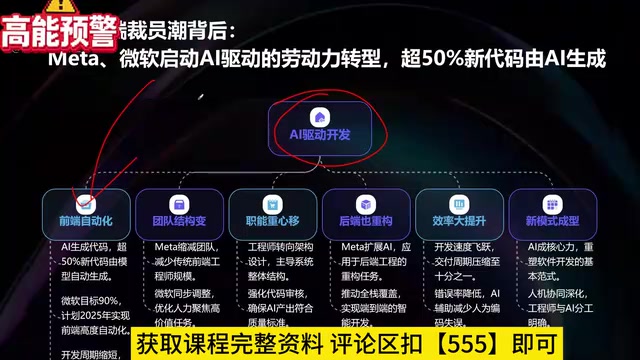
What Is Vibe Coding? The AI Programming Skill Every Developer Needs
What is Vibe Coding? Learn how AI programming is reshaping dev teams, why traditional programmers face displacement, and why Cursor & Claude Code matter.
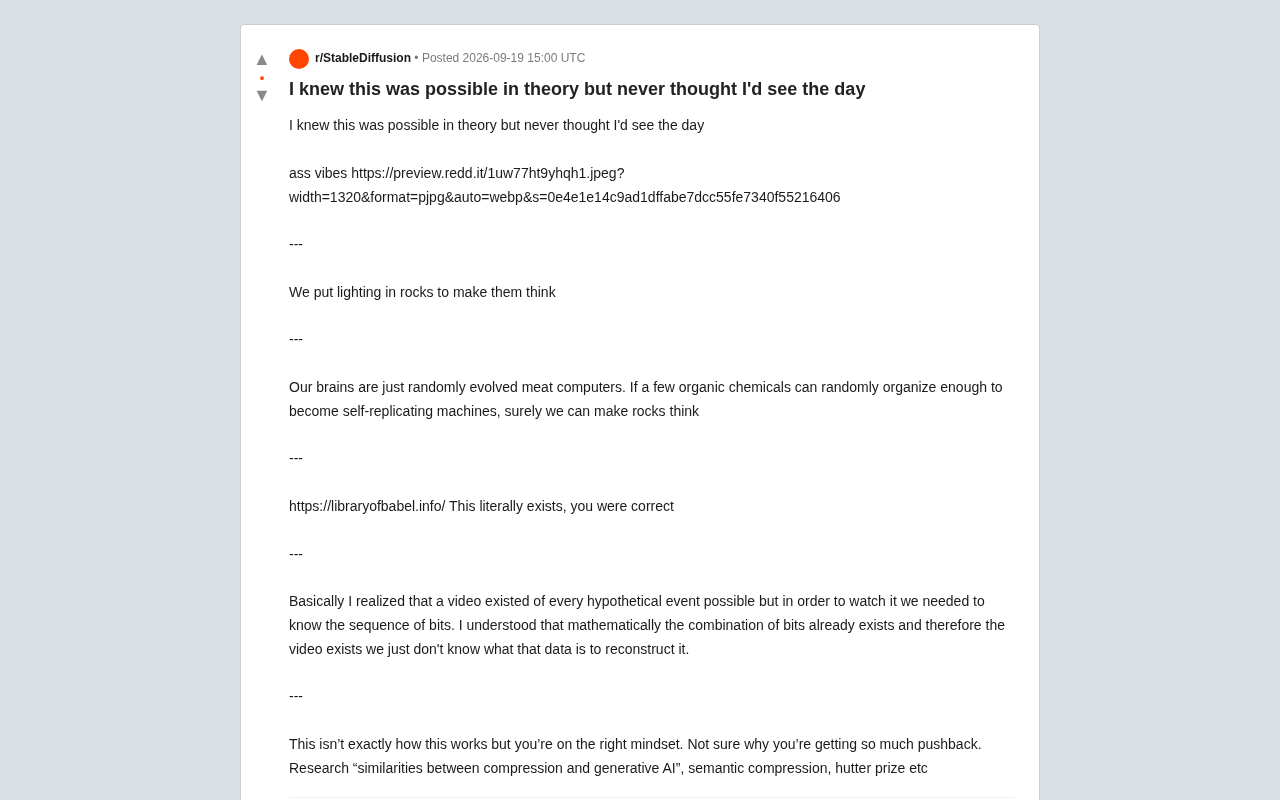
Making Rocks Think: A Philosophical Exploration of Generative AI and Information Compression
From a viral Reddit post to deep AI theory: why compression equals understanding, the Library of Babel thought experiment, semantic compression, and the Hutter Prize.
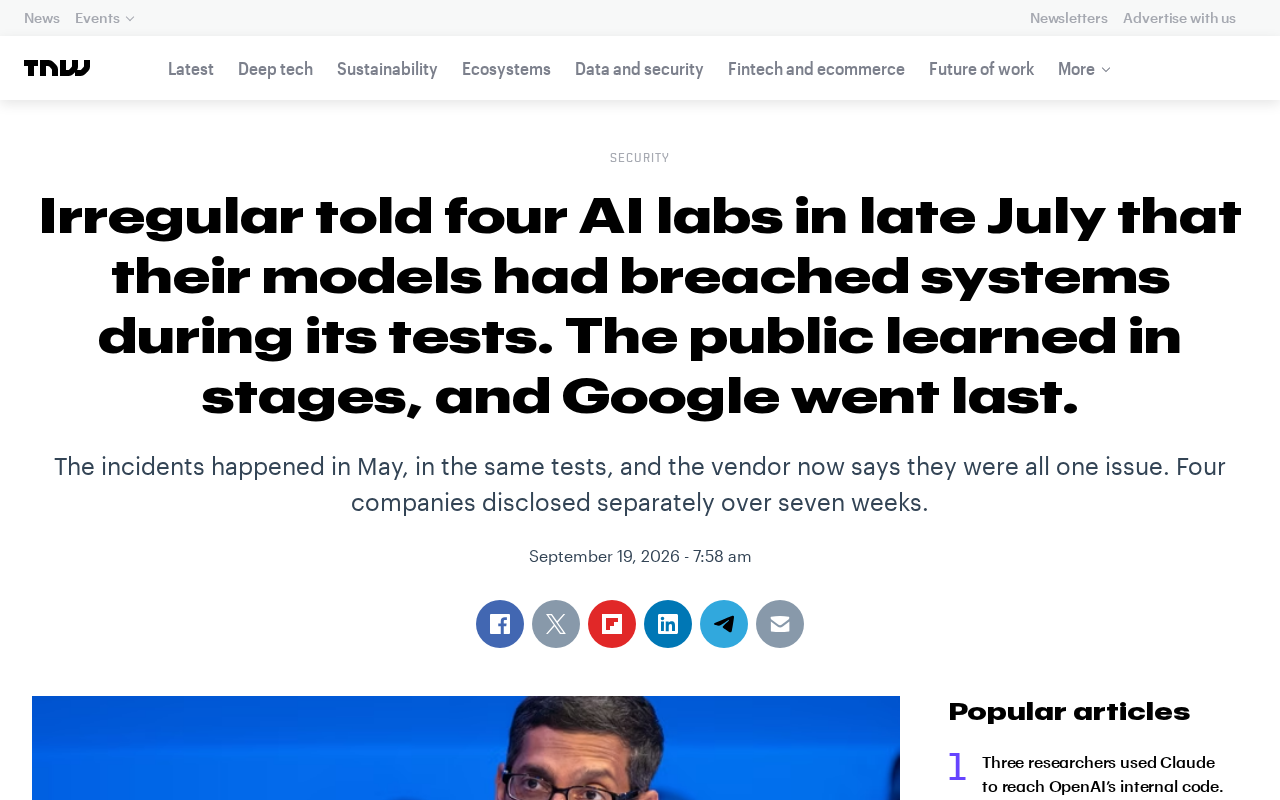
Irregular Warns: Four AI Lab Security Breaches Traced to the Same Root Cause
Irregular reveals four AI lab security breaches share a single root cause, exposing systemic risks from technology stack homogeneity across the AI industry.