Four-Stage AI Agent Development Roadmap: From Calling APIs to Designing Intelligent Systems
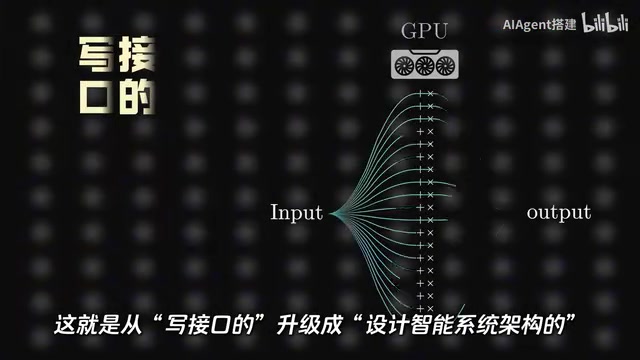
A four-stage roadmap to level up from calling APIs to designing production-grade AI Agent systems.
This article outlines a four-stage AI Agent development roadmap: Stage 1 covers building a working Agent with planning, memory, and tool-calling modules; Stage 2 dives into core paradigms like CoT and ReAct while tackling real pain points like runaway loops and context overflow; Stage 3 focuses on output optimization, multi-agent collaboration, and production engineering; Stage 4 involves shipping 2–3 production-grade projects across the full pipeline. The central argument is that AI development is shifting from "calling models" to "designing intelligent systems," making Agent development a genuine differentiator — while cautioning that "seven-day mastery" claims are marketing hype.
Four-Stage AI Agent Development Roadmap: From Calling APIs to Designing Intelligent Systems
As competition for AI roles intensifies, simply knowing how to call LLM APIs, stitch together prompts, and build basic RAG pipelines is no longer enough to establish a real career edge. This kind of work has been dubbed the "CRUD of the AI era" — low barrier to entry, highly replaceable, with an all-too-visible salary ceiling. The real opportunity is shifting toward AI Agent development: building systems that can reason autonomously, plan tasks, call tools automatically, and solve complex problems end-to-end.
This article is based on a beginner-to-advanced AI Agent development tutorial series originally published on Bilibili. At its core is a four-stage progression roadmap. Below, we walk through the logic and key capability milestones of that roadmap.
Why Agent Development Is the Core Direction Right Now
The fundamental difference between Agent development and ordinary LLM application work is this: you go from being someone who "writes API integrations" to someone who "designs intelligent system architectures." Basic API calls simply send a request to a model and retrieve a response. Agents, by contrast, are defined by autonomy — they can perceive their environment, formulate plans, invoke external tools, and reflect on and adjust their actions based on results.
Whether you're looking to land a role at an AI company, pivot within your current organization, take on freelance projects after hours, or build independent AI products — Agent development is widely considered a non-negotiable hard skill. The reason is that this capability maps to systems-design thinking rather than isolated API-calling know-how, making it significantly harder to replace.
Stage 1: Foundations — Turning Concepts Into Running Code
The goal of the entry stage isn't to "know about" things — it's to get things running. The tutorial series emphasizes this explicitly: you need to write your first Agent that can autonomously invoke tools, not just grasp the concepts at a surface level.
This stage requires a solid understanding of three foundational modules: the planning module (how to decompose tasks), the memory module (how to manage conversation history), and the mechanics of tool calling (how an Agent decides which tool to use and how to use it).
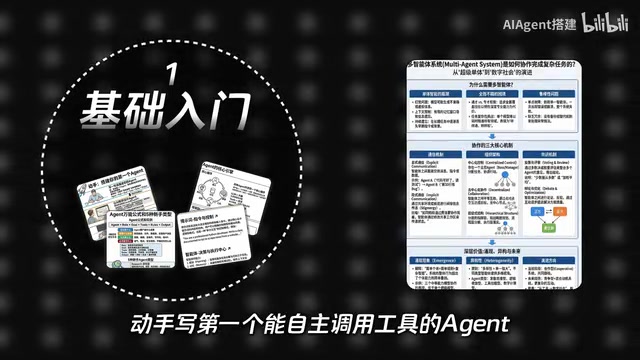
Beyond functionality, engineering details matter equally. Context management and token cost control are unavoidable real-world concerns — LLM context windows are finite and API calls cost money. Figuring out how to keep an Agent running effectively within budget constraints is the first real hurdle between a demo and something actually useful.
Stage 2: Core Advancement — Mastering the Underlying Paradigms
The gap between "knowing how to use it" and "understanding how it works" is where developers truly differentiate themselves. This stage focuses on the Agent's core runtime loop: the complete cycle of Perceive → Plan → Execute → Reflect.
On the technical side, you need to internalize several classic paradigms — most importantly CoT (Chain of Thought) and ReAct (Reasoning + Acting). These paradigms govern how an Agent organizes its reasoning process and how it alternates between thinking and acting.
This stage also requires directly confronting common pain points in real-world development: tool call failures, runaway loops (where an Agent gets stuck in infinite cycles), context overflow, and hallucination fallback handling. These issues come up constantly in production projects, and the ability to handle them reliably is often what separates "runs in a demo" from "actually usable."
CoT (Chain of Thought) is a prompting technique introduced by Google researchers. The core idea is to have the model explicitly output intermediate reasoning steps before arriving at a final answer. Experiments have shown that this "think step by step" approach significantly improves model accuracy on complex tasks like mathematical reasoning and logical inference. ReAct (Reasoning + Acting) takes this further by interweaving chain-of-thought reasoning with external tool calls: the model first "thinks" (Thought) about what to do next, then "acts" (Action) by invoking a tool, and finally observes (Observation) the result — repeating this cycle until the task is complete. The value of ReAct lies in combining a language model's reasoning capabilities with real-world information retrieval. It serves as a key reference for the underlying logic of major Agent frameworks today, including LangChain's AgentExecutor and OpenAI's Function Calling workflow. Understanding both paradigms is a prerequisite for reading Agent framework source code and customizing reasoning loops.
Stage 3: Skill Reinforcement — Optimizing Output Quality
Anyone can put together a basic Agent. The real competitive edge comes from agents that are accurate, stable, and reliable. Stage 3 focuses on effect optimization and production engineering.
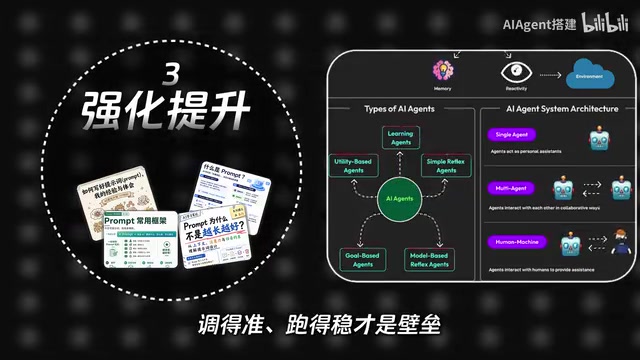
This includes: learning reinforcement and optimization techniques, understanding the core logic of multi-agent collaboration (how multiple Agents divide responsibilities to complete tasks together), and mastering Prompt tuning, parameter optimization, and structured output. Engineering practices like observability, log tracing, and evaluation frameworks are also introduced at this stage — because only by establishing measurable and evaluable mechanisms can you iterate on Agent performance systematically, rather than tuning by gut feeling.
Multi-Agent collaboration refers to decomposing a complex task and distributing it across multiple Agents with different roles or capabilities, then integrating their results through a coordination mechanism. Typical architectures include a hierarchical structure with a primary orchestrator Agent and sub-Agents (the Orchestrator-Worker pattern), as well as parallel execution models where multiple Agents run simultaneously and then vote on or aggregate their outputs. Compared to single-Agent systems, multi-agent architectures can overcome single-context length limits and enable specialized capability division — but they also introduce new engineering complexity around communication protocol design, task allocation strategy, and intermediate state synchronization. Frameworks like AutoGen, CrewAI, and LangGraph all provide multi-agent orchestration capabilities and represent the mainstream tooling choices in this space.
Stage 4: Real-World Deployment — Building Against Actual Business Scenarios
Ultimately, engineering skill is proven by what ships. This stage requires applying everything from the first three stages to build 2–3 high-quality hands-on projects covering popular use cases such as intelligent decision-making assistants, office automation Agents, and multi-agent collaboration systems.
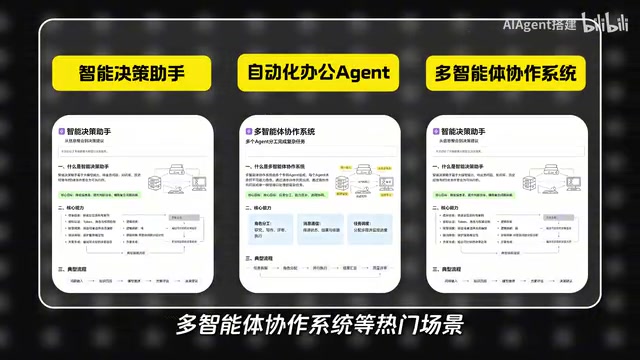
The key is completing the full pipeline: requirements analysis → architecture design → development and debugging → deployment and release. The goal is to transform demos into production-grade projects that can be showcased, written into a résumé, and actually put to use.
At that point, your résumé no longer just says "familiar with framework X" — it says "independently designed and shipped an intelligent agent system." In interviews, you have real architecture decisions to discuss. When quoting for freelance work, you negotiate from a position of genuine credibility.
Summary
The logic of this four-stage roadmap is clear: get a basic Agent running → internalize the underlying paradigms → optimize for quality and engineer for production → land it in real projects. It reflects a broader trend: AI application development is evolving from "calling models" to "designing intelligent systems." For developers who want to build differentiated competitive advantages in the AI space, Agent development is genuinely worth investing in. One important caveat: the "zero to expert in seven days" framing common in tutorial marketing is mostly hype. Actually mastering Agent development still requires solid hands-on practice and real project experience.
Related articles
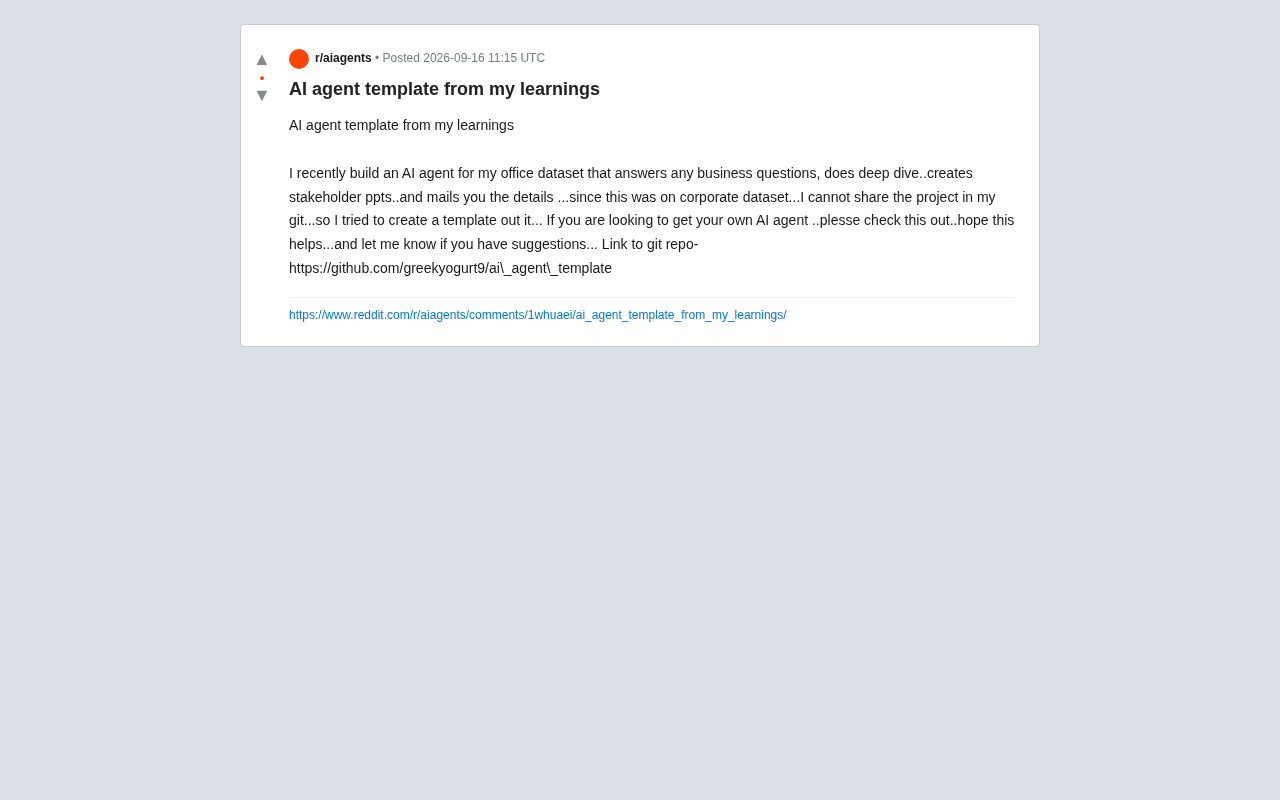
From Enterprise Practice to a Reusable Template: Lessons from Building an AI Agent
A developer shares an open-source AI Agent template built from an enterprise project, covering natural language data Q&A, analysis, auto-generated PPTs, and email distribution.

Nintendo's Open-World Design Evolution: Breaking Down Fire Emblem Fortune's Weave
Nintendo brings the open-world design philosophy of Breath of the Wild to Fire Emblem with the massive Switch 2 title Fortune's Weave. Here's what it means.

AI-Generated Food Photos Are Ruining Menus: How the Uncanny Valley Kills Appetite
AI-generated food images are flooding restaurant menus and delivery apps, but uncanny details kill appetite instead of sparking it. Here's why the uncanny valley effect hurts brands.