France Accuses Iran of Hacking Freezers: Grocery Stores and Blood Banks Targeted
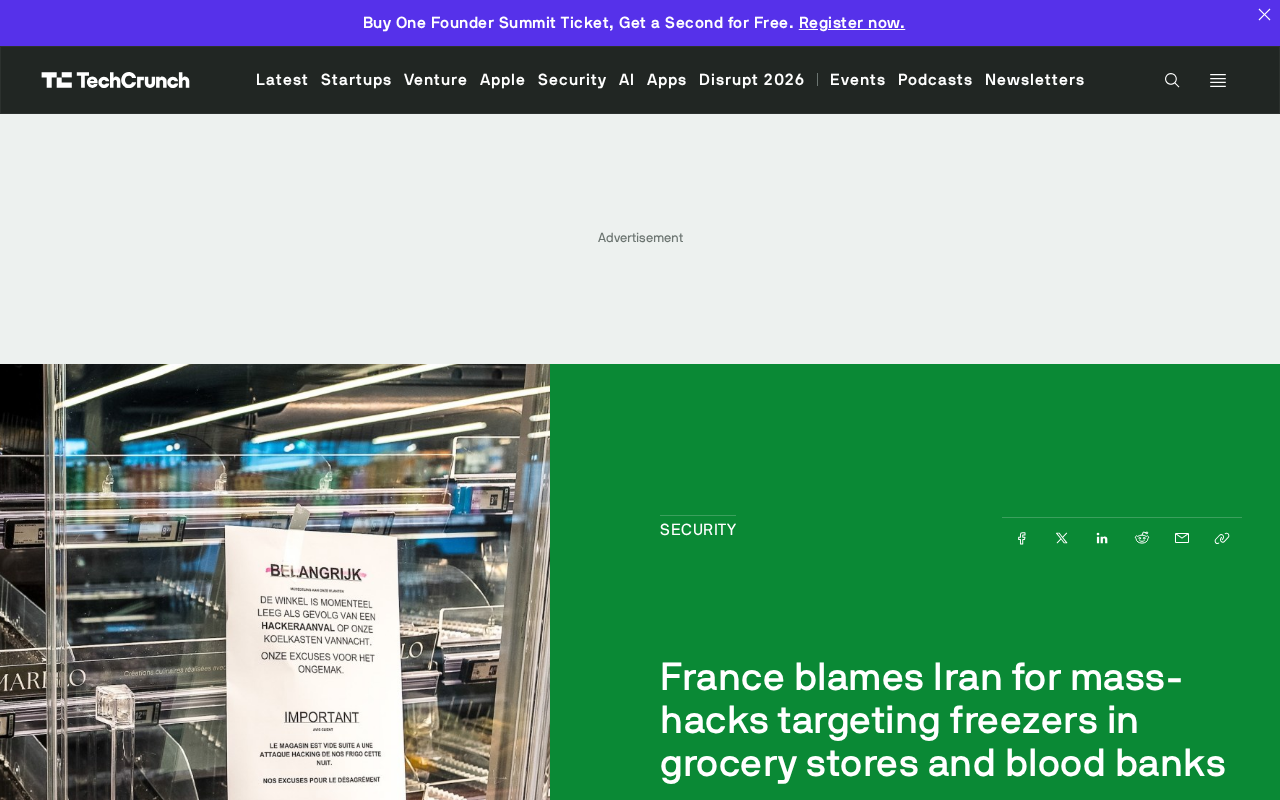
France accuses Iran of two waves of attacks on European industrial refrigeration and blood bank equipment, exposing cold-chain IoT security blind spots.
France's foreign minister publicly accused Iran of launching at least two waves of cyberattacks against industrial refrigeration and freezing equipment in France and the broader European region, targeting grocery store freezers and blood bank low-temperature storage facilities. Industrial refrigeration equipment is widely networked for remote maintenance and designed with availability as a priority; default passwords, unpatched firmware, and publicly exposed interfaces are common issues, yet it remains in a security regulatory blind spot. Diplomatic-level attribution indicates France treats the incident as a security and diplomatic issue rather than a purely technical one, potentially driving the EU to strengthen critical infrastructure protection coordination. The article notes that beyond the attribution dispute, organizations using such equipment should immediately assess their networked status, remote interface exposure, and firmware update mechanisms.
France's foreign minister has publicly accused Iran of launching at least two waves of cyberattacks against industrial refrigeration and freezing equipment in France and the broader European region, with targets including grocery store freezers and blood bank storage facilities. The incident has thrust the IoT security of critical civilian infrastructure into the spotlight.
Targets: From Supermarket Freezers to Blood Banks
According to statements from France's foreign minister, the cyberattacks targeted industrial-grade refrigeration and freezing units, with impact extending beyond France to the broader European region. Named scenarios include frozen display cases in grocery stores and low-temperature storage equipment in blood banks—the former tied to the food supply chain, the latter directly involving the safety of medical blood supplies.
The attacks came in at least two waves, indicating this was not an isolated probe but a sustained campaign. Industrial refrigeration equipment is typically managed by networked temperature-control systems designed with availability and remote maintenance convenience as priorities, where security is not a primary consideration. Once compromised, attackers could manipulate temperature settings or take devices offline, with consequences ranging from food spoilage to the failure of medical supplies.
Why Refrigeration Equipment Becomes an Attack Surface
The security problem with cold-chain infrastructure lies in its "silent" nature. Freezers and blood bank equipment, unlike power grids or transportation systems, are not subject to strict security regulation, yet they carry equally critical functions for society. A large number of such devices connect to the public internet for remote monitoring and fault diagnosis, and issues such as default passwords, unpatched firmware vulnerabilities, and lack of network segmentation are not uncommon in this field.
France's pointing the finger at a nation-state actor means both the threshold and the motive of the attack go beyond ordinary cybercrime. Geopolitical maneuvering extending into civilian cold-chain equipment exposes a long-overlooked reality: the attack surface of IoT devices has long expanded from personal routers to industrial endpoints supporting essential social services.
Network Segmentation refers to dividing an enterprise network into multiple isolated subnets, so that if one subnet is compromised, attackers find it difficult to move laterally to other critical systems. In industrial refrigeration scenarios, the ideal architecture places temperature-control devices in a dedicated operations VLAN, isolated from the office network, financial systems, and even blood bank management systems, allowing only monitoring traffic filtered through a whitelist. In reality, many organizations, for convenience, connect freezer controllers directly to a flat internal network; once a device is compromised, attackers can use it as a springboard to penetrate the internal network. For cold-chain operators, network segmentation is a relatively cost-effective and quick-to-implement hardening measure that, combined with least-privilege access control, can significantly reduce the probability of a single point of failure escalating into a systemic incident.
The Signal Behind the Official Designation
That the accusation came from the foreign minister rather than a technical department indicates France treats this as a diplomatic and security issue, not merely a technical event. Such public attribution is usually accompanied by diplomatic actions and may also push the EU to strengthen coordination on critical infrastructure cybersecurity.
For operators, the questions raised by this incident are direct: Have the networked status of freezers and blood bank equipment undergone security assessments? Are remote management interfaces exposed to the public internet? Are firmware update mechanisms reliable? Beyond the attribution dispute, these are steps any organization using industrial refrigeration equipment can begin immediately.
Public attribution of cyberattacks refers to a government formally designating a state or organization as responsible for a specific cyber incident. Technical-level tracing often involves uncertainty, so public attribution is essentially a political and legal judgment rather than a purely technical conclusion. France's accusation through its foreign minister typically means it has formed a judgment based on combined intelligence, technical forensics, and allied coordination, and is prepared to bear the corresponding diplomatic consequences. Public attribution is often accompanied by sanctions, summoning ambassadors, and promoting multilateral mechanisms, and is also an important driver for coordinating critical infrastructure protection policy within the EU. However, attribution conclusions themselves may be controversial, and the accused party typically denies them, so operators should not dwell on "who did it" but focus on their own verifiable, remediable security weaknesses.
Key Takeaways
- France accuses Iran of launching at least two waves of cyberattacks against industrial refrigeration and freezing equipment
- The attacks affected France and the broader European region, with targets including grocery store freezers and blood bank equipment
- Cold-chain IoT devices have long been in a security regulatory blind spot, with default passwords and exposed interfaces being common risks
- Public attribution at the diplomatic level means the incident is characterized as a security and diplomatic issue, potentially driving EU coordination on critical infrastructure protection
One-line Summary
France accuses Iran of two waves of attacks on European industrial refrigeration and blood bank equipment, exposing cold-chain IoT security blind spots.
Paragraph Summary
France's foreign minister publicly accused Iran of launching at least two waves of cyberattacks against industrial refrigeration and freezing equipment in France and the broader European region, with targets including grocery store freezers and blood bank low-temperature storage facilities. Industrial refrigeration equipment is widely networked to support remote maintenance, designed with availability as a priority, and issues such as default passwords, unpatched firmware, and publicly exposed interfaces are common, yet it has long been in a security regulatory blind spot. Attribution at the diplomatic level indicates France characterizes the incident as a security and diplomatic issue rather than a purely technical event, potentially driving the EU to strengthen critical infrastructure protection coordination. The article notes that beyond the attribution dispute, organizations using such equipment should immediately assess their networked status, remote interface exposure, and firmware update mechanisms.
Related articles
AI Code Generation Is Getting Cheaper—Validation Is the Real Challenge
Code generation is getting cheaper, and the bottleneck is shifting to validation. Drawing on Satya Nadella's interview, this piece analyzes coding agents' specifications, multi-model review, separation of permissions, organizational changes, and how engineers can turn a single fix into reusable team capability.
Saparo: The Shopping AI Agent That Stacks Discounts Automatically, Topping Product Hunt
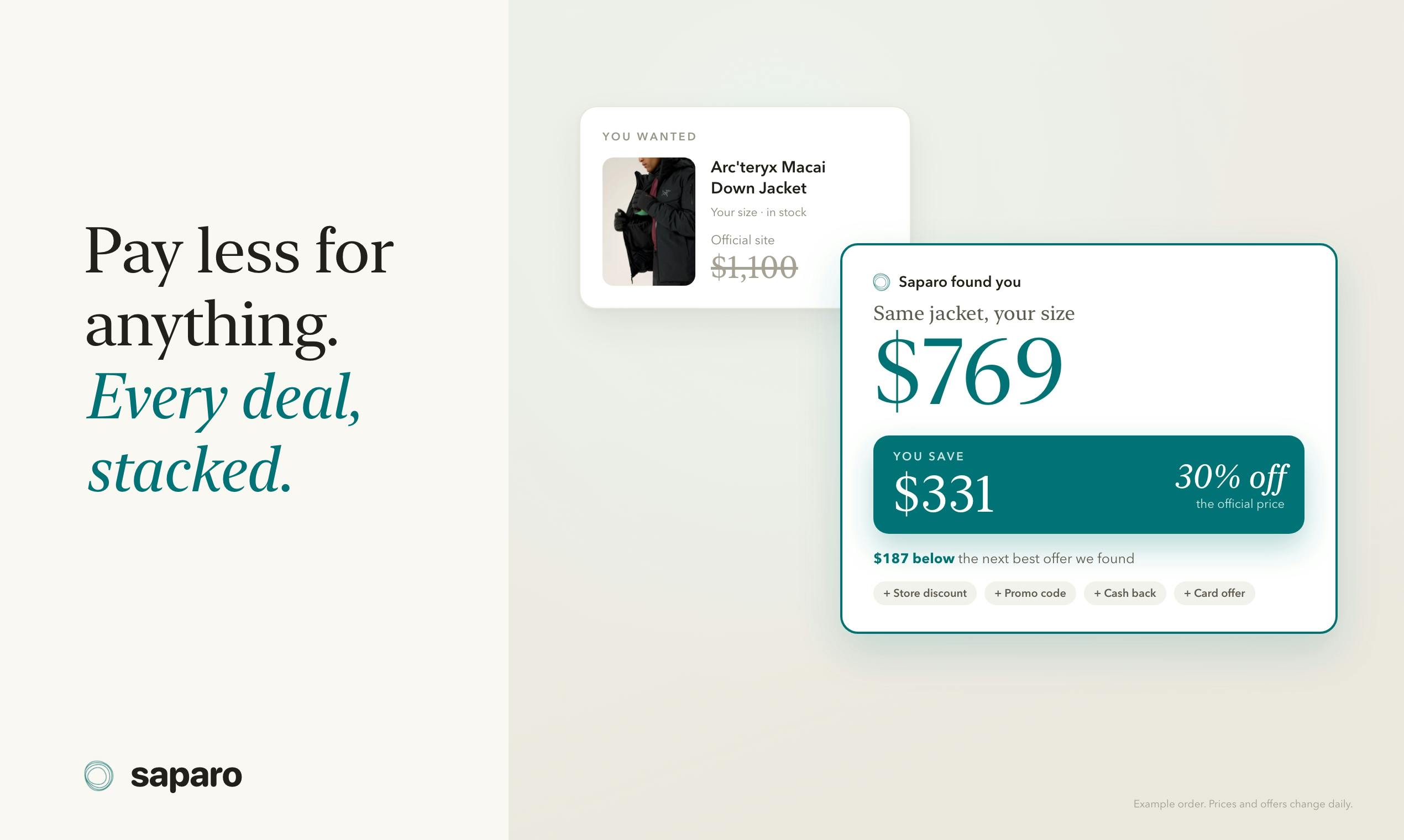
Saparo is an AI shopping agent that automatically stacks discounts, topping Product Hunt. It finds the same item, matches sizes, combines promo codes and cashback, ranks by total cost including shipping and taxes, and leaves final payment to the user.

Tripmojo: The AI Travel Agent That Checks You In
Tripmojo is the #2 AI travel agent on Product Hunt: it syncs booking emails into a shared itinerary and lets Mojo attempt check-in, save boarding passes, and flag delays.