Free AI Visibility Report: Turn ChatGPT's Brand Assessment into a Marketing Tool

A free tool generates a brand's AI search visibility audit PDF report in 4 minutes.
The article introduces a new Product Hunt product for SEO agencies: enter a domain, select AI engines and countries, and get an AI answer audit report in about 4 minutes. It covers how engines describe the brand, which trust pages they rely on, and a prioritized fix list across ChatGPT, Gemini, Perplexity, AI Mode, and AI Overviews, with country-level differentiation. Positioned as an agency lead-gen and delivery prop rather than an internal monitoring dashboard, it's free, requires no registration, and outputs a PDF with a logo and booking link. The article notes AI answers are stochastic and time-sensitive, so reports are snapshots, and the fix list's depth must be tested hands-on.
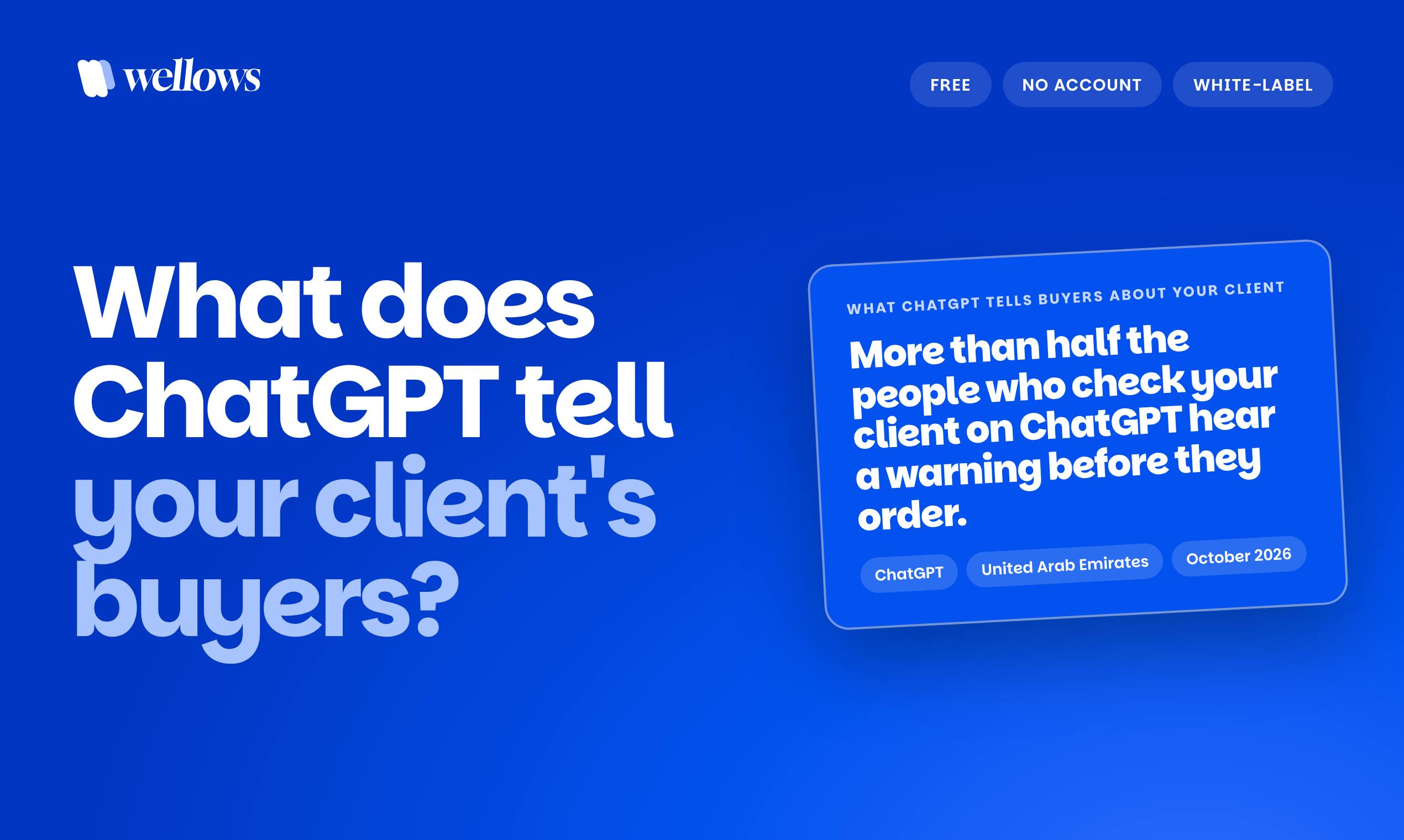
SEO agencies once closed deals with keyword data, but when clients ask "how is our brand performing in AI search," they often have nothing to show. A new product on Product Hunt aims to fill this gap: enter a domain, select AI engines and countries, and in about 4 minutes you get an AI answer audit report.
What Problem Does the Product Solve
Traditional SEO deliverables center on keyword rankings, traffic estimates, and competitor comparisons—data sufficient to persuade clients in the Google era. But AI search's answer generation mechanisms are opaque, and how a brand is described in ChatGPT or Perplexity answers, and which pages are cited, has been difficult to systematically present to clients.
The core value of this tool lies in turning "the brand image in AI's eyes" into a PDF report with a logo and signature. For agencies, this amounts to material that can be used directly for client proposals and lead generation, rather than yet another set of monitoring data sitting in a dashboard.
GEO and AEO: GEO (Generative Engine Optimization) and AEO (Answer Engine Optimization) mentioned in this article are two service concepts that have emerged alongside AI search. Traditional SEO optimizes a webpage's ranking in search result lists, while GEO/AEO focuses on how a brand is mentioned, described, and cited by large language models in generative answers. The core difference is that rankings can be observed through crawlers and indexing mechanisms, whereas the construction of generative answers happens during model inference and is difficult to observe externally. This has shifted optimization approaches from "keyword placement + backlinks" toward "content citability + factual consistency + structured data," and the industry has yet to establish unified measurement standards and delivery specifications—a gap that such audit reports attempt to fill.
What's in the Report
According to the product description, an AI visibility report contains three parts:
- Brand descriptions by AI engines: How the target engine talks about the brand when answering related questions, including wording and stance.
- Trust page sourcing: Which pages the engine relies on more when generating answers, helping determine which content assets are being cited by AI.
- Prioritized fix list: Actionable improvements listed by priority, rather than generic optimization suggestions.
The covered engines include ChatGPT, Gemini, Perplexity, AI Mode, and AI Overviews, with support for differentiation by country. AI answers may differ across regions, and the country option makes reports more relevant to clients' actual markets.
AI Overviews and AI Mode: AI Overviews covered in the report is the AI summary module Google generates at the top of search results pages, while AI Mode is Google's conversational search experience. The key difference between these and ChatGPT, Gemini, and Perplexity is that they are embedded directly into traditional search entry points—users can encounter AI answers without jumping to a separate chat interface. This means a brand's presentation in AI Overviews directly affects exposure that would otherwise belong to organic search results, with a more direct impact on sites that rely on search traffic. Therefore, distinguishing these engines separately helps agencies assess the visibility differences for clients across two scenarios: "AI within search" and "standalone AI assistants."
Significance for Agency Workflows
The product's positioning is clear: it's not a monitoring dashboard for brands to use internally, but a "prop" for agencies to use in sales and delivery. Adding your own logo and name and generating a PDF with a booking link both point to the same scenario—sending the report directly to prospective clients or using it as a deliverable for monthly services.
Free and requiring no registration lowers the trial barrier, and a 4-minute generation time is enough to support an on-the-spot demo. At a stage when AI search optimization (commonly called GEO or AEO in the industry) services have yet to form standard deliverables, such reports provide a reusable template.
Points to Note
AI engine answers are stochastic and time-sensitive; the same question may yield different results at different times, so the report is better suited as a snapshot at a given point in time rather than a long-term benchmark. In addition, the actual depth of the report's "fix list" and whether it provides verifiable priority justification cannot be judged from the product description alone—you need to actually generate a report to evaluate its professionalism.
For teams looking to enter AI search optimization services, such tools can serve as a starting point, but what clients ultimately pay for is still the ability to implement concrete content and structural adjustments behind the report.
Sources of randomness in generative answers: Inconsistent AI engine answers are not simply "instability" but stem from multiple factors such as sampling temperature, the set of web pages retrieved by retrieval-augmented generation (RAG) changing over time, and model version updates. The same prompt may trigger different retrieval results in different sessions, thereby changing cited pages and wording. For audit reports, this means a single snapshot has limited reproducibility, and a more rigorous approach is to aggregate results from multiple samples at multiple time points. When evaluating the professionalism of such reports, you can check whether they disclose the number of samples, the prompt set, and the engine version—these metadata determine the confidence interval of the report's conclusions.
One-line Summary
A free tool that generates a brand's AI search visibility audit PDF report in 4 minutes.
Paragraph Summary
The article introduces a new product on Product Hunt aimed at SEO agencies: after entering a domain and selecting AI engines and countries, it generates an AI answer audit report in about 4 minutes. The report contains three parts—how the target engine describes the brand, which trust pages the engine relies on, and a prioritized fix list—covering ChatGPT, Gemini, Perplexity, AI Mode, and AI Overviews, with support for country-level differentiation. The product is positioned not as an internal brand monitoring dashboard but as a "prop" for agencies to use for lead generation and delivery: it allows adding a logo and booking link and outputs a PDF that can be sent directly to clients. Free and requiring no registration lowers the trial barrier. The article also cautions that AI answers are stochastic and time-sensitive, making the report better suited as a snapshot at a given point in time, and the actual depth of the fix list needs to be evaluated through hands-on testing.
Related articles

Vibe Coding Full-Stack in Practice: AI Programming from Beginner to Enterprise Deployment
From Cursor to Claude Code, this Bilibili AI programming course uses four progressive projects to cover full-stack development, open-source secondary development, and team collaboration. The article analyzes the shock to frontend roles, the efficiency shift from 50 people to 5, and the methodology required for enterprise-grade projects.

David Blaine's Global Quest for Real Magic: From South Africa to Japan and India
David Blaine travels to South Africa, Japan, and India in his Do Not Attempt special, documenting Spinning drivers, black mamba rescuers, iaijutsu masters, and ascetics—exploring the boundary between magic and real human极限 challenges.

Is a Touchscreen MacBook Coming? Vergecast Reveals Apple Executive's Response
Vergecast podcast reveals a conversation between a reporter and Apple executive John Ternus about a touchscreen MacBook and Apple Pencil support. Ternus says iPad is the best device for a stylus, while the reporter bets MacBook will eventually support Apple Pencil.