Free Claude Code: Real-World Testing of the 48K-Star Open Source Agent — Saves Money, But Don't Expect a Free Replacement
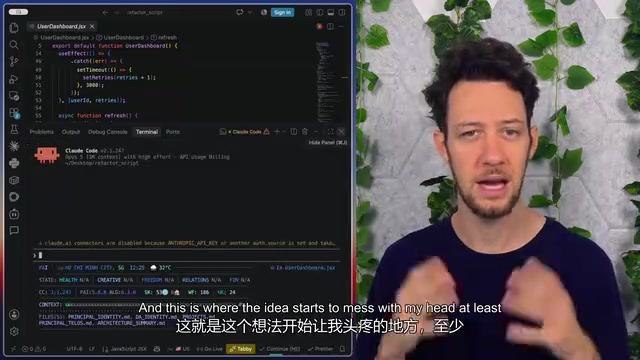
Free Claude Code lets you keep Claude Code's interface while routing requests to free or cheaper models.
Free Claude Code (FCC) is a 48K-star open-source project that acts as a reverse proxy for Claude Code, Codex, and Aider, routing requests to free, cheaper, or local models while preserving the familiar interface. Real-world testing shows it handles simple coding tasks well, but model limitations in tool calling and reasoning remain. Its core value lies in tiered routing — saving costs on routine tasks while reserving premium models for complex work.
Claude Code is undeniably one of the most powerful AI coding tools available today, but when every trivial task calls a premium model, the costs quietly add up. An open-source project with 48K stars — Free Claude Code (FCC) — offers a clever solution: keep the familiar Claude Code, Codex, or Aider interface you know, but swap out the underlying model for a free, cheaper, or even fully locally-run version. It sounds almost perfect, but as the original video author tested — "Claude Code without Claude" is an entirely different thing.
What Free Claude Code Actually Does
Free Claude Code isn't trying to replace Claude Code, Codex, or Aider — those clients stay right where they are. Your terminal workflow, file editing, tool calls, and project access permissions all remain the same. FCC plays the role of a middleware proxy layer.
Put simply, where Claude Code normally communicates directly with Anthropic, FCC intercepts those requests and forwards them to a target you configure — perhaps a free provider, a cheaper model, or even a model running on your local machine. The agent itself hasn't changed; you've just swapped out the "brain" behind it.
From a technical perspective, the "middleware proxy layer" that FCC acts as is known in software architecture as a reverse proxy. It works similarly to gateways like Nginx or Envoy: HTTPS requests sent by the client (Claude Code) are intercepted by a local proxy server, which parses the model invocation instructions in the request, then forwards them to different backend API endpoints based on preconfigured rules. Since Claude Code uses standardized API communication protocols, FCC only needs to listen on the same local port and mimic Anthropic's response format to make the client switch over "without noticing a thing." This pattern is extremely common in microservice architectures and is one of the core ideas behind service mesh design.
This is also what makes the whole setup most mind-bending. After the author launched FCC on a Mac M4 Pro, Claude Code's interface, project configuration, and available tools all looked exactly the same — the top even still displayed "Opus" as the model name. Running the model command, Opus was still set as default — Claude Code still believed it was communicating with Anthropic, but in reality, requests had already been routed to the model configured in the management interface (the author used an NVIDIA model).
It's worth explaining Opus's position in Anthropic's model family here. Anthropic's Claude models are tiered by capability and cost: Haiku (lightweight and fast), Sonnet (balanced), and Opus (strongest reasoning capability). Opus performs best in complex code reasoning, multi-step planning, and long-context understanding, but its API call cost is also the highest — taking Claude 3 as an example, Opus's input token price is 60 times that of Haiku. This enormous price gap is the economic foundation for FCC's tiered routing strategy.
Installation and Configuration Walkthrough
The entire deployment process is surprisingly lightweight:
- Run the installation script;
- Start the local proxy with
fcc server; - A management interface pops up on the local server, where you can configure the models you want to use.
The management interface comes with built-in support for several options, including OpenRouter free models. You can also create your own: add an API Key, select a model, and save. The author chose an NVIDIA model, and within a few steps, a free model was running behind the proxy.
Regarding OpenRouter — it's a unified API gateway platform that aggregates hundreds of large language models. Developers only need to connect to a single API endpoint to access models from OpenAI, Anthropic, Google, Meta, and more, with the freedom to switch based on price, speed, context length, and other dimensions. OpenRouter also provides free calling quotas for some models, which is why the FCC management interface includes OpenRouter free model options by default.
For developers who want to run at absolutely zero cost, FCC also supports routing requests to local models. Over the past two years, the local inference ecosystem — represented by tools like Ollama, llama.cpp, and vLLM — has matured rapidly, allowing developers to run quantized open-source LLMs (such as 4-bit quantization in GGUF format) on consumer-grade hardware. The author's Mac M4 Pro features a Unified Memory architecture, where GPU and CPU share high-bandwidth memory, making it particularly suitable for running medium-scale (7B-70B parameter) local models. However, local models still lag significantly behind cloud-based flagship models in inference speed and quality, especially in coding tasks that require long-chain reasoning.
Configuration is the easy part. The real test is — can Claude Code still do genuinely useful work through this proxy?
Real-World Coding Test: It Works, But That's Not the Point
The author tested with a real-world scenario: a React component that ran but had messy async logic and poor error handling. He gave Claude Code the instruction: "Refactor this component, add proper error handling, clean up the async logic, but don't change existing behavior."
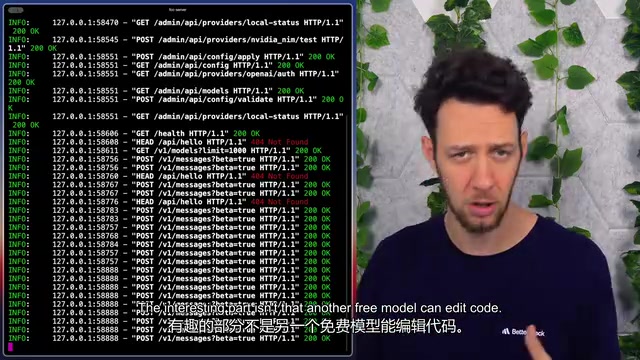
The result was satisfactory — it read the project, inspected the component, and completed the edits, with a workflow indistinguishable from normal Claude Code. Loading states were cleaned up, error paths were properly handled, and existing behavior was preserved. For this task, it was usable.
But the author highlighted a key insight: the truly interesting part isn't that "another free model can edit code" — that's old news. What's truly interesting is that he didn't need to change his workflow at all. He was used to Claude Code, and he was still using Claude Code… or was he?
This is where we need to understand the core mechanism that makes Claude Code powerful — Tool Use (Function Calling). Claude Code doesn't just generate text; it can directly manipulate the development environment through tool calling: reading and writing files, executing terminal commands, searching codebases, and more. This capability relies on the model's understanding of structured tool definitions — the client describes the parameter format of available tools to the model, and the model decides when to call which tool during reasoning and generates call parameters conforming to JSON Schema. Different models vary enormously in their tool calling quality, and many open-source models remain unstable in multi-turn tool calling and complex parameter parsing — this is the technical root cause behind the later mention of "the underlying model struggling with tool calls." Relatively structured tasks like code editing have lower tool calling requirements, but when tasks involve multi-file coordinated modifications, autonomous debugging, and other complex scenarios, the model's tool calling capability becomes a critical bottleneck.
Core Value: Tiered Routing to Save Costs
Think about it — of everything you ask a coding agent to do each day, how much of it actually requires Opus-level intelligence? Renaming a few variables, writing boilerplate code, explaining a file — these are extremely simple tasks. If all these requests go to a premium model, you're paying a premium for the most mundane work.

Free Claude Code was designed precisely for this with tier routing: hand simple tasks to free or cheap models, and save powerful models for moments that truly require reasoning capability. Many developers are actually already doing this manually, and FCC builds it into a familiar interface so you don't need to learn anything new.
Tiered routing isn't a concept invented by FCC — it's essentially a specific application of "Model Cascading" strategy in coding scenarios. Many enterprise AI systems have long adopted similar architectures: use a lightweight model to quickly assess task complexity, handle simple requests directly with a small model, and only escalate requests judged as complex to more powerful models. Google's Gemini API and Amazon Bedrock both offer similar intelligent routing features. In the coding domain, GitHub Copilot also uses a multi-model strategy internally — lightweight models for autocomplete, and more powerful models for chat conversations. FCC's innovation lies in putting this capability, which previously belonged only to big tech companies, back in the hands of individual developers, letting everyone define their own model routing strategy.
How Is FCC Different from OpenRouter?
This is a question that naturally gets asked. The author's answer: they solve different problems. OpenRouter is a general-purpose routing layer that puts numerous models behind a unified API. Free Claude Code is more focused on coding agents, specifically enabling existing clients to work with models they weren't originally designed to support. The distinction: OpenRouter is model-level routing aggregation, providing a unified model access interface for any application; FCC is client-level proxy interception, deeply adapted for the usage scenarios of coding agents like Claude Code, Codex, and Aider, ensuring that agent-specific features like tool calls and file operations are correctly passed through.
In other words, FCC's message isn't "here's a brand new coding agent, come learn it" — it's "keep using the agent you already love." That's a much smaller change — and in daily work, the smaller the change, the more likely it is to stick.
Limitations You Must Know Before Using It
The author repeatedly emphasizes one point throughout the article: keeping Claude Code's polished interface won't magically make your local model more capable.

If the underlying model struggles with tool calls, gets stuck in loops, or can't handle long tasks, no amount of elegant UI will save it. Specifically, "struggling" with tool calls manifests as: the model generating incorrectly formatted tool call parameters that cause parsing failures, repeatedly calling the same tool in multi-step tasks to form infinite loops, failing to correctly understand the coordination between multiple tools in context, or "forgetting" previous tool call results in long conversations. These issues are still prevalent in current 7B-32B parameter-class open-source models, and even specialized tool-calling fine-tuning can't fully eliminate them.
So the real value of this setup, as the author puts it, is "not free Claude — thinking of it that way is a mistake" — it's letting you decide: when you actually need Claude-level intelligence, and when you're just paying for it out of habit.
Which Developers Should Use Free Claude Code
The author offers remarkably measured advice:
- If you have a Max subscription, unless you're constantly hitting usage limits, you probably don't care;
- If you're on a basic Claude subscription and familiar with Claude Code, then FCC might genuinely be better — keep your familiar workflow while shifting a large portion of the load to other models;
- Don't use it to completely replace Claude. The more sensible approach is "don't waste your Claude quota" — save the premium model calls for major bugs or tasks that genuinely require strong reasoning.
Here's a rough cost estimate: a moderate Claude Code user might generate tens of thousands to hundreds of thousands of tokens in daily calls. Using Opus exclusively, monthly costs could easily reach several hundred dollars. Roughly 60%-70% of daily requests are simple tasks (code formatting, variable renaming, documentation queries, etc.), and routing these to free or cheap models could theoretically save over half the cost, while preserving the budget for top-tier models when deep reasoning is truly needed.
The author's final reminder is thought-provoking: "Saving a few bucks is cheap — until the cheap model creates an hour of cleanup work." At that point, reliability matters far more than token cost, and that's exactly where we should draw the line.
Conclusion
Rather than calling it "Free Claude Code," it's more accurately described as "Claude Code where you choose the brain." It doesn't lower the bar for the models themselves, but it gives developers a previously missing dimension of control — sending each request where it truly belongs, rather than mindlessly funneling everything to the most expensive model. For cost-conscious developers, this may be the most pragmatic approach to saving money on AI coding tools today.
From a broader perspective, FCC's emergence reflects a structural shift underway in the AI coding tool ecosystem: agent frameworks (interface and tool-calling capabilities) are decoupling from underlying models. Just as operating systems can run different applications and browsers can access different websites, coding agents are moving toward "model-agnostic" architectures. This trend means developers will have increasingly flexible choices in the future — the agent's user experience and the model's reasoning capability will become two independent competitive dimensions, and middleware tools like FCC are early signals of this trend.
Related articles

Is the Agent Harness Dead? Cursor's Early Engineer Breaks Down the Real Architecture of AI Coding Agents
Cursor early engineer Jediah breaks down the real architecture of the agent harness: why "the harness is dead" is only half right, how the data flywheel lets the harness obsolete itself, and how Grokbot, software factories, and primitive design open new frontiers for agents.
Python Visitor Pattern and Better Alternatives Explained
A deep dive into Python's visitor pattern and four alternatives: method pattern, pattern matching, dictionary mapping, and functools.singledispatch. Choose the best decoupling design by change frequency.

357 Days of Deep Experience: Why Omarchy Made Me Stop Distro-Hopping
A 357-day deep dive into Omarchy: 59-second install, out-of-the-box audio and GPU support, the Quattro QuickShell rewrite migration pains, and why Arch users should try it.