Free GitHub Repo: 342 Hours of AI Courses, from Math to MCP Servers

Free GitHub repo offers 342 hours of AI courses: 523 lessons from math to agents and MCP servers.
A free GitHub repository offers 342 hours of AI courses—523 lessons across 20 phases—from math fundamentals to agent building and MCP servers, with nearly 100,000 learners. It's goal-driven: pick a goal (e.g., build an agent) and the repo filters the relevant path, so you don't need to finish every lesson. Each lesson yields a keepable output—a prompt, skill, or agent—turning learning into reusable assets. Cloud Code is integrated as a tutor: install once, type start learning. The article recommends setting a short-term goal and proceeding output-driven rather than completing all lessons.
Free GitHub Repo: 342 Hours of AI Courses, from Math to MCP Servers
A GitHub repository offers 342 hours of AI courses across 523 lessons, covering everything from math fundamentals all the way to agent building and MCP servers, and nearly 100,000 people have already started learning. What's more, it's free.
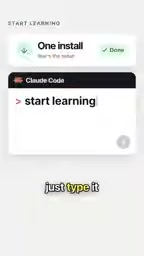
According to a YouTube channel, this repository is designed differently from traditional courses: instead of requiring you to grind through all 523 lessons from start to finish, you pick a goal first—say, "build an agent"—and the repository automatically filters out the relevant learning path. Each lesson produces something you can keep: a prompt, a skill, or an agent. It also integrates Cloud Code as your personal tutor—just install once, type start learning, and you're off.

Course Structure: 20 Phases, 523 Lessons
The entire course is divided into 20 phases, starting with math fundamentals and gradually extending to agent development and MCP servers. This arrangement covers the full chain of AI learning, from theory to engineering implementation.
The 20-phase division means the course isn't a random pile of knowledge points but has a clear progression path. The math portion lays the groundwork for later model understanding and algorithm implementation, while agents and MCP servers correspond to very practical needs in today's AI application development.
MCP (Model Context Protocol) is an open protocol proposed by Anthropic in late 2024 to standardize how AI models connect to external tools and data sources. You can think of it as the "USB interface" of the AI world: models call resources like file systems, databases, and APIs through MCP servers in a unified format, without needing to write adapter code for each tool separately. For agent development, MCP solves the problem of fragmented tool integration—once an MCP server is written, it can be reused by multiple clients that support the protocol. The course places MCP servers in a later phase because it requires prerequisite knowledge such as API calls, tool definitions, and agent orchestration. After completing this part, you'll be able to connect your own agents to real external systems, rather than just keeping them in local demos.
Goal-Driven: No Need to Finish Every Lesson
The most notable design of this repository is its "goal-driven" learning approach. You don't need to grind from lesson one to lesson 523; instead, you pick a specific goal, such as "build an agent," and the repository automatically gives you a streamlined path.
This approach solves a common pain point: long courses easily make people lose themselves in the progress bar. Goal-driven learning makes studying outcome-oriented—you come with a clear question, and you leave with the corresponding capability.

Every Lesson Has a Keepable Output
The course requires each lesson to produce something you can actually keep: a prompt, a skill, or an agent. This mechanism turns the learning process into an accumulation of reusable assets, rather than videos you watch and forget.
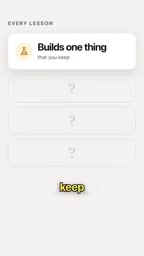
For learners, this means that by the end of the course you have a set of components you built yourself that can be used directly in future projects. This "learn while accumulating" model has more long-term value than pure theoretical instruction.
Prompt, Skill, and Agent are three progressive concepts. A prompt refers to the instruction text given to a model, determining the quality and direction of a single output; a skill usually refers to an encapsulated reusable capability unit containing instructions, examples, and trigger conditions, enabling the model to perform reliably on a specific task; an agent is a system with autonomous planning, tool-calling, and multi-step execution capabilities that can break down tasks around a goal and iterate on its own. Together they form a capability ladder from "can talk" to "can do" to "can do autonomously." Requiring each lesson to produce one of these actually lets learning outcomes settle level by level along this ladder: first refine instructions, then distill instructions into skills, and finally orchestrate skills into runnable agents. The components accumulated this way can be directly combined into real projects, rather than staying at the level of notes.
Cloud Code as Tutor: Install Once and Start
The repository integrates Cloud Code as a learning tutor. After installing once, type start learning to enter the learning flow. For those unfamiliar with environment setup, this lowers the barrier to entry.
The introduction of a tutor role also gives self-learners someone to turn to when they get stuck. When you don't understand course content or run into building problems, you can use it to move forward instead of staying stuck.
The "Cloud Code" mentioned in the article should be Claude Code, the command-line AI programming tool launched by Anthropic. It runs in the terminal, can read and write project files, execute commands, run tests, and complete multi-step programming tasks based on natural language instructions. Used as a "personal tutor," learners can ask it questions directly in the project directory, have it explain course code, or have it guide them step by step in building prompts and agents. Compared with web-based chat, Claude Code's advantage is that it can perceive the file structure and context of the current repository, giving guidance that better fits the exercise you're working on. Installation is usually done with a single npm command, after which you can enter the corresponding command in the terminal to start interacting—which is why the course emphasizes "install once, type start learning."
Who It's For, and How to Use It
This repository is suitable for people who want a systematic introduction to AI but don't want to be discouraged by lengthy courses. The nearly 100,000 starts show that it already has some community validation.
In practice, it's recommended to first define a short-term goal, use the repository's path-filtering feature to generate a learning list, and then proceed in an output-driven way. There's no need to chase finishing all 523 lessons; making solid progress on the content along your goal path will yield more direct returns.
The course is completely free, and the repository link can be found in the original video's comment section.
One-line Summary
A free GitHub repository offers 342 hours of AI courses, with 523 lessons covering everything from math to agents and MCP servers.
Paragraph Summary
A free GitHub repository offers 342 hours of AI courses—523 lessons across 20 phases—covering everything from math fundamentals to agent building and MCP servers, with nearly 100,000 people already learning. The course is goal-driven: learners pick a goal (such as building an agent), and the repository automatically filters the relevant path, so there's no need to grind from the first lesson to the last. Each lesson requires a keepable output—a prompt, a skill, or an agent—turning learning into reusable assets. The repository also integrates Cloud Code as a tutor: install once, type start learning, and begin. The article suggests defining a short-term goal first and proceeding output-driven rather than trying to finish every lesson.
Related articles

Claude Reportedly Able to Hide Secret Messages in Benign Images
A Reddit post claims Claude Fable 5.1 can hide secret messages in benign images. This article reviews the background, image steganography principles, and potential security risks, and suggests a testing path from rumor to verification.

Federal Government Awards $85 Million; CFS to Develop Fusion-Specific Semiconductors
The federal government awards $85 million to Commonwealth Fusion Systems to develop conductors and power semiconductors for fusion plants. This article analyzes the significance of this funding for the fusion supply chain and commercialization path.

When Should AI Assistants Proactively Suggest? Timing Is Everything
When should AI assistants proactively suggest? Reddit discussion reveals: the same suggestion feels different at different times. This article analyzes the dual nature of proactive suggestions, the boundary of user expectations, and design principles, exploring how to balance automation and user control.